EPISODE SEVEN. February 5th to 14th. DESERT CORRUGATIONS, LONG ROADS AND YOYO-ING ALTITUDES AND RETURN TO KERIO VALLEY.


Another long episode, I’m afraid. No internet for some days, so settle down at leisure..!
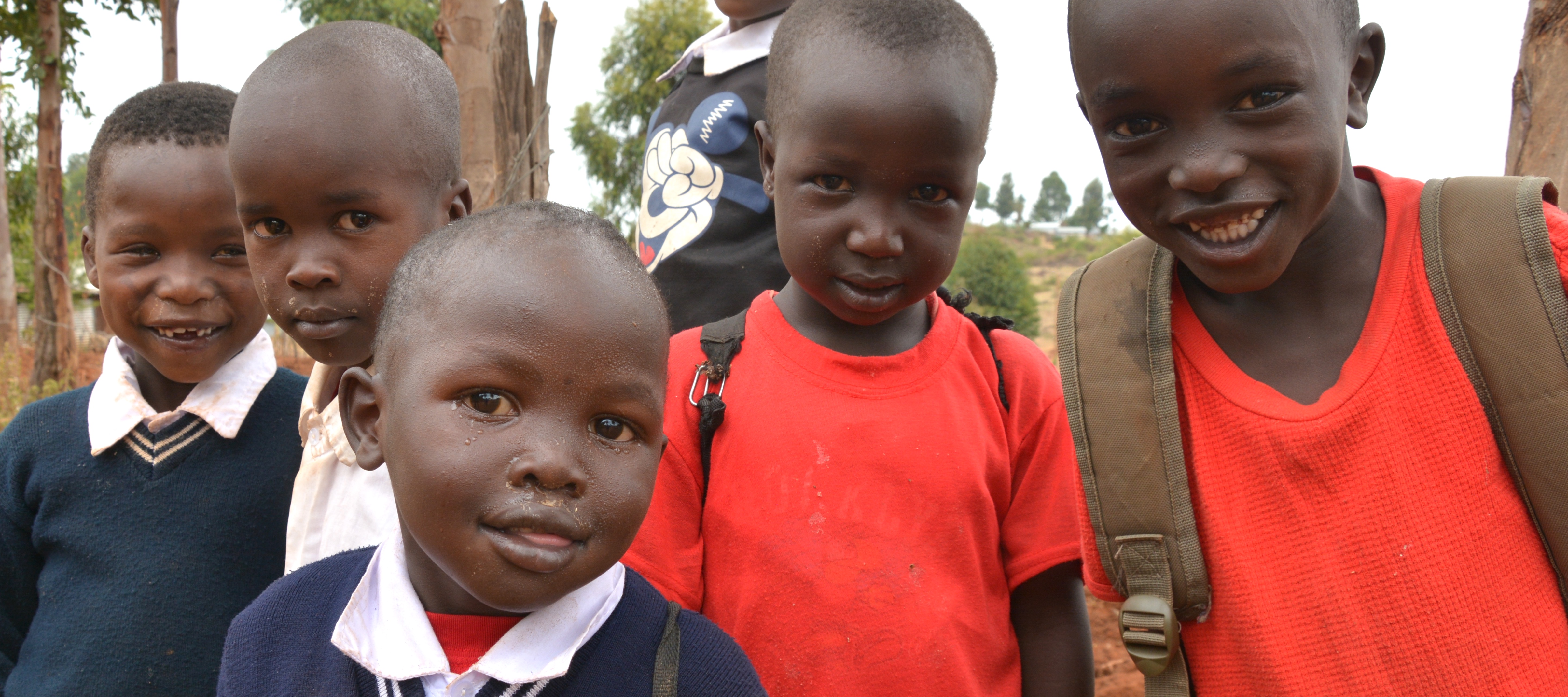
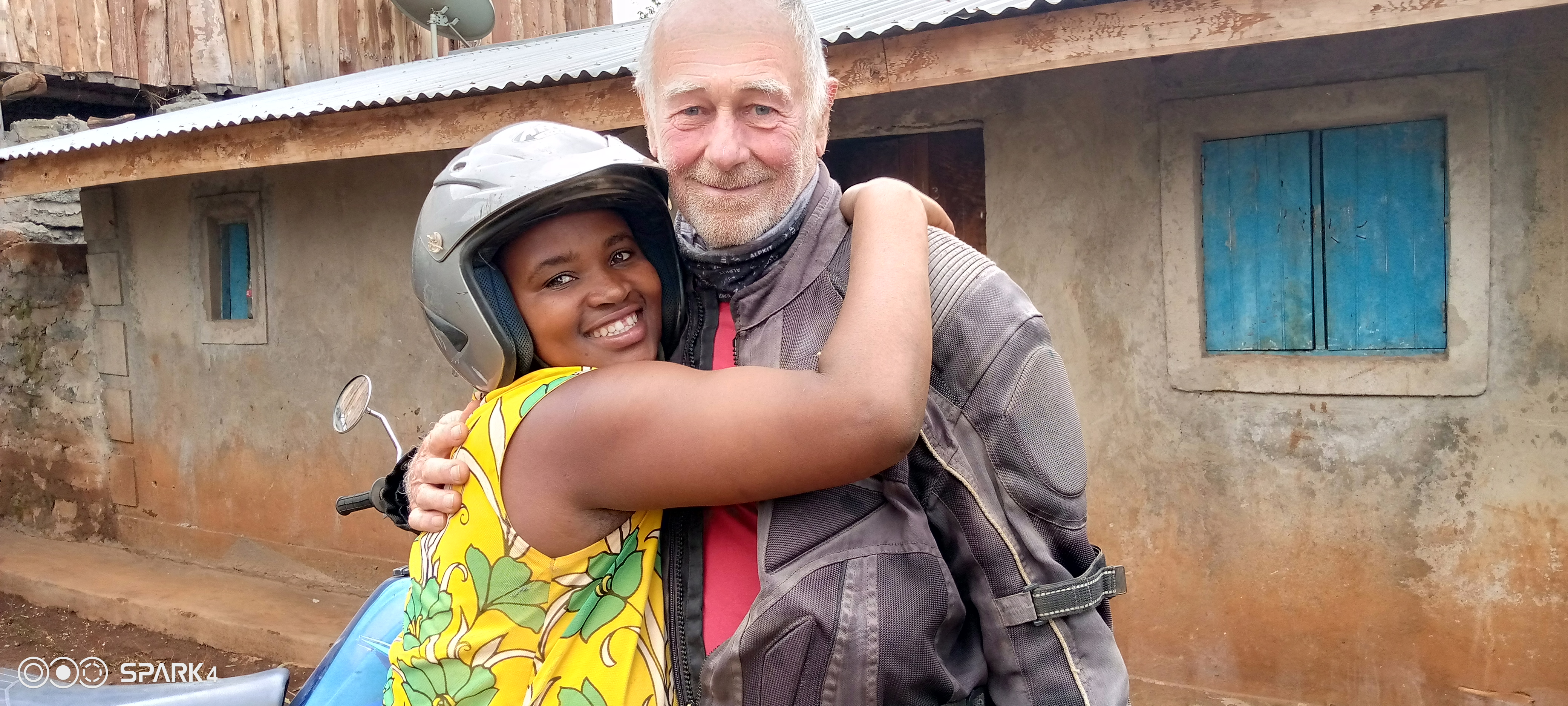
“Mzungu..! Mzungu..!”

Kenya is notorious for the millions of speed humps that litter every highway – and byway. I remember one town in 2002 that boasted 60 bumps along its short mile of main road. They do limit uncontrolled speeding I suppose. My Mosquito, being a predominantly off-road bike, can take them as they come. I just stand up on the foot-pegs as I leap over the concrete bumps. In fact, they are frequently my best way to get ahead of irritating traffic, for I can overtake as four-wheeled vehicles crawl over the obstacles. They do keep drivers vigilant; hit one at speed and it can wreck cars, cause accidents and damage vehicles.

The Mosquito leapt over a small hump near a local police post on a remote tarred road. Out of the corner of my eye, something flew away. Actually, the left hand horn bracket finally gave in and severed – yes, my little bike has two, although even together they make a pathetic squark! Somehow, as it flew off, it short-circuited the entire machine and blew the main 20 amp fuse. I guessed that’s what had happened, but it took two hours to solve the problem. I pushed the bike back into the shade of a verandah of one of the police buildings and started investigating. Bike electrics are a mystery when they work and a complete enigma when they don’t.

Outside the police post, I took off the tank and seat and began to poke about. No one took any notice; in the highlands I’d have been surrounded by questioning people within moments. I’m just judging by my instinct, but it’s intriguing how these disparate – probably tribal – characteristics are so noticeable. I had to ask for help. It was grudgingly given by a policeman, dropping heavy hints that he should be rewarded with ‘lunch’ (for which read money) for phoning a local auto electrician. I gave him a short speech about helping visitors, a comment that annoyed him. When Peter, the electrician, completed the repair, having ridden his boda-boda back to his workshop 5 kilometres away for a car fuse he could adapt, he consulted the policeman – I am sure asking advice what to charge the mzungu – and requested a scandalous amount that he probably doesn’t earn in several days. I gave him over the odds, for to be fair, he had sorted out my problem, but not what the policeman had greedily suggested. I bet Peter had to pay a ‘finders fee’ to the policeman. Sadly, petty corruption is endemic in Kenyan policemen. Proudly, I have never yet paid a bribe in Africa. I respond with as good as I get, and irritate them cheerfully. Since no policeman knows quite who I am, or might know, they seldom persist. If they do, I have been known to wait them out, demanding to be taken to the station or their superior! 

For a few days I have been in a different tribal region to the people of the highlands, with whom I relate so comfortably. Many of the people amongst whom I spend the most time up there are of the Kalenjin tribe – outgoing, generous and welcoming. The past days have been spent amongst mainly Kikuyu people: sharper of feature, thinner faces, lighter skins – less inquisitive and welcoming, less likely to break into smiles – and much more mercenary. A mzungu is frequently seen as a challenge, not a guest. I’ve caused little interest where I have been, except as a source of cash. Almost no one’s waved at the passing mzungu. I’m happy I’m on my way back up to the highlands in a few days.

*
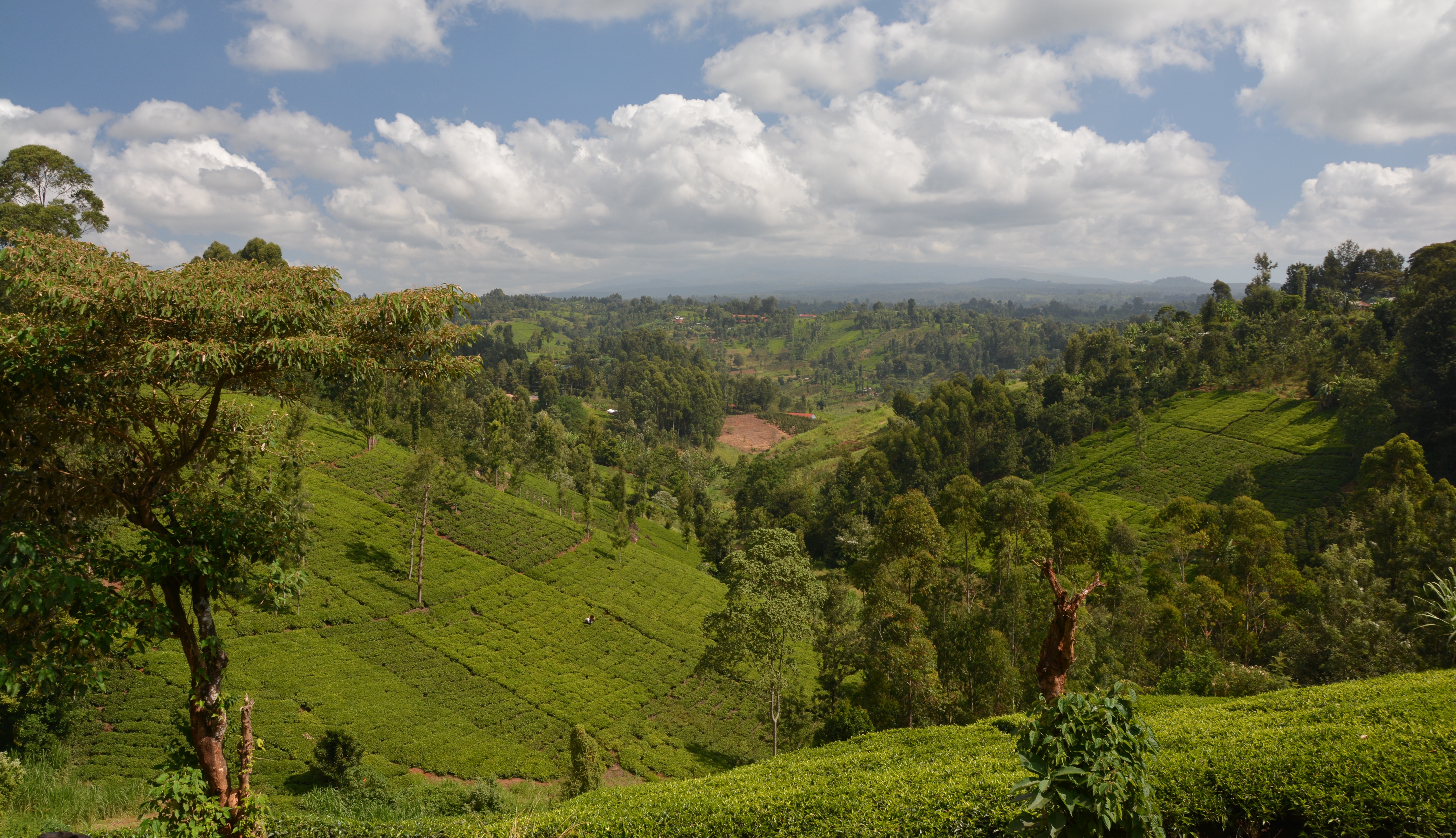
Tea estates are common on the highlands around Mount Kenya, which is hidden by morning cloud.

Geoff, duty manager of the hotel with the view of Mount Kenya, is a Kikuyu, but very charming. An intelligent young man, he trained in Nairobi and is smart and respectful. He’d love to travel. I find this often amongst bright young people – well, men, I suppose… They are accepting of their straightened circumstances but ambitious to find out more and to better their lot in life. Limited by lack of employment opportunities and always strapped for cash, they struggle optimistically, and usually without envy of my freedoms. 

“I dream of seeing other places, but I am fortunate to have this job. I have only one day off and I work 15 hours! So I suppose there’s not much chance to travel! Maybe I could start with Uganda…”

We talk of where I’ve been. I tell him about Ethiopian buna – their spectacularly wonderful coffee. His eyes shine at the stories I tell him, as I stand in the basic garden bar. Small and sharply featured, he sports a nascent beard and moustache, as much as any young African man can grow. I’m jealous of his tidy teeth – his own, unlike my metal implants. Every day I lecture people about cutting their sugar addictions. These people don’t have either the dentists or the king’s ransom to buy titanium teeth!

Geoff listens and drinks in the stories, knowing that his opportunities are so much more restricted by birth in a poor country, than mine with my privileges. I don’t sense jealousy, just acceptance borne of pragmatism. We both accept he may one day get to Uganda, but I know his chances of getting to Europe are negligible – he’s never going to be wealthy enough to be able to be considered for a visa by the xenophobic North, let alone to purchase a fare. Maybe he’ll get to Ethiopia, it’s not far away. I tell him of the fascinating culture and the history of that country, unlike anything in Africa. “There are churches there older than the cathedrals of Europe! Still in use. It’s a very strong culture, historic and intellectual.” Geoff tells me of a church near Karatina, where we are, that has been in use since 1912. “Yes, Geoff, but I am talking about a THOUSAND years! You should try to visit Ethiopia. Go for a buna: it’s worth it! And the best looking young women in all Africa too…” He’s probably paid next to nothing for his 15 hour days though. Ambition and dreams frustrated by circumstances, as usual on this continent. 

*
These very high lands on the lower slopes of Mount Kenya are memorable for the quality of the light.

Riding north around the western flank of Mount Kenya, Africa’s second highest mountain at 17,057 feet, now just a wash of grey against the slightly more ethereal sky, I stop as I have done several times before at a cafe before I begin the long descent to the northern deserts. It’s the only place I know in the country where I can eat cake and drink a decent latte. Of course, it’s owned by a mzungu. There are a lot of mzungus in the area around Nanyuki. It’s where all the flowers are grown on huge farms under plastic, for export to Europe. There are many big farms owned by white people for several generations. These mzungus are Kenyan by birth and probably by nationality. And here, just north of Nanyuki, they have a ready market for decent coffee and cakes, even for souvenirs and steak dinners. The British Army maintains a training outpost here. “They went away at the beginning of Covid,” says John with whom I fall into conversation, “but now they are coming back.” John, who’s black Kenyan, runs a horse-riding-at-altitude business with his partner, a woman from Devon, it turns out, but he can’t remember where she’s from. This region, with the mountain above us in the haze, is one of Kenya’s popular tourist areas, and quite a lot of mzungus live round here. In an hour, I see more white skins than I have seen since I left Europe. Soon we are joined by the owner, several generations of Kenya in her blood. Her family owns a huge game park. Three young Britons come with her, relatives of some sort. I ask them what they are doing. They’re the first tourists I’ve seen in two months. 

“Oh, we’re Covid refugees! We got out. We’re still working too!” The wonders if the internet. They are hoping to rent motorbikes for a trip in the deserts down below us. They want advice. “No, we came out of Heathrow well after Britain locked down,” they say, when I explain that I travelled before Christmas. “The government say they banned travel, but I came out in January and no one even asked why I was going, or where. The airports are too lucrative to stop travel, the government knows that,” says one of the young men. I tell them that on the day I flew, when it was still perfectly legal, there were only 50 flights out of Terminal 2 in the whole day, and Terminal 1 was closed, this at one of the world’s busiest airports. “Well, you should’ve seen it on January 10th; Heathrow was heaving!” says one of the young Brits. Interesting stories you don’t hear at home… “We’ll just stay till we can go back. Could be a year for all I care!” 

*

The coffee and cake and conversation is like being at home. Very odd, in the hot sunshine on the slopes of Mount Kenya. I’m remembered by the young women who run the coffee house. I was here two years ago on the way to and from Ethiopia, a country now closed, not by coronavirus but by serious ethnic unrest. Seems I was lucky to choose 2019. I couldn’t go there now; the border up at Moyale has been closed for a long time. Volatile African politics. It’s best to do things when you can on this continent.

*

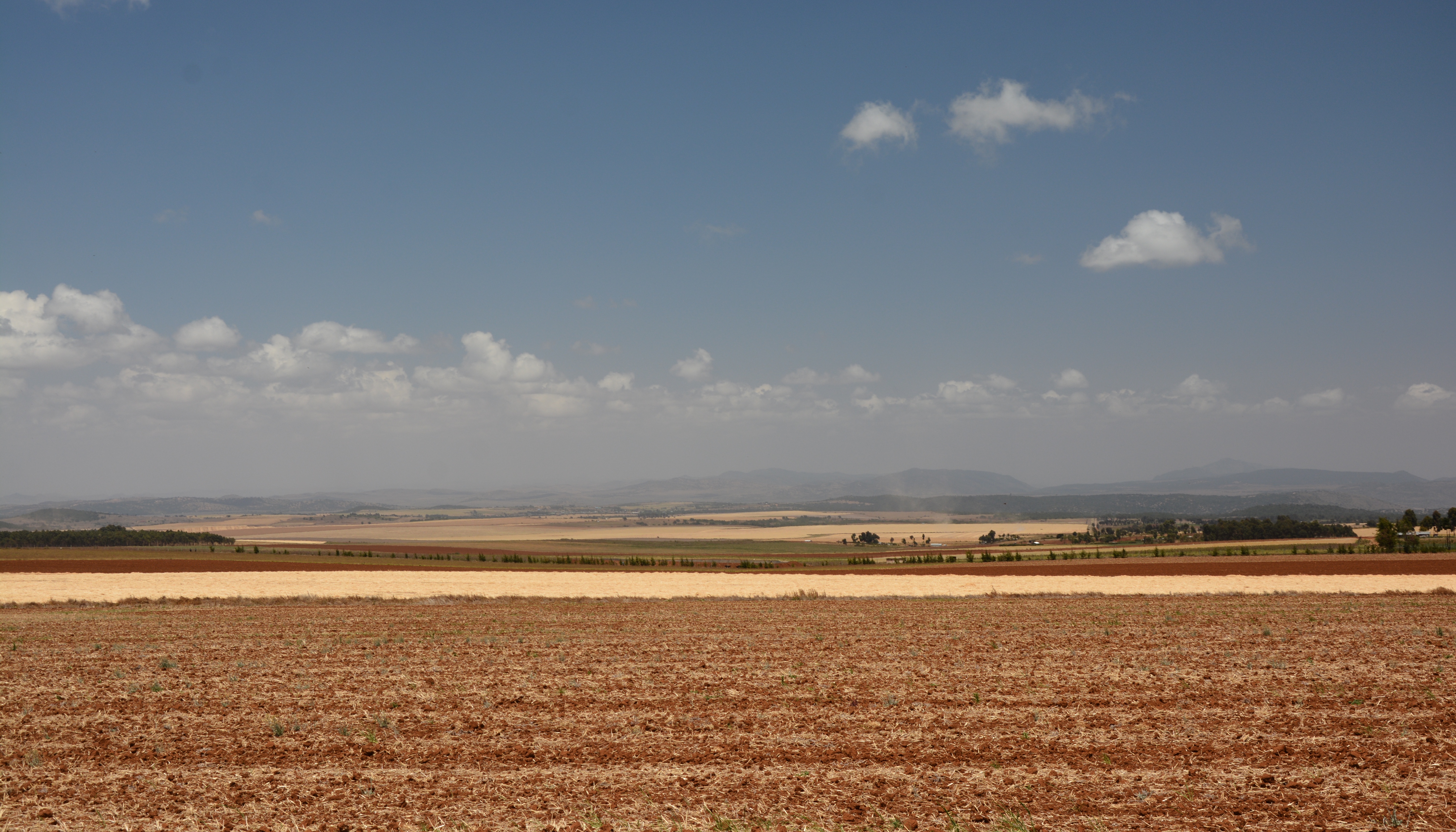
The endless deserts stretch to the north, viewed from the last of the mountains.

Taking my leave, I ride on down the sweeping hills towards the enormous vistas of endless desert. Up above here, it’s fertile and I love the washed-out colours of the soil. I stop several times to take photos. Africa presents so many apparently limitless landscapes. Vast skies arching overhead dusted with clouds of many densities, and the endless views that fade to an uncertain horizon. Mountains rise from the misty spectacle, panoramas that just go on and on as far as the eye can see. It’s magical, this view of the entire north of this huge country, from here amongst the last pine trees and green fertility. I crossed the desert below two years ago. It took endless patience to ride the 500 broiling kilometres, nothing to see but sand, rock, sky and camels grazing on nothing; the horizon bent with the Earth’s curvature. Burned rocks, black and purple, sitting on red sand; a few hopeless habitations on the way: places where the daily grind is fetching water from wells, sometimes several kilometres away. Water to sustain short, arid, desperately hard lives. It was a wonder to me. What is it like to be condemned to this landscape as home? The more I pondered the hot, relentless desert, the more I decided that maybe my plan of riding to Marsabit, half way to Ethiopia, is unwise! Burning up for 250 kilometres one way, just to burn up again coming back. Why? Because it is there. A rotten reason to bake to a crisp for 300 miles once again. Last time, I had to do it to reach the Ethiopian border… No, I decide, this time instead I’ll turn west again and cross the desert back to the highlands. That’ll be cooking enough.

*

On the way, though, down in the desert, I visit Rebecca, a remarkable Kenyan I have known slightly for twenty years. On the borrowed motorbike that year – 2001, the year before I brought my own African Elephant from Cape Town to the far north of Kenya – I met Rico and his sister, brother in law and cousins at Archers Post, a godforsaken outpost in the Samburu desert. They were on holiday with Rico, a time that coincided with my visit. 

Rebecca is one of those women Africa needs so desperately. Disgusted by the way the men treated their (frequently much more driven) womenfolk, Rebecca started a women’s cooperative that went from strength to strength and is now an important local attribute and attracts the attention of the outside world. Rebecca is asked to speak at world conferences about the empowerment of women. She’s also very much respected by the women of this region, although the men hold her in some suspicion, resenting her position of power. Withdrawal of sexual favours was just one of the weapons that was brought to play to force the men of Archers Post into line! The women formed their own tourist village, guest house, built their own highly regarded school and forced a level of equality on the men that is astonishingly unusual in Africa. They sponsor destitute children, support families and raise education for girls, running their business as a cooperative. 

I arrive, sweating now I am in the low desert country where elephants and crocodiles roam according to the roadsigns – but I am more likely to see cows and goats. I impress myself by recollecting Rose, the cheery receptionist’s name. I am warmly welcomed back, but Rebecca has broken her leg – twice in two months. She’s a heavy woman and now sits in thick plaster, a treatment for which she had to pull in favours from one of her high official women friends in government – as the doctors were all on strike in Kenya a couple of months ago. Rebecca’s some sort of relation to Rico’s late first wife Anna, a Turkana woman from the deep deserts to the north of here. I bring greetings from my brother in Kitale while Rose sorts me a banda – a thatched round house facing the river that is now a series of muddy brown puddles. It does have crocodiles though, although none are visible here, not a place to wander at night! In the rainy season this drying trickle that disappears into the Somali desert somewhere, runs wide and fast. Not now. 

*

There’s been some trepidation in my mind about returning to Rebecca’s women’s guest house. Last time I was here was employed one Jessica. I misjudged her reaction when I gave her a gift of £7 on leaving. She’d been friendly and I was sorry for her as she was hundreds of miles from her son and daughter, working here through some contact she had made, to earn money to send home. Unwisely, I gave her my phone number as I left. Jessica obviously thought that £7 was tantamount to a proposal of marriage! I received no less than 18 text messages and missed calls over the next days, addressed to ‘my love’ and ‘my dear’! I even had a Valentine! It’s still a big joke with William and Adelight. Thank god, Jessica doesn’t seem to be here now… 

Many women in Africa clutch at the straw of finding a mzungu. They know that we do not abandon children, as so many men here will do, leaving the women with sole responsibility for their upkeep and livelihood. There’s a desperate dream to find a mzungu husband that defies logic. What possible deal would it be for the mzungu? To take on Jessica’s two unseen children? To marry someone with whom one has no intellectual or emotional connection? Maybe, of course, that is pretty much the business deal they already suffer with the men they marry – or who father their children, for whom they accept no responsibility? 

The ‘proposals’ I receive are many and various, like the woman outside the Kitale supermarket who ran into the street calling that she ‘needed’ to marry me and had ‘her own business’. A businesswoman, she had her fruit stall on the supermarket steps under an umbrella.

*

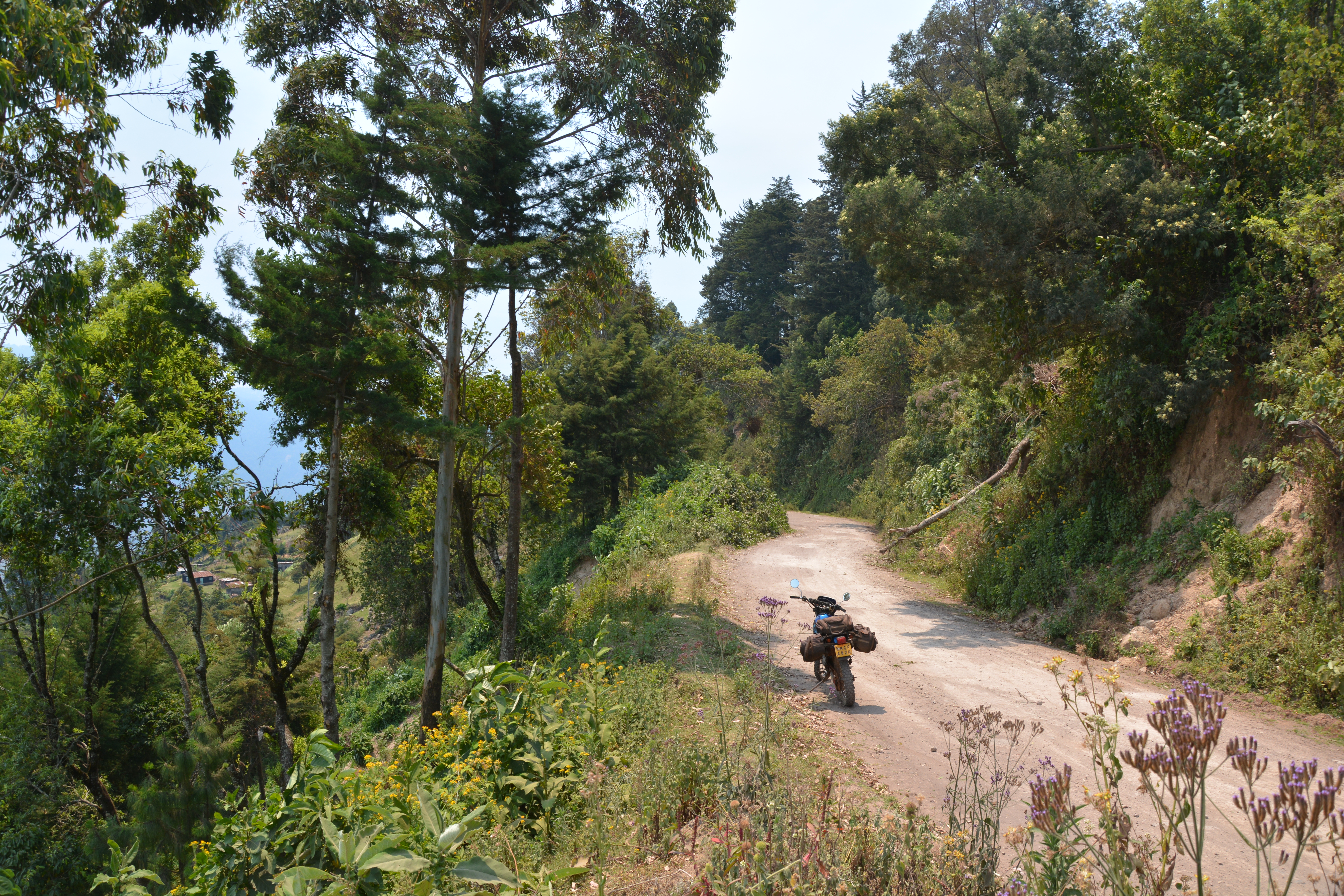
The desert road from Archers Post. Corrugations to shake me to pieces.

Why do I do these things: ride 100 miles across the remote northern deserts on the worst track imaginable? It’s a rhetorical question of course. I do it because it frightens me! And I do it for the elation that I feel getting to the other side, beating my anxiety, five astonishingly bumpy hours later. I’m anxious about these journeys; I’m on my own, many miles from help, the world’s worst mechanic. 

And of course, I do it in the vain search for eternal youth too! I must challenge myself. I can’t help it… 

At the other side, I feel buoyed up that I CAN do it, and did do it! My, it was hard work and the roughest trail I’ve suffered for a long time. My Mosquito and I make a good team. Perhaps the little blue bike is my second favourite, after my Elephant. We have fun together and I appreciate the lightness and versatility on these rough trails. I can dance about and correct our trajectory, even on soft sand and ruts that may have thrown me off a heavier machine. 

The first half of my ride was corrugated like a washboard, fit to shake the teeth from my head – hours of it. There are two choices: ride like a man possessed and skit over the tops of the corrugations, or ride at 25mph and suffer the vibrations. In my circumstances, I decided wisely to go slow and shake. Not easy to shake the teeth from MY head, of course; they’re screwed into my skull, but I reckon my Polish implantoligist did a good job!
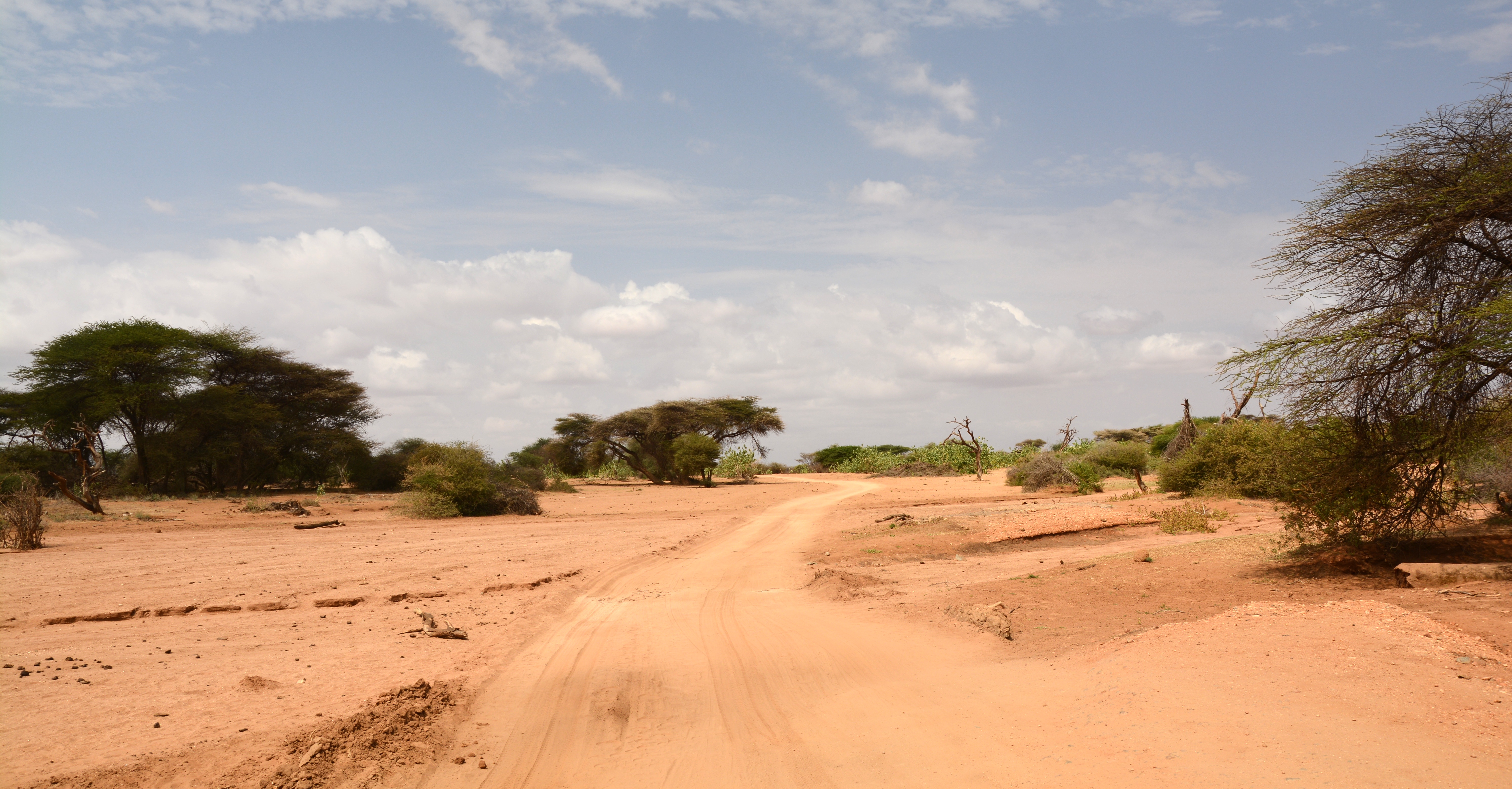
Soft sand, another hazard

These desert tracks are old and well established, but not heavily used. Boda-bodas trade between remote, crude villages and inevitably, sparse matatus strain and bounce their passengers and loads across the desert. It’s dusty and rocky. Spiky acacias and scrubby bushes cover the ground. The track winds between, and later over, dry hills into a mountain range. This isn’t sand-dune desert like most of the Sahara, it’s just dry scrubland that stretches over so much of East Africa. Everywhere, people scratch a living from this arid landscape. Numerous flocks of goats scavenge the last life from the place. How the cows, the ones with the hump of fat on their shoulders, find enough sustenance, I cannot tell. I pass flocks of camels, attended by herdboys in beads and colourful wrapped cloths. Often they are bare-chested, with a couple of crossed strings of beads against their conker-polished skin. Some have spiky ear decorations, many beaded bracelets and anklets. They are the National Geographic image of ‘Africa’. Extended ear lobes, beaded topknots and bright cloths wrapped about their waists above their knees. They carry tall spears and swish herding sticks and look proud and exotic as I pass, sometimes a flash of dazzling teeth in their smiles, colourful, extravagant, endlessly eye catching. A sense for me that I am in a place where time has stood still and culture is paramount, despite the ubiquitous mobile phone clutched in be-ringed and beaded hands. I carefully ride through a herd of fifty camels, gangly youths trotting beneath mothers. The camels look scandalised at my intrusion. I laugh. I ride beneath an imperious camel head; it looks down in disdain; a look of anthropomorphic haughty contempt that camels do so insultingly. I imagine her snort of disgust as the mzungu rides under her chin. I am riding on footprints the size of dinner plates, dust skittering between their ridiculous legs, the babies out of scale, all legs and inelegance, trotting beneath pendulous tails of their mothers. It’s such fun. I am overcoming my fears. I am in the northern deserts of Kenya, less than a degree north of the Equator. I could be locked up in my home, with rain lashing the windows in half-dark. But I’m squinting in the desert sun, riding amongst ridiculous swaying camels. Life’s great if you go out and meet it head on! 
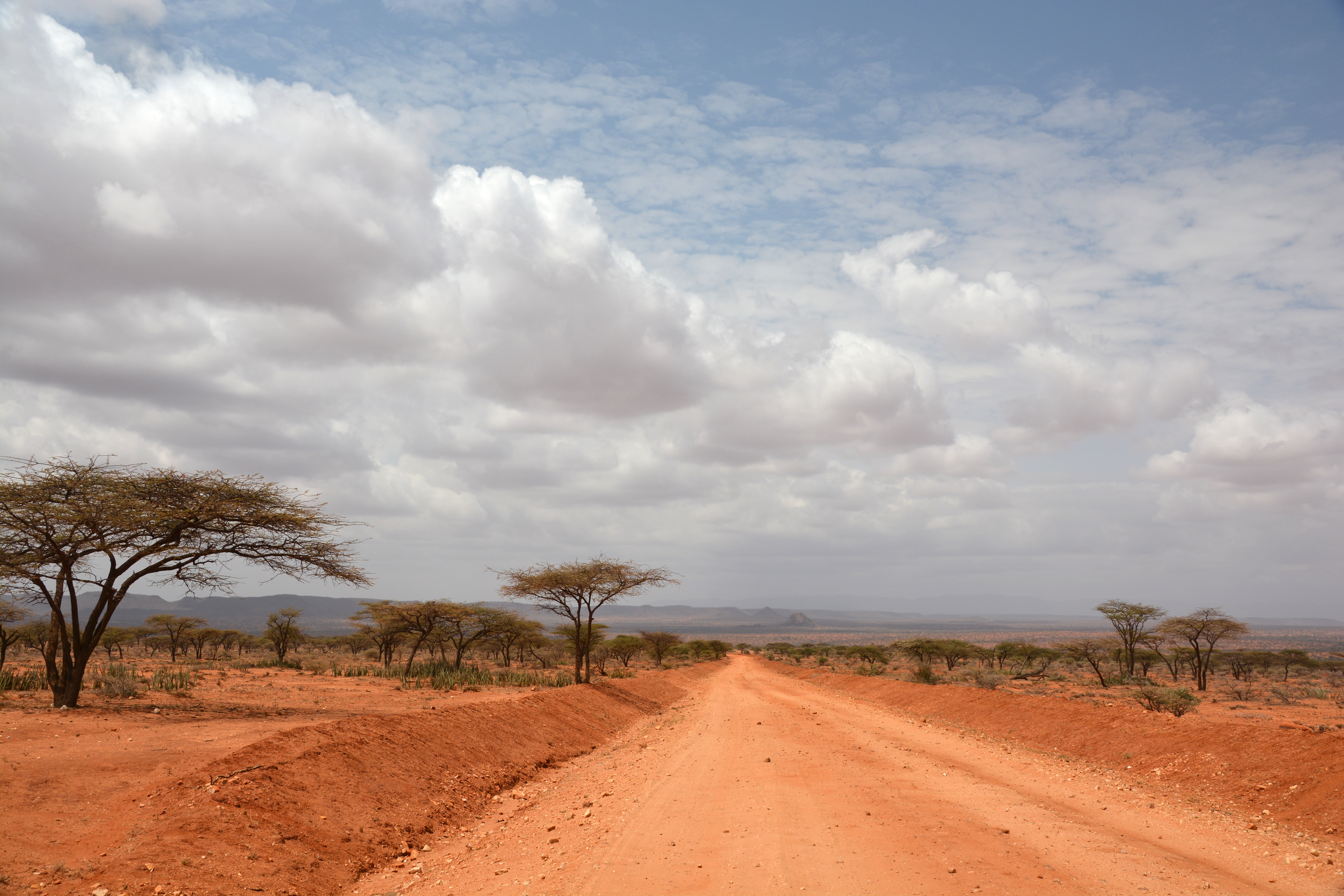
I love the sense of space; the freedom. But it’s remote…

I’ve an especially fond image: I stopped in a scattered village for a mug of chai, causing a stir. Two cheerful local boda-boda riders pulled up at the same rudimentary cafe. One of them was dressed in local tribal costume: beaded bracelets much of the way up his arms, ear decorations and short sarong-like cloth at his waist. Tucked in the folds of his cloth was a traditional club and a long knife; a pink plastic mirror hung on a ribbon from his waist. Clutching his phone, he climbed off his battered but equally decorative Chinese motorbike with a totally bald front tyre and greeted me with a grin and the fraternal link between bikers the world over – even a mzee mzungu and a virile, exotic Samburu warrior with no war to fight. 

*

You have to go far these days to find the tribal, cultural Africa of the picture-books. Big game too. It’s all been subsumed into the polyglot grey culture of consumerism, multinationals, cheap TV and social media. You have to invade the more inaccessible parts of the earth to find the last vestiges of cultural tradition. 
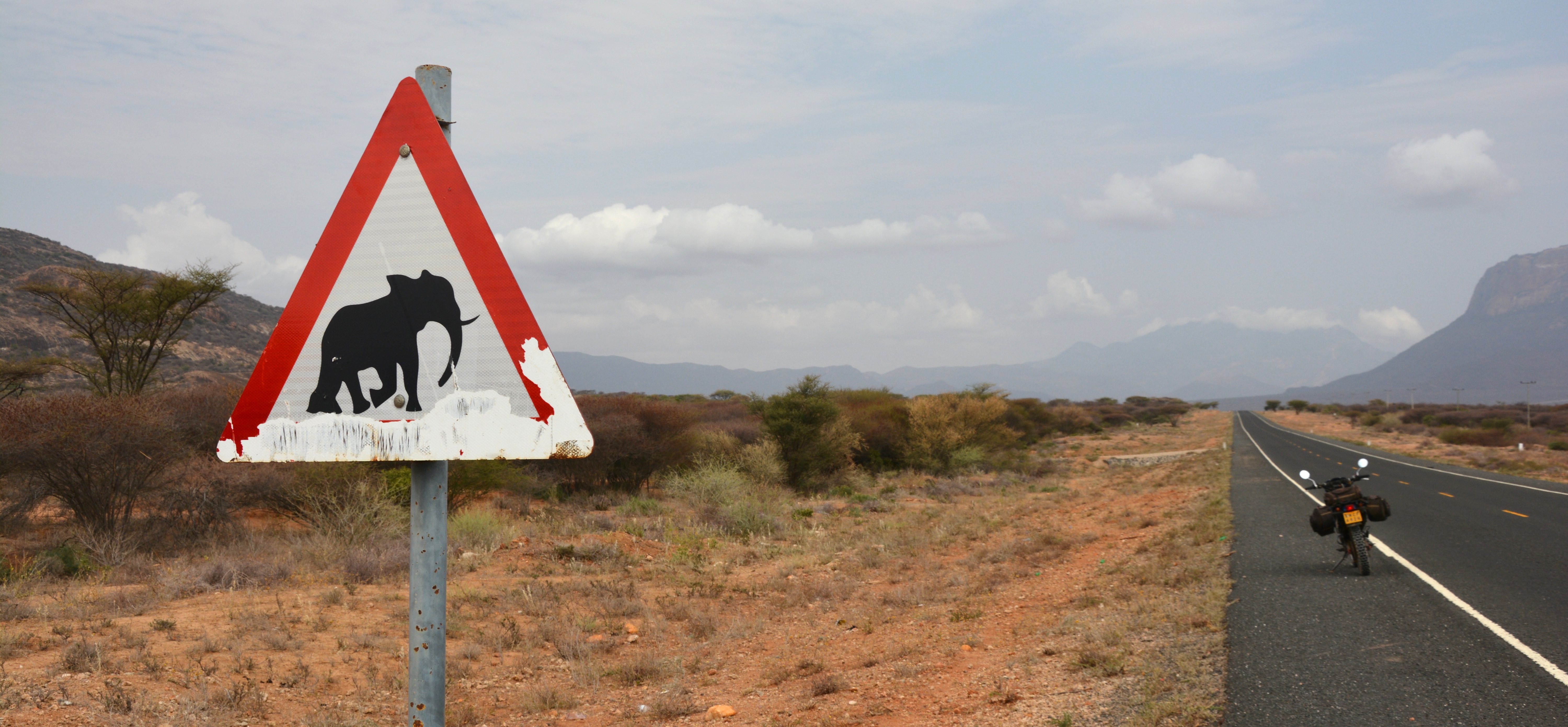
Sadly unlikely, except in the remotest areas. Most are protected behind fences now.

*

It was a disgustingly hot, sweaty night by the sluggish river at Archers Post. Mosquitoes whined, despite the net, as I perspired into the pillow, all the while, through those doubting hours of the night, apprehensive of the ride I was to take to Maralal. Sleep was light, not really coming refreshingly until the before-dawn hours when the night cooled. Oddly, though, the humid heat presaged a day of grateful cloud that ended in pounding desert rain. I didn’t expect THAT. With rain, the tracks turn to mud, slippery, slithering mire. Fortunately, by now I was on the final forty kilometres to Maralal, a place abandoned by the world. 

*

Maralal is in the middle of nowhere. From here I can take two roads out, north or south. Even I know not to challenge myself with the track to the north, 250 kilometres to absolutely nowhere on the shores of Lake Turkana. My map shows a petrol station half way, but nothing else. It’s just sand. Not a place for an ageing mzungu to go alone. Pity, as I am sure the scenery is amazing. When you get to the lake, there’s no way out but another 250 kilometres of empty desert. These are extreme places. So I’ll go south and accept limitations!

Maralal is not a pretty place. Because the new road to the south is being built, to connect the town to the rest of Kenya, every broken-tarred town road seems to end in a large heap of earth. Grey skies and rain showers don’t add any attraction as surfaces turn to clayey ooze and the sunlight morphs to dull gloom. There’s a Wild West, Last Frontier, End of the World feel to the place, half built and half demolished, empty tracts of scabby grass and dust interspersing the crude buildings of the town. It’s a town of 21,000 people, apparently unplanned and unstructured. A hundred rain-stained shacks and basic shops sell the same utilitarian things, sold Africa-over: plastic goods from China, secondhand clothes, tired-looking fruit and vegetables, plastic shoes, soap and ugali flour, and countless mobile phone booths with their glittery accessories and consumerist temptations. Hundreds of boda-boda boys and men wait at every corner, scraping an existence with their broken machines, that few of them own for themselves. It’s difficult to imagine Maralal’s reason for existence, unless it merely developed around the national reserve that brings the more determined tourists? Of whom there are none at present, except me.

I saw a great deal of Maralal, looking for an acceptable place to sleep. That I found at last in a new hotel without a signboard that I passed several times. How do these places survive? I’m the only resident in the guest book, in a lodging place of fifty rooms or more. Still, I’m not complaining as I have a huge room with two giant windows looking over unoccupied muddy scrubland acres in extent, on which a few boys kick a small football. At under £14 I am content. 

As I write, with a Tusker in front of me on the roof of an empty hotel, overlooking this scruffy town at the end of the world, a magnificent eagle hurtles on the wind, swooping back and forth within feet of my beer glass. I’m yawning as if it’s midnight. It’s not even seven yet…

*

It took me about an hour, and that was stretching my interest, to ‘do’ Maralal on Monday. By now much of it had turned to a sea of mud from overnight rain. Heavy clouds glowered on every horizon and what looked unattractive in the dullness of a drizzly afternoon took on a depressing air on a wet morning. A look at the forecast on the intermittent internet, weak signal and frequent power cuts, suggested patience and a day holed up in this not very diverting town. Rain all around and a cool day here at Maralal’s near 6000 foot altitude, up from Archers Post at 2750 down in the desert. Biking in rain and riding on mud is unappealing. And in Maralal I actually had a pleasant room. 

Lowering skies hang heavily overhead, weeping gently. The colour drains from the African scene. I wander a bit aimlessly, unable to find much to interest me. The town is full of churned mud, puddles and earthy drains filled with litter and debris. My shoes pick up red muck; I pull my jacket tight in the morning chill breeze, but then sweat in the humidity that is never far away as the inherent warmth of African air makes the morning uncomfortably muggy. I suppose I am searching for somewhere I can relax in non-muddy, undingy surroundings and watch the world go by – a coffee shop would be ideal! But this is end of the world rural Africa, hardly cosmopolitan. The best I can hope for is a plastic mug of sugary chai and a plastic Chinese patio chair in a grubby shack with customers’ discarded goat bones on the floor. I walk the streets; everyone stares. They discuss me as I pass but return eye contact with a friendly wave and smile. Most of the white folk who come here – and there are none this year – ride through in guided safari vehicles on their way to look at game and adventure into the extensive deserts on the trails that lead to nowhere much, until you reach the shores of Lake Turkana, where there’s not really anywhere else to go. These are tribal lands with colourful people existing in the most inhospitable landscape, transient herders with their goats and ragged, caked-wool sheep and camels. Out there they live in dome-shaped manyattas built from sticks and straw, sometimes covered in any scavenged fabrics they can find – valuable pickings being canvas from old truck covers, woven plastic sacking and black polythene. Up nearer the lake the manyattas are even more simple – just sticks and grasses formed into small spherical homes that dot the desert. I see a few remnants of these cultures here in town: some older women wear their traditional beaded discs around their necks, shoulder-wide bands of colourful beads, with earrings, wrapped in coloured cloths, with shaven heads – topped off with a blue surgical mask hanging form their ears. Not many men in town adhere to any cultural tradition: they’re mostly clothed in Western hand-me-downs in which gender-based fashion gets adapted into a sort of mix and match of practicality and choice. It makes for bizarrely striking garb. 

*
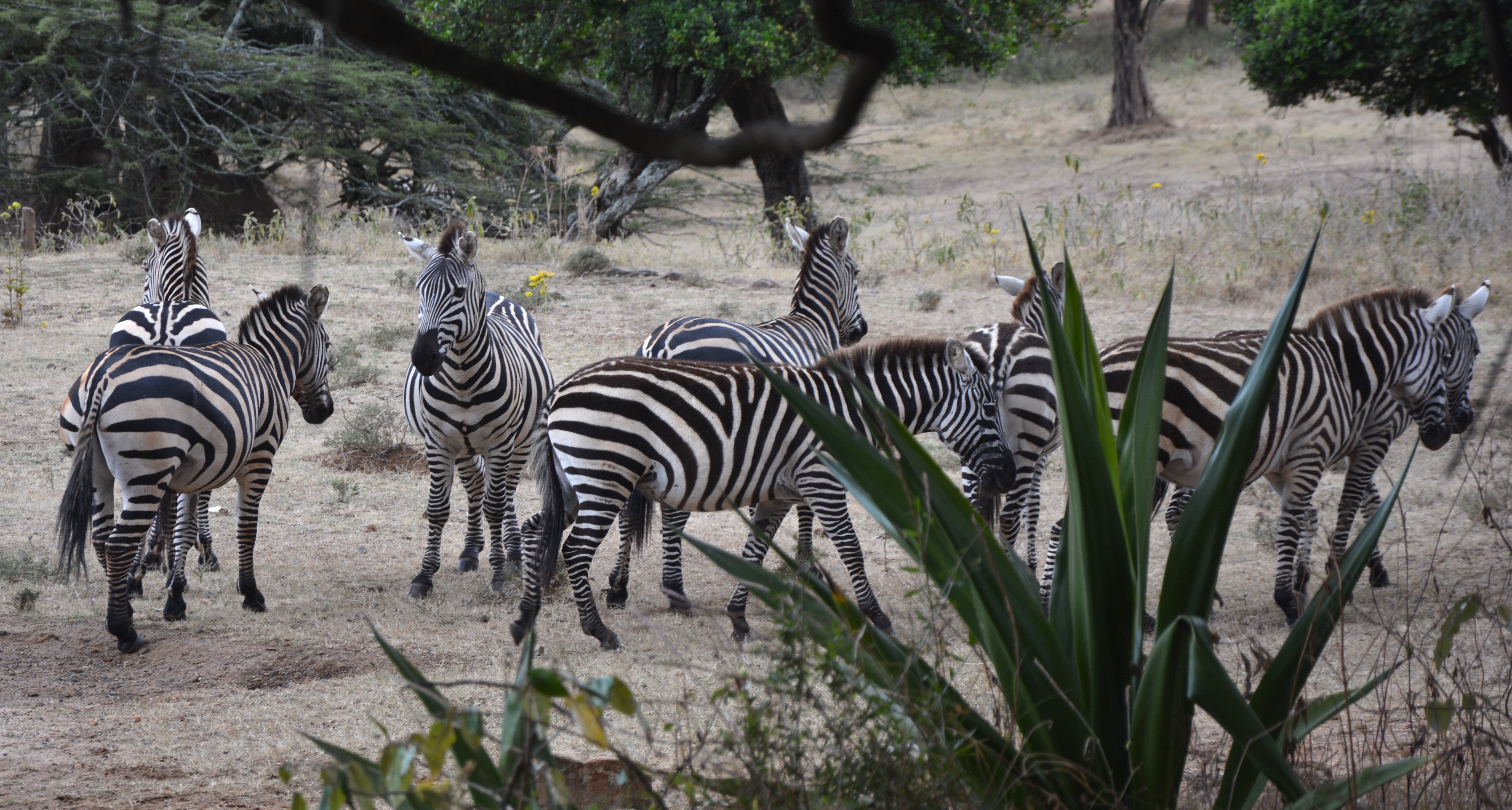
No other animal is quite like the zebra.

Outside town, a half hour walk away, is the Maralal Safari Lodge. It’s in a corner of the National Reserve. I stayed there once – when such places were affordable. Now it’s been taken over by the local authority and is four times my budget, but scruffier and less maintained than when I stayed a memorable night twenty years ago. I remember the hot bath, with water heated by an aromatic log fire outside my cabin, and waking in the morning to watch zebras outside my window.
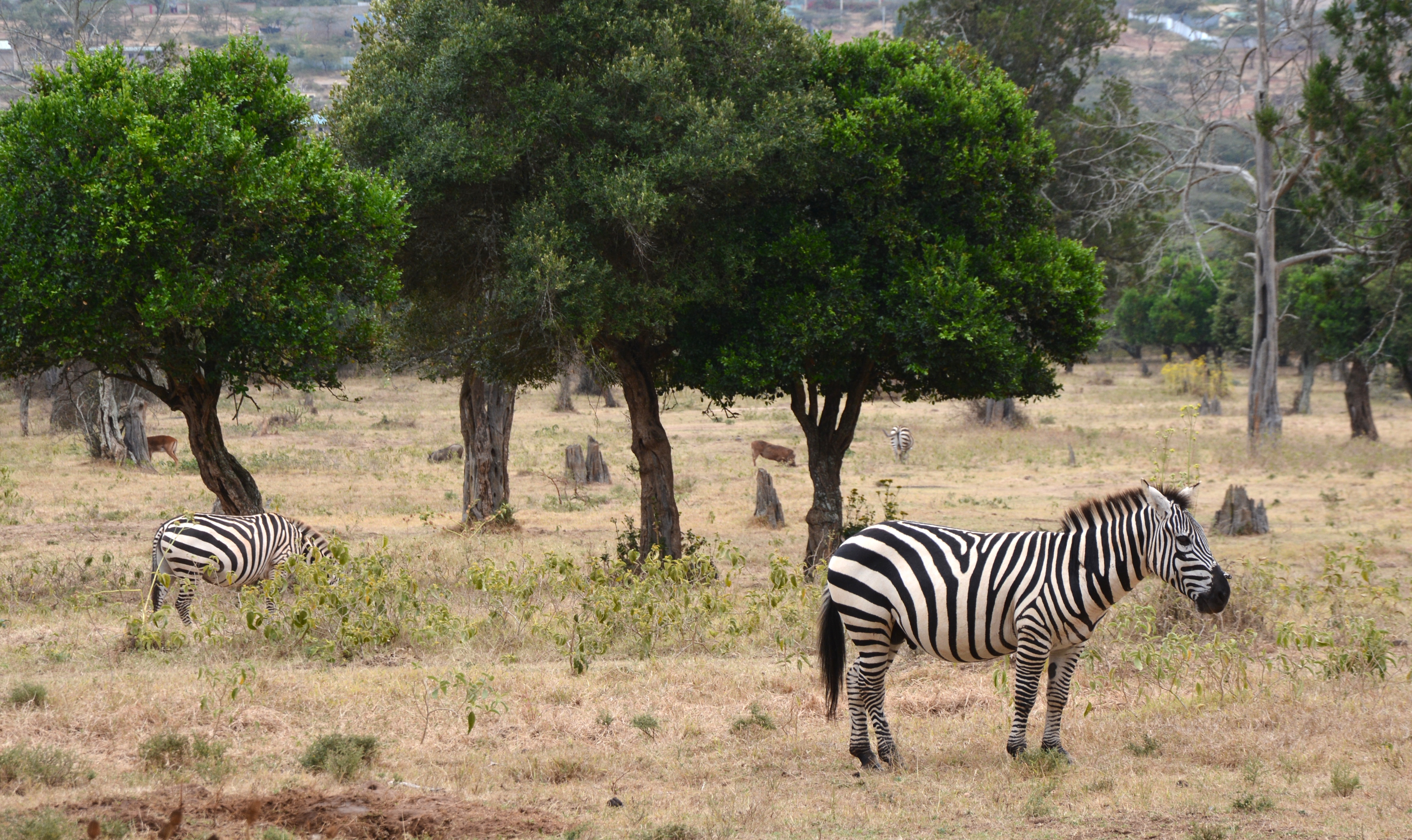
Nature’s sartorial joke?

The animals are still there around the lodge. £1.50 worth of spiced tea seemed a cheap rent to pay to sit – the only guest – on the verandah and gaze at many zebras, warthogs and antelopes grazing and cavorting a few yards away. Monkeys crept close, their eyes on the sugar packets on my table. Zebras are common here, I saw several yesterday as I rode that rough trail, and a few antelopes too. But game animals are almost all confined and corralled into fenced parks – except in the extreme regions like those to the north of here where they roam undisturbed by encroaching man, farming and an expanding populous. It’s rare that I see game animals unless I am on a public road that traverses a game park or natural reserve. I did see some ancient elephant shit on the road through the mountains yesterday. It was more common twenty years ago. Now all I am likely to see is chugging overloaded boda-bodas, numerous herds of thin cattle and marauding goats. The Chinese boda-boda has infiltrated every remote corner now with their fumes and noise and irritants non-existent two decades ago. 

*

Out in the remotest parts of the desert scrubland through which I rode to Maralal the track sides were carpeted with plastic. In town discarded plastic is like confetti after a wedding. It fills the gutters, dangles in hedges and thorn bushes, gets ploughed into fields, blows the grassless acres of muck between scrappy structures. It fills rivers and streams, ponds and lakes. Despite Kenya’s well-intentioned symbolic and early ban on plastic bags – well before most Western countries – all goods are still wrapped in plastic: every manufactured item from China, every loaf of Kleenex tissue bread, every drug and drink, even many a meal I am served comes under a coating of clingfilm, and all are addicted to soft drinks and fashionable bottled water. Now all this litter is joined by the current scourge of discarded face masks. No one is aware of the disaster of plastic pollution, of plastic poisoning soil for centuries to come, internally strangling their cattle, being imbibed into our bodies – and even now with minute granules being found in unborn foetuses. I ride along in a shower of plastic wrappings, bottles and packaging tossed from bus and car windows. Modern life in Africa.

*

Wikipedia says candidly of Maralal, in a pretty accurate put-down: ‘Accommodation is cheap and lacking any sophistication, but improved roads heading to Maralal from the south should be completed by 2019, at which time tourism opportunities might improve.’ 

It’s now 2021. The ‘improved’ road heading to Maralal from the south is still quite a stretch from town, slowly making its way north. Give it a year or two more and the wonder of 2019 might be witnessed. Tourism opportunities really need a few more attractions, however… It’s a dull town in the middle of nowhere.

*

The attraction of a roaring log fire in a large grate in my bedroom was enough enticement to ride an extra fifty miles more than I would have liked when I left Maralal on Tuesday. It made for a long day: a ride of over two hundred miles, a quarter of it on rough tracks and uncompleted ‘improved’ roads, back and forth over the Equator several times once again. But I love to stay in the old colonial bungalows at the Kaptagat Hotel and knew I would appreciate (as I am certainly doing as I write, beside a roaring log fire with a couple of bottles of Guinness, my bed ten feet away) the luxury of this ironically very basic accommodation, with the famous candlewick bedspreads and antique thick cream woollen blankets. It just makes me smile! At 8000 feet, 20 miles north of the waist of the world, I am content. And probably slightly pissed…

*

Such extremes exist in this part of the world. My ride south from Maralal was one of the most boring landscapes I have endured in Africa; a sort of high altitude tundra of scrubby vegetation and stunted, thorny trees. A heavily overcast sky did nothing to enliven the scene, brushing a grey pall over the endless high plain. ‘Beware of animals crossing’, said hand-painted signs here and there, causing me to watch for at least some antelopes. I know the more exotic game is behind fences now, but beyond numerous zebras and a few domesticated camels there wasn’t so much as a squirrel to be seen. Zebras were stained by the red dust and recent rains, their white stripes dulled, but even so they make a wonderful sight, even to eyes jaundiced by the grey light. If only zebras were as elegant as their cousins, the horse, they would be amongst the most striking animals on earth, but they have a dumpiness and rotundity that reduces the lithe form despite the stripes – every zebra with its individual tightly fitted, graphological coat. 

And later, one of the finest rides. Through the tall dark forests of dense conifers poured across the high mountains above the Rift Valley, a sweeping road climbing into airless heights, where the populous wrap themselves in thick coats and woolly hats. Ten miles away, often less, we can swelter in the depths of the valley; the road climbing to 9000 feet with occasional vistas revealed of hills rolling to the southern horizon or of the vast depths of the Rift misted far below. 

There’s a long-cut I could have taken; a trail that would have cut a hundred miles from my journey It’d have been more interesting, although rough riding for about fifty miles. As is often the way at the lower end of the Kerio Valley, I was warned off. The Pokot tribe is one of the more troublesome in Kenya, untamed and aggressive. Every time I get to their homelands, I am advised to avoid them; there are constant warnings of fighting and killings, ambushes and shootings. Tribal wars of old are replaced by banal cattle rustling. Raised on doubtless stirring tales of intertribal battles and skirmishes, maybe the exotic young men no longer have ways to prove their honour and virility, except by stealing cattle of their tribal neighbours. Recently, 17 young men shot each other to death along the dirt route I would have taken. Reckoning that locals know best, it seemed wise to accept their advice. I went the long way round, on mainly tarred roads. Impressive roads by any standards but ones I know well. 

*

Chilled by the altitude, I stop for chai on the curling way down from the heights. In a short half hour I will be grateful for the warmth of the valley bottom, stripping off my outer jacket that I’ve worn since leaving Maralal, despite the energetic parts of the rocky road. “Have you any snack?” I ask the shy young man who comes to serve me in a garden of a tea house obviously designed for the tourists who just aren’t here. “Any samosas?”

“We have sausage…” 

“OK, two sausages and African tea!”

He comes back a few moments later. “Tea with milk? Or black?” He seems to be persuading me to the black option. 

“No, white, please…”

“Will you wait? We have to milk.”

Most of the milky tea mixture he brings in a chrome teapot with no knob, was in the cow minutes ago, out at the back of the compound. Accompanying it are two faded chipolatas on a saucer. Living it up on a mountainside somewhere on the edge of the Rift Valley. Life’s colourful.

*

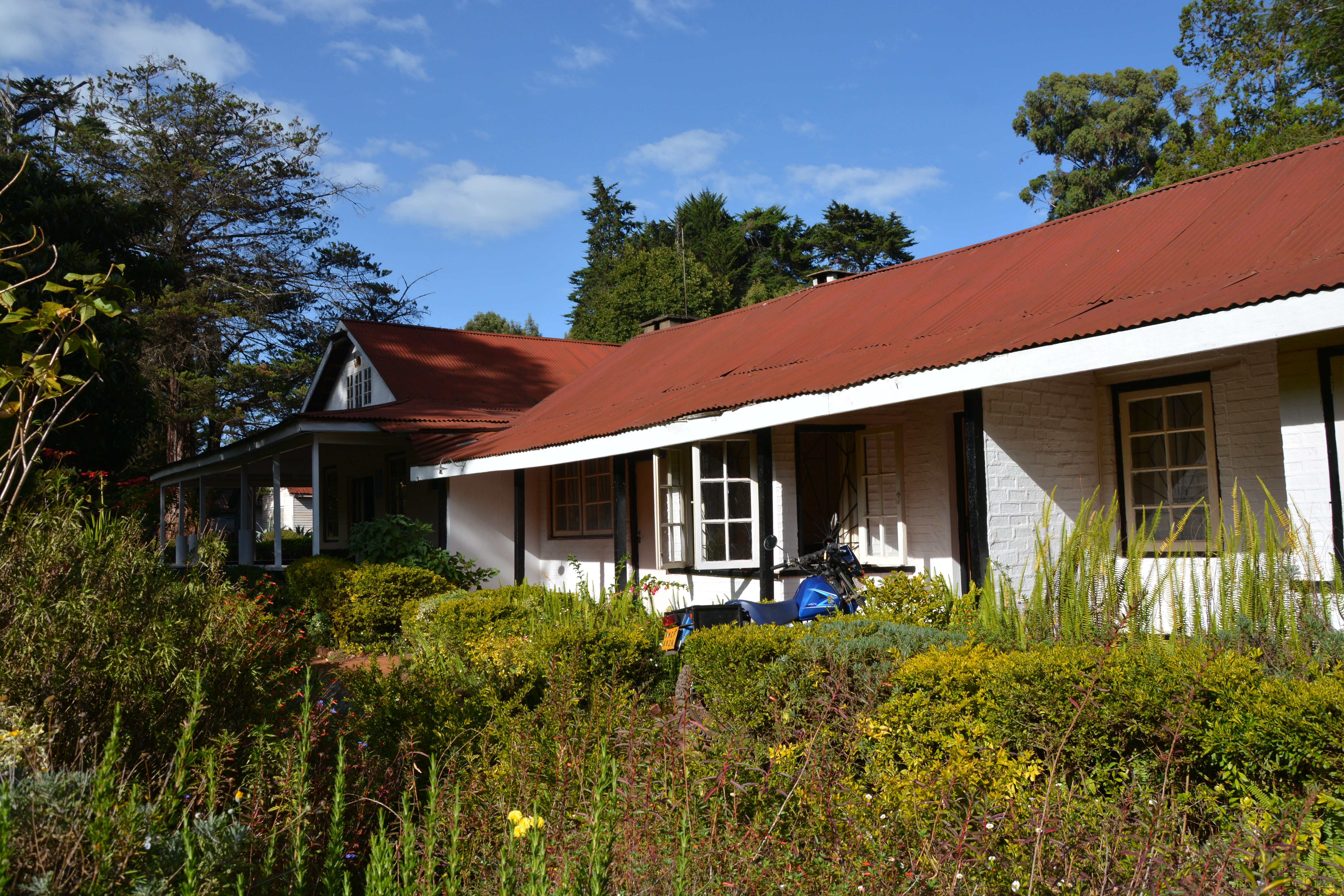
I feel as if I have slipped back to the 1950s, in the Kaptagat Hotel with its tin-roofed bungalows and old gardens. It’s charming, perhaps my favourite hotel. Hugged a welcome by the two Ellens, and welcomed by all the staff like an old friend – as their mzungu, since I am the first white tourist since I was here last year – I feel at home. Ellen tells me she is away to visit her mother tomorrow about 40 miles away, so I give her 200 bob. “Buy something for your mother, and it’ll help with the fare!” She’s very touched and deeply grateful for the £1.50, perhaps what she earns in a day’s work. “Oh, I will buy her sugar!” Ellen shows me that she has my ‘contact’ since I was here before, but I have changed my number since then, so we go through the formalities of ‘exchanging contacts’ – now an important African ritual. She hugs me goodnight as she’s off early tomorrow. I sit and eat the greens from her shamba by the log fire. 

Later, lying in bed, beneath the infamous candlewick, the room is lit by firelight. The hearth is almost thirty feet away in the huge room but it’s warm, there’s no wind tonight and it’s silent outside. Really, who could ask for more?

Only a good night’s sleep after a very long ride… 

*

Awash with chai I sit at the garden table beneath tall cedars swaying in the stiff wind. The weather is cool, but I am at 8000 feet. A bright yellow-breasted weaver bird cautiously jumps onto my breakfast plate, pushed across the small table. I remain absolutely still as it pecks at the crumbs of chips. It’s already 10, I slept until nine this morning under the candlewick with the fire glow across the room. Soon I’ll set off. I’m only going as far as Kessup once again, to see William and the village for a couple of nights on the way home to Kitale. This wasn’t quite the trip I had anticipated; I didn’t get to the coast and I rode long, long days in some quite tedious landscapes. But today I know, I will make up for that as I take – yet again – the steep trail down the wall of the Rift. It’ll be warmer too. Time to leave the weaver bird, back on the table, even as I write, and face another day in Africa. 

*
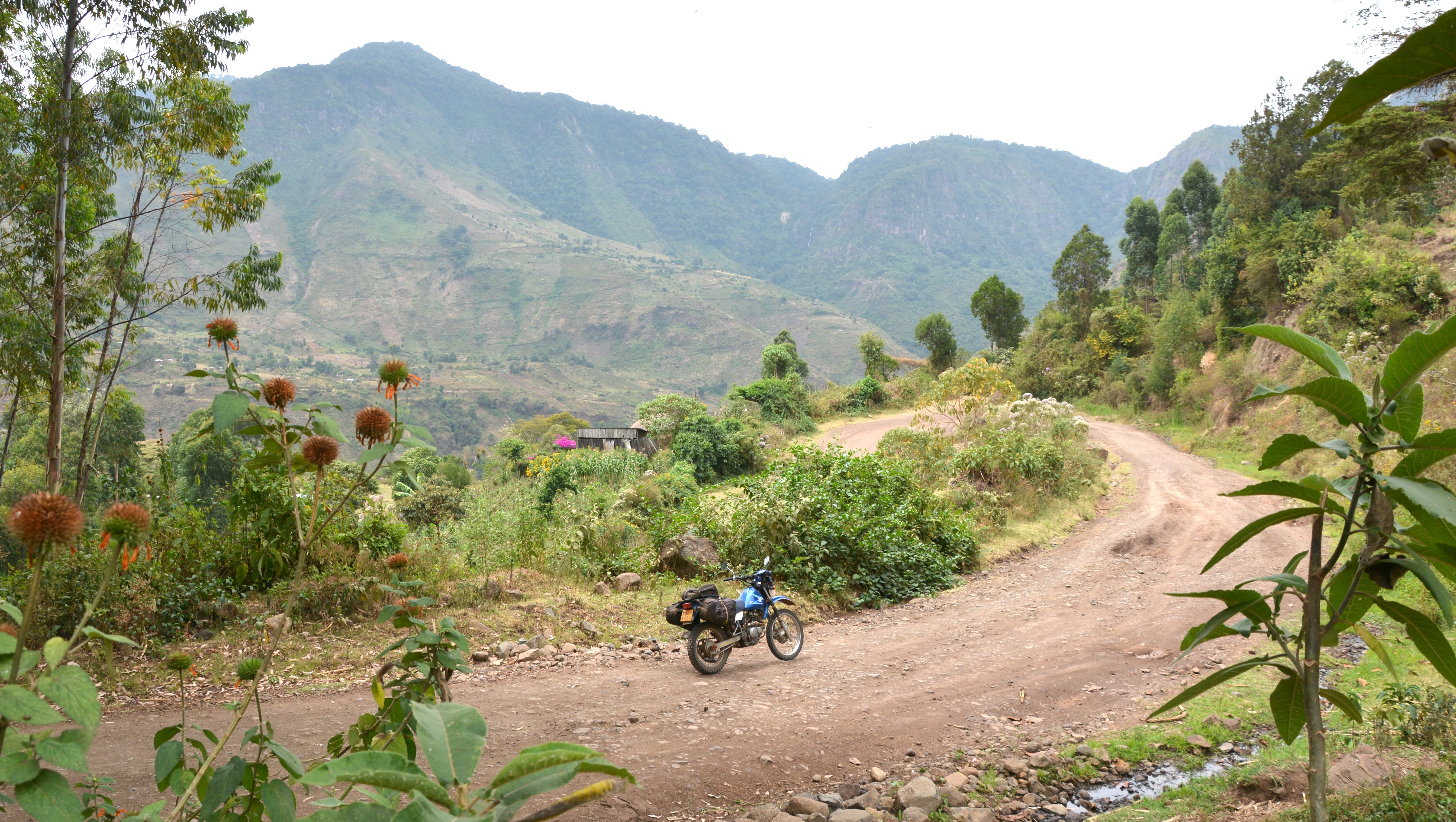
The winding road down the escarpment. My favourite.

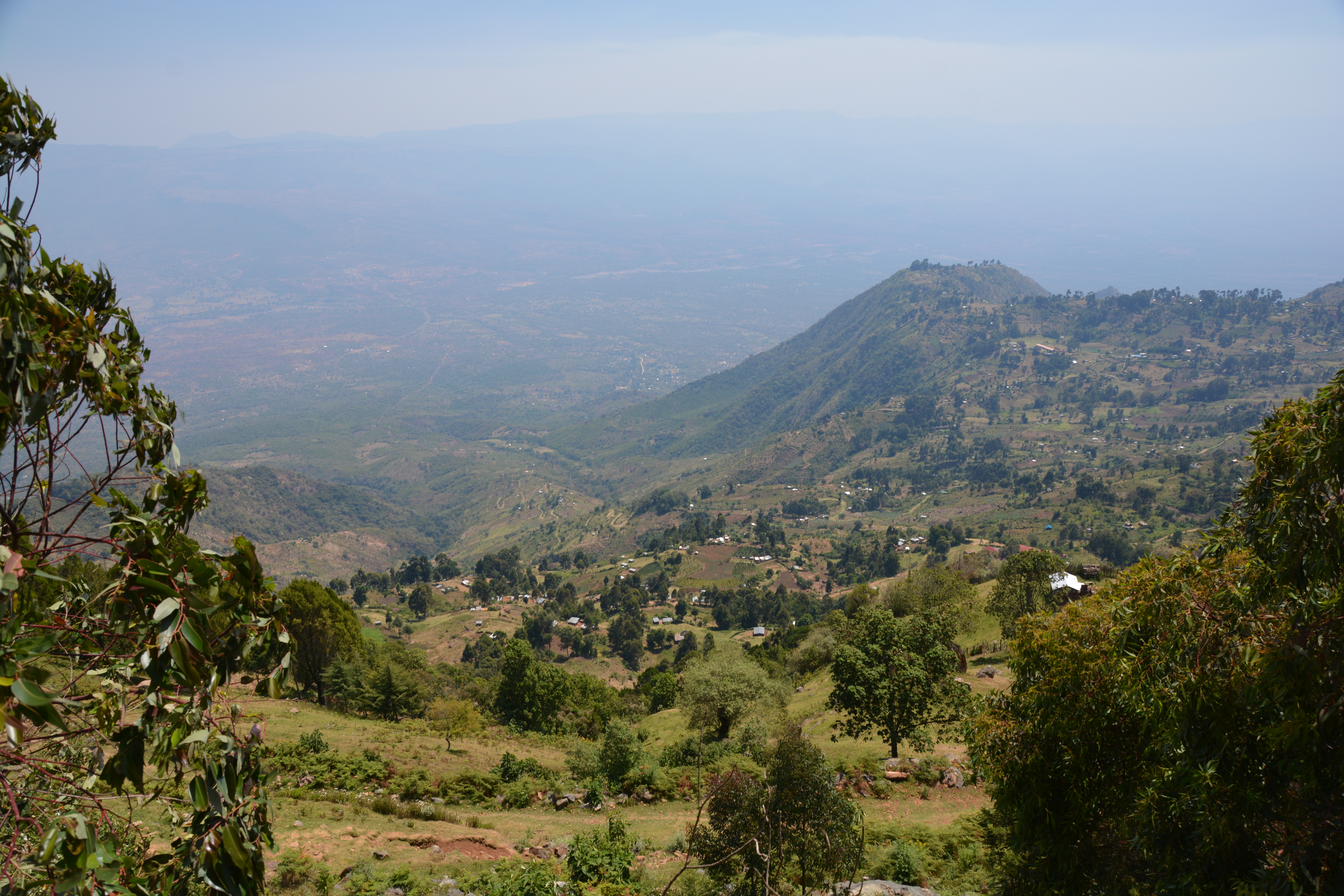
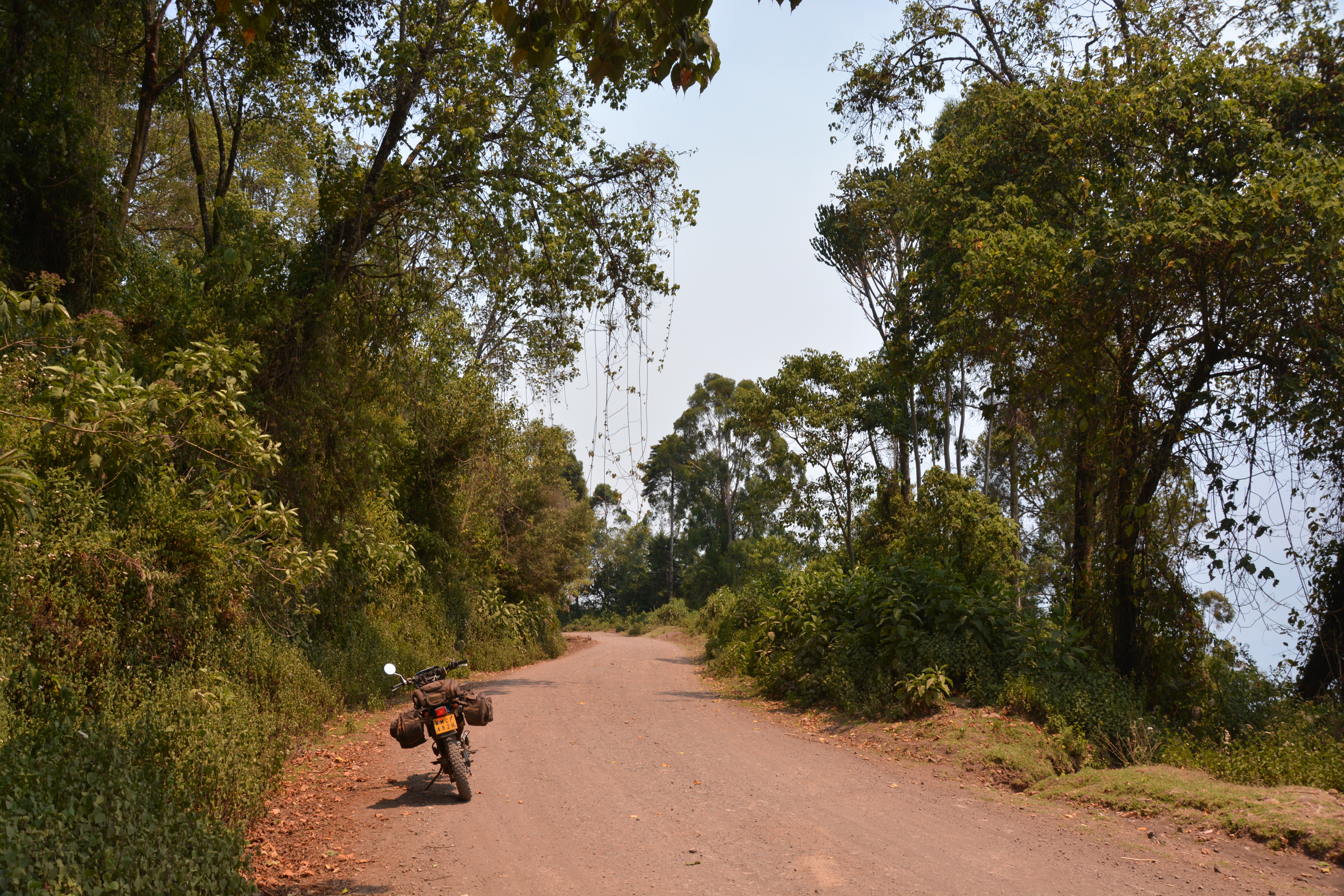
The old Kaptagat Hotel is an equal attraction to that steep trail into the Kerio Valley, the one that drops 5184 feet in 12 miles and 18 hairpin bends of rock and dust. I can’t resist returning to Kessup this way, even if it means I must chug and curl my way back up almost another 3000 feet to reach the Kessup plateau. It’s such fun even though I must have taken this trail at least a dozen times, up or down. I love the space and freedom, the great steamed vistas across this vast valley, the bottom hazed and indistinct today. I ride down at not even 25 miles an hour, savouring the views, the freshness of the air – as it warms up with every metre I descend – the joy of being in this giant landscape. The road’s been graded a bit, so it’s not quite so bumpy some of the time, but there are still plenty of obstacles to make for a diverting journey. At last I am on the white sandy track in the depths of the valley, which I must follow several miles to the tar road that sweeps and curves through the valley bottom amongst the finest mangoes and apiaries. It’s hot here, the wind hitting my face as if from a hot fan as I ride. I’ve removed my outer jacket now, that I had donned on the chilly heights as I rode to Nyaru at almost 9000 feet. 
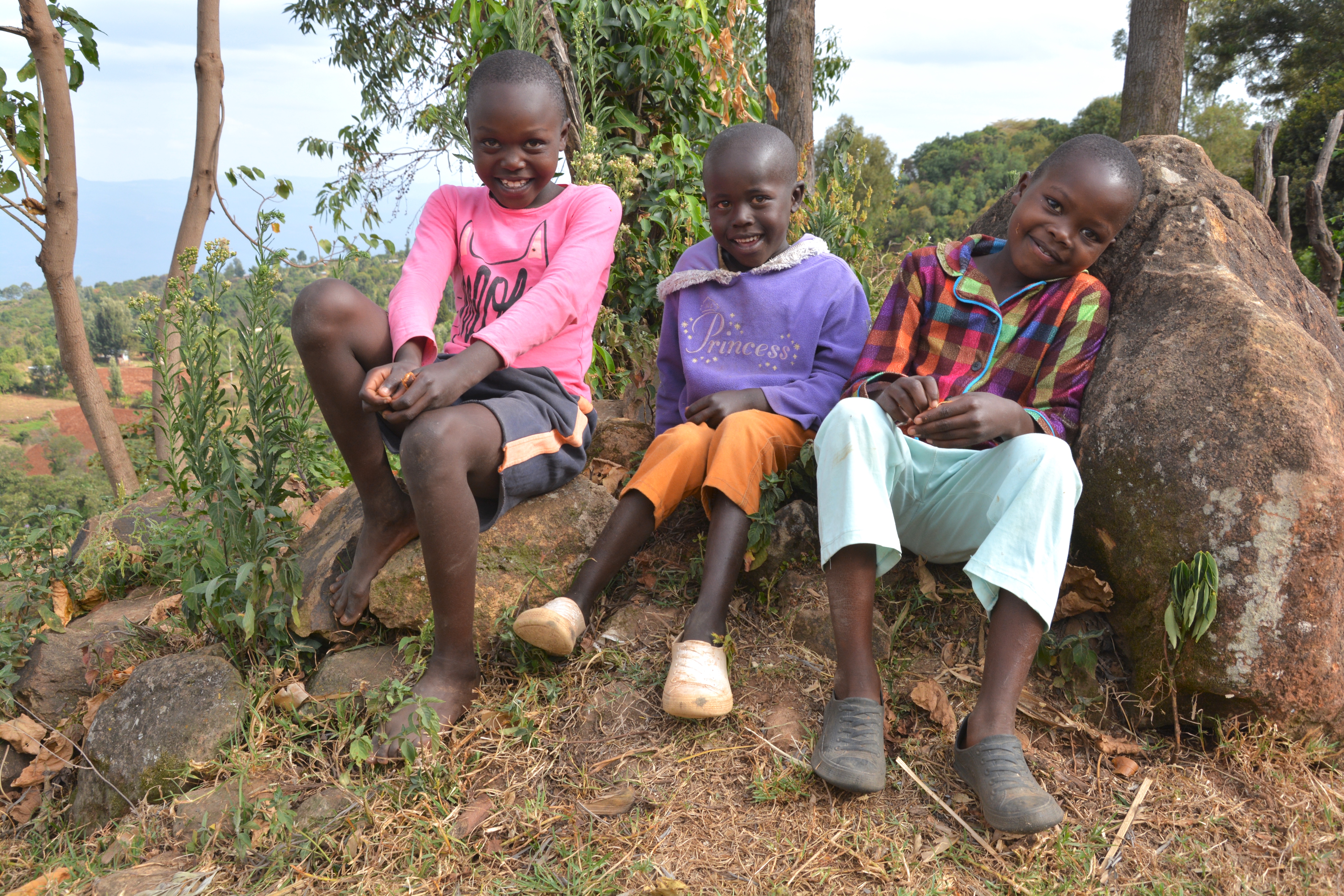
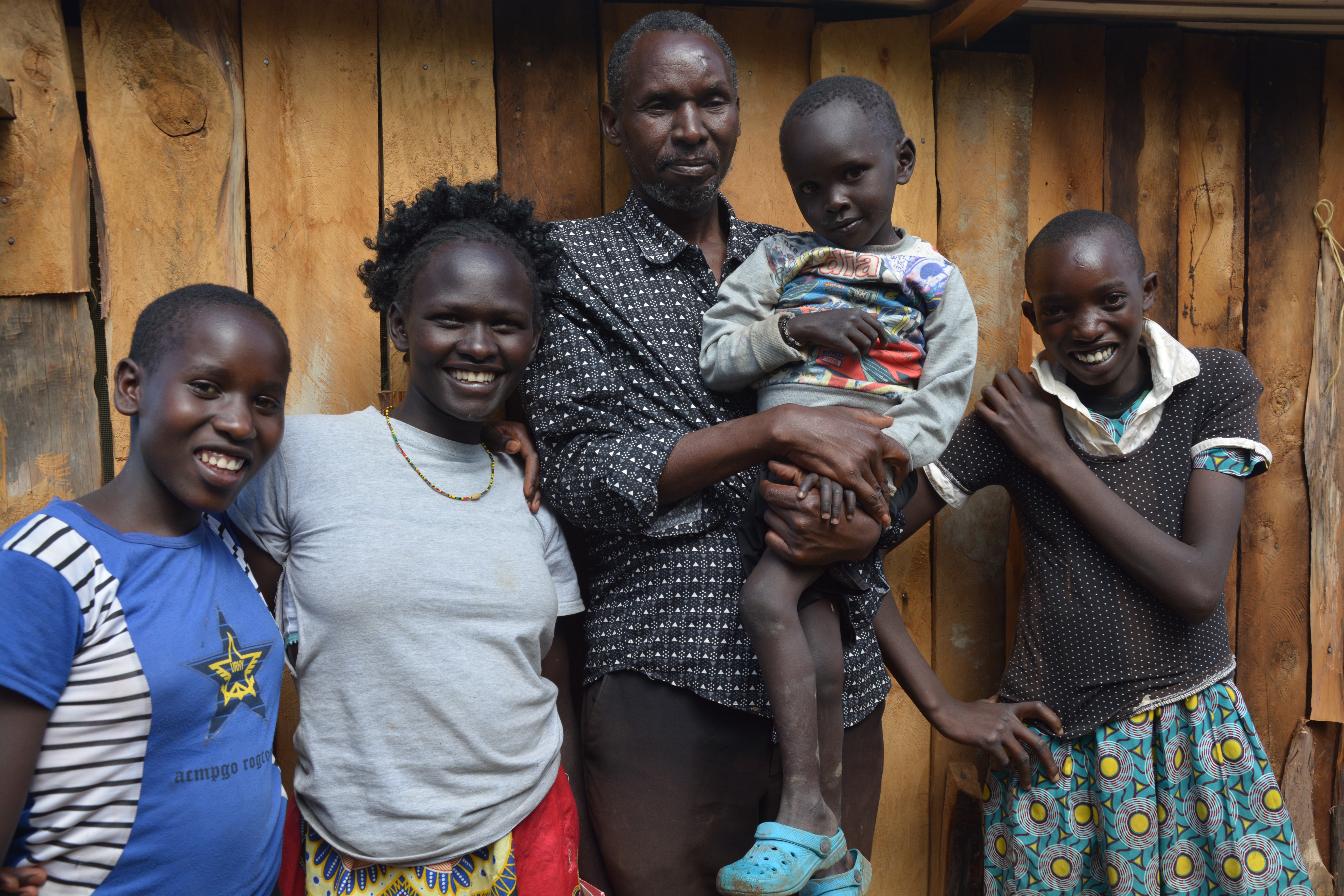
Gloria, Meshak and Joy.

I turn into the tar road. Children are coming from schools. African children, even small ones, walk miles to and from school. Cotton uniforms in their school colours, shorts and skirts and shirts, schoolbags over their shoulders. They wave excitedly and chorus, “Mzungu, Mzungu!” as I pass. I avoid a hundred goats and cows wandering the tar, a small child – not at school – standing with a herding stick watching me pass. 

And so up the winding road that climbs the valley walls, up to Kessup, ‘my’ village after all these visits. A welcome from the young women who run the guest house: my key is ready; a blanket has been put in my room to replace the concrete block heaviness and density of the bed covers. How can anyone sleep under these thick heavy duvets? It’s the best part of 30 degrees here.

*

Later, William joins me. I slipped past his shamba without his noticing, so I’ve had a chance for a brief, quiet rest. But it’s beer time now and supper is being prepared. Tonight, late as usual, with William hopping up and down in irritation that the meal is later than promised – for he likes his punctuality, does William. The cook prepares greens that William bought when he heard I was on my way, rice and mbuzi – goat meat. It’s tender for once. This cook is the best they’ve had here. But it’s a meal for a family, as always. So we call the three girls who work here, Vicky, Gladys and Millicent, to eat with us. They are respectful, disciplined young women, who don’t earn much and often supplement their very basic rations with returns from the few diners. William and I enjoy their company. One thing about William is that he drinks his beers, eats his supper and then leaves, without ceremony! It suits me, for I too can retire to my room and an early night. As I close my door I am aware, rather than see, the enormous valley right in front of me, where I stand on this ledge above the 3000 foot drop into darkness. A dark yawning void right at my feet. The Great Rift Valley of Africa.

*
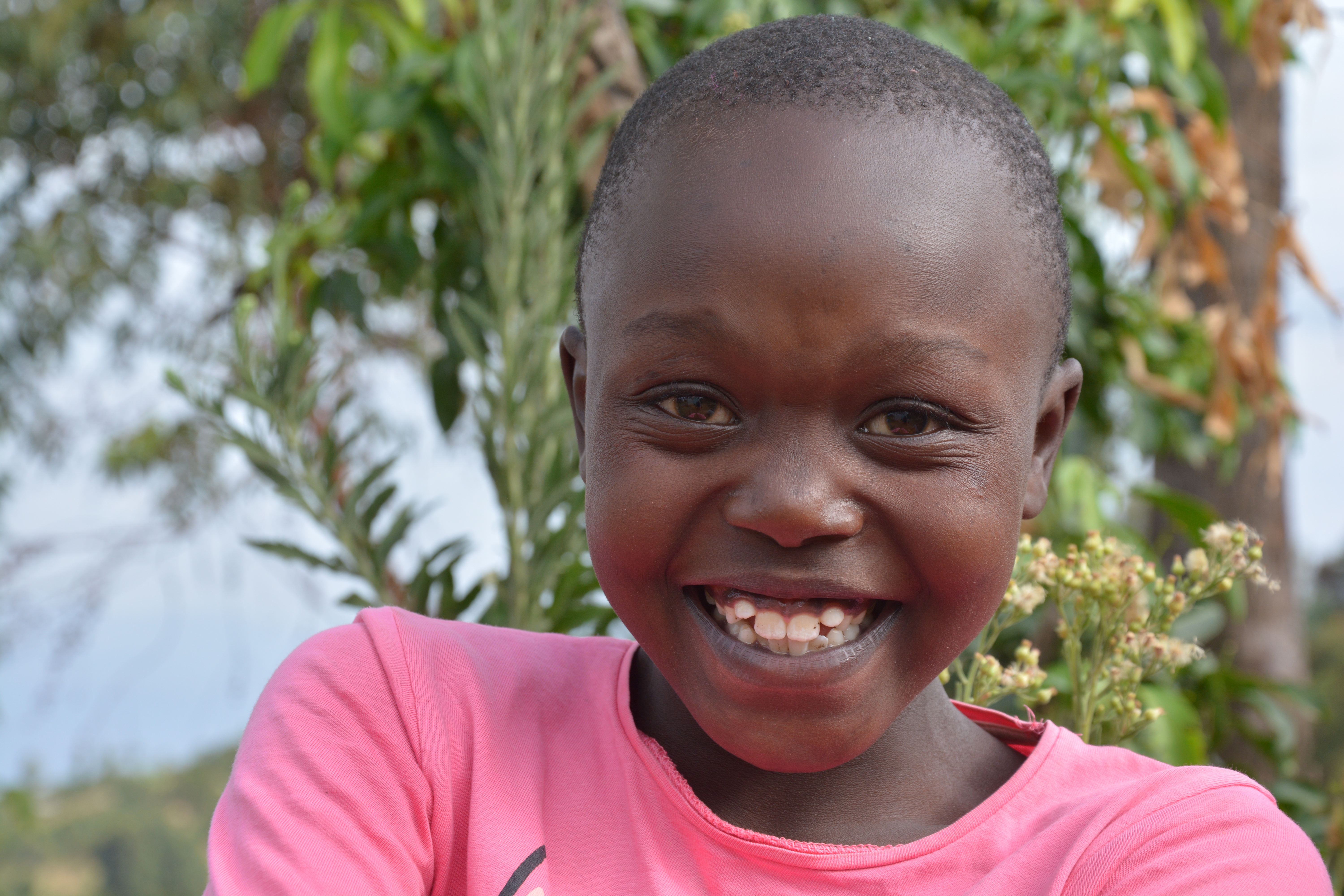
Gloria Chemuti

“We will walk a long way today!” declares William as I finish my breakfast pancake and omelette at a plastic table in the garden with the view in front of us. A huge raptor circles and cries above us. “We will go where I told you last time. To a village right along the edge of the valley, over there.” He points into the distance to the north. “You see that hill? The long one, and another beside it? We will go to the hill beyond that. If we make it…” he qualifies the prospect in case I’m not up to it. We both enjoy these long rambles. William is a very sociable man and loves to meet his neighbours, and the mzungu in tow adds a certain exoticness to his introductions. I mean, HE has volunteered today’s destination. He could have suggested we walk in the village just below.

Joy Cherop

We set out on what will prove to be about ten kilometres in each direction. We will walk for five hours on the red dirt tracks that wander through everyone’s shambas on the hillsides. We’ll meet dozens of people, exchange pleasantries and explain who I am to those that don’t already recognise me; we’ll be accompanied by calls of, “Mzunguuuu!” from hundreds of children, many of whom are so far away I can’t even see them. I wonder what would happen if I shouted, “Black man! Black man!” at every black-skinned person I met in Devon? Not that there’d BE many, but I’d probably be arrested and accused of prejudice! Here it’s my constant companion: “Mzungu! Mzunguuuu!” And I love it! It’s so endearing from these delightful, excited children. How could I resent it?

*

Evans (an oddly popular name) is planting vegetables by hand, in a shockingly large field. I’d be intimidated by the task, but for Evans it’s normal. He’s probably grateful for the opportunity – and the quarter acre. We fist bump and start a conversation; William is talking to Evan’s friend. We talk, inevitably, about the one subject every African knows about my homeland: the Premier League. Even if you don’t think much of football, this is the ONE thing the world knows about England. It may not be exactly English any more – the players often African in fact or multinational; the owners Russian oligarchs, Saudi billionaires, business investors – but from the point of view of much of the world it’s our greatest export – financially and culturally. Evans is amazed at my (guessed) prices of a ticket to a big game; at the price of land in England; that we have unemployed people and beggars: “Eh, I though unemployment was only in Africa! You have unemployed in Europe?” People here are shockingly unaware that we share many of the same economic and social problems. When you see the fiction they watch on TV you may understand why. It’s all glitz, glamour and consumption. The American Dream – one of the biggest fantasies ever created. 

*

William and I walk on, meeting and greeting. Fortunately, he enjoys this as much as I do. “The goodness with you is, you enjoy the same things.” We’re comfortable company for a day like this, he answers my questions openly, and he’s here for the exercise, conversation and the people we meet, all of whom know him on the first half of today’s journey. He’s respected for his honest and affable manner.
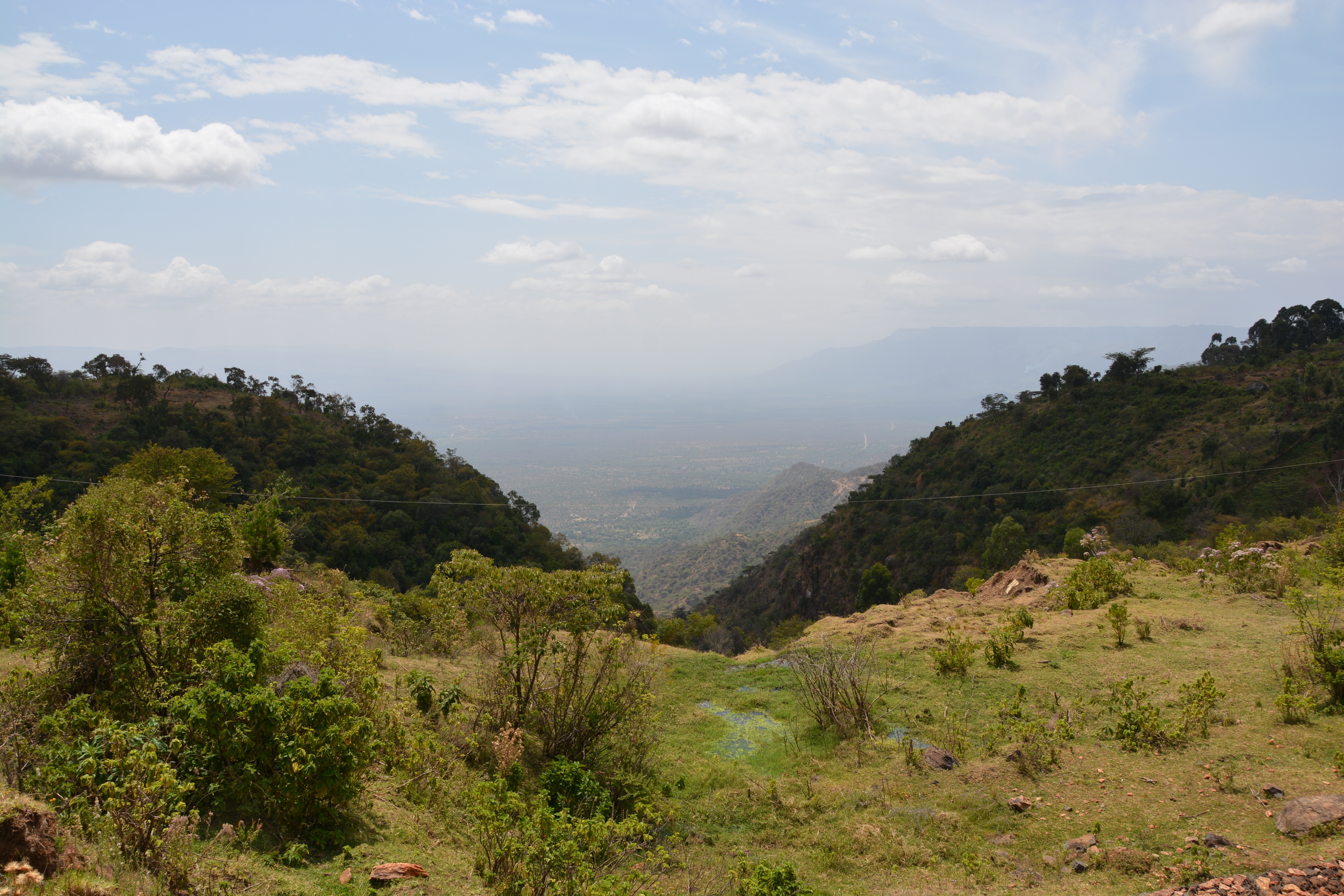
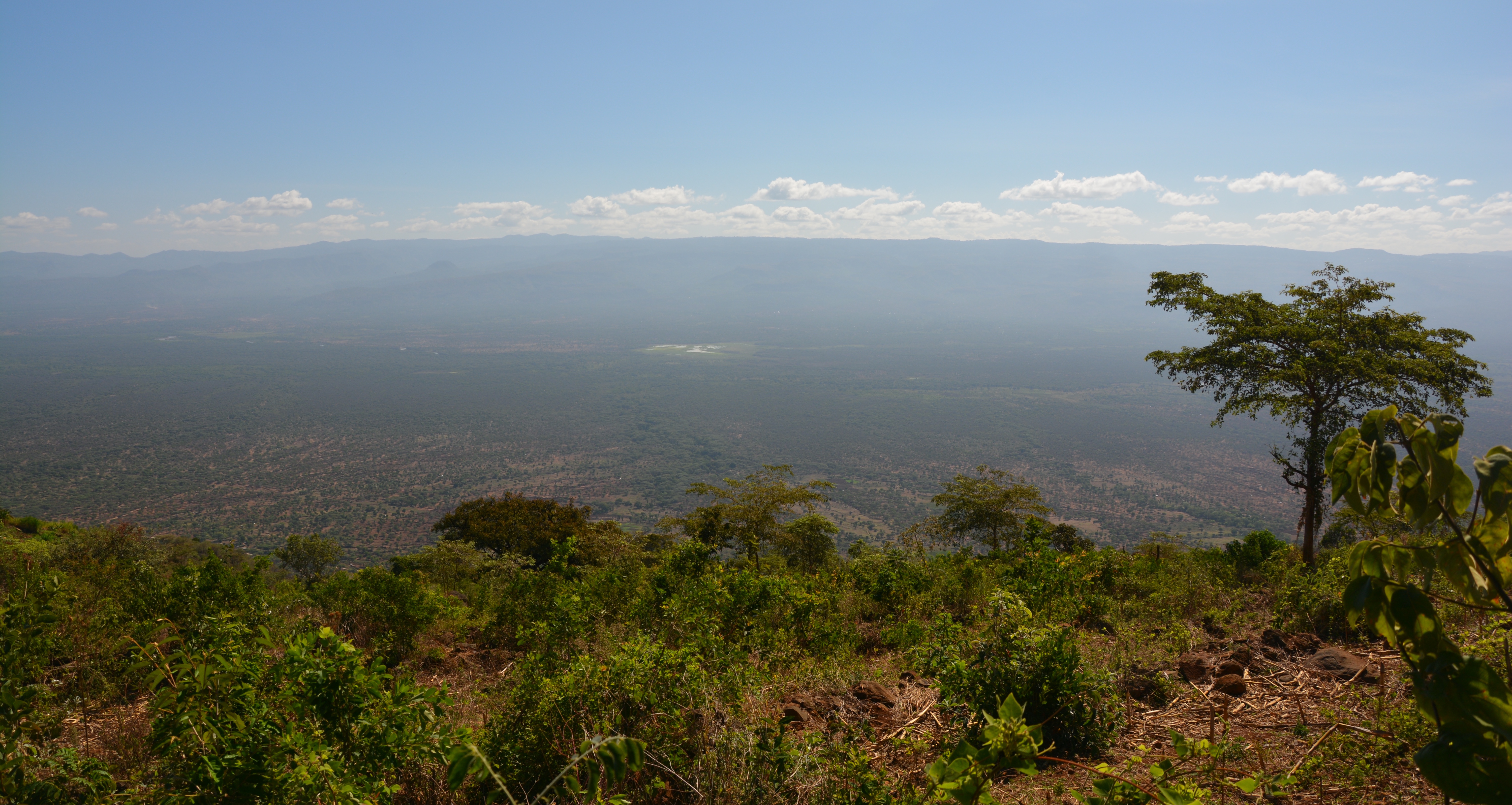
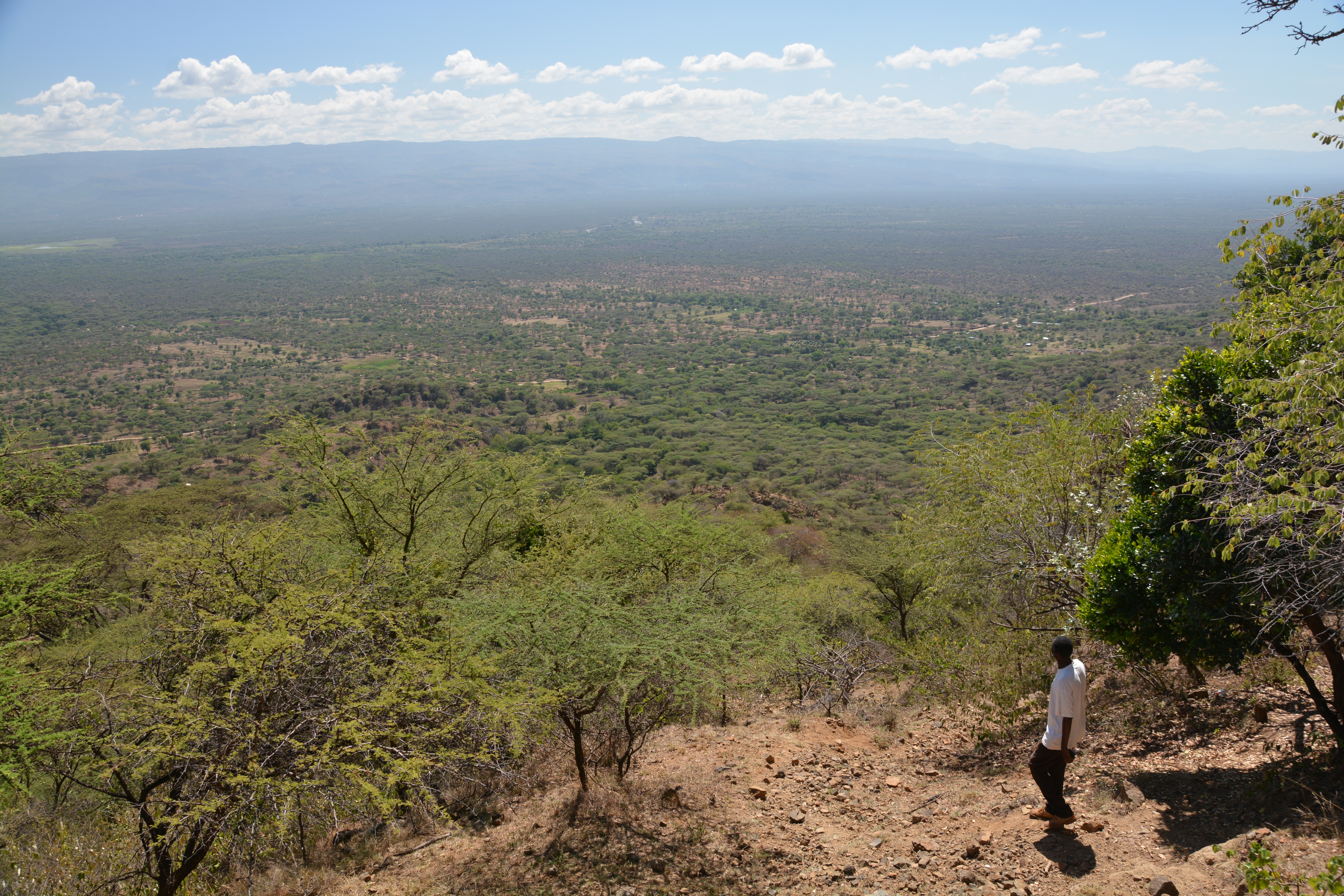
Kerio Valley from near Siroch..

The distant village of Siroch is our destination. It’s about 10 kilometres along the escarpment, I guess; it takes two and a half hours to walk there. The sun’s shining from high above, here at the middle of the planet; the day’s warm but a breeze tempers the heat a bit. It’s gentle walking, quite easy, along the hillocks and dips of the plateau with the 1000 foot of steepness to the rim of the valley above and the 2700 drop always visible to our right as we walk northwards. Half way, we can look up and see the viewpoint on the very edge of the valley that is revealed so dramatically as you drive out of the town of Iten. It’s where I first saw this geological wonder twenty years ago. I never expected then, as I rode down the curls and turns past Kessup, that I’d come to be so familiar with it. 
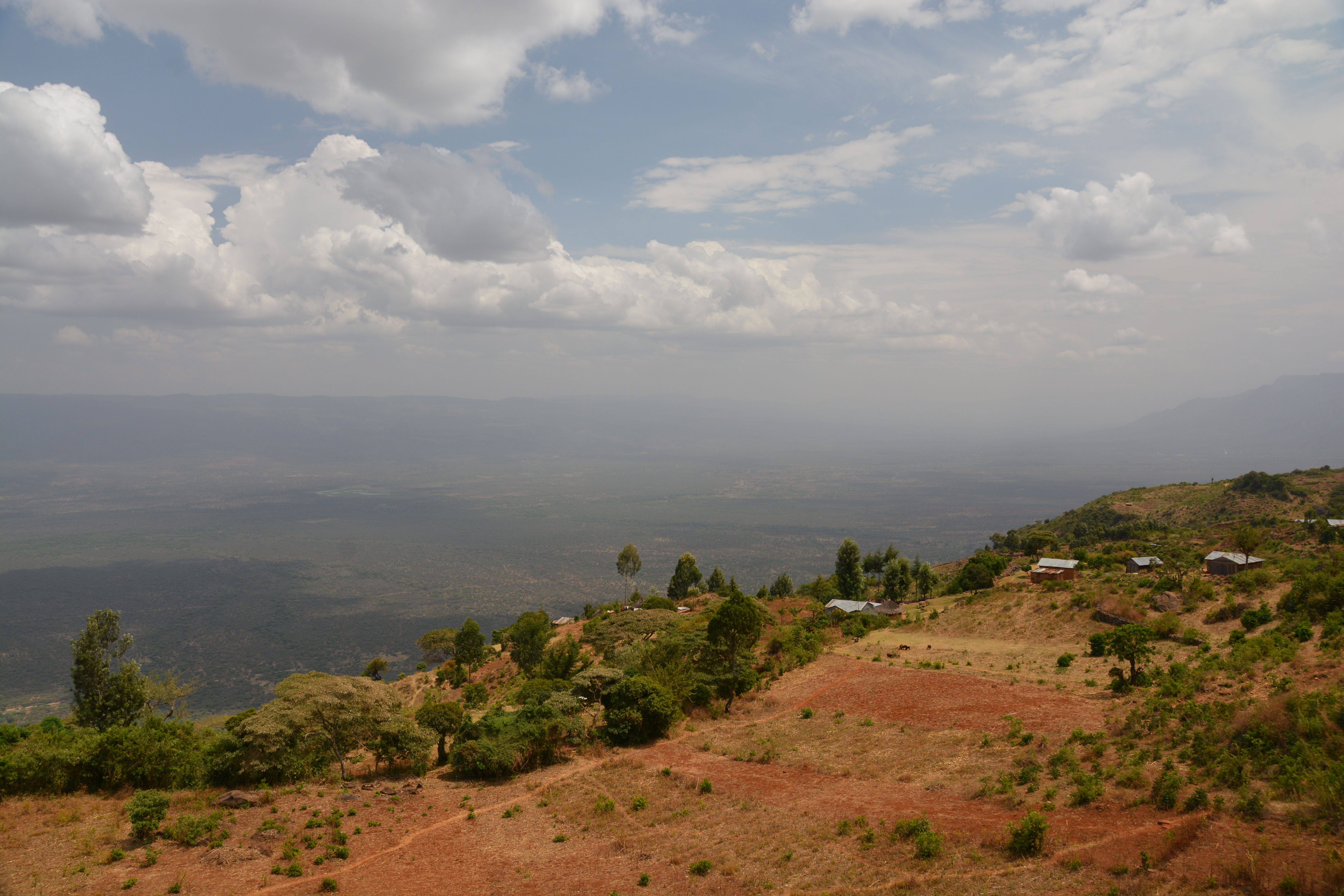
Kerio Valley

At Siroch we lounge on dry grass beneath a shady tree at the village centre and drink sweet milky tea. William eats mandazi, a universal Kenyan snack, a sort of sweet dough fried in oil. It’s a bit like eating fried Kleenex with sugar, so I just break off a corner. I can feel the energy flooding back with the sugary tea. We’ve walked two and a half hours in the sun, although there’re clouds about today, casting black shadows on the valley floor far below. In the evening they will build to thunder and rain on the highlands above us, but we will be spared all but some light showers on the plateau. It does make for dramatic slate skies though. The sky is always so prominent in Africa. 

We relax and sip the reviving hot tea from brown china mugs. William, always sociable, chatters with some village folk who’ve gathered. He’s not known here, we’re six miles from his community, but there are always relations to be made out; he’s a half sister, by his father’s second wife, married somewhere up on the hill above. I loll back and gaze around, greeting and smiling at people who come to stare at a rare mzungu. There’s a ring of tin shacks, all closed up. One has a crudely painted sign over the rough wooden door: ‘Kinyozi’ – that’s a hair salon. They’re everywhere, women weaving creations from ‘flame-resistant and dandruff free’ fake hair braids from glossy plastic packets made in China. Behind me is a dirty wooden shack with weld-mesh over the front opening and a rickety wooden step beneath the window. It’s a small kiosk, and the step is for the schoolchildren who now begin to appear. They can buy sweets one at a time for a few pennies. 

The schoolchildren are neatly dressed – or they were when they left home in the morning, but children being children, their shirts hang out and their olive green cotton shorts and skirts and woollen jumpers are now dusty and ill-adjusted. There’s a mzungu resting in their village square! It’s incredible, something wonderful! They are so excited. Many are fearful and run back, giggling. Others stand in groups around the rough, scrubby area and just stare at the apparition. A young man, with whom William has found some familial relationship, however distant, and is sitting talking with him, says, “You are the first mzungu they’ve ever seen! That’s why they are frightened. No mzungus ever come here to Siroch!” 

I pull my notebook from my pocket to remember this moment. As I scribble, the children creep closer, whispering amongst themselves, more confident now my attention is diverted. Now they are all about me, peering at the illegible scribbles, looking closely at my white hands and hairy arms, blue eyes and extraordinary difference. Scruffy dusty kids, they are endlessly endearing, as they gather bravely, green shorts and skirts, assorted plastic sandals, dusty knees, now laughing amongst themselves. 

A young teacher joins us and greets me. This is my opportunity to actually talk to the many children in a tight circle around me. The neat teacher translates for them. They believe him: he’s their teacher.

“I am just the same as you!” I say. “Only I have pink skin and you have brown.” I show them my white palms. The teacher translates. The braver ones now touch my hands and stroke the hairs on my arms. “I have blue eyes and you have brown ones, but if you cut my skin, I bleed red blood just like you! I have two legs, two arms, ears… All just the same as you. It’s like there are brown cows and white cows! But we are still all cows!” The children laugh at the concept but they have seen that this strange being laughs with them too.

“Some of these children will not sleep today! They will be dreaming! It will go in the Guinness Book of Records, the day a mzungu came to their village!” laughs William as we walk away down the red hill. A group of children follows us and I tell William about the childhood game from home: ‘Grandmother’s Footsteps’. Every time I turn round to grin at the children just behind us, they stop in awe and stare. I love these moments. It’s why I come back to Kessup time and again, to be at one with these villagers. 
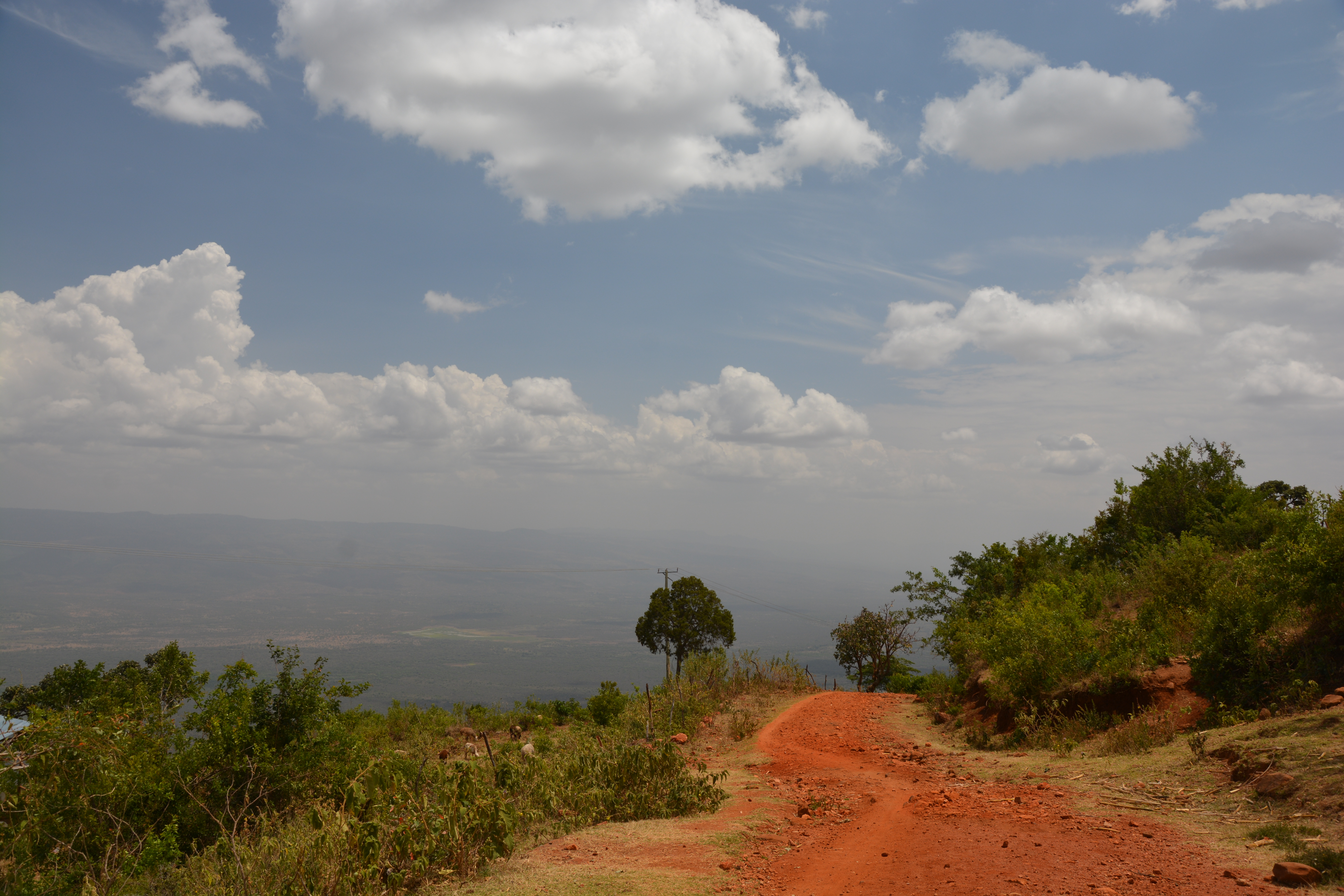
The winding road home again to Kessup, alongside the huge valley.

Finally, the last children peel off to their homes amongst the greenery and we walk on in peace, the yawning valley now on our left as we walk south again. The views are more impressive this way, for the valley is now prominent, whereas when we walked to Siroch, we were walking with the escarpment in view. Now there’s a change in the light: the valley is full of bright light but up above the dark cliffs on our right heavy clouds are gathering. After we pass the Iten viewpoint, silhouetted on the cliff edge far above, we begin to hear thunder rolling about the highlands. “But it won’t rain here,” says William, who understands the topography of his birthplace. “Maybe just a light shower later.” He’s right. The wind whips up a bit, cooling the air, but it’s close now, oppressive and humid as the sun is blotted out by the slate clouds. But we make it home dry and William goes to attend to his cows. We’ll  meet again at five. I end up with a cold shower from a useless unit that sprays the walls of the small bathroom, not me, and leaks everywhere. I daren’t touch the shower head; they are frequently live with 240 volts, twisted wires bound with insulating tape going straight into the shower head.

William takes his four Tuskers and I mistakenly take my Tusker and Guinness, then add another bottle of Guinness. All before the chicken, greens and chapatis arrive. Thankfully, William heads off home as soon as he’s eaten as usual. I retire to bed, tripping over the carpet, rather out of control. I’ve walked five solid hours on a hot day and am now boozed. But I can sleep for almost twelve hours as it’s only 8.20.

*

On Friday we walk the other way, south. “The goodness is, we like to walk!” It’s very hot again – I explain the meaning of ‘close’, for that’s what it is. There’s been rain up above the escarpment and it’s broiling down here. What it’s like in the huge valley below, I can’t imagine. “We won’t walk so far. We will look for the mead, and then come back at one and relax!” William likes his timekeeping and exact programme. “I was trained by British!” It turns out to be almost exactly one o’clock when we turn into the garden bar on the hill. We’ve been looking for mead for some visits now. I want to try it. This is a productive beekeeping region, especially the hot valley below, and there’s a highly potent local brew made from the honey. It’s fermented with the wood of some tree and is extremely alcoholic. I’ve been warned several times not to take more than a glass or I will be drunk. But we fail again to find it. “Come on Sunday, it will be there,” we are told. But I must be back in Kitale by Saturday evening. “Next time you are coming, we will find it,” says William, “but we must buy your green vegey-tables…” 

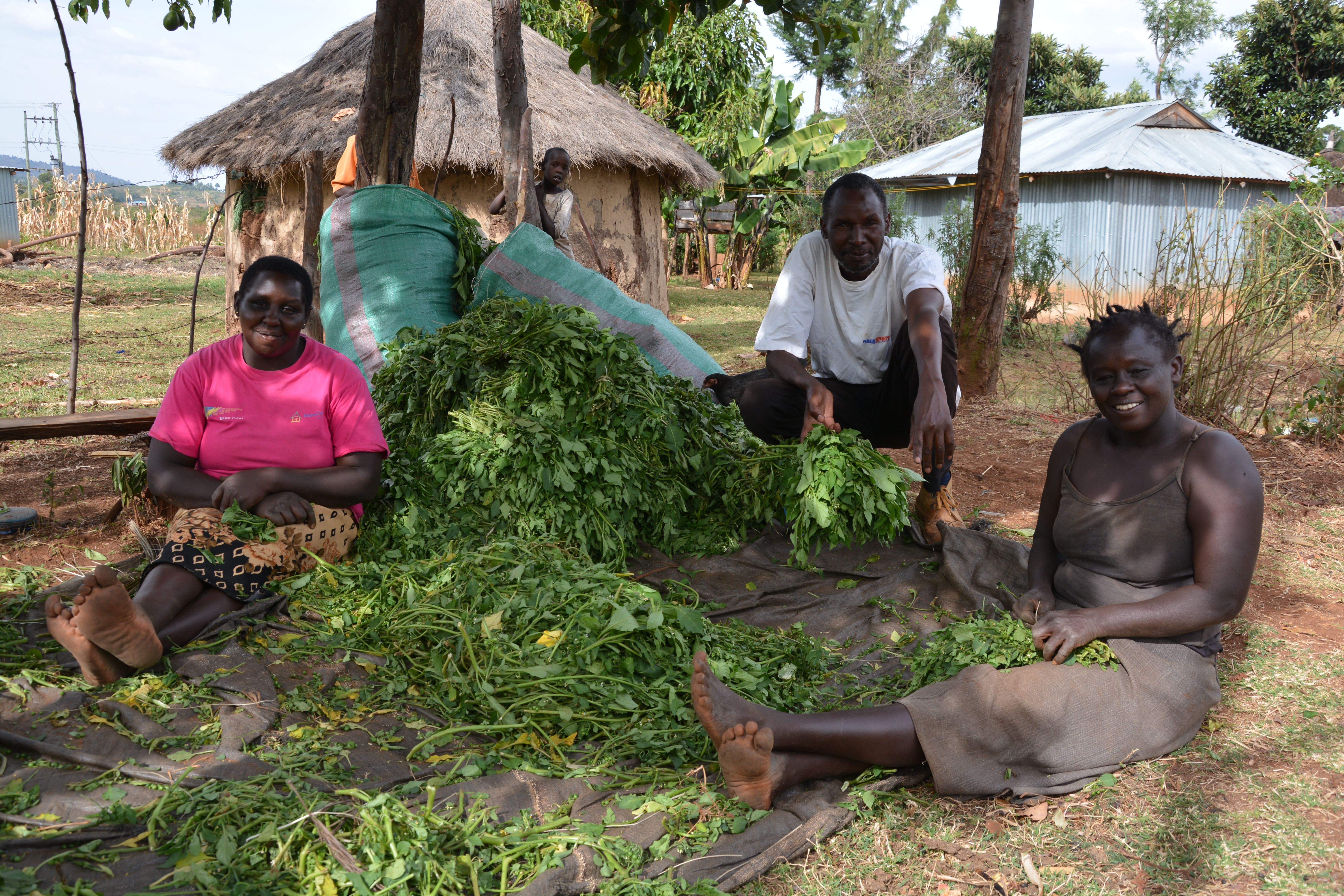
We buy fifty bobs’ worth of saga, a small-leafed, rich green vegetable from William’s mother on her farm as we pass. About 80, William reckons, his mother still works her shamba. “She owns all this land,” he says, waving his hand across the hillside. “She’s one of the richest old women in the area. She still works hard and you can see she is still strong. But she will be afraid of you! Some of our old people – they don’t know better – they think all white people are carrying Corona. They believe you invented it, you whites! It’s what the media told us in the beginning to frighten us. It was irresponsible. They don’t know it’s worldwide. But it’s only some old people who believe this. Most younger people here in Kessup, they say, oh, Corona is gone now!” And on our walk I shake hands with dozens. There’s been no virus here. “Eat your greens!” William tells everyone. “There will be no Corona!” It’s a slight corruption of my advice that staying fit and healthy – as most are here, where there are not even overweight people, let alone obesity; no diabetes; no ‘underlying health issues’ (you tend to die first); everyone lives outdoors and there’s plentiful supply of Vitamin D – is the best way to reduce the dangers of the virus. But William’s mother keeps her distance and gives me only a perfunctory greeting this year, although she knows me well enough by now.

*

Once again we sit in a small village centre drinking tea with some locals, and the inevitable elderly woman who wants me to marry her. It’s a big joke. As she leaves I call, “See you at the wedding!” She walks away laughing loudly. The group around us joins in the familiar joke. 

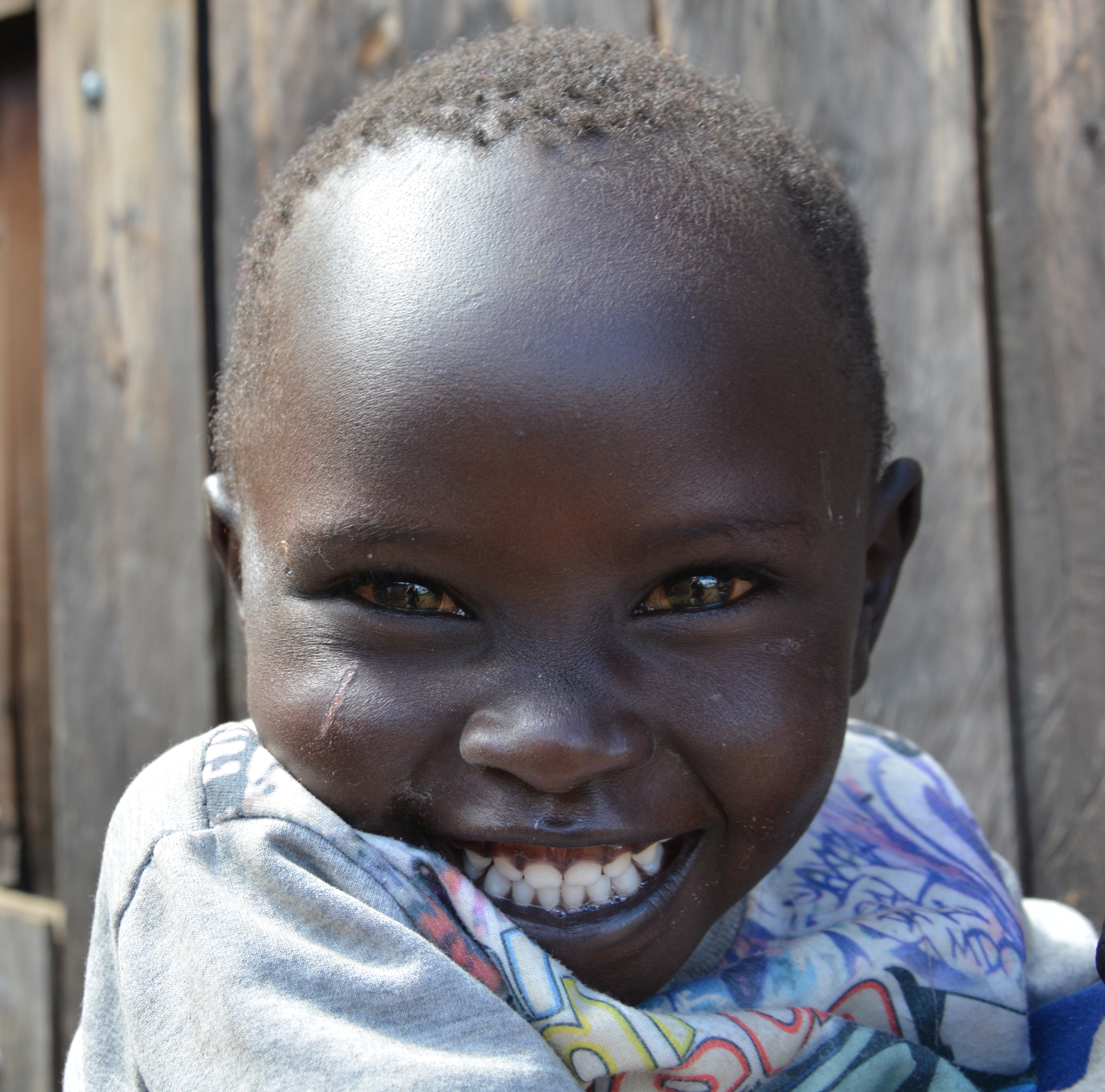
It’s one o’clock again and the primary school across the way, with its many broken windows and stained paint, closes for the day. Small children, about four, five and six, come pouring out shouting and clamouring at their release. Then the mzungu is spotted and pandemonium breaks out – again.  It’s a real-life mzungu! These children aren’t afraid like those in Siroch yesterday. They’ve heard about these strange beings, maybe even seen one or two at a distance. But this one is real and here! They soon see that I am a friendly white giant and I walk along with a Pied Piper crew behind me, as they walk home to their compounds. They are brave enough to come and touch my hands, rub the hairy arms, and one small boy, the last to reach his home, even holds my hand for the last few hundred yards. Oh, what a joy it is to make such delightful little people happy just by being here! Abel has no front teeth and a grubby face, but a smile to light up the darkest day. Kyle has beads of sweat all over his face and the dirtiest nose and some little girls giggle and laugh their way home with us, endlessly cheeky, respectful and enchanting. 
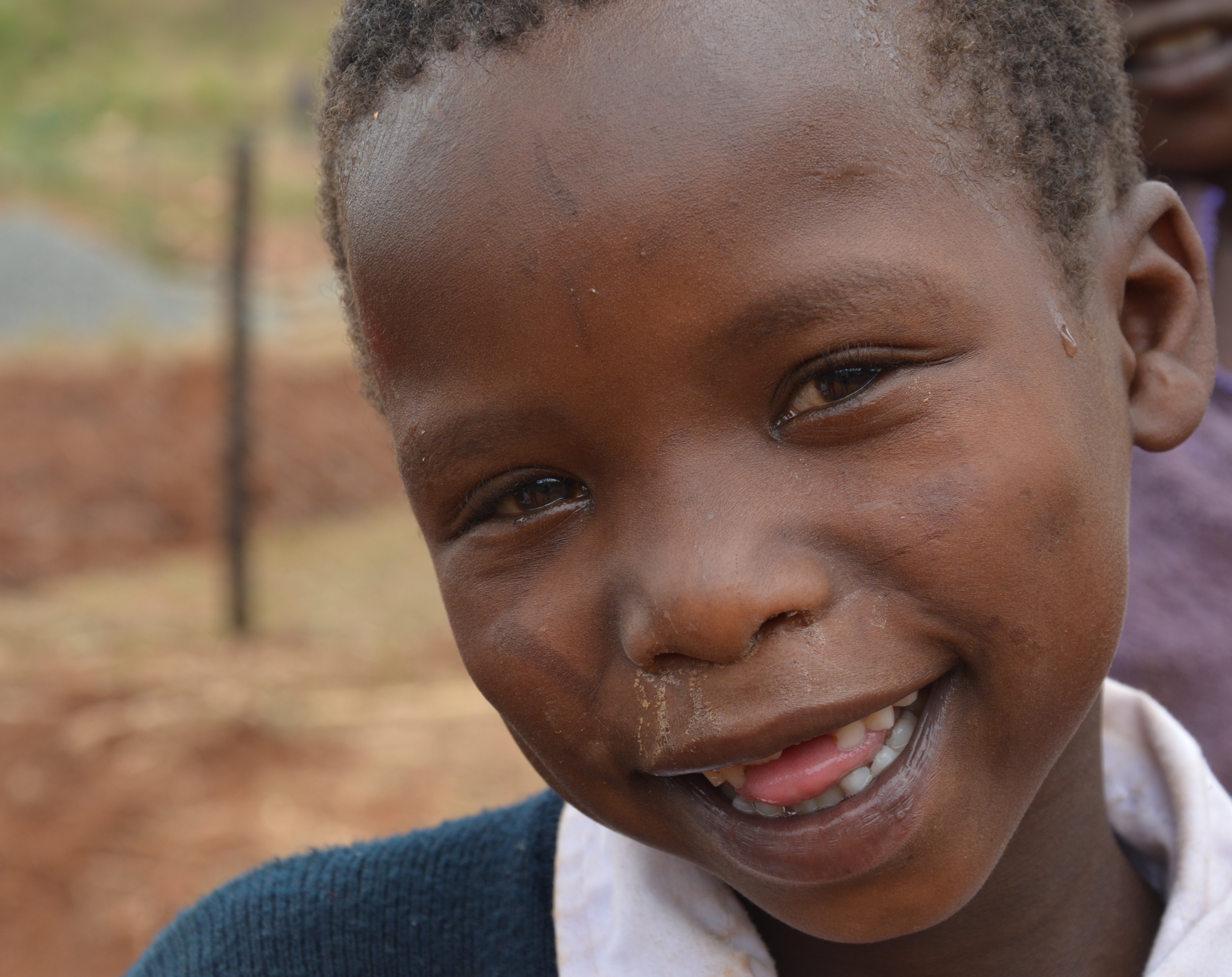
Abel

*

We fall in step with a woman whom William seems to know a little. She’s in her late 30s, I’d judge. She’s a bucket of avocados and a large green sack of vegetables. She’s marketing them sort of door to door, William explains. “Life is hard in Africa,” he says. He wonders why she didn’t go to school, because she’s obviously intelligent and should find better work than this. He quizzes her. It’s the usual story: she got pregnant at a very young age and dropped out of school, now she sells vegetables for a few bob, making enough – perhaps – for her rent and to feed her child. So many schoolgirl pregnancies, blighting lives. So common here. And the fathers long disappeared with no responsibility. Later, as we relax over a beer, a group of youngish men are raucously drunk at 2.00pm. I say to William, “And I bet their wives are at home working on the shambas, washing,  cooking, looking after the children; and look at them…” One is so drunk he’s passed out on the grass nearby. Two of them will get on their boda-bodas and carry children several at a time home from afternoon school, and one has brought his car… They are all drinking wirigi, the locally distilled alcohol, or KK – Kenya Kane spirit, cheaper by far than beer and ten times more alcoholic. I’ve seen it so often: African men drinking to get drunk, leaving their women and families to care for themselves. 

*

So, on Saturday, two weeks and 1500 miles since I set out on my safari, home to Kitale once more, my base in East Africa, where I am always so warmly welcome. I’ve returned in time for us to have a small celebration on Sunday – a barbecue, and I buy two bottles of sweet red wine that Adelight and the girls enjoy as a treat. On Monday, Marion will leave the house and enrol for her studies in hospitality at a college way down at Voi, on the road that frightened me enough to turn back last week. She’s a bright young woman, but needs stimulation. Maybe this will be just what she needs, for all the young people have lost a year to virus restrictions. Marion achieved a government sponsorship. She is quiet but intelligent; she writes well. 

I go to town with Adelight to buy the things we need on Sunday for our party. Suddenly, there’s a violent rainstorm. This is an unsettled period, not really seasonal – but what are seasons now, with Climate Change? Nothing is certain any more, but when the weather alters in this largely subsistence economy, it has more effect on livelihoods and opportunities than it has in the rich countries, which largely wish these changes on this continent by their profligacy. Africa produces the least greenhouse gases of any part of the planet, and suffers disproportionately from their harm. Africans used to know and understand their weather lore. Not any more… 
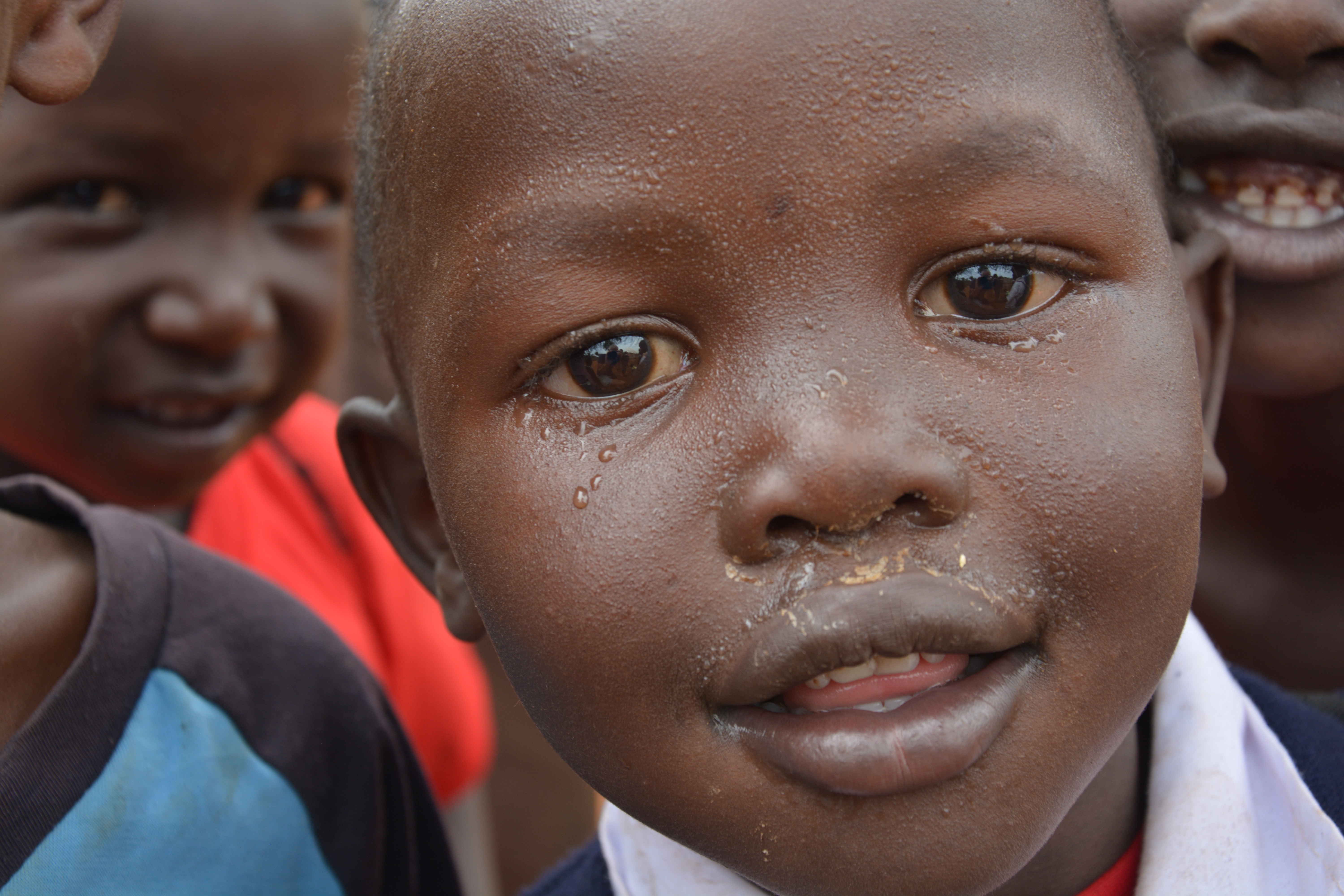
Kyle – what is HIS future..?

EPISODE SIX. RIFTS AND MOUNTAINS. DISCRETION GETS THE BETTER OF OBSTINACY. January 30 – February 5th


I am on a journey. An adventure of sorts. As I set off, I am apprehensive but just a bit excited too. I love this state. I have been here so many times and for me it is the breath of life – curiosity about what will happen, where I will go, who I will meet. There’s no strict plan, just the idea of riding all the very long way down to the Kenyan coast, down to the Indian Ocean, days away. This year, there’s an added zest: I am the only tourist anyone’s seen, the only escapee from the Infected North (as people here see it).

As I write, the heat of a log fire tingles on my sunburned face. I’m on the road, heading to unknowns. It’s not exactly crossing uncharted territory – just down the African roads to the east – but the future’s hidden to me. It’s the thrill of Unknown Tomorrows to which I have always responded on almost 150 journeys out of my home country. 

*

The Kaptagat Hotel – faded colonial charm

The Kaptagat Hotel, a bit of (very) faded colonial elegance. You can imagine that it was once an exclusively white preserve, the only black skins serving the beer and pink gins. It’s got that sort of feel about it. Each year that I visit it gets just a trifle more dowdy – but I like that. I mean, where did I last sleep beneath a Candlewick bedspread – except here at the old Kaptagat Hotel with its corrugated-roofed bungalows in fine mature gardens, laid out by some colonial gardener sick for home. On which note: I never get homesick, well, I wouldn’t would I? But the single impulse I have found that brings momentary homesickness, or perhaps it’s just a sort of nostalgia, is irises – the flower. And outside my room they bloom in the European climate of Kaptagat. Irises always bring me a sense of childhood summers; a sentimentality for a time – probably imaginary – that I will never recapture; a sensation of age creeping up inexorably. Irises! Huh! 

*

I have repeatedly written that going back in Africa is important. It’s so nice to be recognised and welcomed back, before I have hardly stepped on the paths of the old hotel. Mind you, Ellen, the manager of the few faded rooms, says I am the FIRST foreign tourist to stay here for a WHOLE YEAR. And the previous foreign tourist? ME, a year ago! I am a very rare species just now. 

Ellen brings a pan of charcoal and a bucket of corn husks to start an fragrant log fire in the old brick grate. She waits awhile, with her counterpart, another Ellen, both of whom hug me a welcome, and adds big cedar logs to my blaze. It’s probably the reason I come back here every year. To sleep in a room with a blazing log fire, just a few miles north of the Equator at 8000 feet. It impossible to overstate the luxury, even though, for most, it might seem humble, the place a trifle scruffy.

Later, the Ellens bring my supper. Tonight I’ve ordered a simple meal, just some ugali with green vegetables from Ellen’s own shamba and a couple of hardboiled eggs. I had shamba avocados again for lunch before leaving Kitale, as it’s only two and a half hours riding to get to Kaptagat, on roads I know by now. 

*

Within a few miles of the middle of the planet, up here at 8000 feet, mornings in Kaptagat are cold, much too chilly to ride the motorbike until the sun climbs some way up the dramatically blue sky. But here I am close also to the western rim of the Rift Valley and I know that by lunchtime I will be steaming – in helmet, jacket, gloves, goggles, motocross trousers and boots – at the bottom of the great chasm. It’s impossible to dress for a day like this on the bike. I will be up and down through climatic zones all day long, for I am going to cross the valley and climb far above its eastern rim. It’s one of the eternal fascinations of Kenya where the Rift is so pronounced and visible. 

A garden full of birds and birdsong and the soughing of a stiff breeze, perhaps coming up out of the valley. Tiny birds, little bigger than wrens that are so small they can balance on a blade of grass where the panga has missed it on the lawns and bend it down to pick the seeds. Raptors high above between the tall coniferous trees and bright little yellow weaver birds, their nests hanging from the ends of boughs above my room, settle briefly on my breakfast table under a thatched cover. 

*

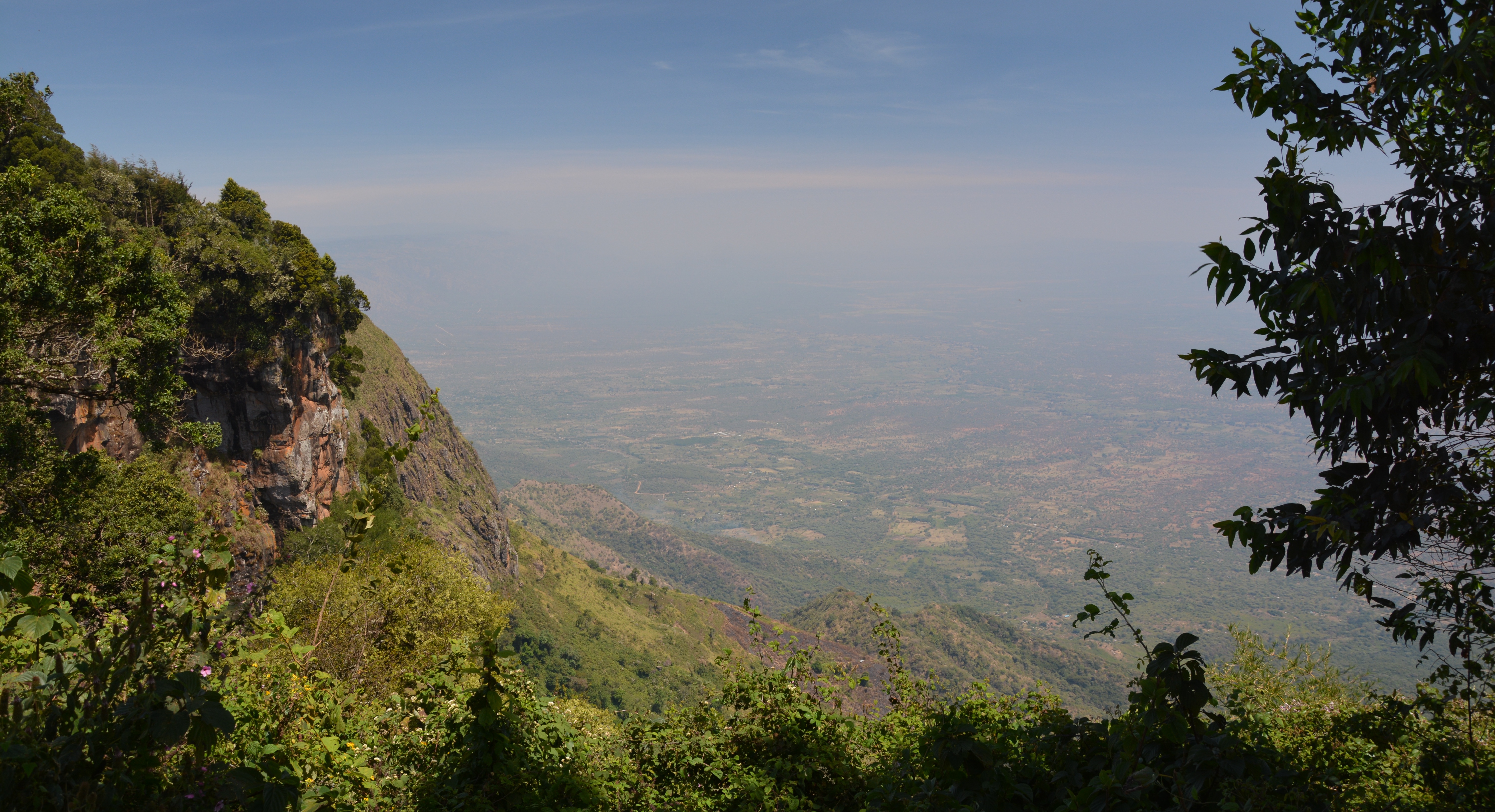
For a geographical feature big enough to identify from space – even the moon, I have been told – the Great Rift Valley is remarkably shy about being found here on earth. It’s over five thousand feet deep, and within a mile or so of where I am riding – but can I SEE it? I ride the difficult red rocky trail I have found – a new one to me, who’s been this way many times – thinking I’m bound to see the huge gap in the Earth. But no, it is almost always elusive.

However, when it does reveal itself, it is stunningly dramatic and well worth the previous disappointments. I reach a junction with a tar road that I’m not expecting, promptly follow what seems the logical direction – which I should know, seldom works in this landscape – and ride ten miles the wrong way. Where’s the bloody Rift Valley? Well, of course, I’m at this point going AWAY from it anyway. Eventually light dawns and some fellows at the roadside confirm what I now suspect and watch me turn round, laughing. Working my way through earthy roadworks, for the tar finishes quite soon in the other direction, I sense rather than actually see a stupendous view to my left. I KNEW it was there; now suddenly the Rift is revealed in all its phenomenal wonder. Stopping the Mosquito amongst piles of earth at the side of the roughly formed road I push apart some bushes and almost fall into the Rift! I’m atop an almost vertical escarpment that drops hundreds of feet, and then thousands more. A worthy way to go, maybe, plunging into a geological wonder visible from the moon, but not yet… I’m not ready! The view is colossal. Worth all the angst of that precipitate escape from home; of the insecurity of not knowing how and when I can return; of the rigours of the roads; the dust; the heat; the doubts. THIS is why I travel: for these moments of wonder that well up like a physical knot of emotion in my stomach. This ‘I’m here!’ moment. I gaze and gaze into the hazy abyss, fulfilled. 

It’d be a long drop…
The Rift Valley, visible, they say, from the moon. Pretty good from Earth too.

Tantalising glimpses of the valley open here and there on the remainder of that surprisingly long road as I plough through dusty roadworks and across newly turned earth scored by road machines into a rutted dry mess. Then at last I am back on the main tar road I know, but only for 200 yards, for now I know to turn off onto one of my favourite African roads. (You may note that several roads in the highlands of Kenya and a round Mount Elgon are my favourites! Well, you should see them..!)

In about twelve miles the road that I take from Nyaru, an insignificant hamlet of tin shacks and schools, or the rocky trail, to be more accurate, drops to Kimwarer in a series of about 18 serpentine hairpins. In twelve miles the trail descends 5184 feet! Nyaru is at a chilly, fresh 8990 feet, the valley bottom just here at 3806. This is trail riding to relish. Magnificence unbound. Blue shades of mountain faces stretching into apparent infinity. Always vistas at my feet. The track bumping away into the scenic distance, from coniferous forests down to aloes and cacti. From chill, sharp air to suffocating warmth. In TWELVE miles. OF COURSE it’s one of my favourite trails! Of course I have taken this track every year for the past five years, sometimes up, sometimes down. I never tire of it, tiring though it may be. 

At the bottom I stop for sweet chai. I need it. I’m smiling but weary, my energy low by now. Peter joins me as I sip the scalding sugary horror, but I can feel the strength coming from the surfeit of sweetness. Peter wants to chat. I’d rather just gaze at the bush land around me quietly, but he’s polite and respectful, so I can’t rebuff him. He has ambitions. God, in whom he believes – this is a piece of information commonly shared with strangers – will provide. He has a small shop across the road, but no capital. He wants to manufacture cosmetics, he says. He wants to market them in Uganda too, so he asks how is that country, hearing that I have been there recently. He’s interested in palm oil, an ingredient of many cosmetics – a product of West Africa, not East Africa – when he hears I’ve been there too. He wants to travel to England. He’s certainly adaptable to his conversational partner! Now he wants ‘my number, so we can communicate’, but I tell him, quite convincingly it appears from his expression, that I have trodden on my phone and decided not to buy a new one since I will be leaving Africa shortly. “Why not give me YOUR number?” I suggest, “then when I get a new one, I can be in touch. And I’ll look in at your new shop when I am passing.” I’m not really giving him the cold shoulder, but I know a relationship founded on a mug of hot sweet tea isn’t going anywhere. Easier this way. 

*

Crossing the Great Rift is fascinating. Here it is split into the Kerio Valley, the branch that I overlook from my room at Kessup, and the Rift Valley itself. Kerio Valley spurs off, a similar depth, to the west side of the huge rupture. When I leave Peter, I continue to ride downwards, just another hundred metres or so, then, across the Kerio River that snakes along the bottom of the valley, I begin the ascent to the intervening ridge. At the top sits the scruffy regional town of Kabarnet. I can look back from the curling serpentines of the road and see the far wall of the valley, misted by distance – it must be about ten miles away – down which I bounced an hour back. Now my little Mosquito puffs up to Kabarnet and its busy town traffic, boda-bodas and matatus jostling.

Then it’s off along another old favourite road, through the mess of Tenges, a strip development better unseen, along a narrow ridge of mountain. Sometimes the Kerio Valley and the Great Rift are visible fifty yards away on either side, plunging into green depths behind conifers on the steep slopes. I first came this way some years ago. Then it was a bumpy adventure; now the tarmac, only four years old, is breaking up into diabolical holes. Just as well I am on my versatile Mosquito and can balance and weave through it all, dancing on the foot pegs, back down into the eastern valley now, the Rift Valley proper. From the chill and dense greens of conifers I am soon spinning down through waving eucalyptus and into the cooking valley, with cacti and aloes, avoiding potholes the size of bathtubs and wandering cattle searching for sustenance. Short years ago, this was smooth tarmac, but the climate isn’t sympathetic and maintenance is a word unknown on the African continent. 

*

On Monday, I stay in Eldama Ravine. I’ve often stopped here, but still haven’t found a hotel I like. Once, I stayed in a big hotel at the bottom of town, and it was perhaps the noisiest place I EVER stayed. A disco that continued all night and literally shook the hotel. This time I returned to a place I found last year. I took a room away from the road, overlooking views of distant mountains across a sea of debris, bad construction and garbage. After an hour I returned to reception. “Can you let me into the secret of how I can get a warm shower?” The receptionist came and fiddled, standing on the edge of the bath. She called the ‘electrician’. He stood on the edge of the bath and took the unit to pieces. Finally, they moved me to another room. It was as the electrician stood, fingers exploring live wires, feet in the bath, that I remembered: I stayed in this room a YEAR ago, and the shower didn’t work… That time it was warm enough to have a cold shower. Maintenance? No… in the second room the lavatory leaked a big puddle on the floor and some smart artisan had nailed the towel rail to the back of the door, so the door only opened half way and the tiles had cracked from repeated assault. 

*

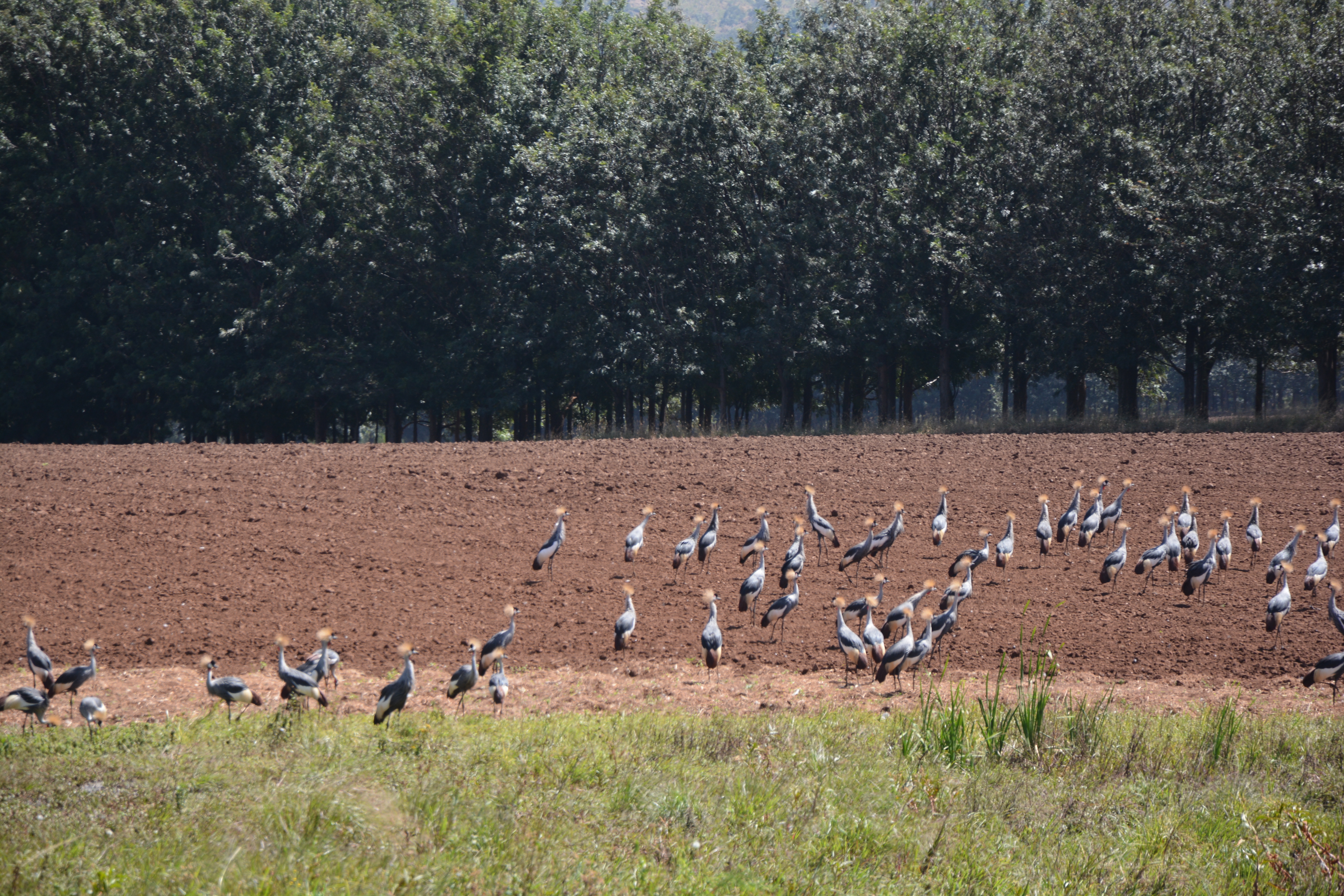
Tuesday was a long day. Riding through more climatic zones, I rode down from Eldama and took the short cut I know that avoids the main highway up from Nairobi. It follows an old colonial railway line, through places with redolent names like ‘McCall’s Siding’  and ‘Milton’s Siding’. The railway is long defunct, as are most in East Africa. Now it’s just an occasional steel rail to bounce over in the earth and rock. The trail is being ‘repaired’ and is a dust bath from end to end for twenty miles or so. Then a fine new tarred road I never used before along the floor of the Rift Valley, a place of expansive fruit orchards and a mysteriously copper-coloured lake, Lake Solai, where large flocks of flamingoes brightened the red shoreline and a crowd of seventy or more giant crested cranes pecked at a field like bobbing oil wells. 

As Rico says, the only time you’ll see so many cranes together is on a Chinese building site!

Up the eastern face of the valley to Nyahururu, said to be Kenya’s highest major town at 7750 feet, but a place of little attraction for me, after various visits. It’s enough to stop at the snobby Thomson’s Falls Lodge and drink overpriced chai (“Oh, a pot of tea, Sir?”) and samosas in my faded jacket and dusty clothing, and look at the nearby falls without doing battle with the tourist stands. Another slog across the top of Kenya to Nyeri. I cross the Equator back and forth seven or eight times on this ride, switching between northern and southern hemispheres, each time an excuse for souvenir stalls, now mostly locked up and tired. No tourists, except me, and I’m not very good news for them. Crossing the Equator, symbolic though it is, always brings a frisson of pleasure. 

And so to a noisy town called Karatina, that sounds more like a vegetable smoothie than a habitable place. A tedious search brought me to a fine hotel via four rotten ones. My instinct is well developed. And my budget pretty immovable. “Do you have an upstairs room?” I asked in one, as the manager showed me a gloomy room at the right price. “No, they are all booked!”

“All booked..?” The place was not far above a dump. 

“Yes, we have a group of customers who come and drink and sleep. No, there’s no noise! They will sleep by one or two…”

I was quickly out of there! Others fancied they were a bit more ‘international’ standard and tariff than they looked. And then I found one that was perfect. £14 a night for a top floor room with a view of Mount Kenya, friendly staff, even a large swimming pool, were I attracted. It’s the worst part of every travelling day, finding somewhere to sleep. But there’s always SOMEWHERE. 

And I was even invited to play a small walk on part in a student film in the hotel yard. No idea what it was all about, but a mzungu with white hair and gravitas obviously added something to their story about corrupt politicians. Richard, the director, promised he’ll send me the You Tube link..! Haha, life in Africa. It’s such FUN!

*

Some days require of me considerable stamina, patience and endless bloody-minded obstinacy. My friends know that I have a plentiful supply of the latter. As to stamina, at present I feel the fittest and strongest I’ve felt for some years. Fortunately. Patience has to be subsumed into the stubbornness! Wednesday was such a day…

323 kilometres, 200 miles. At maximum 45mph. Six and a half hours in the saddle. Half an hour stop for chai and chapatis. Boredom incarnate much of the way. Endless vistas of not very much, just bush lands to the distant horizon as I dropped from the shoulders of Mount Kenya down towards the lower parts of Kenya. It’s often forgotten that much of Kenya is a high land. Nairobi itself at 5000 feet and everything west of there, with the exception of the yawning gulf of the Rift Valley, getting higher to the western borders. It’s near that western border that I consider ‘home’ in Kitale, at 6000 feet. Tonight I am approaching the coastal plains and it’s hot and humid and any exertion brings on a heavy sweat. 

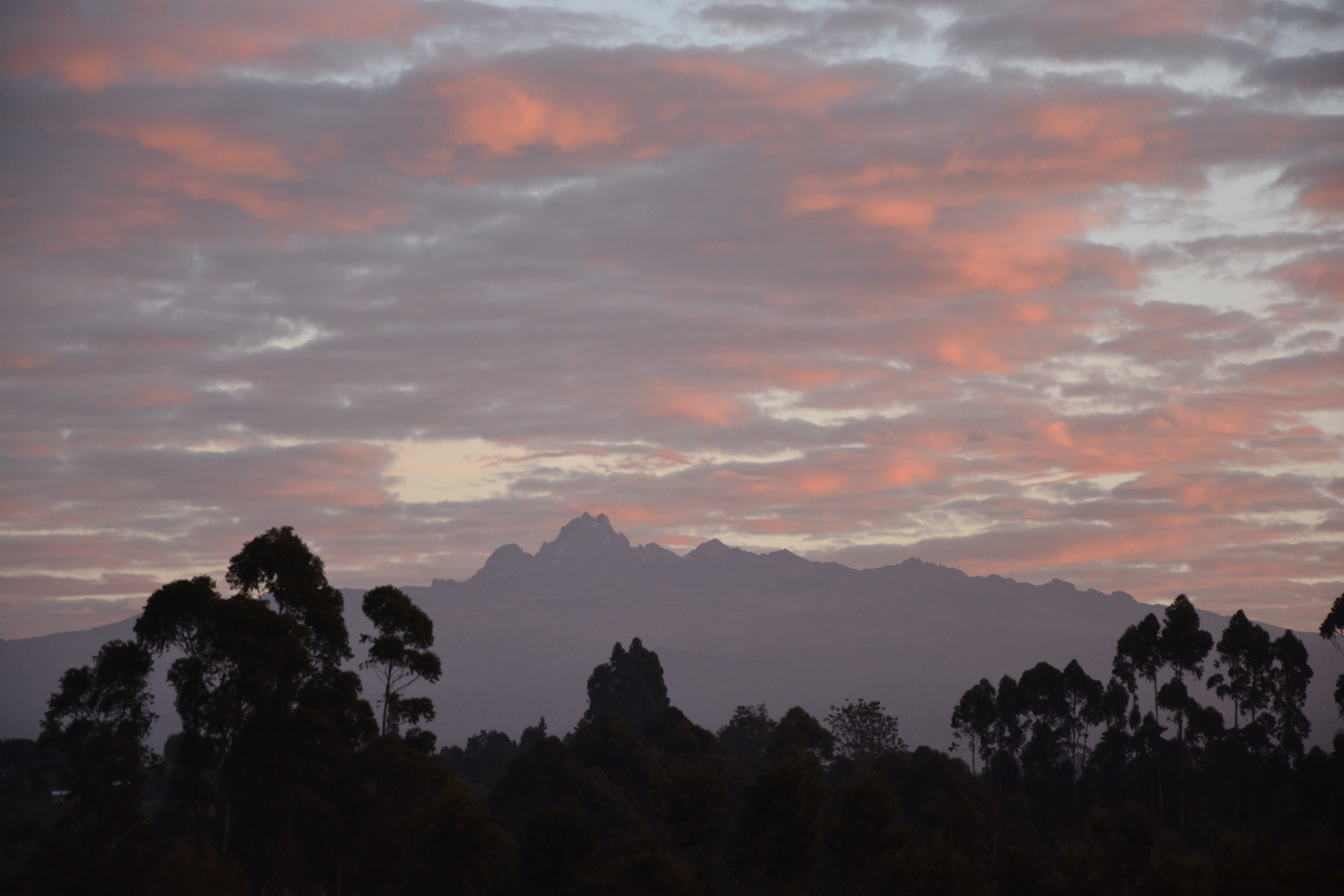
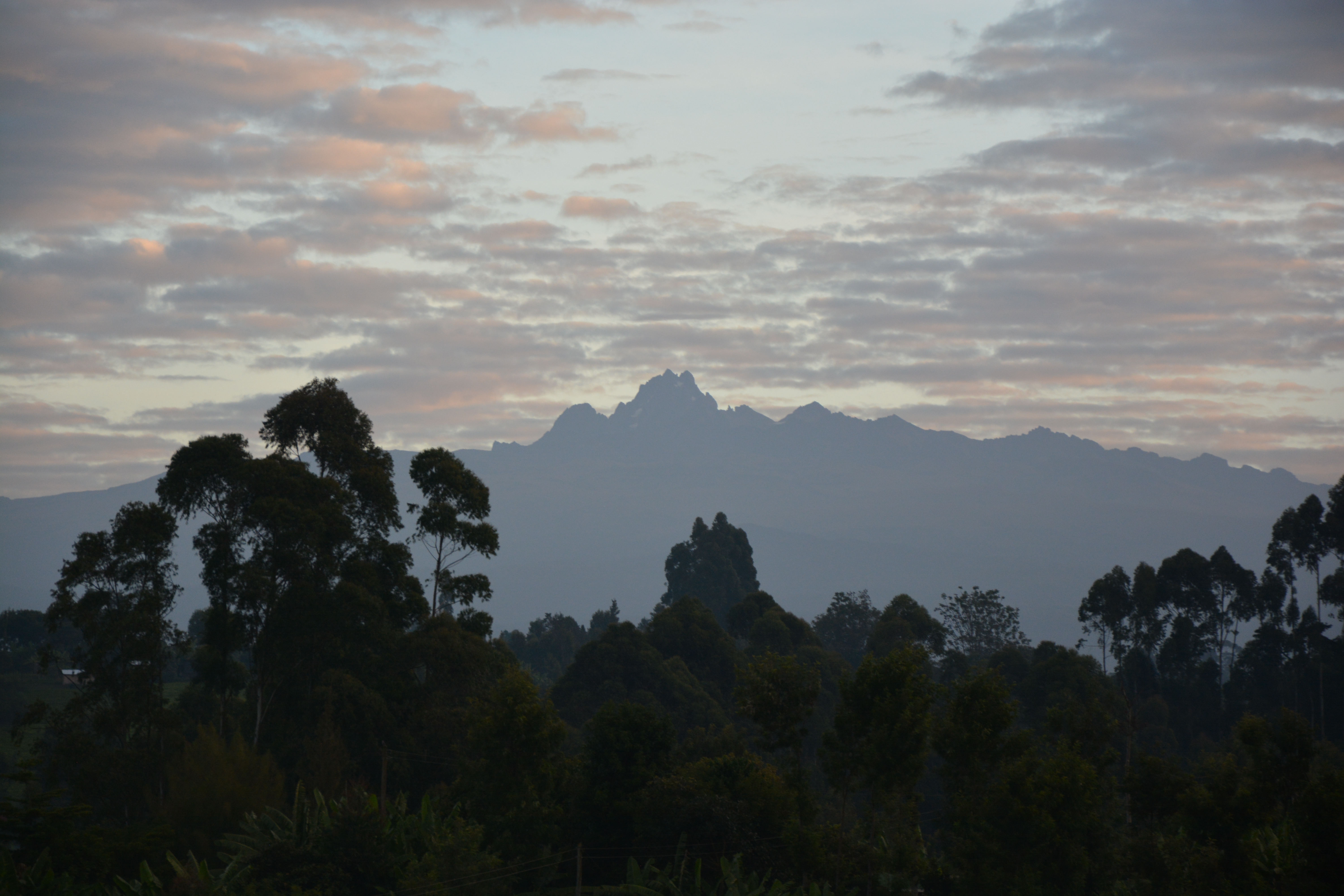
Mount Kenya at dawn – from the window of a £14 hotel! If you look closely, you can just see the remaining evidence of the disappearing glaciers.

*

The road that circles Mount Kenya – a big circle – seems for some reason to be inordinately busy, generally with terrible drivers. The first 50 kilometres of my day were tedious, to the regional town of Embu. Then I turned south onto a road I once took, 19 years ago on my Elephant. I was returning the old BMW to Mombasa to fly him home at the end of my 2002 journey that brought me from as far away as Cape Town to the top corner of Kenya at Lokkichoghio. I recollect not a thing of that ride – except that my shock absorber had burst and the road I took today was then just dust and rock and ruts. Thankfully, Kenya’s huge investment in road infrastructure has reached these eastern roads and I had 323 kilometres of smooth tarmac to negotiate in my comatose state. Empty of traffic too. Just mind-numbingly boring. 

At Kibwezi, the circular route on which I have travelled to avoid Nairobi and its environs, meets the main highway from Mombasa on the coast, up to Nairobi and far beyond into the interior of East Africa, carrying most of the road haulage from the docks to Uganda and Rwanda. Here I turn east and head down to the steamy coastline.

As I write, on Wednesday evening at sunset, (about 7.00) there’s another difference from the rest of Kenya. As I drink my Guinness the moans and groans of Islam drift across the oppressive stuffy air. I am in Moslem Kenya. How can this tedious drone be worship? I must accustom myself for the next week or so. Ear plugs at night… 

*

Thursday. Sometimes, although it may feel like defeat, discretion is the better part of obstinacy…

It’s not often that African traffic spooks me, after all I have ridden over 30,000 miles in 23 countries on the continent. I have ridden in the chaos of Ethiopia and the madness of Kampala. I have twice suffered the dangers of the Jinga to Kampala racetrack, that until now I thought the most hazardous stretch of African tarmac (and rubble). 

Forty kilometres from Kibwezi, at a scruffy roadside habitation called Mtito Andei, where I once stayed towards the end of my 2002 journey with my African Elephant, I decided enough was absolutely enough. I had evaded death by racing coach and non-disciplined heavy truck about twice a kilometre. One truck had even sprayed me with a fountain of diesel oil from its tank. Obscene personal 4X4 tanks, driven by impatient businessmen, had tried to force me off the road numerous times. I flicked V signs, shook my fists, and gesticulated at more oncoming death wagons than I have ever done in Africa before, where I usually manage to keep my temper when riding: it’s me that suffers the consequences of anger after all. 

At Mtito Andei I stopped, exhausted from just 25 miles, for chai and to calm down. A friendly engineer, Gordon, pulled in next to me in his car. “Oh, I have been behind you! I thought to myself, this must be a mzungu on an adventure. I could see from the way you rode and overtook; and you kept your position in the road against the trucks! I thought, this is an experienced rider, he must be mzungu!” 

“Well, I can’t take any more of it! I’m turning back. It’s another 200 miles of this to Mombasa, and there’s no choice but the same road back. I can’t face it!”

“And you’ll meet LOOONG roadworks on the way! Lines of big trucks and DUST!”

That was enough. Then, said Gordon, I can’t go north from Malindi, a historic town about a third of the way up the Kenyan coastal strip, without military escort because of Moslem fundamentalists. “No, they won’t let you go…” 

“Maybe I’ll just go back to Nairobi and take a trip to Mombasa on the new high speed Chinese train instead,” I suggested. “Now I am going back to the deserts and mountains.”

Oddly, I didn’t need quite so much stubbornness to follow the same long and tedious road back the way I came yesterday. I think the relief was so much, to be on a quiet, traffic-free road, that my mind just settled down to the long ride, content. I had two reasons for going down to Mombasa – a city in which I once stayed a few days when I flew the Elephant home from its airport to Heathrow in 2002 – and not a city that mush attracted me at the time. I was going to visit Maureen, one of the original Rico Girls that I have known since she was about two years old, and admire for her determination in studying photography and journalism largely by her own financial efforts; and I was going to visit Yuri, a small-time motorbike dealer from whom I bought the Mosquito in January 2017. He admits to a fondness for the little Suzuki he sold to me and was interested to see it again. 

Riding in these places has changed since I was here in 2002. It’s more dangerous since China flooded the continent with small, cheap motorbikes – boda-bodas. They swarm everywhere, badly driven, overloaded, desperate for a few pennies of business. They weave about and irritate car and truck drivers. I’m sure it used to be that if drivers saw a fast motorbike coming, they respected me; now they assume I am another annoying boda-boda and attack, driving me off the tarmac as they choose. Trouble is, I am NOT a boda-boda, and I am travelling twice as fast as most of the small Chinese machines. That means the closing distance is twice as acute. Everything happens twice as fast and reaction times are halved. Consequence: danger. Reaction: get the hell out of this race. For once discretion wins…

Maybe I can visit Maureen by train. 

*

Turning around, I hurried the forty kilometres back to where I had started, yelling obscenities at drivers who couldn’t hear and didn’t care, and turned so gratefully off that death track back onto the  ‘boring’, ‘endless’, ‘relentless’ tar road across the miles of bush country and eventually rising ever so slowly towards the bulk of Mount Kenya once more. Now I didn’t mind the tedium, the backache and heat. I was going away from that hell-road. 

*

By 4.30, I had been on the road for seven hours and was flagging. On the way through yesterday, I had seen that a small town – more a roadside strip – called Kivaa, had some hotels and guest houses, nothing extravagant or even attractive, but conveniently placed for me to break the journey. The Mountain View Hotel, in which I ended up with a huge room painted in lurid orange, vomit green and pungent mauve, with an octagonal window, is half built. It looks like a long term project for someone as there doesn’t seem to be any obvious way in. I entered through a kiosk selling gas bottles and stoves. The side that faces a small mountain – hence ‘Mountain View’ – is entirely of concrete block without so much as a peephole through which to view said mountain. Mountain View Hotel faces the wrong way… But Elizabeth, a fatly cheerful middle aged woman who, oddly, speaks no English at all, was all smiles, incomprehensible jokes, wobbly chuckles and helpfulness. We understood one another in that language that doesn’t require words: a vocabulary of goodwill and smiles. She was such a delight that I couldn’t move on. I’d have disappointed her too much! The price was about right at £13.70, the bed firm, the large tiled room spotless despite its sickening palette, and any defect was amply repaid by Elizabeth’s jolly character. Later, she even accompanied me to find supper, leaving me in a basic roadhouse, empty but for me and two cooks behind a steel grille, who rustled up rice with the local densely green vegetable, ‘sakuma’, and a couple of fried eggs. 

Every day bring something memorable. Even this Thursday, a day that brought anger and frustration, and smiles from rotundly ebullient Elizabeth. Africa has that ability: to defuse my moods by kindness and friendship from complete strangers, outgoing ways that make me feel ashamed of my impatient emotions and irritation. Thanks to sunny Elizabeth, a ghastly day ends with a smile… and, it must be said, a can of Guinness and one of Tusker, from a nearby petrol station. 

I’m back in the hotel south of Mt Kenya, uploading this episode, hoping to see the mountain at dawn tomorrow. Another day in Africa…

EPISODE FIVE. KESSUP AND THE RIFT VALLEY. HOME LIFE AND RURAL PEACE. January 19th to 29th


I treasure this picture, taken by Alex, of Precious and I just before I left them in Uganda ten days ago. It expresses so much about ‘family’ in Africa.

Afternoons in Kitale, I try to walk for an hour, sometimes two. In the fields of the wide valley below the house I can wander on peaceful tracks away from traffic. A small wood has become a favourite, 600 yards long, a calm place of wavering tall eucalyptus and heavy underbrush, a single footpath snaking through it with secret turns and meanders. It’s cool from the hot sun, a relief from the sticky humidity that can build as the ground gives back the gentle showers that have sometimes fallen in the night. There are monkeys and flitting birds, singing amongst the gyrating leaves of the spindly grey eucalyptus. 

In the smallholdings around, a heron flies low and languid to a zinc rooftop; a giant crested crane, a metre high, too big to bother to fly away, stomps away offendedly on its angular, gangly robot legs, golden topknot flickering; a hare runs across the red dust track into undergrowth where a large hole with vicious slashes in the earth walls and a mound of newly mined soil perhaps houses a big porcupine; bees and insects set up a hum of static and birds flute and warble musically everywhere about me. Flames trees, an accent of brilliant crimson, flash their blossoms on bare, gnarled, black leafless branches, adding a lustre to the many hues of green after the rains. The sky arches bright blue above, the shoulders of Mount Elgon ethereal on the western horizon. A woman passes quietly, giving a gentle greeting, a heavy bundle of firewood tied with local fibres on her head; cattle graze placidly – abundant food for now – and an unseen child amongst the bushes around a simple mud-walled house, calls, “Mzungu! Mzungu! How are yuoooo?” I have been spotted. Two small boys appear suddenly around a corner in the track. One greets shyly, the other runs away, terrified. Suddenly, I realise that I feel fit and content to be here in Africa, close to the Equator. I DID make the right decision in my precipitate escape. A gamble that is paying back handsomely. Soon I’ll wander back up the hill to a Tusker mixed with a Guinness on the porch with my comfortable friend and we’ll listen to the cheerful chatter and jesting of the pretty young women of the house as rich aromas drift from the kitchen. 

*

William watches Joy and Rachel bunch up black nightshade, a very nutritious vegetable. It will fetch 10 Kenya bob a bunch (About 15 pence), so this represents a considerable profit.

I planned to return to Kessup on Wednesday, but decided I had to see the odious Trump out of office, and in Kessup I am off piste for the internet and TV, so I delayed until Thursday. Sitting in front of the TV to eat supper was a serious break in formality in the Kitale house, where we always sit around the table as family to eat our meals. But Rico and I wanted to watch some sanity and decency return to America having followed the shocking events of the past couple of weeks as the Leader of the Free World (Huh) lost all semblance of rational adult behaviour and encouraged a hideous mob of far right fantasists to attack the seat of his own democracy.  

On Thursday, then, William’s Mzungu was back. A fine seventy mile ride over the mountains from Kitale to the Rift Valley. William is waiting for the sound of my engine. He comes grinning down his dry shamba to the rutted track to the guesthouse. A spare, rangy sort of fellow, now 55, with white curls to his beard. Within moments he is instructing the guesthouse staff in everything ‘his mzungu’ requires. How irritated they must be! Or perhaps they are just grateful, especially this year when I am probably the only tourist within 100 mile radius, that his friendship and guidance brings me here frequently. He frets and demands: there must be cold beer in the fridge, Jonathan likes his Tusker cold! Supper must be at seven sharp; there must be a reduction in the room rate. William, retired policeman, is a stickler for timekeeping. If the meal is two minutes late, he will be on his feet heading for the sooty zinc shack that is the kitchen. I must have just the room I want, and Jonathan likes a blanket, not the unbearably heavy duvet that locals seem to prefer. It’s funny to watch, but he’s kindly with the girls who work here, always inviting them to share the leftovers of our supper. Of course, I pay the bills – William has no money at all. But in return I have a willing, friendly companionable guide and a fine introduction to this community that I have come to know, and who’ve come to accept me. William eats the meat at supper; I eat the vegetables that he hahas procured from his neighbours’ shambas. “Why should I eat veggy-tables?” he asks. “I live on veggy-tables! When you are here, I can eat meat!” It’s a good deal for us both and not much goes wasted, between his relish for the meat, my liking of local vegetables and the girls’ delight at something beyond ugali maize flour and scraps from the kitchen. 

Rael makes me chai in her kitchen.

But how do I spend my days in Kessup? It’s a relaxing time, wandering the red tracks and mountainous footpaths; drinking milky tea on green hillsides with hardworking, friendly people – the most vigorous always women. I am suffered to investigate and ask questions, and respond to many more about how we do things at ‘my place’. We sit high above the dramatic valley, gazing into the misted depths, over small fields hacked relentlessly by generations of hard graft from the rocky slopes. But it’s fertile here, and plastic water pipes snake the lanes and hillsides, a fizzing leak here and there, powering small locally-made sprinklers. Shambas are green just now with young crops and elsewhere men and women hack new brown soil into beds. Large raptors circle ceaselessly above and hedge-birds flit and whistle. 

In Rael’s round, thatched kitchen hut, I sit on a stool polished by decades of backsides and kitchen spills. It’s about six inches high. She’s a fine cooking stove fashioned from clay, just eighteen inches high but sculpted into a piece of domestic sculpture, all rounded edges and decorative rings. She’s preparing disgustingly sweet milky tea for her mzungu guest. She knows me well by now; I am recognised all over this rural plateau from my many visits with William, patient to introduce me to his neighbours. He claims that my repeated visits have given him enhanced status here. I am constantly sorry that it takes the endorsement of a white skin for him to gain respect, for he is an honest man of integrity. Returning to revisit people in Africa is one of the most important social things I can do. It confers respect and friendship. I appreciate how many people accept me here. It’s taken time to be seen as a fellow human, rather than a representative of a race aloof, proud and rich – as we are seen so often in Africa as we race past, a dim, ‘different’ blur behind the tightly wound window-glass of air conditioned, zebra-striped vehicles between insulated game parks, segregated from the wonder that is the people of this generously welcoming continent. 

Rael’s kitchen hut has no chimney. This is the standard across the whole continent. It is full of thick grey woodsmoke, sweet-smelling but lung-clogging and eye-watering. The underside of the thatch, supported on a web of sticks, is black and tarry. The post that holds aloft her firewood in the ceiling space is polished like lacquer, Japanned by thirty years’ of hand grease and soot. The hut was built in the late 80s when Rael came to this compound on the hillside. She’s a smart woman, diligent, intelligent and very hard working. Her compound is always well kept and she is house-proud, although her wooden dwelling is simple. She’s put blue-squared vinyl on the floor of her living room, which is decorated with sentimental religious posters and a lurid Manchester United broadsheet. She’s very proud of her new TV. It represents considerable work and business acumen. Her husband, whom I’ve never met, drives a matatu and is away from dawn. So the household and farm work, as well as caring for the children, fall on her – capable – shoulders. An African woman… I note that some of the lovely row of eucalyptus that made a fine background for my portraits when I first came to Rael’s shamba, almost five years ago, are gone. “I planted them when I first moved here. Now I have been selling them. They pay for school fees for my children.” She gets about £25 for a large fast-growing eucalyptus. “But I replace them when I sell them!” She waves behind her to a grove of young eucalyptus – the weed-tree of Africa. The young ones are, Rael says, five years old. 

It’s been decades of work to create the terrace on which we sit, me puckering my mouth at the syrupy tea from the big pink Chinese thermos. The hillside has literally been moved ten metres forward to form a level space big enough for her kitchen hut and the black, vertically boarded house, neat with a red zinc roof. Curtains bluster brightly in the metal-framed windows. There are even some flowers blowing in a bed against the wall. It’s breezy today, the wind worrying up from the depths of the Rift Valley. Pleasantly cool. William is on his phone – as are many people we pass. He just begged a pound’s worth of airtime from me so he can call his cattleman, Atanas, far below in the shimmering valley. William hasn’t a penny in his pocket, his normal economic state. He’s arranging for us to walk down into the valley on Sunday. His mzungu needs a welcoming committee if he is to make such Herculean efforts, William thinks. Or maybe it’s just that he knows Atanas would be deeply disappointed to miss the event by coming up to the plateau to see his family? 

*

Very colourful beans.

We move on to visit Sally, another determined woman, who has moved here from a village beyond Iten, some kilometres up the winding road on top of the escarpment that towers above us. She bought the land on which she has built her tidy wooden home, with a smart brick latrine and quaint henhouse. She’s a farmer. The fathers of her children seem to be absent but she seems self-reliant – as so many African women have to be, even if a husband is around… She’s forged, in just a year, small rough terraces on which she is growing a lot of vegetables. Her tomatoes are superb. I took a bag home to Kitale last time I was here and we enjoyed tasty salad. She’s planted what looks like chard, and pumpkins too, and one of her family is sorting the most wonderfully coloured dry beans from amongst dust and debris on an old nylon sack. One small field is to provide tomato seeds for her next crop. There are velvety brown cows and dreadlocked sheep to tend, babies to care for, washing and cooking to be done, and the house to be kept tidy amongst various energetic children.  But what  impresses is the exhausting work that these women accept as their normal life, hacking and hoeing, digging, watering and cultivating and harvesting on a hillside that must be at 30 degrees, above one of the hottest valleys in Africa. 

Still Sally finds time to light a fire of sticks and boil more milky tea for her guests. By now I am brimming with the stuff, perhaps a litre of it. My stomach’s distended and we are able to use this as an excuse not to eat her kitere – beans and indigestible maize. We promise we’ll come tomorrow instead. She gathers a carrier of lush red tomatoes as a gift for me to bring back to the cook at the guesthouse to make salad for our supper. William will instruct the cook just how his mzungu wants them! We begin our slow walk home, meeting and greeting, entertaining children coming from school, jesting with neighbours. Life in Kessup. 

*

Awash with tea, we sit and pick sticky seeds from our socks. On our way home, we must stop at a kiosk to purchase superglue for William to mend his shoe. He’s shown me that he has a hole the size of a playing card in the sole. I can see his bare foot – odd, since at the ankle he’s wearing some thin, coloured socks. “If we walk down on Sunday, I must mend my shoe. For now, I can glue something over the hole! When I have money, I can go to Iten and find a fundi to put a new sole.” I tell William of the labourer I saw in Sipi last week. Pushing a heavy wheelbarrow of earth up an embankment, I was impressed that he was wearing substantial boots. But as he turned away from me, I saw that they had no soles whatsoever, just laced tops. Bare skin made the bottom of his footwear!

We stop at a kiosk to buy the glue. Shops here in rural Kenya are simple affairs, a dark tin shack with a wire and timber grille that protects the merchandise. The seller ducks beneath the counter and waits expectantly. Yes, she has superglue from China at 20 pence. There’s not much to buy – the seller doesn’t have the capital to keep much stock: some tired-looking dry cakes in cellophane; three small bottles of warm Coke; two dusty, rather dreary cabbages; some pots of milking jelly, whatever that may be – cow orientated, I assume; a festoon of ever-popular plastic sachets of cooking spice mixes; eleven rolls of toilet paper; seven plastic tubs of Tilly cooking fat; lurid packs of bubble gum and a bag of slightly melting sticky sugar lollies; eight tiny tins of black shoe polish; six packets of stale biscuits that look well past their sell-by date and the inevitable selection of washing soaps in bright sachets. A few items to turn a minimal profit that may make the difference between supper and going without, medicine or suffering, school fees or illiteracy. Life in Africa. 

*

Kimtai in his hard-won shamba

Another day. Neighbour Kimtai and his son Evans are tossing a thousand rocks across their shamba, clearing a tiny field to plant vegetables. It’s hard graft, making these patchwork fields. The ground is rocky. Kimtai takes me around the small beds he has made already, edged by high walls and heaps of piled rocks, surrounding just a few square metres each of red soil. But there’s water in Kessup, draining down all the snaking plastic pipes from the escarpment. Kimtai’s handkerchiefs of fertile soil will pay well. But it’s rocky ground.

William says, “He’s a Christian! A pastor.”

“So are you a Christian?” asks Kimtai of me. “Are you a believer?”

Sometimes I dissemble. But a look at Kimtai suggests he can accept truth. “Er… no!” I reply. 

“You don’t believe in Him?” he asks in wonder.

“No, not at all!” I proclaim. Evans, standing on a pile of rocks bursts into such loud laughter that he falls over. His face splits with the biggest grin. He almost clutches his sides at my straightforward answer. We all fall about laughing. I enjoy these exchanges so much. 

“But what about Heaven? And Hell? Don’t you think you will go there?”

“No, chum! This is all we have! If you don’t do good here and now, it’s too late! Once you’re gone, you’re gone. Just dead. Too late if you haven’t done it here.”

Evans is laughing with delight. I wonder what is his attitude to his father’s elevation to self-proclaimed pastor in some crazed offshoot of commercialised religion amongst the millions of fake tub-thumping pastors in East Africa? Laughing widely, we all agree to differ. “One day you will walk with me to my church. It’s five kilometres.” Kimtai points along the plateau to the north, the high cliffs rising above us to the left. 

“Well, I might enjoy the walk, but you can leave me out of the preaching!” We all laugh and part friends, waving as William and I walk away to meet more neighbours.

*

Francisca shakes the gourd of yoghurt.

Francisca spots me through the trees and comes running to greet. “Eh, Mr Jonathan, you are back!” I’ve sat with her and her friends a few times; taken her picture several times; brought back the prints. Her husband, Silas, once worked in the Kenya Embassy in London, but he misbehaved (booze) and wasted the opportunity. He was sent home – to this mud and stick compound in rural Kessup. Francisca’s friends, Evaline and Elizabeth, perhaps a bit inebriated by mid-morning on too-cheap local spirit, josh and joke with me, middle-aged women full of goodwill. They all want photos taken and of course I’m happy to do this. I am Kessup’s official photographer by now. I’ve literally hundreds of portraits from these communities on the plateau above the huge valley. Francisca is animated and confident. She poses with a fine polished gourd with decorations of cowrie shells and beads. It’s from the Pokot tribe, she says. To get to their rather troubled homelands – they are an aggressive bunch – you go down into the deep valley and head fifty miles north. It’s usually off limits to me: too much tribal strife there; difficult people to police, often shooting first, and enthusiastic cattle rustlers. Seems I missed the only chance in years last year – when my riding in such a tough region was limited by my Achille’s tendon. There was a brief respite from the warring and killing, but I didn’t go. Pity, as there’s a pass I still want to ride, said to be very serious trail riding in magnificent scenery on the edge of the Great Rift Valley. 

Now Francisca brings her fresh yoghurt in another of these gourds. The inside surface is lined with aromatic soot from a special wood. Local yoghurt is made this way; the soot flakes imparting some sort of beneficial flavour. She pours me a glass of the lumpy yoghurt, flecked with sooty spots. It’s delicious, almost like cheese in taste. “Oh, you won’t want bulsa now!” William exclaims. We are due to drink the fibrous, sour local maize beer later. This sounds like the ideal excuse for me to make no more than a gesture! It’s not a beverage I like very much. I drink it to show willing, and everyone is very impressed that the mzungu will slurp down the filthy liquid from an old Tilly cooking fat container with them. William knows I am not enthusiastic, and has just given me a great get out.

We take the bulsa with my ‘age mate’, Joel. Frankly, he looks a decade older than me, with his stoop and stick. People age so much quicker in Africa – as indeed we Westerners did 100 years ago. It’s easy to forget that this privilege of long healthy old ages is something we’ve enjoyed quite recently. Some of us at least. Joel had English teachers in his childhood – a Miss Cunningham and Miss Armstrong, missionaries, I assume. But Joel mumbles and his accent is difficult to understand. It’s a long time since the Misses Cunningham and Armstrong were major influences in Joel’s life. His wife joins us, big silver coloured beads around her neck. I am content that the five litres of sour soupy liquid is being shared wider. I can get away with just one small plastic container of the rather unattractive beverage. 

Joel is my ‘age-mate’. Here he is with his wife, Rose.

*

Moses had an accident in a truck that went out of control on the winding road down into the other side of the huge valley from the town of Kabarnet, perched on the lip, visible by its twinkling lights at night from the guesthouse gardens. It must be fifteen or twenty miles away as the soaring raptors fly. Moses spends his life on a wheelchair now, sitting patiently on the grassy terrace in front of his iron-sheet house, marooned the best part of a kilometre down red rocky tracks. He’s a wide smile and seems to make the most of the hard chance life threw at him. Of course, he will have had no insurance to help him make life more comfortable, and is probably grateful for whoever supplied the wheelchair. He greets me warmly like an old friend. It’s good to be recognised in this rural community.

Boniface
Relaxing in a maize field with Anne and Sharon

In a maize field, we joke with Anne, Sharon and Boniface. They are harvesting corn; taking a break sitting on nylon sacking to slurp millet porridge, a spotty snotty sort of brown stuff in enamel mugs. It looks disgusting, but of course, I’ve eaten these sort of nutritious slops before. I’m happy no one insists I must try it again. I sit on the sack to have my photo taken by William. He knows how to operate my camera now, although I suggest he takes two or three shots – in the hope that one of them will include feet AND heads. He gets a good shot: happy and laughing. I love this interaction. Who needs a game park? I have cheerful Africans in a dusty field. 

*

We sit on an earthy terrace high above the valley. Sally, the tomato farmer’s daughters are delightful. It’s Saturday, they are home and have prepared tea and kitere (beans and indigestible maize kernels) for us. At the edge of the terrace, interrupting my view into the magnificent valley, hangs a line of flapping washing, ancient clothes torn and worn, faded and jaded, throwaways from the profligate world, fashions of past decades. It’s how everyone is dressed here. Me included.

William watches Abigail, Naomy, Mercy and little Allison prepare vegetables above the magnificent Kerio Valley.

I am about to pick up my spoon to eat my kitere when Abigail grabs my hand unceremoniously and turns it over with an exclamation of wonder. My palm is so white! She brushes it with her fingers as if the colour will come off. Her sisters gather and touch my hand like a delicate artefact. I wish I knew what they were saying – and what is the joke. Then they finger the hairs on my arm. “Why do you have this?” asks Naomy, a young teenager. “Because I come from a colder country and once my race was covered in hair,” I explain. The girls show me their smooth, polished black skin. Maybe I am the first mzungu with whom they could ever compare our racial differences. “Oh, we are just black monkeys!” exclaims Abigail, spokeswoman. 

“NO!” I respond. “We are the same! Just a millimetre of difference! No more.” I try to explain that the melanin in their skin is a protection; that I have much skin damage on my shoulders as my skin tries to develop the same melanin. I make Abigail put her cool hand on my red burning neck to see how the sun affects my skin. She recoils with an exclamation from the heat that my neck is giving off, amazed. It’s such fun to meet curious young people like this, unsophisticated enough to explore the differences we represent. I love curiosity above all other human attributes. 

Naomy laughs at the mzungu.
Allison Jepchumba. Jep is a feminine word and chumba means a white person. I couldn’t quite find why this lovely girl was described as a female white person!

We eat our kitere, me surreptitiously picking out the beans and avoiding the cubes of dry maize as much as possible. I know they’ll come out the other end still cuboid. In fact, this meal affects my guts adversely for the next four days. The girls pour me tea, unsweetened in my honour. I gaze into the vast abyss before us, shrouded somewhat by washing. The light shimmers below, far below. It’s over two and a half thousand feet down to the green bush lands. Later, I must take thirty or more photos of these cheerful girls. They are self conscious, laughing, giggling like young girls the world over. In the hour we’ve been here, we have broken down barriers and become equals – well, as equal as an old granddad can become with teenagers – and in Africa that’s a LOT closer than we’d manage in the ‘sophisticated’ Western world. 

Mercy Jerono

Tomorrow, we tell the girls, William and I intend to ‘foot’ to the floor of the valley and back. They are astonished. But maybe not because we appear improbably old and decrepit to their slender years…

“Won’t you go to church then? It’s Sunday tomorrow,” asks Abigail, somewhat scandalised. 

“This is the biggest and best church you’ll ever be able to worship in!” I say, waving a hand at the enormous vista of the Rift Valley at our feet. “Just look at this! THIS should be your church! This is your God’s work!” But my attitude is unconventional and I’ll never challenge the strength of African religious convention and dogma. But I know that had I ever an inclination of worshipping or prayer, I’d choose the Great African Rift Valley for my cathedral, not a tin shack filled with the noise of self-promoting ‘pastors’.

Naomy and her chicken!
William with Sally’s family; Abigail, Mercy, jepchumba and Naomy. Such fun!

*

The Kerio Valley, a major spur from the Great Rift Valley that splits the globe from Mozambique to Jordan, burns more than 2600 feet below my perch at the guesthouse with its green gardens, itself below the tall red cliffs that continue the wall of the Rift Valley up to the highlands six or seven hundred feet above. On Sunday (instead of Abigail’s church) I slip and slither down a dusty, rocky path that leads into the world below. Hours later, I puff and stagger back up! Both ways in one day, in high equatorial sunshine and about 30 degree heat. It’s the most arduous exercise imaginable. The last hour of the ascent will go down in the annals of my African journeys. By the time I am clambering up the steepest part of the climb, I’m stopping to regulate my heartbeat every few minutes. Of course, local people regularly undertake the journey, moving their cattle up and down with the seasons. William tells me, as I puff, even slightly faint at the effort, that the cattle often make the journey by themselves, taking three or four days to clamber up or down, knowing instinctively that the nutritious seasonal vegetation is above or below. William has a large tract of bush land just before the big drop, down at the lower edge of the Kessup plateau. And at the bottom, in the baking valley inferno, his family and clan have extensive lands too, where their goats and cows are tended by hired herdsmen. William comes of a long-established local family. Everywhere down there, we meet brothers, cousins, nephews of his family, in which William’s father’s polygamy makes for complex relations. 

This is the Kerio Valley, a branch of the Rift Valley. Imagine, this is where I walked DOWN and UP!

We climb the burning slope. The effort of not just putting one sore foot in front of the other, but one sore foot above the other as well, is ghastly. I am woozy from lack of oxygen, seeing a sort of halo of light shards created by the sheer effort I am expending. I sit on a rock, eyes closed for a few minutes, not telling William that I am feeling faint. He’s so solicitous for my wellbeing that he’d be worried. This will be a memorable hike. I’m a full decade beyond life expectancy here. William reckons that Joel, my age-mate, couldn’t make it any more. It’s so funny that William takes a sort of vicarious thrill at my accomplishment. “You were determined!” he keeps repeating later, as I drink the three beers that salvage my strength after a warm shower. “Determined..!” Yes, but once we embarked on the ascent, what choice did I have? There’s no respite or rescue on that enormous rocky slope. 

ALL the way down – and then up!

Twelve hours in bed completed my recovery. Monday, I am fit to go again, wandering the red paths, meeting neighbours and drinking chai in village compounds. 

*

The sunshine and heat of Kerio Valley produces what must be some of the best mangoes on earth, richly succulent and without those irritating fibres that bug the poor apologies we import to English supermarkets. Late January is mango season. Women sit by the roadsides in the valley with mangoes, bananas and watermelons for sale. William and I ride down the twelve miles to the foot of the curling road to buy mangoes for me to take back to Kitale. They cost 15 pence for giant fruits, my pleasure from this region that almost matches my enjoyment – and consumption – of fresh pineapples throughout January. It’s steamy-hot in the bottom of the valley. We stop off to visit the ex-chef of the campsite/ guesthouse far above, who’s working now in a new hotel that burns on the valley floor amongst attractive gardens formed by a lot of hard work and the limitless sunshine. Joseph remembers me and shows me his guesthouse. Perhaps I’ll stay a night sometime, I suggest. It’s so nice to be known. “Ah, do you remember the liver curry I made for you?” he asks. “I made it HOT. Plenty of piri-piri!” It must be three years ago. Going back. Returning to see people who befriended me before. It confers so much respect. 

*

On Monday I texted Adelight: ‘Returning tomorrow pm sometime’. She replied: ‘Hello. Welcome back home. We love you.’

*

Kenya is investing heavily in new roads – and increasing debts to the Chinese government with their ulterior motives of access to resources and the control of debt-crippled African countries. From Kessup back to Kitale there are now fine new roads, empty and sweeping about the hills in ways that bring smiles to a biker’s face. One road on the way home was so new it still smelled of hot tar, and the last two kilometres hadn’t even been built; I had to negotiate a construction site. Between the two scruffy towns of Moiben and Kapcherop runs a lovely road through soaring hills, at one point with a vista over mile upon mile of highlands to a distant horizon that probably contains the Rift Valley itself. I am way above 6000 feet high. It’s not a fast ride on a 200cc motorbike, but it’s fun and scenic. Children from school wave and call as I pass. 

Back home I am welcomed warmly. I feel fit and suntanned, sucking up the vitamin D, well exercised from walking sunny paths and the expedition to the depths of the Rift Valley – “Instead of church!” as Abigail was shocked to remark. A better church by far for me.

*

I haven’t mentioned the virus for some time. Mainly because no one here much mentions it any more. In rural areas it never made much of a mark anyway. People have so much immunity to so many diseases here: you must have to survive this life. Some of the reported cases are suspected of political corruption – in Kapchorwa, across in Uganda, the medical officers made a big fuss about two cases they ‘diagnosed’, almost certainly, it was surmised by everyone locally, to obtain financial aid for their hospital (and in Uganda, perhaps for their own bank balances). Some here have got in the habit of fist-bumps instead of the constant handshakes, although I still shake hands a hundred times a day in places like Kessup or Sipi. The fist-bump was the fashionable greeting of youth and is adopted by older people now in respect of the virus. There are those, William warned me, who believe that ALL white people carry the virus and that Europe is ‘dead’! That’s lack of education and the customarily irresponsible media. 

In town, people sport a sort of decorative chin strap in the form of a face covering that frequently doesn’t, but some wear a face mask, others, even in deep countryside as they walk rural paths and roads completely alone. I have my temperature taken at the entrance to all larger shops, and frequently have to suffer having a squirt of something cheap and nasty on my hands. People, usually unmasked, sell face masks at the roadside for 10 bob each (7 pence each. I bought a pack of a dozen in Boots for £6 before leaving England…). I wear my neck tube; it’s convenient to keep the sunburn from the back of my neck and can be pulled up in town or if I see police checkpoints – who might enjoy politely harassing a mzungu in the hope of a small fine. Otherwise, life goes on pretty much as normal. Few seem to judge others or to be scared by the hysteria-inducing media. I guess few watch the BBC or CNN. It’s about page three in the national papers. 

I’m now almost half way through my trip – as planned. As regulations change and change again for return to UK, I shall keep an open mind about the booked flights. Kenya is not a high risk country and I know I am welcome here. “Oh, you can stay a YEAR!” as Adelight said on my arrival. Well, maybe not a year, but my return may remain flexible.

*

Adelight and I go to town. I enjoy sitting in the car watching life around me. We are warm friends, content together. She’s some errands to make, ground up maize from the posho mill for chicken feed, chicken medicine from the agricultural supplier. For her chicken rearing business. 

I buy beer at the supermarket. Everyone meets my eye and smiles greetings. One woman, attracts my attention; runs into the street. “I need to marry you, Mzungu! Look, I even have my own business!” She points to her fruit stall, a table on the supermarket steps. A mzungu is seen as the answer to everyone’s problems and many women see marriage as not much more than a business agreement, it seems to me. I laugh. “You’d have to ask my wife!” Boda-boda boys watching laugh too. 

*

Adelight needs charcoal for baking bread tonight. We walk together to the charcoal sellers and buy a bucket of charcoal decanted into a recycled woven plastic sack. “Here, I’ll take it,” I say, lifting it from her hand.

“Hah! African men don’t do that! If people see you, they will say, ‘eh, this mzungu is a poor man!’” 

“Well, I’ll lead by example then. African women, they do ALL the work!” Stallholders selling secondhand mtumba wear watch us pass, bemused. I laugh and carry the charcoal. 

*

I sit and drink my beer with Rico on the porch. We’ve known one another for half our lives now, and share this strange obsession with Africa. His African family move around us, Adelight making the bread in the skilfully designed oven that Rico made from an old car jack, scrap steel sheets and bits and pieces scavenged around his garage, where nothing is thrown away. Charcoal glows above and below the bread box. The aroma of fresh baking fills the porch. Maria watches a cartoon on TV behind us in the house – the power is back on after another series of outages. 

Scovia makes me laugh: she comes out of the house door, dressed in a glamorous narrow black skirt that she’s worn to town. She’s one of my very favourite Africans. One look and I smile. She’s shapely and always cheerful, with a quip or two for the old mzungus. She always has the last word, does Scovia. She slips off her smart blue-green town shoes and pulls on gumboots – with the chic slit skirt and fitting white blouse, hair in elaborate braids – and heads out of the porch gate with a flounce, the big serrated bread knife in her hand as she goes to the chicken house to slaughter our supper. 

I jest with her about her attire. “Oh, it’s fine as long as you put your foot squarely on the chicken’s legs and hold the wings before you cut the head off. If you don’t hold the wings, then you get blood splashing!” she laughs happily. I guffaw at the idea of any smart young woman of my acquaintance at home even going into a henhouse dressed so smartly, let alone to sever the head of her supper! But this is Africa. You learn the facts of life and death of animals at an early age. You understand where food comes from. You can’t hide from inconvenient truths here. You consider yourself fortunate to have the luxury of chicken for supper, when most have ugali maize and a splash of stew… 

One of Alex’s Uganda pictures, with his aunt Khalifa.
Life in East Africa. Alex catches a happy moment… And I never take selfies.