
EPISODE ONE – DECEMBER 2024
“AREN’T YOU AFRAID, THESE DODGY PLACES YOU GO..?” The most common question I am asked. AFRAID??? Read on…
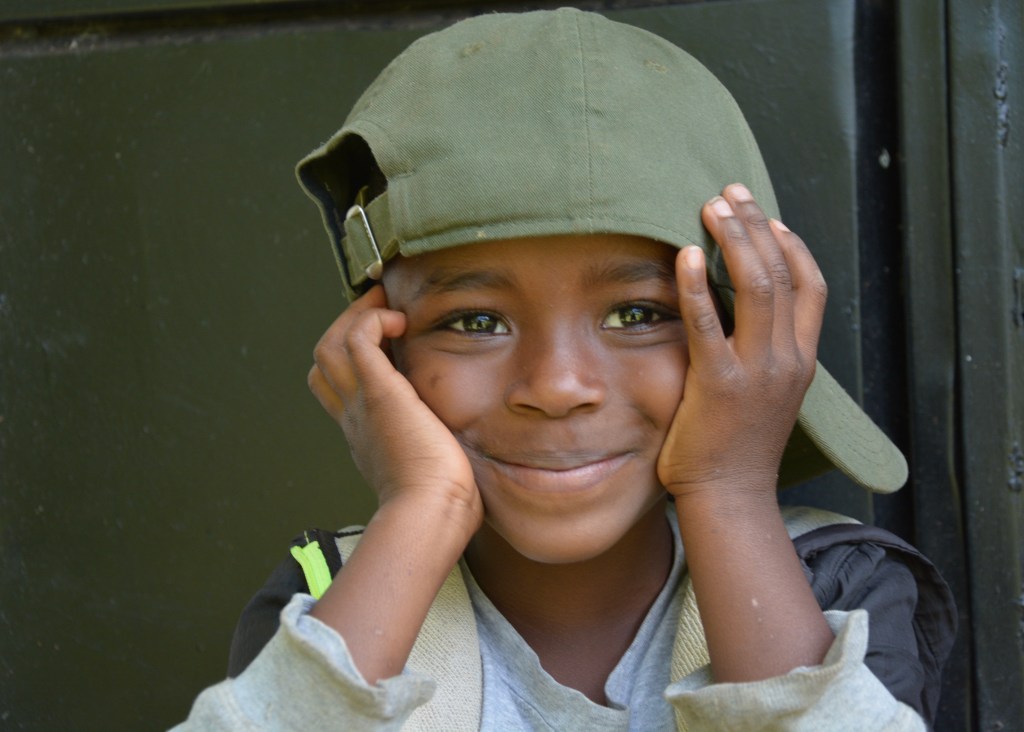
If nothing else, travel teaches resourcefulness and patience.
I’m in a bus travelling up the M5 at 17.10 on Thursday the 5th of December. My flight is tomorrow, Friday, at 6.00am, so I’m going to stay in a cheap hotel by the grim Bristol airport, surely one of the tackiest in Britain.
A text message pings in: ‘Your flight KL1074 on 6/12 at 06.00 has been cancelled. New booking on KL1080 7/12 at 13.45’. That’s Saturday lunchtime. It’s Thursday afternoon! I’m stuck in Bristol for an extra thirty one and three quarter hours. Too late to go home now, and anyway, I’ve lent out my house. I have to book a £90 hotel for Friday night in the city, and fritter away a filthy, wet, chilly day in storm-lashed Bristol. Rain bounces off the pavements and flies horizontally round corners on the gales. Wet and windswept, chilled to the bone in mere cotton trousers suitable for arrival in the tropics, I get through the day somehow. Now I just have to get to bloody Nairobi…
I have to leave Bristol airport on Saturday, which I swore I’d never do again: crowds of hen parties of tattooed women wearing as little as possible, pink hats and obscenity-emblazoned tee shirts, necking cheap Prosecco, taunting stag parties downing pints of factory lager, off to vomit and piss in the doorways of the ancient cities of Europe with less economic wealth and cheaper booze. There’s not much to be proud of here. Flying has no romance. Especially at Bristol.

Every plane I take is further delayed by one and a half hours, all three of them. In Amsterdam, we sit in the Nairobi plane – on the tarmac. After half an hour the pilot tells us that a baggage truck has bust a gut and leaked hydraulic oil under the plane. We sit and wait, cooking in the plane, while it’s cleaned up. Another truck is found and loading continues – for another hour, as the luggage is heaved aboard – well, (spoiler alert) MOST of it.
Despite paying £50 for an exit row seat, I’ve got a chicken perch in the back cabin on the new flight. I have a sleepless night roaring down across Africa and arrive at 07.45, thirty three and three quarter hours later than scheduled. Immigration takes only 20 minutes and then I’m at the baggage belt, waiting for my KLM ‘priority’ labelled bag. I wait. And wait. I begin to get a bad feeling that history is about to repeat itself. Now there’s no one left. The belt stops revolving. No more bags are coming. I’ve been here before…
I know the ropes. A pretty young woman takes my baggage tag and searches on her computer… “Your bag is in Amsterdam,” she tells me confidently.
I’m in Nairobi.
“This happened last year,” I exclaim. “It was ‘lost’ in that storeroom over there for a month!” She apologises in that oh so African way, as if it’s her fault. It’s impossible to be irritated with such charm. She promises it will be on tomorrow’s KLM flight. At least I left out the mature Stilton this year, just in case…
I leave with an instinctive smile. The first Uber doesn’t bother to turn up. I can see the little car icon driving in the opposite direction on my phone screen. It stops on a road half a mile away. I cancel the order and try again. This time the icon, and Newton, crawl towards me. At least I have no baggage to lug around. That’s three and a half thousand miles away.
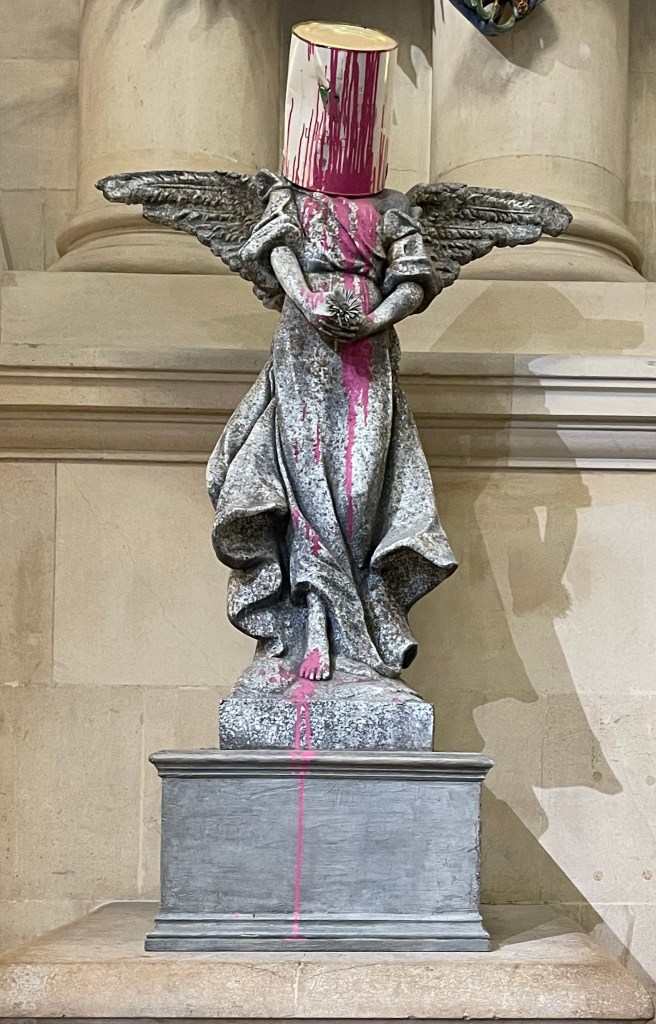
Newton drives me to the old fashioned, homely United Kenya Club with its green gardens and echoes of colonial Africa. I’m well known here. The receptionist gives me my favourite room, although it’s hours before check-in time. I don’t leave again all day.
****
Sunday morning, it’s back to the bloody airport.
There’s no consensus. Is my bag in Nairobi or not? The desk officer seems to think it might be, but the people at the ‘sharp end’, squeezing between hundreds of lost bags in chaotic stores, reckon it’s not here. “No, it hasn’t arrived…” But I insist on searching ALL the bulging stores, repositories of so many travel plans and dreams. Bags and suitcases, boxes and bundles are stacked ten feet high. The floors are impassible, we have to cavort between tiny islands of space, clambering over mounds of travellers’ belongings. But I can’t see my bag, and the young fellow with me, charming and eager as he may be, doesn’t have a clue what we are looking for. “Is it this one..?” he keeps asking. “I don’t think it’s here…”
Some of these bags must have been here for weeks, months maybe. Doubtless, passengers have fought the arcane compensation system, but many, like me a year ago, will have capitulated in exhaustion. Then, in a distant corner of the arrivals hall I spot a miscellaneous heap of isolated bags. My bag is tumbled amongst them!
The young man is delighted. I must give him his due, his customer relations are typically African. He’s thrilled with (my) success. “Oh, that’s fine! Now, you must just sign the book.” He turns the battered ledger to me. “…And maybe something for my coffee..?” he adds with a gentle smile.
I lug my bag, which will return home empty, across to the domestic terminal, where the next flight is an hour and a half delayed…
****

Half an hour short of four days since I closed the front door at Rock Cottage and set off to the airport, I step out of a plane in Eldoret, still 50 miles from my destination. Adelight, Maria, the late Rico’s brother in law, Jhost, and Rico’s Dutch grandson, Mano, on a visit, greet me warmly, and we pile into their hired car and drive home to beer time. At last.
It’s a slightly different visit this year. As you may recollect, as I waited for a taxi to Nairobi airport on my last evening in March this year, my friend Rico, who was the reason I first came to Kenya and began to build my East African families, died here in Kitale. We’d been friends since those heady days when we crossed the Sahara in 1987, he in an aged Land Rover with Liesbeth and Marti and me on my old friend, the African Elephant (still running at almost 43 years and 270,000 miles). We both discovered Africa together, that was our bond. Rico never really went back to Holland, and made a new life here, marrying twice and adopting a family of lovely girls, and eventually adding his and Adelight’s daughter, Maria, to the fold. Many of those girls, now all young women, have become my fond nieces, and Adelight a warm friend. But Rico’s not here to drink beer on the porch of an evening and tell stories of Africa. Now I have Adelight and Maria and my new small friend, Wesley, her brother’s five year old, to brighten my Kitale days.

‘Jonathan’s House’, the small room that we built in the compound seven years back, is now home to Tito, Adelight’s junior brother, and Naomi, with their children, Wesley and Wayne. They’ve moved to the house to provide security and help in this large compound. The children are charming, although Maria confides that when adults are not here, Wesley plays rough, and sometimes pulls faces at his mother. I tell her to be strong against it; lovely as the five year old is, Wesley is an African boy and will probably grow into the usual chauvinistic African male. Anyway, I say, he’s smaller than you so you can thump him harder! Maybe not the advice old uncles should give, but African boys need to be controlled, always favoured and spoiled by mothers for their superiority over girls. My influence may move these young girls forward in some way, who knows? Rico made all his ‘daughters’ independent and tough. I tell Keilah, my dearest granddaughter, in Uganda, that she can have ambition to be not only a nurse, but a doctor, a surgeon, a pilot, lawyer – president (unlikely in totally corrupt Uganda!), and that she is at least equal to all the boys. She doesn’t have to grow up being a baby machine for Ugandan men, working herself to the bone for their comfort and gratification.
****

Well, back in Kitale, we enjoy a congenial holiday with Jhost and Mano. It’s sad that Mano and Rico never met as adults: I can see many likenesses in his eldest Dutch grandson, 24. He would have been proud of him. Last year, his daughter, somewhat estranged for decades, made the trip to visit her father and restored relations – just in time, as it turns out. Mano and I bonded strongly. He’s a cheerful young man, a biker by enthusiasm and now a budding traveller. He tells me he finds me an ‘inspiration’ – a role I take on increasingly with old age. Most of the young bikers I meet on the road want pictures to send back to their friends, that show that age doesn’t have to be the end of enthusiasm! It’s a role I enjoy.
Jhost brought Mano to strengthen the bond between the Dutch family and their unusual African off-shoot, and it’s working well. Jhost, a retired high-flying optician, has been many times – we’ve travelled together here in the past – and he’s started many optical projects around the world, so he’s a seasoned traveller. It’s good for Adelight to bond with the Dutch family now Rico is gone.
****

Since February, my motorbike, the Mosquito, hasn’t run. When I limped it back to Kitale then, I left it for Rico to work on. Now Rico is gone, I am in trouble. I wish I had the knowledge of motorbike maintenance and repair. It’d have been rather useful, the way my life turned out. But I have no aptitude – and even less liking for it.
I arrange for Kato, the mechanic in Kapchorwa, 70 miles away in Uganda, to come round the mountain to check it. He keeps telling me I have to replace bits, but I wonder? Why am I changing so many parts of the machine: the electronic control unit, the coil, now the valves and seals? Do they really need changing? Trouble is, I don’t know enough about it. Now he says the starter motor, that’s been turning the engine just fine as we investigated, needs stripping down. At this rate it’d be cheaper to send the motorbike down to the Suzuki dealer in Nairobi (they know the eccentric old mzungu too) and have it done expensively but with original parts. As I write, on the 23rd December, two weeks into my safari, I’m waiting for Kato to drive the Mosquito back round the mountain – repaired and strong, he says… I hope.
It’s remarkable that Kato can drive my motorbike back and forth across the international border, whereas they hassle me for documents, certificates, stamps and engine numbers. He just says, “Oh, we know people!” and even shows me a picture of the army officer he knows at Suam Border. So he can export and import my machine with absolutely no proof of ownership, insurance, and paperwork! African life.
****
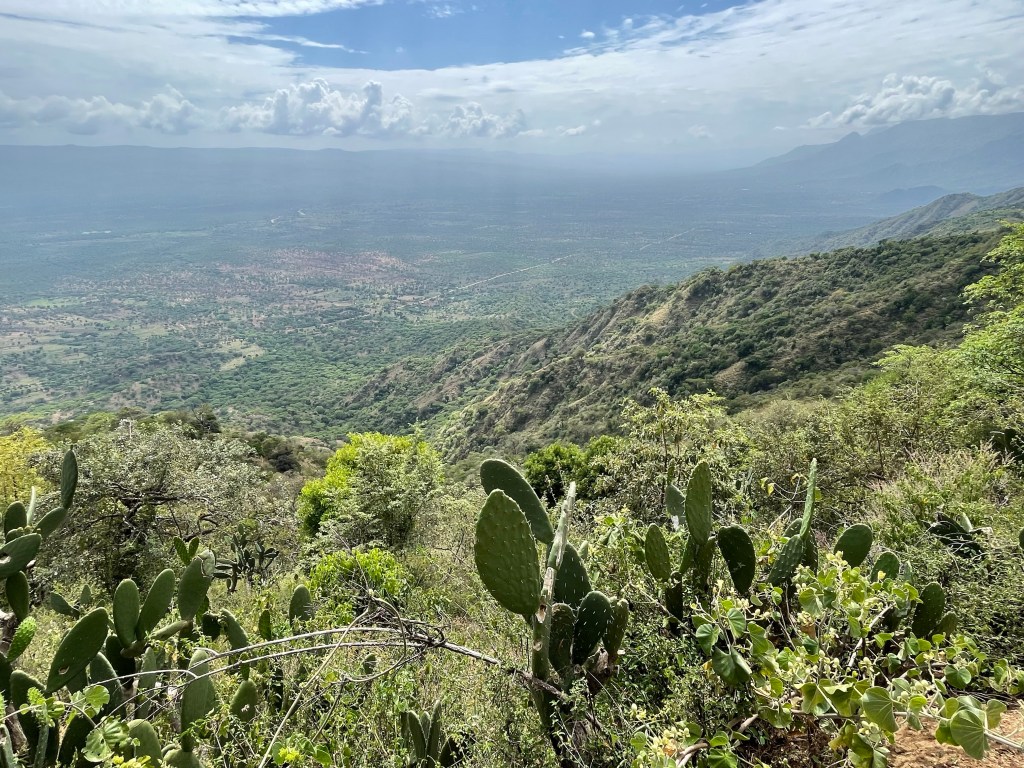
We see Jhost and Mano off from the airstrip in Kitale and a day or two later I set off to Kessup and the Kerio Valley – by matatu…
I sit in those battered minibuses and wonder that I have the guts to ride a motorbike in these countries! But when I’m riding, I know my senses are tuned, I know it’s fun, and I am generally hugely more observant and road-aware than most drivers. In fact, I must switch off and tune into a philosophical mode and let my European riding habits go. Then it becomes fun!
So, back to the lip of the magnificent Kerio Valley, to Lelin campsite, where I am so well known. William waits at the roadside for my matatu with a warm welcome: his mzungu. Now he has status again; is important while I am here. Also, he gets to eat meat, while I eat the greens with a bit of the meaty soup. Both are satisfied. He tells me that between my visits he almost never gets meat; I tell him that between my visits I am delighted that I no longer have to eat any meat.
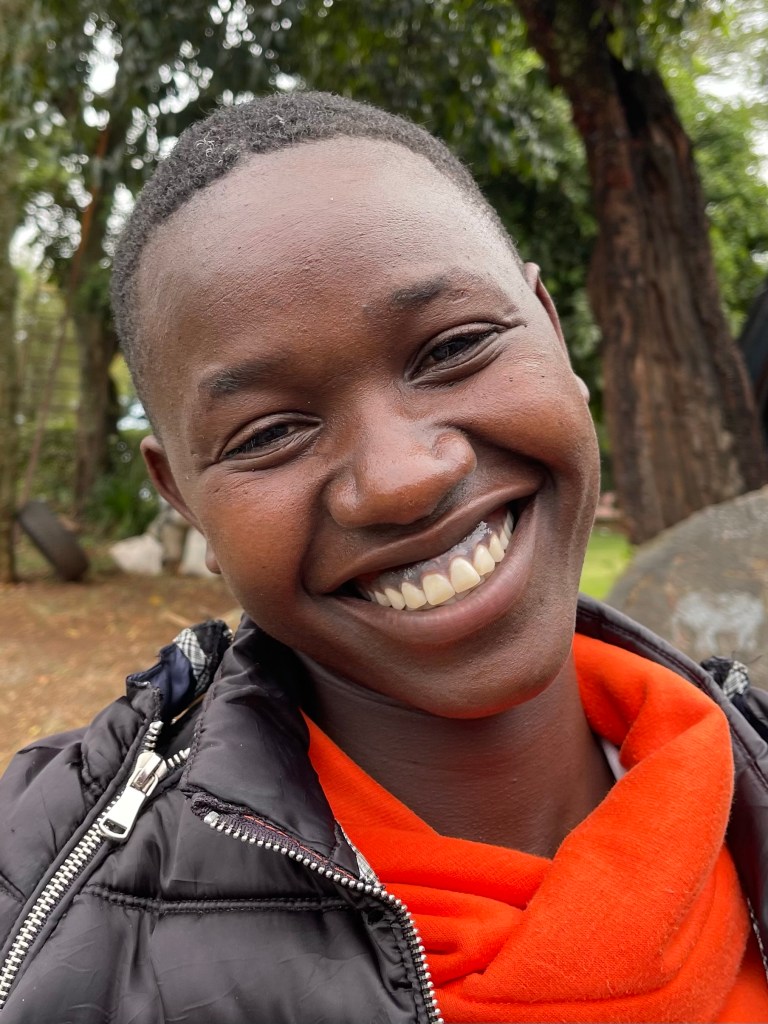
It’s chilly this year. I find myself adding as many layers as I can in the evening, and piling the covers on the bed as if I was at home. Well, maybe not quite as if at home, since I am still sitting outside and it’s not raining…
No one could ever accuse William of ingratitude! Our conversation returns again and again through the day to all the good things I have done since we met. I gave him his cow – seemingly a reason to get up every day. Now she has a male calf. From the few litres of milk he can sell to the milk cooperative he can make 31 pence a litre, enough to keep him in his next-to-nothing lifestyle. I stopped him drinking strong, killer local spirits, wirigi and KK; I advised him to quit smoking. “Eh, you have made me a big man in Kessup! To have a mzungu friend! A white man! It’s not a small thing!” To me, it’s more of a criticism of white people.
The guest house is empty; the view the same magnificence. The local governor has taken a lease on one of the large escarpment-top hotels, and diverted all the political and civil service business to his investment, many of them groups who traditionally held their office parties and days out here at Lelin Campsite and Guest House. My gain, Lelin’s loss, I fear.
I DO like the fact that William, having had his meat and three Tuskers, leaves promptly for home. Tonight at 7.30. Then I can relax, and probably retire to bed at a ridiculous hour of the evening!
****
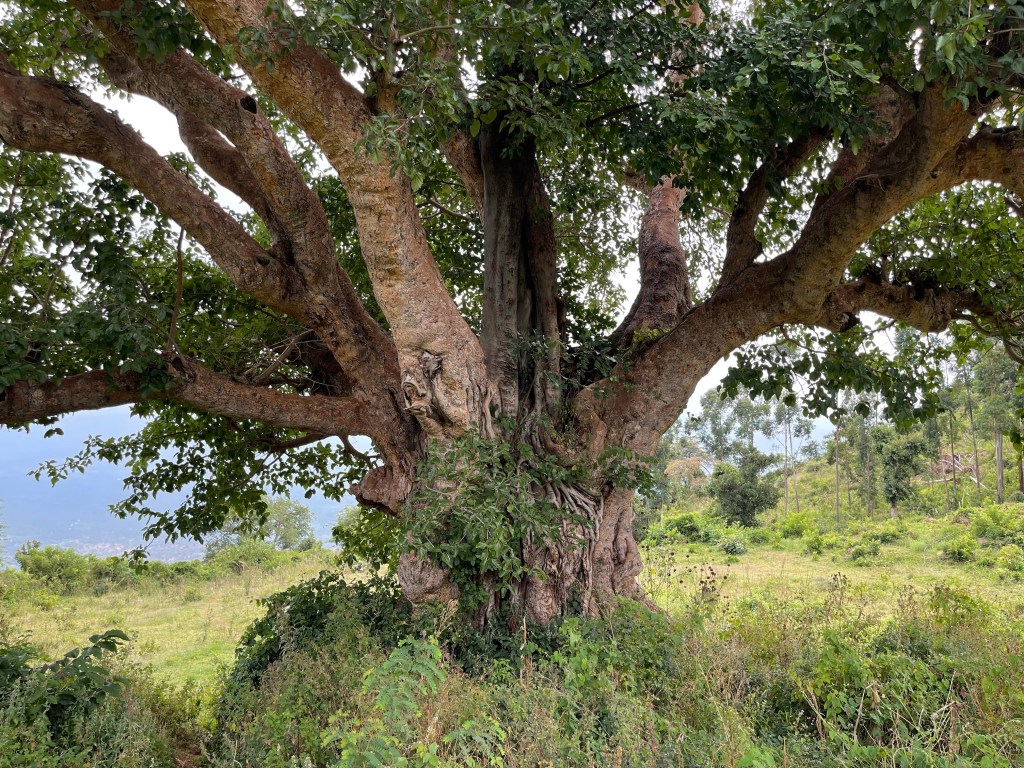
We like to hike in this magnificent scenery, William and I.
Today, we walk to Singore, with its lofty preserved forest, along the plateau, a delightful walk, with huge vistas across the Rift Valley, green vegetation and red dusty paths. We have to clamber steeply up into the forest; it’s as high as 8000 feet. We meet people everywhere, it’s a feature of African travel. But everywhere my smile and I go, I am welcomed warmly, “Habari, Kenya!”, “Welcome mzungu!” Children call and shout and run to greet me, often rubbing the hairs on my arms in fascination. It’s just delightful. I feel like a celebrity, and SO happily welcomed to people’s social circles, their compounds and fields. I greet hundreds of people on a day like this, my own grin a permanent feature. People at home in England ask me, “Aren’t you afraid, these places you go?” Afraid indeed!

For five days, William and I walk, between eight and ten miles a day, I guess. The great valley yawns taunting and inviting before us, plunging steeply from these green heights. Top to bottom is about 4000 feet, but at Kessup, we are already 1000 feet down the escarpment, on a sort of natural plateau or step, about half a mile wide and three or four miles from north to south.
It’s a challenge to my spirit and ridiculous concept of the search for eternal youth, that I must hike into the depths several times when I stay at Lelin, on the very lip of the gulf. It’s a 2750 foot scramble down unstable paths on a billion rocks, pebbles shards of gravel and dust, all slipping beneath our feet, through thick, scratchy undergrowth, in heat that increases from Kessup’s reasonably temperate (at present) 25 degrees or so, to the mid-30s at the bottom.
One day, we stumble downwards into the searchlight, sun-bleached landscape of the Kerio Valley, one of my favourite parts of East Africa, from our vantage point, thickly pixilated by thorn trees. Out in the middle by the pea-green lake, elephants roam in the bush below. First, we drop gently through the Kessup fields and red tracks, towards the edge of the plateau. William owns a tract of land down here, just a few hundred feet down, stretching to the dramatic lip of the valley, where the scrub-covered slopes drop away, the views expand and the heat builds. We slip and slither down the precipitous slopes.
The path is rough, but this is as good as it gets for a direct highway into the valley, where many families have land and graze cattle on the thin vegetation. William’s family owns a lot of land down here, on the slopes and across the valley floor. We stop, most of the way down, at a crude goatherd’s hut of sticks and mud and drink rather brown, earthy-flavoured water from a margarine tub, with a woman who tends some of William’s mother’s – one of the richest women in Kessup – goats. A small boy is fascinated, struck dumb by the rare appearance of a mzungu.

William hears that today his senior brother (by another mother) is holding a ceremony at his compound. William says we must show our presence. If his brother hears that William was so close the insult will be serious. And in this close society, it’s guaranteed that they will hear that William and his mzungu were in Rimoe. After all, we are News. We must divert and visit the event. Suits me!
From above, in a side valley, almost at the bottom of the Kerio Valley, we spot rented gazebos, filled with the white plastic Chinese chairs of every Kenyan event. Not much looks to be happening, but nearby on a hillside compound, is much activity. Women are cooking and preparing huge plastic bowls of intestines, smashed and splintered goat, potatoes and voluminous quantities of rice. The compound consists of a zinc house, a grass roofed round house, a building of smoke-blackened planks, and a brushed mud floor around a shady mature tree. It’s surrounded by thick bushes, but we approach from above, where all activity is exposed.
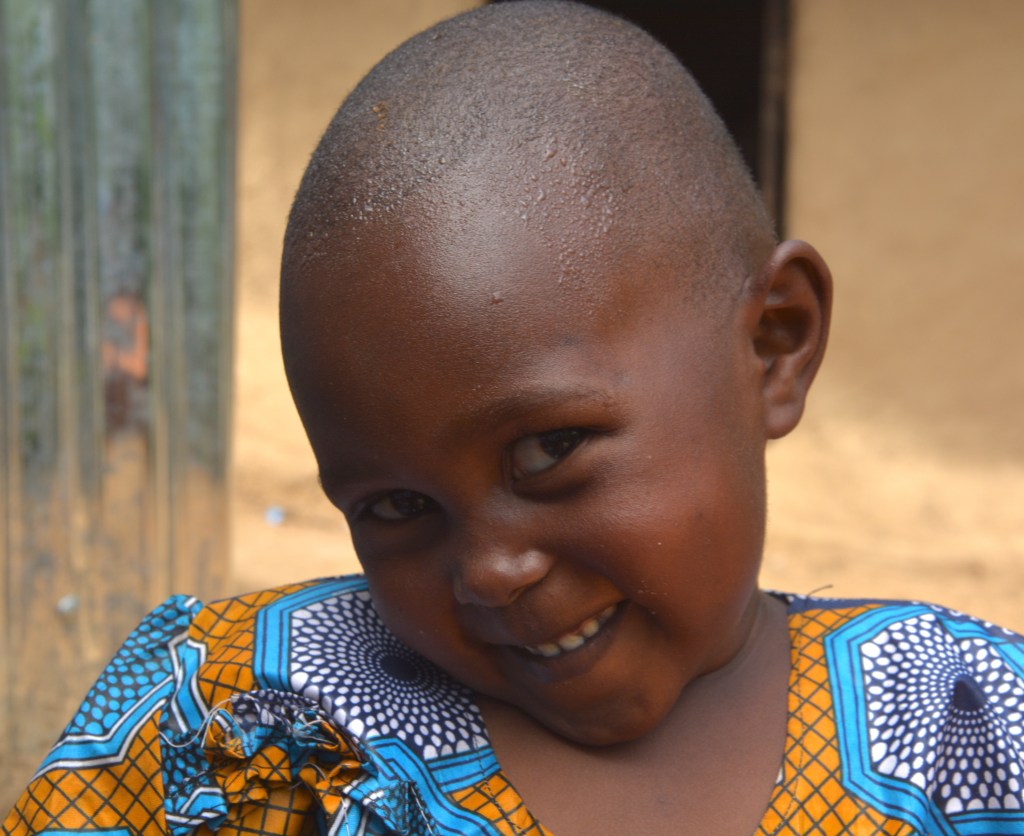
A mzungu arriving is a HUGE surprise! It’s such fun to be the focus of all this goodwill and welcome. Everyone wants to shake my hand and greet me. My visit is considered an honour to the event. What’s happening is that a bride is being ‘given away’ and presented to the bridegroom’s family. But I take photographs of several delightful children, the progeny of bride and groom! Gloria is eight years old, so this ceremony has been a long time coming! It’s not unusual that formal events only happen when families have saved enough money to throw such a big party. Such a party as this usually involves the slaughter of a cow, William says. We arrive at 1.00, but the celebration will last into the night. Later, as we leave along the long bumpy rock road that traverses the valley bottom, we will see dozens of guests arriving in matatus, on boda-bodas and on foot, even in a school bus. Africans love a party!

As surprise guests, our host insists that we must eat, although we make an excuse that we cannot stay the course of the event. But we will do our duty to William’s brother, and take a dish of goat, potato AND rice AND chapati. I’m afraid that my teeth won’t cope, especially now I am missing the two front teeth – the ones you REALLY need for pulling stringy African goat apart! But the meat is reasonably soft, the potatoes delicious and the sauce tasty. We make a good meal, and honour has been served. I take pictures – the bride, Brenda, is a very attractive woman, with her four appealing small children, all in matching dresses and suits for the day. I must join a family photo group, to prove that the celebration was honoured by a mzungu guest.
At least, I have the wisdom now not to walk both ways in a day. Even at the valley bottom, we are three and a half thousand feet high. Our destination is over 6600. I need more oxygen to operate. Slowly, I feel my body attuning to the altitude of the Kenyan highlands but it’ll be a few days before I really acclimatise.
****
In lands so dependent on reliable seasons, climate change is making drastic alteration in much of Africa. While climate change is existentially crucial to all mankind in the longer term, it’s felt with more immediacy in subsistence living, when crops rely upon certainty of rains and temperature. People used to know from hundreds of years’ of folklore and experience, that the rains would start in Kessup on March 10th. Now, it’s anybody’s guess. This year, as we walk down the steep hillside by the guest house, the river is in spate and the waterfalls worrying noisily between wet rocks. This time last year, the river from the high cliffs up there to the west, was almost totally dry, just a dribble between rocks covered in dried grasses and vegetation. And now too, in the evenings I must don my jumper and jacket as we eat supper outside above the deep, dark valley, where lights twinkle from small homesteads far below. Two evenings, we had to retire to the shelter of the verandah of my room to escape sharp showers. It shouldn’t be raining now. Across the mountains in Sipi, Uganda, it’s hardly stopped raining all year, and rained all through the dry season when I was there last year. Too much or too little rain here makes the difference between hunger and plenty, the ability to pay school fees, or purchase medicines.

****
Like most men of my age, I suffer the universal ‘old man’s urinary problems’. My best coping method is to make a story and a joke out of these things, and in so doing, I have come to realise that I am in plentiful company. I suggested to William that perhaps I should try some local, African medicine…
God, the things I put in my stomach as a world traveller… From snot-stringed dried and reconstituted okra (NEVER again!); fresh sheep’s milk yoghurt in a Syrian village chief’s house (sour lamb fat flavour); chewing on a still somewhat hairy goat’s foot and stew (when I had better teeth) at a Ghanaian wedding; a dribble of fire-peppery sauce on a rice flour dough ball during a siege in Sri Lanka, as tanks rumbled past the cheap hotel; roasted dog leg in a screw of cement bag paper in West Africa (tasty but tough – boiled in a thin Chinese soup is a lot better); pilot whale and blubber in the Faroe Isles, also ‘skerpikjøt’ (mutton air dried to aged leather) and puffin; crocodile curry somewhere in Africa (because it was on the menu); and now boiled sticks in Kessup…
A matronly woman, Elizabeth, trades in local medicines at the roadside in Iten, 1000 feet up the hill from Kessup, sitting behind a low stall filled with bits of roots, bark and sticks, dried bits of god know what and various battered plastic containers, frosted by time, containing mashed and powdered stuff. Elizabeth rooted about the stall for some minutes; it looked random, but she scrabbled convincingly, assembling about a sugar bag’s worth (£1.80) of desiccated bits and pieces, instructing William on preparation – although he knew most of this anyway, it’s old local lore.
“I’ll boil the medicine tonight,” he told me, “you must be ready to drink it at 7.00am.”
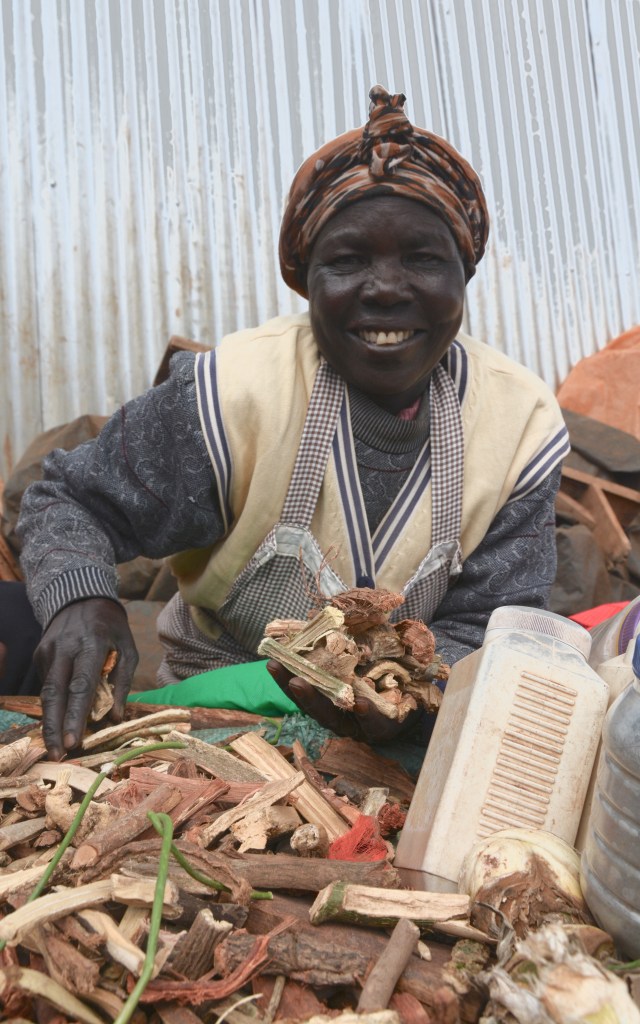
Next morning, sharp on seven – William respects discipline (a policeman, “Trained by the British!”) – I glugged down the filthy orange mixture. It was sour, a taste reminiscent of burned toast spread with rotting fruit. A tumblerful. Disgusting. Landing in my stomach as a definitely alien invader. I went back to bed, guts grinding disconcertingly. William had comforted me: “You might feel like vomiting, but even if you vomit, not all the mixture will be lost.” Oh great…
My breakfast – Spanish omelette and pancake, with milky African tea, was a challenge. The mixture is supposed to flush my kidneys and bladder. I had to put up with four doses. But I’ve been taking equally unknown chemicals for years, expected to trust unprincipled multinational pharmaceutical giants, and assist their mega-profits, with no more guarantee that they are doing any good, and a strong suspicion that they may cause nastier side effects than some dusty old bits of timber boiled in a dented African saucepan.
****
I’m satisfied that I hiked into the Great Rift Valley once again. 75 and still scrambling 2750 feet down to the burning depths. I’m also happy I didn’t attempt to hike back up the same day, though. Maybe that IS a thing of the past..? But even as we walk, William and I were discussing other routes we might try – up and down – this immense escarpment.
We’ll see…
For now, I’m back in Kitale for Christmas. Next week – complete with Mosquito, I trust – I shall go to Sipi, Uganda, for New Year with the family there. Life is good.

A bit of childcare. Not a chore!
HAPPY CHRISTMAS AND A GREAT 2025!!
 jonathansjourney.net
Happy Christmas from Harberton. Just off to sing carols in the square.
At least it’s not raining!
Have a wonderful trip – hope your motor bike is as robust as you!
Love from
Liz and Martin xx