EAST AFRICA 2023 – EPISODE SEVEN

FEBRUARY 28th – MARCH 11th

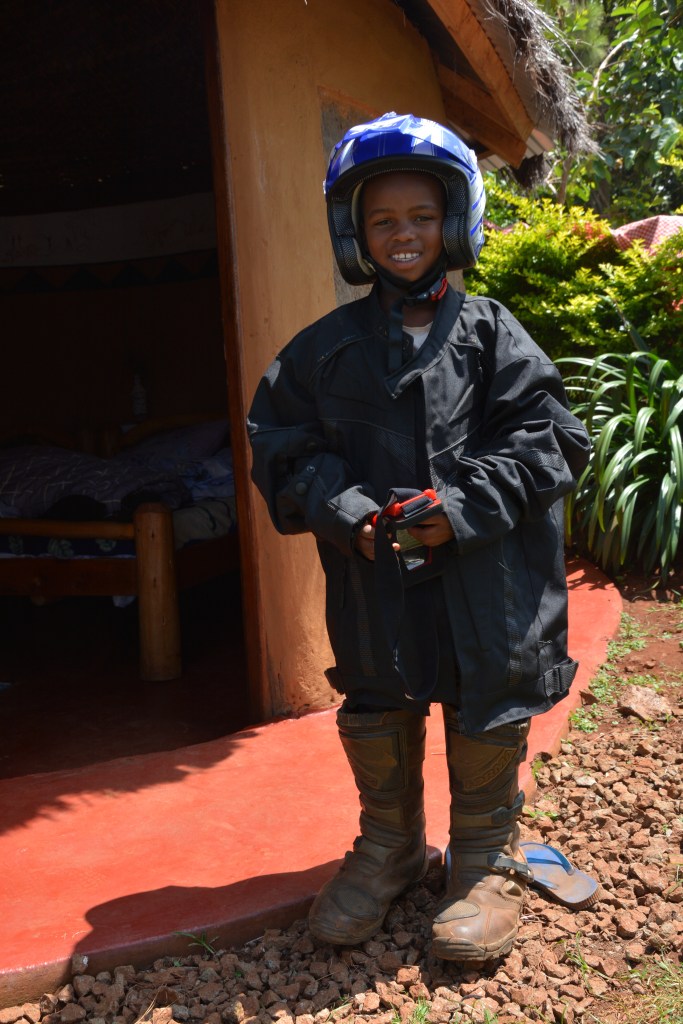
A mug of porridge, with neither milk nor sugar entices this schoolboy in Kashambya Primary.
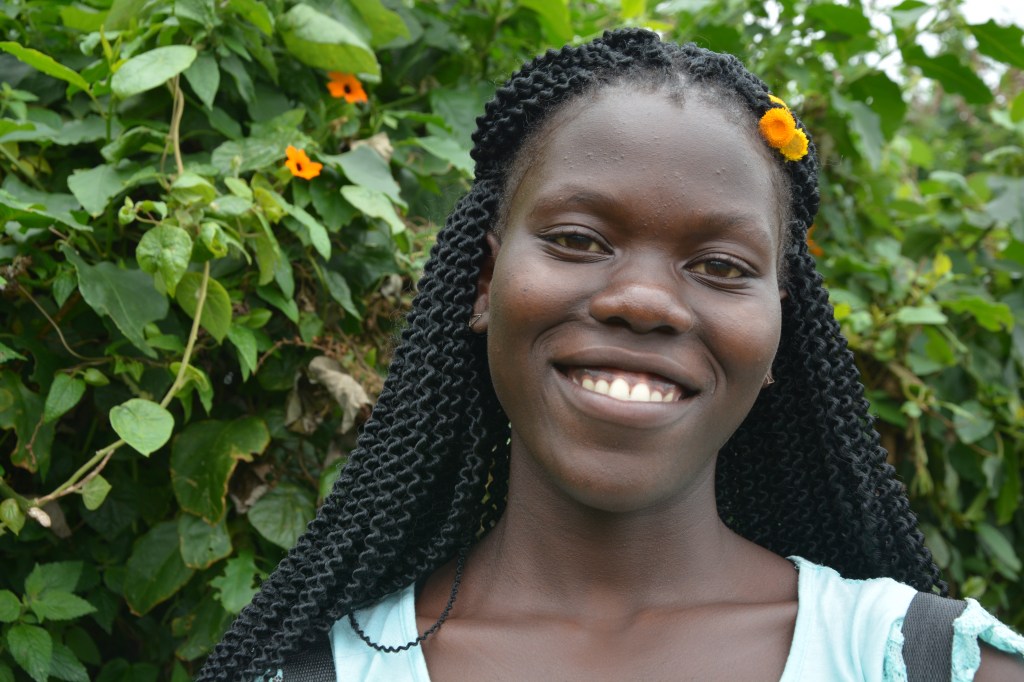
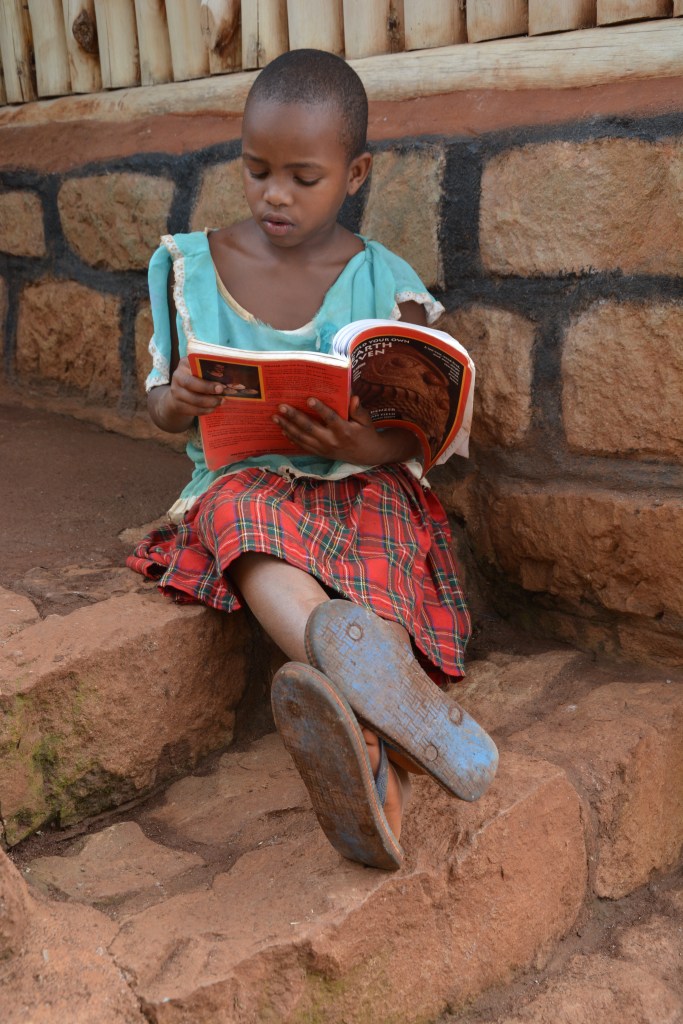
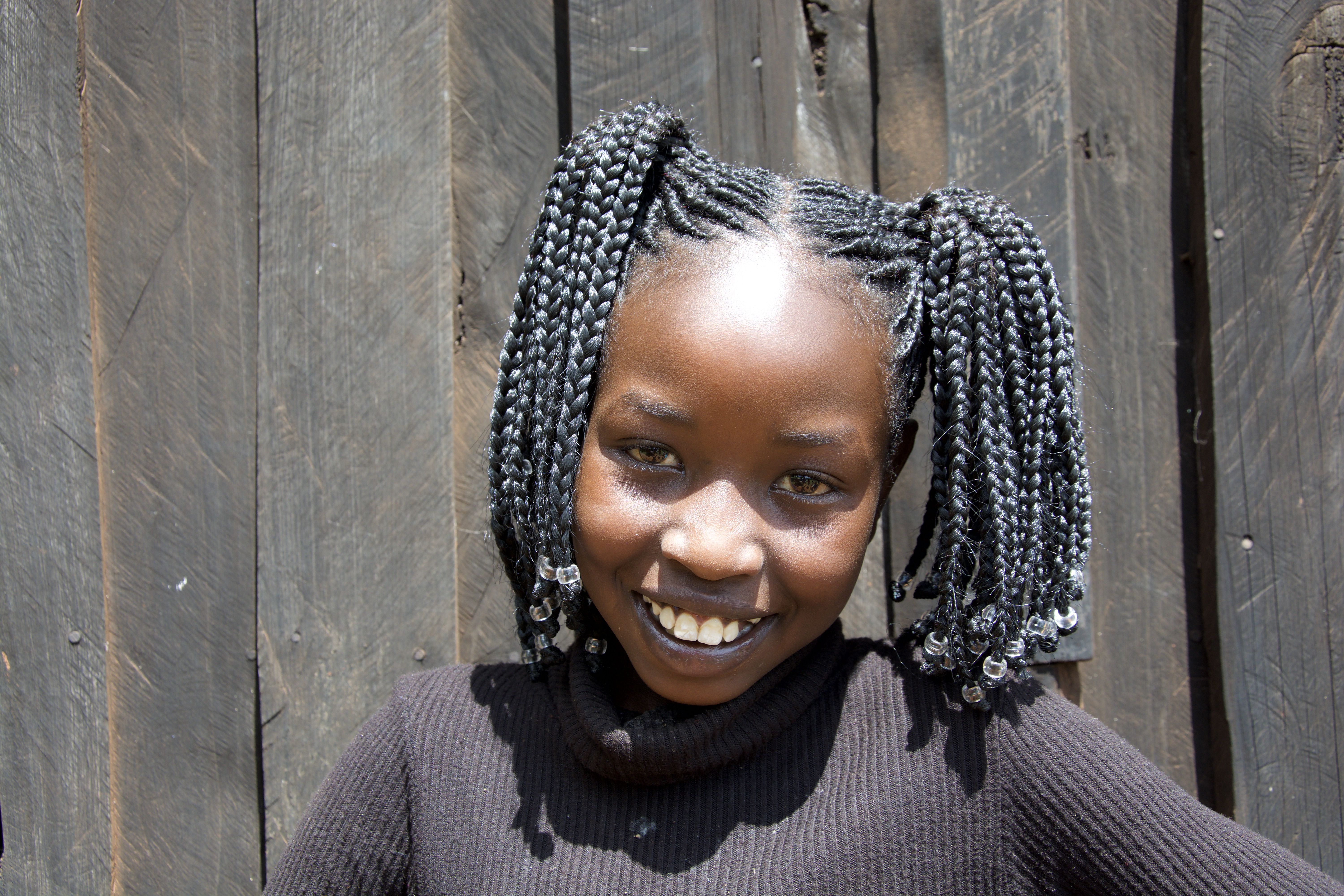
Kashambya Technical School girl.

So what of my contract in Tanzania..?

Despite my apprehension: not really knowing why I was there or what was expected of me; the mental discord that I am in ‘travel mode’ and not confident changing to work mode; the fact that I’m really not a film director – all aspects that weighed on me while I waited – I had a really good time and thoroughly enjoyed myself! It’s good for confidence that my peers still consider I have something to offer; I bonded instantly with, Amin, the young film maker from Dar es Salaam, and the hospital director, Mary. “You’re CRAZY!” she kept reiterating when we met and she heard the stories of matatus with 25 passengers and the fact that I’d hired a motorbike taxi to search for her hospital. “You’re CRAAZY!” But perhaps my most valuable contribution, that my American colleagues couldn’t have offered, is my now fairly deep understanding of African life. “You UNDERSTAND!” she exclaimed as we talked of the jealousy she incurs in her uneducated community, despite bringing them a state of the art hospital in the bush. “I never met a mzungu who understands how these people are so jealous and just think I am a rich mzungu, when all the time I am using my OWN money to help them..!”

Mary, born in Kashambya, trained as a doctor in USA, and now struggles to provide her people with a state of the art hospital in the bush.

Mary is a chubby, voluble American citizen, born here in the village near Bukoba, in north western Tanzania near the western shore of Lake Victoria. Daughter of educated parents, her mother was her champion, and willed her land in the village. As a now American citizen, she’s not allowed to buy land, but can keep land she inherits: hence the hospital in the bush. And despite her extreme generosity – “Of course, as a doctor in US for six months of every year, I earn well, but I’m spending so much of it here…” – her locality is envious and jealous and tries to subvert her efforts, and the Tanzanian government does nothing to help, mainly putting difficulties in her way: they resent outsiders coming in and aiding their people, when the politicians get no credit and, I guess, no corrupt cash for involvement. Oh, Africa can be disillusioning when you scratch below the surface of the safari tours and glossy tourism.

Mary and Gertrude, mother of a boy badly injured in a motorbike accident discuss how he was saved by what his friends insisted on calling the ‘mzungu hospital’.

*

On Monday, Mary was still busy and reluctant to take time to meet me. I felt I needed to do something at least and made my own visit to discover the hospital out in the bush. I’m glad I took the initiative as I was then prepared for our first day’s filming.

*

A serious storm boils over Lake Victoria.

Amin, the cameraman, was flying in from Dar es Salaam, delayed by some hours as a dramatic thunderstorm raged across Bukoba. I watched from my balcony as lightning flashed and the deepest slate clouds boiled over the lake. His plane turned back to Mwanza on the south side of the lake shortly before landing in Bukoba, which has no radar at its small airstrip – and is justifiably cautious after an accident that killed 19 passengers in November when a plane tried to land in bad weather and plummeted into the lake before reaching the runway.

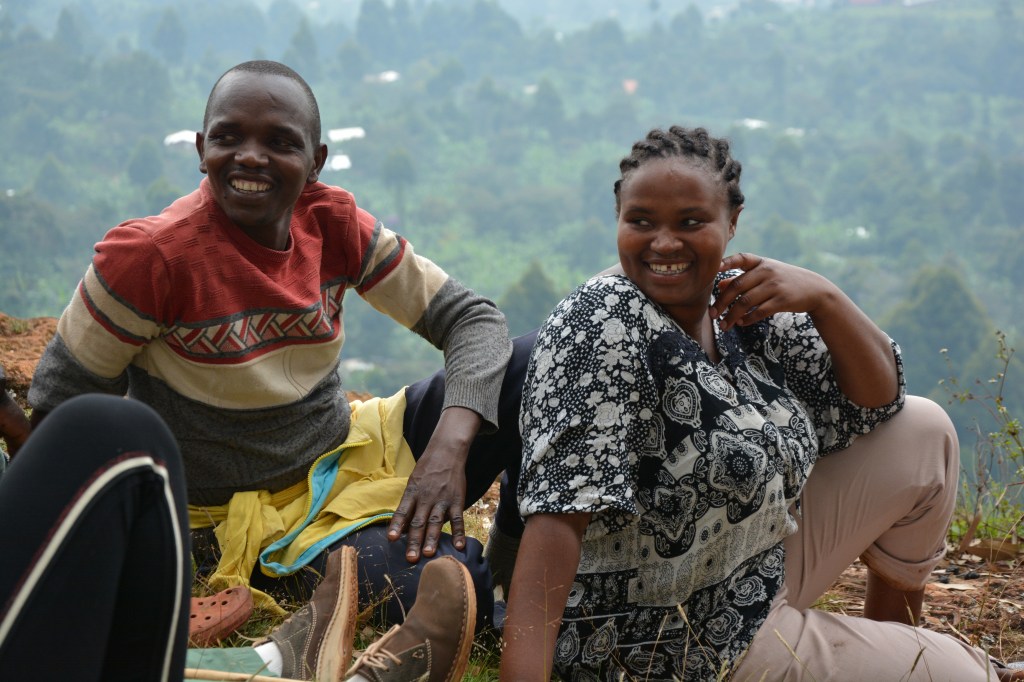
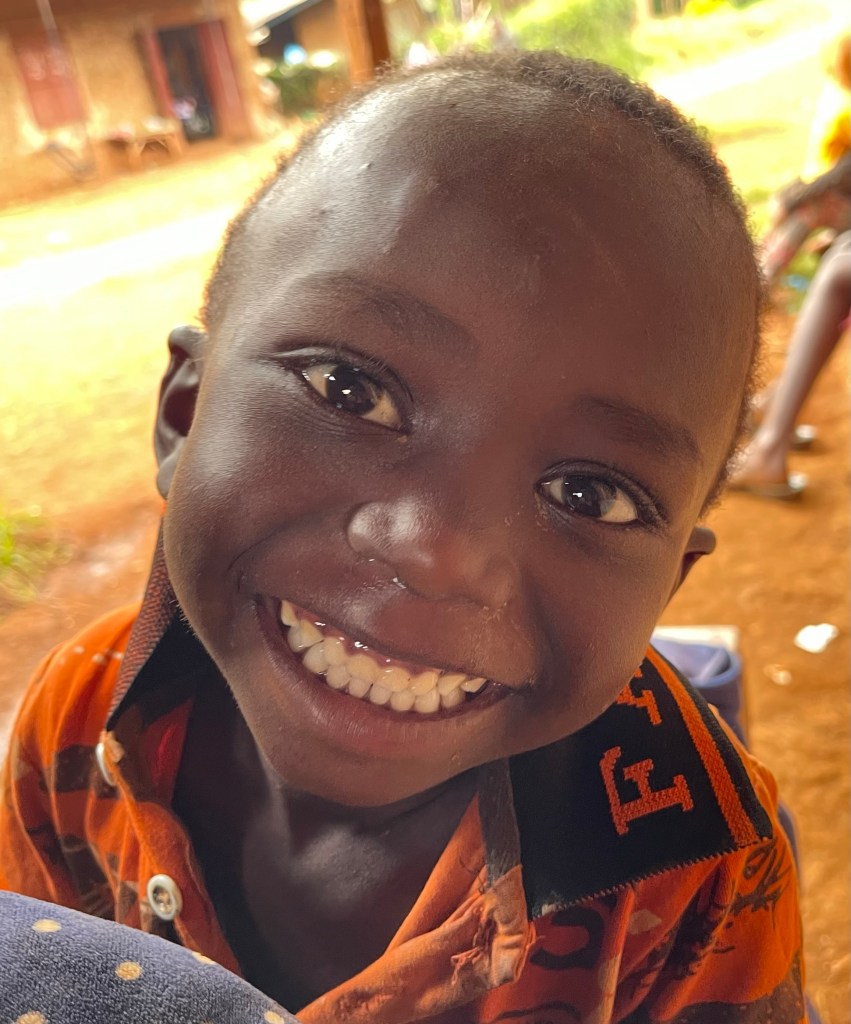
Amin, a pleasure to worry with, as the smile proves.

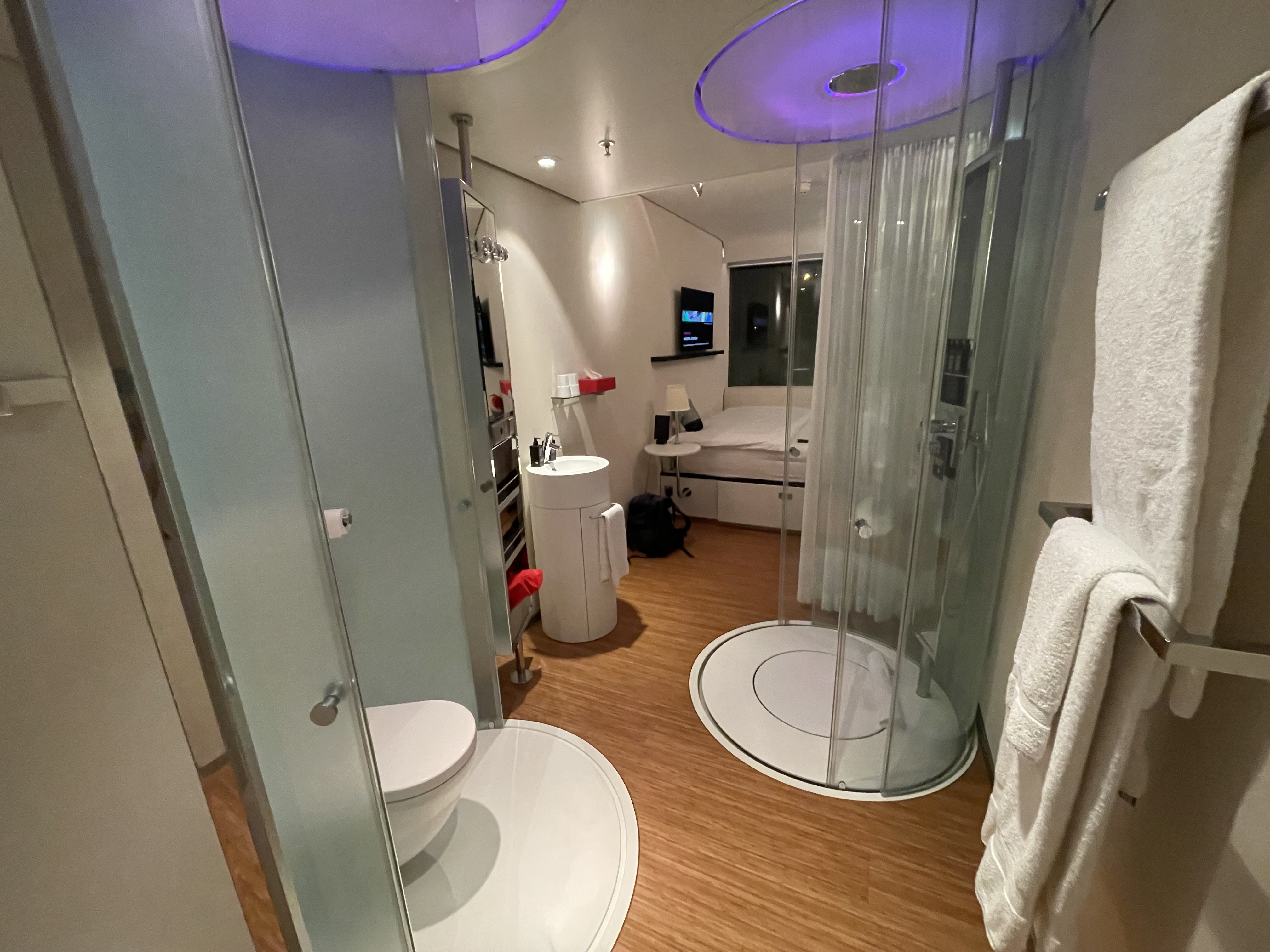
It was early evening before Amin knocked on my door and we could chat. We conversed for an hour and a half, bonding immediately and instinctively. He’s about 28, studied at film school in Turkey and is deeply committed to his trade. He works hard and with a smile. I so enjoyed his company, and when you like the people with whom you work, you invariably do better work. Mary came to introduce herself and have supper with us. It’s a Catholic hotel, considerably fancier at $45 than I usually inhabit. I had six pleasant nights, with a balcony overlooking the lake, as big as an inland sea, a simple bar and quite good food.

Establishing shots at the lake’s edge.

On Wednesday, we set to work. We’d shot lists and suggestions from our American colleagues, but most of them turned out to be pretty irrelevant to the actual situation on the ground. It’s a fledgling hospital with few patients. It suffers from the fact that most people nearby haven’t even a couple of dollars to spend on treatment.

Spensioza, our first patient, with very low bp.

An elderly woman was the first patient – one of just two during our filming. “Just give me the medicine, I don’t want to see a doctor,” she insisted. Doctors cost money. But with a blood pressure level that was dangerously low, Mary had to do tests to find the reason. In the end, she had to offer to pay the ECG cost herself, a few dollars.

Dr Sampson, the medical officer in charge, with Bryana and her baby, Namala.

The second patient was a young woman with a small, very cute girl who had almost died from pneumonia. “I had to discharge her with an intravenous drip,” Mary told us. “It’s against all regulations, but the mother has no money. But she has done well by her daughter. She’s attended every day for treatment.” By the third day, little Namala was walking herself, constantly unable to draw her sad little eyes from the mzungu.

Namala, who almost died of pneumonia. Saved by Kashambya hospital.
She didn’t like the treatment, though.

We filmed around the area for two days; establishing shots of the hospital and environs; women hoeing in their fields; at the primary school that Mary provided 20 years ago (“Just look, no maintenance since I handed it to the government. It was so clean and well cared for…” It requires great tenacity to achieve anything here.

This will be home to the giant new scanner, the only one for 100 miles. Yet Mary struggles with government regulations.

I took many photographs, a great excuse to get more portraits. We shot all over the new hospital, empty wards and the new imaging centre for which Mary’s American philanthropist is soon to supply a scanner that will rival anything in the province of Tanzania. Yet the government won’t even construct a gravel road to the hospital and puts endless challenges in Mary’s path. I can only conclude that there’s nothing in it for government officials…

Gertrude was sowing groundnuts in her field.
Gertrude.

On the third day of work, Mary organised a blood drive at a local technical school. Blood is rarely collected here, and a valuable resource.

A blood drive at a nearby technical school. Students were happy to donate in exchange for rare treats: a bottle of pop and pack of biscuits…

We filmed and photographed happily, despite torrential rain outside. The school was grim: having fulfilled most of what we’d come to do, I wandered off to the boy’s dormitory and kitchens. Tell a western student that they must live like this and there’d be a revolution. “Oh, I studied in a place just like that! That’s not poverty, it’s reality,” Mary dismissed the harsh conditions of the 25 young men in their miserable dorm, with its grubby foam mattresses, draped clothes and concrete floor beneath iron bunk beds.

“It’s reality…”
The technical school kitchen. Diet? Maize ugali with minimal soup of onions and tomatoes probably.

We worked, but we partied too. We all got along so well. Amin and I had our professional links and Mary and I were linked by my understanding of African life and the ‘other’ life we both live amongst more complacent Americans and Europeans. I hope we’ll meet in Massachusetts in due course, and maybe at Kashambya again. In the end, all my reservations came to nothing.

Happy donor.
A bottle of pop and some biscuits…

I hope we made good film, but it’s very different from the one my American colleagues imagined. “Much better, more personal and powerful,” Amin summed up our three days’ efforts. I know I got fine pictures, which gave me a confidence boost too, and the fact that we all worked so happily, with so much mutual respect was terrific. We all believed we’d done a professional job – and we’d thoroughly enjoyed it at the same time. What more could we ask? We dined on Friday night with a lot of pleasure and were sorry to end our time together. Having heard of my undignified arrival and so shocked that their photographer and video co-director rode a 12-seater minibus packed with 25 adults, three babies and all their bags and baggages, Rahym, the project manager, insisted that the project would send me back to the Uganda border by private car! I didn’t demur…

Children queue up for a mug of plain porridge at school. For some, it’ll be all they eat today except plain maize ugali.

*

Despite being on expenses (!) there’s not much advantage when travelling in Africa by public means. However much privilege I enjoy I have only the choices available to my fellow men and women… Much as I’d like to flit across Lake Victoria by air (actually, would I..?), there’re no flights to get me nearer my African homes. I am condemned to the matatus again.

Leoncia, hotel manager at Bukoba.

Making an early start for the journey back, I was driven away from the hotel overlooking the lake at 7.00am. The kitchen is unreliable, with breakfast scheduled to begin at 6.30. In the end, I had just time to grab a sausage, a pancake and throw down a mug of Milo. On this and six biscuits and half a litre of water, I survived the next 14 hours. It’s not surprising that I have notched up TWO belt holes by now: two inches off the waistline.

Winni, lab assistant.

On my ghastly ride to Bukoba last Sunday, I saw none of the scenery from my contortions in the minibus. Now, I rode in style. The driver didn’t speak English so I was at liberty to relax and gaze at the fine, wide views of rolling savannah grasslands and fir forests. The road was quiet, the driver considerate, and traffic laws are observed and roads maintained in Tanzania. It made for a more relaxing journey than the ones to come later, in madcap, disintegrating Uganda.

I was at the border at 8.45. Formalities were polite and friendly. Once again, I paid my $50 and walked into Uganda, slopping through the thick brown mud of Mutukula once again, only this time, after rain, it was sticky and disgusting. Only the customs officer made any issue of my entry, insisting on going through every corner of my – very small – backpack, opening every bag and case. I haven’t much respect for authority at the best of times, but when I know officials are just trying to make a meal of their petty power, it evaporates completely. “Why don’t I just tip it all out on your floor?” I asked, doing just that, dirty washing, bag-bottom debris and all. “I’m going to have to repack it anyway because you’ve turned it all upside down.”

Matatus were waiting up the road. I waited the customary hour for it to fill – this time with 18 passengers (remember: they are called ‘18 Condemned’ in Ghana!). The fifty miles or so to Masaka are potholed and broken; now we splashed through deep slippery pits of mud as well. The car crashes and bounces, the passengers shaken and battered, the driver sharing his seat with a noisy woman. How can he drive, forced against the door with three passengers on the front seat? Well, I call it ‘drive’… That implies a certain regard for vehicle, passengers and life. That’s not the way here. None of the passengers can drive themselves, so no one actually COMPREHENDS the dangerous practices on these roads: freewheeling down any slope to save a soupçon of diesel as profit for the driver – who doesn’t own the vehicle. We’re overloaded for the same reason: the extra fares go to this lousy driver.

We are squeezed into an undignified space, eighteen strangers condemned to face their chances together on this road with undisciplined users, corrupt police just there to collect bribes, in unroadworthy vehicles on broken roads. A voluble argument breaks out in this small space. Everyone has an opinion and wants to share it, loudly. I’ve no idea what it’s about; something to do with the woman who’s sharing the driver’s seat. She got out and went to a shop, delaying us all, and got back in the car with no apology. Everyone’s yelling at her now, but she’s arrogant. Eventually, it seems the passengers all vote to throw her out, and happily she disappears. The driver still shouts his justifications. This harangue is going to go on and on. I delve in my bag – on my contorted knees of course – for my earplugs and retreat from it all. When the conductor tries to move me to a smaller seat, (I already have to sit sideways with my feet in the door foot well), I play the grumpy intransigent mzungu. I’m not moving. The man next to me is big enough for two as it is. The vehicle is dangerously overloaded so the driver can make a few extra bob – at the expense of safety and comfort. Comfort! Hah! Most of the passengers are shouting into mobile phones. It’s odd how people have so little sensitivity or shame about sharing their intimate conversations with strangers these days. I hate making any call in public, with others listening.

Zenna.

At 2.00 in the afternoon – I got up in Bukoba at 6.45 – we cross the Equator once again. I’m back in the northern hemisphere. A few souvenir shops and another school called Equator Primary. There must be dozens along this imaginary line across these countries. We’re still at least two hours short of ghastly Kampala. It’ll take the last hour and a half of this awful journey just to get into the city. I don’t intend to stay there this time, I’m going right through the horrors of the decaying city and its seething population. No one talks to me on this journey. It’s not so friendly down here as it is in eastern Uganda. But at the end of the ride, it seems that James, a young man beside me now, in a shiny blue suit, is also going on to Jinja this afternoon. “In that case, I’m going to follow you!” I say as we emerge into the frenetic mess of Kampala and matatu conductors and touts descend to hassle me. James know where we are going for the next matatu: it turns out to be only a quarter of a mile through the busiest streets I’ve ever seen in my life. It’s Saturday afternoon and chaos. There are tens of thousands thronging the streets, battling with boda-bodas riding the wrong way through pedestrian precincts (‘Strictly cycles only’) and the gross flashy cars of the Big Men, forcing their arrogant, proud way through these broken streets. Those who consider themselves above the rest of us, put on their hazard lights and drive forcefully, pushing peasants out of their road. These really are the nastiest manifestation of humanity in Africa.

Kampala, a warning to the world…

Somewhere along the trial of this ride, I get an excited message from Alex: ‘We have our first camping guest at Rock Gardens!’ Good, things are finally taking off for him. I’m on my way back too. He’ll be happy.

James directs me to the next matatu going to Jinja, so called ‘Source of the Nile’, where the great river exits Lake Victoria. There used to be impressive falls there, until the government blasted them away for a hydro scheme. Now the town broadcasts its tourism status, but I visited the ‘Source’ a few years back: a place of plastic debris, dust, filth and tawdry bars. But this visit, I just want to break my long awful journey. We get to the matatu and James starts to back away. “I thought you were coming to Jinja?”

“But I don’t have money for this bus, I will go and get another…” I thought it was a standard fare, maybe not. So I offer to pay his fare, telling him that his protection of the mzungu from all the touts and cheats is worth the £2.50. A mzungu is like a magnet. We get the front seats, so I can witness all the ghastliness of what’s probably the busiest, most frustrating road in all East Africa. Millions of vehicles crawl this way every day, on a broken road, single carriageway, with 22-wheelers staggering up the hills and everyone fighting through the densest traffic and filthy, obstructed roadside towns filled with crazed motorcyclists. Sometimes we dash forward three abreast in desperate overtaking; at others we delve off into broken mud streets in hectic towns, a pointless attempt to get ahead of the jams, rolling and bouncing on informal mud roads between shacks trading so much Chinese crap it’s mind-boggling. And those proud men force their way with their hazard lights flashing, better than the rest of humanity. We got in this minibus at 4.00, left at 4.45 and it takes three and three quarter hours to travel 51 miles… Less than 14 miles an hour… It’s just awful. I never want to see this road again. It’s little more than a traffic jam fifty miles long. Fancy being condemned to LIVE here and use this dreadful road. It doesn’t bear thinking of…

The smiling mzungu fascinates a small boy.

I reflect as I watch the appalling antics of a million drivers, that this is how I used to travel for all those years before I became a biker. The stamina and sheer cussedness are still there, but I’ve become used to my independence, the ability to go where I want, stop as I wish, detour on a whim, investigate. No, I don’t want to travel like this any more, unless I am forced by circumstances. It’s not that I’m getting too old – perish the thought! – but I’m not enjoying this experience.

Kampala madness.

Darkness falls, now we’re dazzled by errant lights, or sometimes there are no lights at all. It’s SO dangerous, this pitted road with the crawling 22-wheeler containers – with their faulty brakes and mad drivers. We’re approaching Jinja very slowly. It’s 8.30 at night, and I set out at 7.00 this morning. So I decide to do something I almost never do: book a place to sleep ahead. I’ve got internet on Mr Bezos’s phone, so I find a hotel on the horrid booking dot com (I even have to write it that way to avoid links and cookies being forcibly downloaded to my writing). I’m on expenses! Why not use the convenient method? But it’s interesting that it’s the worst value I’ve had on the several last trips: usually I just pole up and look around, then bargain a room in the best looking of choices. Most travellers these days lack the confidence to do that, so they get ripped off by an all-engrossing, intrusive internet giant instead. This place is double the usual tariff I pay, and not worth it. Still, I’m not paying – but I still resent the poor value. It’s only a night, I want to be away early for the journey home to Sipi.

*

In the morning, it’s another one hour twenty minute wait for the matatu to fill up to leave for Mbale, the biggest town near Sipi. I pride myself that at least with this long wait, I get the front seat again. But to my consternation and irritation, it turns out the minibus is only going to Iganga, twenty miles up the road. I am shoved unceremoniously into the cramped back of another bus to Mbale, a madcap race behind a fast driver who constantly throws the car into neutral to coast down the slightest slope at 50mph with 19 passengers in the back. I wonder how long it’d take to stop this heavily overloaded vehicle with all the sacks of vegetables on the roof when the brakes fail. They will one day, for maintenance is an unnecessary expense. I have the same experience in what I hope is the final minibus up the mountain to Sipi: the driver tells me he’s going no further than the bottom of the hill and I must take a boda the last 15 miles. No way! I bargain with a taxi car and buy a couple of pineapples while I wait. But the car is almost twelve pence more expensive than a motorbike, so no one wants to go in the car unless they have heavy sacks to carry. I wait. I give the driver an ultimatum: five more minutes and I’ll be forced to take a boda. He grumbles. I wait. Then a smart tourist car from the most expensive Sipi hotel pulls up and asks if I’d like a ride. Would I like a ride! And Ramazan drives me up the hills. He’s a local tour guide, who organises treks to the top of Mount Elgon, several-day hikes. He also works at the expensive hotel. He knows Alex and I do good marketing-speak all the way up the mountain, such that he says, “I’m not dropping you in the centre! I’m coming all the way to Rock Gardens. I need to look at it. I have many guests for whom it may be just what they want: a taste of African life.” Exactly, I agree, that’s what we’re trying to create. And happily, we have a guest too right now. We show Ramazan around and give him some of the brochures we printed in Kampala. I really feel that Rock Gardens may begin to take off now, with this marketing.

*

Elio, Precious and Alex go hiking.

Elio is a charming young man from Berlin. He’s camping in the garden. I laugh when Alex tells me that he phoned, having seen the website and been attracted by pictures of the gardens, and asked, “Do you have a tent?” (Apparently, it’s the norm for hotels like this to supply the tent. I assumed the camper brought his own.) “Oh, yes!” Alex assured Elio, the scurrying about while Elio came up from Mbale, finding said tent! An ex-army friend had a tent and agreed to sell it to Alex, who had no money! So Elio arrived to find a brand new tent ready for him, despite Alex’s debt that would be paid when I arrived.

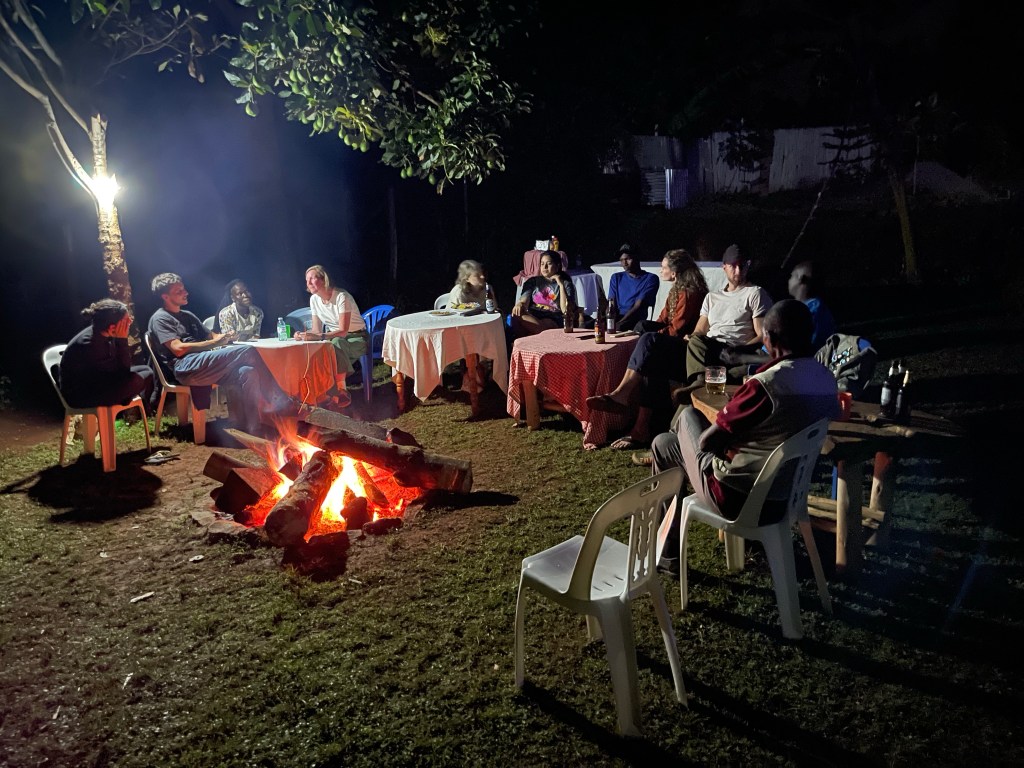
Elio (a Greek name, he says) is just 19, and has been volunteering in Tanzania and now wants to explore more of East Africa. A mature, curious fellow, his company was great. These days, I find myself often becoming a mentor or inspiration to younger travellers, a role I relish. Old enough to be his grandfather but humble enough to be equal, we had good conversation and chatter till late nights around the fire pit. “I shall really miss this place!” he declared on his third and last evening: just the reaction we want. He became part of the family in a couple of days: ‘Uncle Elio’ to the children and hugged by Precious. This is what can make Rock Gardens special.

*

Precious made it all the way!

On Monday we hiked again, the pastime I’ve come to enjoy so much here. Precious has been eager not to miss out, and the prospect of young Elio’s company encouraged her to join us. Alex and I gave her an hour before she was asking for a motorbike to take her home. To our amazement, she walked ALL the way from Sipi to Kapchorwa, a huge distance of at least 12 to 14 steep, hilly miles, a feat of endurance that not one of her neighbours and friends would even consider possible. She was proud and is looking so much better than a year ago, when her weight was increasing and her confidence in this jealous, envious ignorant village decreasing. I’m happy to see her doing so much better, especially now Rock Gardens is perhaps just beginning to burgeon.

*

While we were out walking for the day, an unfortunate but typical event occurred. Someone broke into Elio’s tent and stole two small banknotes, maybe six or seven pounds in value. But the story tells so much about the thinking of Uganda. The thief was young Abraham, who’s been working with us, and for whom Alex has been finding small jobs. Now, he will probably never come back, and certainly will get no more valuable support from Alex. It’s the usual short-sighted thinking: a quick few shillings, rather than the ongoing support for a hard working young boy whose father just disappeared one day. Few on this continent plan or think for the future: the value of long-term support – or a quick buck, once off. They’d rather steal a dollar today, than reap a dollar a day for the next months. But the example filters down from the very top of the hierarchy in this crumbling, immoral country. A quick corrupt buck now is valued more than the wealth of integrity and work. All the way to the top… It infiltrates Uganda society, infected all down the social chain. I’d considered helping Abraham to go for lessons with a local building school…

Beatrice.

*

It’s a rich irony, an irrelevant farce, that Wednesday was International Women’s Day: in this culture where women are expendable slaves. The local council had allocated 300,000 Uganda Shillings for celebration – hardly a generous gesture at something under £70: enough to buy guests a packet of sweet biscuits and a bottle of over sweet soda that will boost the shameless profits of the Coca Cola Corporation, who licence almost every single-use plastic bottle that infests the Ugandan countryside and environment. However small the meaningless gesture to International Women’s Day by the local authority, 180,000 shillings was instantly corruptly ‘diverted’ – without doubt into men’s bank accounts, leaving just 120,000 shillings, just £27 to commemorate a day that really has no relevance in this medieval country. It’s just how things work here. It’s blatant, shameless and expected by the cynicism of the population, who’ve watched this corruption all their lives.

In so many ways, this is a completely medieval country, socially and morally stuck in an ancient ‘cultural’ and ‘traditional’ past where the ‘wisdom’ and power of men is preserved at all cost. Education levels are abysmally low; many aren’t even in school; this country had the longest school closures in the world during the pandemic – despite very low Coronavirus statistics – although it’s widely believed that the government inflated them richly to milk more aid from the international community… Schools were closed for an unjustifiable 22 months.

I’ve come to understand that there’s only ONE route to development: ‘Education, Education, Education’ (to quote another politician who formed delusions of power). Here, it is a low priority. I’ve also come to understand that it’s so much easier for despotic governments to rule over ignorant people, from whom most powers have been wrested.

The mad population explosion here – remember, the average birth rate per woman is seven babies…; pollution – this must be one of the dirtiest countries on the continent; equality – hah, just a joke here; agriculture and nutrition – with the attendant problems of poor physical and mental development; even poverty itself, can be addressed and affected by Education. Pouring limitless money into churches and religion keeps this country in its middle ages. And I see two or three so-called churches (AKA business opportunities) to every school. It’s even more obvious in poor rural areas. The churches take on the role of control and subjugation of the ignorant people; they pay no taxes and aid the government’s programme of oppression. It’s all so simple when people are emasculated by those at the top…

Power corrupts… Why is it that I can point to so few African leaders who benefited their people? Nkrumah, Mandela… and then I begin to struggle. Is it, I wonder, that colonialism trusted, and consequently trained so few local leaders that at its importunately hasty end it left a vacuum open to greed and despotism? Or is it just lack of education that precluded any sense of democracy for the African people? Democratic choice thrives in educated communities. There is rare democracy and rare decent education on this continent… But, then there’s Zimbabwe, the most educated country in Africa, and even that’s in a mess, caught in the treadmill of despotism and conflict. However, they do settle their differences in a relatively adult manner, as their peaceful ousting of the criminal Mugabe testified. Uganda, though, is steadily building the usual dynasty, as the president’s son gains power for the future and opposition is silenced.

This country, Uganda, could be such a lovely place to be. I feel so sad for my educated friends who had the misfortune to be born to an undeveloping country and must strive and struggle in such a cesspit of corruption and hegemony.

*

Rock Gardens gets a new sign.

I spent four more nights in Sipi, and then it was time to head back round the mountain once again. My 2023 safari is near its end now, just days to go before I fly back to hot water bottles and blankets. The one personal benefit of International Women’s Day was that schools closed (any excuse) for the day, giving me a day with two of my favourite small children. I constantly persuade Keilah that she is equal to all; she can become a doctor, a pilot, a lawyer, a professional woman. She’s only six, but it WAS International Women’s Day! I’ve come to love Keilah so much: a truly delightful, warm, loving girl, with keen intelligence and bright character. Little Jonathan Bean Cheptai is still a rambunctious child, but has also intelligence and cheer. They’re stimulated by loving parents who, despite peer pressure, intend to limit their family to a size they can educate and bring up with whatever privileges can be managed. “Oh, I left that chapter long ago!” jokes Alex with Elio as we walk – and see that just about every young woman has a baby at her back as she carries weighty firewood from the valleys, water from the springs, washes, sows, harvests and keeps the home – on International Women’s Day, as the men sit and drink local brew and ‘marry’ more downtrodden women to produce more babies they can abandon.

Keilah and Jonathan have a day at home with their mzungu.

On the 9th, I must head for Kenya. Precious and Alex come with me by boda-boda to Kapchorwa, where I can get a minibus to the border, 75km away. The rider Alex calls for me, Levi, is actually a good rider; there aren’t many. I say my usual spiel about docking 500 bob for every time he freewheels downhill, but Levi actually knows how to ride in gear. He’s the first I’ve found who isn’t totally confused by my instruction to use engine braking, not his cheap Chinese brakes. In fact, Levi has an Indian machine, well maintained and 150cc, a TVS, in good condition. It’s two years old, he tells me as we ride. Most machines are broken and battered by overloading after two years.

At the matatu stage, four vehicles are waiting and the touts pounce on the mzungu. I hate this: I’m just money on legs. Thankfully, I can leave the negotiations to Alex. I’m promised the front seat in three vehicles, but there are only two other passengers and I’ll wait a couple of hours at this time of day: it’s already 10.30. I take a plunge: “Have you Levi’s number? I’ll go by boda!”

Someone around us has the number. Levi returns. He calls Alex ‘Uncle’; he’s some relation. We agree a price: £11, instead of the matatu fare of £3.50. But that money will buy him petrol for the 50 mile ride and fare him back to Kapchorwa if he gets no return passenger. I’m on ‘expenses’ anyway! It seems fair, so we agree. I hug goodbye till next trip to my two surrogate children, whom I’ve come to respect and love, and wave farewell as we set off in the bright sunshine. I’ve NEVER ridden more than half a mile without a helmet (except on bodas for a few miles) but now I must sit in the searing equatorial sun for almost two hours on the back of Levi’s little bike. I’ve more time to look about than usual on this magnificent road. I’m travelling light. He rides well, and we reach Suam border by one o’clock – I’d still be waiting for one of those matatus to fill.

JB, Alex and Keilah.

My friend, Harison, checks me out of Uganda’s Covid system – no one else but Uganda has asked this year: it’s another control mechanism. I walk across the unfinished highway bridge, looking fondly at the old broken one still crossing the trickle of the Suam River.

Then… I am embroiled in African bureaucracy for the next two hours! Kenya has put its visa service online – with the most arcane website, multiple demands for information, the assumption that everyone has a powerful smartphone like my Bezos Special and the power and signal to make use of it: here in remote Suam, where there’s hardly even electricity and certainly nowhere to add top-up to my Kenyan number. My Uganda number has been blocked for days, and there’s no electricity in Sipi anyway. Chirchir, the immigration officer is fortunately my friend. He says I really have to wait for approval – which can take up to 72 hours – of my visa, but he kindly lets me go, technically illegally into Kenya. The website won’t take my payment, but he stamps me a visa and lets me go. Next day, in torrential rain, the website still won’t let me pay. I talk to the credit card company in Leicester, the recipients in Nairobi. At last, I have to ask Adelight to drive me to town so I can pay at a bank in cash. Here it takes a few moments, although I’ve been in conversation with the UK and Nairobi for two hours. I wonder if anyone will join the dots and spot that I paid for the visa in a bank in Kitale, Kenya, while I was supposed to be waiting approval in Uganda? Probably not, this is really all about revenue for the government and I can only comfort myself that Britain treats Africans a hundred times more arrogantly and shamefully than this irritation I must endure. Two days later, I am still awaiting confirmation of the visa – but I have the stamp stating three months’ entry, and a receipt for the payment. I have to trust to luck at the airport immigration next week.

So, my trip to Tanzania is behind me. I’m still astonished by the good fortune of getting creative work while I’m on my annual safari! In transport expenses, I crossed the whole of Uganda – and back – for about £40! Despite being on expenses, I had no choice without my Mosquito. Whether the Mosquito will run again before I leave Kitale on Tuesday is looking unlikely. We’re only a little further forwards, even with the new control unit I bought in Kampala.

Stop Press, on Saturday! We (I use the royal ‘we’, as of course it’s Rico who knows these things) now think it is probably something called the Woodruff Key, a tiny piece of metal on the crankshaft/ flywheel about half the size on a little fingernail that has a rather important bearing on the correct timing of spark and fuel. We must source a replacement, so the Mosquito continues to be parked in Rico’s garage until later in the year.

Of such is the fate of my travels: a thousand miles in extreme discomfort – travelling ‘with the people’, mind you – because of a tiny piece of hardened steel half as big as a five penny piece. I’ve only ridden a little over 1000 miles on this safari, the least of my seven winter journeys in East Africa.

Meanwhile, the visa saga continues its tortuous way. It’s been sent back for correction with a request that the photos supplied should be Jpegs, less than 293kb (who takes photos that small?). In fact, the photos I submitted WERE all Jpegs and all less than half the required size. Were it not for my ‘celebrity status’ at the border, I’d be waiting in Uganda… I sit and wait for official acceptance.

Hiking near Sipi.
Another batch. Including banana bread this time.
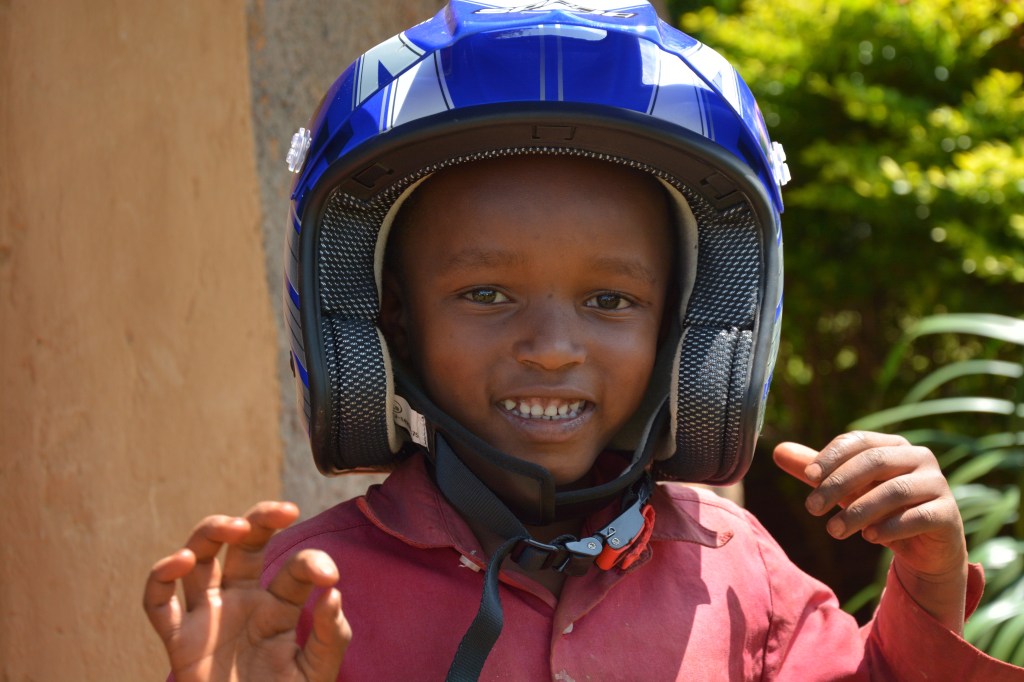
Happy boy!

EAST AFRICA 2023 – EPISODE SIX

FEBRUARY 20th to FEBRUARY 27th

Lake Victoria, an inland sea.

The Mosquito is sick and in need of some new parts, rather important ones. Rico diagnosed that it’s likely (having spent time eliminating other possible causes), we need a new ignitor box, the on-board CDI box that controls the electronics. The fact that an egg-cupful of water dribbled out of it does strongly suggest that the electronic components might not be in the best of health..! Now my motorbike remains in Rico’s garage in Kitale.

So, I have to travel across Uganda to the hospital in Tanzania by public means – which means decrepit matatus, the legions of battered, overloaded minibuses. Maybe in Kampala I can find the bike bits I need: Kampala is good for those things.

I was happy when Alex decided he’d like to accompany me to Kampala. Having a local companion makes African journeys so much easier – as well as his company being cheerful. I’ve a date to reach the hospital in Kashambya, near Bukoba on the western shore of Lake Victoria, on Sunday. The freelance film maker, Amin, will travel from Dar es Salaam on Tuesday, and we’re scheduled to work the first three days of March.

*

I’m up early on Wednesday 22nd, a quick coffee and breakfast at home in Kitale, and then I set out, fondly imagining that if I am at the matatu yard by 8.45, I might get to the Suam border sometime after ten. Haha! By the end of my second day’s journey, I understand that the average waiting time for a matatu to fill with its 14 passengers, is one and a half hours. I sit in the sun-drenched minibus, beside open drains that smell of drying urine and rotting vegetables, until 10.30… Every moment, hands thrust goods through the window in attempts to attract the mzungu’s custom. I resolutely keep my eyes focussed on my book. I’ve the front seat as I was the first passenger for this scratched and scraped old machine: the previous vehicle was unfortunately pulling out as I arrived. I have to develop a sort of Zen attitude to all this: I won’t get there any faster if I fret, I’ll just get stressed. This is Africa, and time’s not money here: it’s flexible and elastic, stretching apparently endlessly into the future.

We wait one and a half hours for passengers, then we set off… and stop 500 metres down the road to fill up the diesel tank. Then another pause to inflate the tyres. It’s the usual routine. No planning. Cash in hand economy. What difference does it make to prepare for your journey and keep your tank full? You’ll spend exactly the same amount of money – but that’s tomorrow, and no one considers beyond the NOW. It takes forethought and planning.

The journey to Suam is familiar and not very long, just over an hour. I’m at the border post at 11.40; I’ve been on the go since 8.30 and I’ve travelled 30 miles… “Eh, Mr Jonathan, you are back! How’s your piki-piki?” the immigration officer greets me. He’s not even the one who was here last Saturday. I’m becoming a bit of a legend at Suam border: the ‘old’ mzungu on his motorbike. But this time, I’m ‘footing’ it across the new imposing international bridge over the ten foot wide rocky creek that separates the two countries. I’m recognised again at Uganda immigration. Then, amongst the uniquely friendly, inquisitive eastern Ugandans, I pad up the dust-covered hill amongst the roadworks to the next matatu. It’s another one and a half hour wait… It’s after 1.30 when we pull away towards Kapchorwa. I’ve the front seat again: I was first for this matatu too. I’m never sure about the front seat; I have enough room for my long legs, but always imagine it’s the first bit that’ll hit things and crumple. But this road is quiet, if still rather unmade for the first 30 kilometres. Then it’s a mad race to Kapchorwa. Jimmy is sitting next to me: an intelligent young man who lives and works in Kampala, whose mother lives in Suam. I usually have someone to talk to on these journeys. He bemoans the fact of the huge unemployment for young people here – but no one makes the connection with the fact that in a dying, undeveloping country in which almost half the population is under 15, there’s sure to be employment. “But we have plenty of land!” declares Jimmy, when I talk of the ballooning population that I see as the root difficulty of Uganda. Jimmy’s well educated, but he still thinks there’s land to spare. “But where’s the water coming from?” I ask. “And the constant cutting of trees for firewood for so many people, and the thin spreading of all resources? Climate change? In a decade or two Africa will be fighting wars for water, not religion as it does now.” But LAND is the one ambition for all people here; they must own land… Yet they don’t see that every new male baby divides that land into smaller and smaller parcels. “One day, you’ll each have just about enough land to stand on!” But my arguments have little effect, even on an educated young man.

Still one of my favourite views.

Not long before we reach Kapchorwa, we turn off the road up a track to the driver’s earth and corrugated sheet home. “So, chai for all your passengers?” I joke. “I’ve got food for my animals,” he explains, climbing out to untie green bundles from the roof.

*

I reach Rock Gardens about 6.00 in the evening. I argue with the boda rider who brings me from Kapchorwa to Sipi. He wants another 2000 bob to take me to Rock Gardens. I know the price; I’ll bloody well walk instead, rather than be cheated. I stomp off and moments later fall flat on my face over a protruding rock. I graze my forearm and knee, such that when I arrive at Rock Gardens, Precious bursts into tears of concern and worry. Sobbing against the wall, I wonder at her emotion. Alex explains later that she’s convinced some of the jealous neighbours have put a curse on me – what with my Mosquito problem and my parasites (now gone by the way). Now this! She’s still weeping as she fetches warm water to wash my slight but bloody wounds. It’s very touching, even as I chuckle. She’s much more impressionable than Alex, and worries about the undermining, pathetic jealousy of ignorant village neighbours. It’s not pleasant to live amongst these undercurrents.

Rock Gardens’ new kitchen, decorated by Alex since I left last week.

This is only an overnight stay in JB1, the round thatched room. Alex wakes me early. He’s coming with me to Kampala. We have to take a boda back to Kapchorwa, ten miles away; it’s cool in the early light. The matatu driver runs the engine stationery for twenty minutes, then freewheels down hills to save a teaspoon of diesel. We wait another one and a half hours and go through the fuel/ air rigmarole again before we set off down the curling hills to the hot plains below. “The trouble is,” Jimmy said yesterday as we watched the appalling Ugandan driving standards, “that a Ugandan wakes up one day and says ‘I’m a driver now’!” Few are trained and many have neither license or insurance. They pay the bribes instead. We stop time after time to load more weighty sacks of ‘Irish’ (potatoes) and onions on the roof. The journey’s slow… “The owner of the vehicle gets his money per passenger, but any extra load they can carry unknown to the owner, the money goes to the driver…” Alex explains. Regardless of safety, I reflect. The owners are remote people with money to invest, and they take money for the 14 passengers that the vehicle is licensed to carry. The small girl whom we pick up somewhere is the fifteenth passenger and must be hidden every time we pass a police checkpoint (AKA bribe collection point). The poor girl later vomits for twenty miles behind my elbow. Oh, it’s glamorous, travelling in ‘exotic’ places.

We all drive at the speed of the lumbering 16 wheeler container trucks on these single carriageway roads, then overtake in unroadworthy vehicles like crazed racing drivers, horns blaring. And the police aren’t there for traffic control, just to supplement their minimal pay.

Entering the outskirts of Kampala, that grind on for the last thirty miles, we crawl along. We’ll need a place to stay, so now I’ve the expensive phone with 4G internet (thank you Mr Bezos for your mistake) I look up accommodation. There’s a two bedroom apartment for rent on the horrible booking dot com. Very cheap, with a picture of a fine new apartment block and quite central. A couple of hours later, we decide it’s a scam entry. It doesn’t exist, despite the booking confirmation. The phone number is incorrect and no one answers emails. The boda rider gives us an hour’s tour of Kampala, but no one knows it at all. What does it achieve, a scam like this? No money has passed and all the information they have is my email address. We later find that the apartment block name is invented, based on the name of an Indian rapper! Weary, we take a couple of rooms at another hotel. Nothing special, too warm and with mosquitoes. Then, on Friday night, all night preaching and loud music from two evangelical ‘churches’, and a mosque a few hundred yards down the road. But Alex is on holiday and we have fun.

Alex enjoys Lake Victoria tilapia, a treat.

*

We spent Friday in crazy Kampala. It’s a city of very little attraction. It’s filthy and tatty, with broken roads. Crowded, polluted, the worst driving on the continent, no observation of any traffic laws. It’s an aggressive place where everyone looks after Number One. There’s no respect for each other; no cooperation, just a constant battle of wills to make a few pennies a day, at any cost. It really is a vision of urban hell. There are few places in the world in which I would rather not live than Kampala. Drivers have no respect for pedestrians, and certainly not for the boda-bodas – the contempt is mutual… Motorbike taxis in Kampala are a stressful way to move about, especially for an experienced biker! Wherever possible, Alex and I walk. Not that that’s easy either, for the pavements, where they exist, are used for trading, construction, workshops, piles of debris and parking. Crossing the roads, with bodas going in every direction – including against the traffic flow and across traffic islands and on footpaths, is dangerous. No, I couldn’t contemplate more than a day or two in this unregulated chaos.

Searching for a replacement ignitor unit for my Mosquito took us – on foot – to the bike maintenance area of the city. For this city has many areas of specialisation: for instance, for printing brochures for Rock Gardens we went to Nasser Street, lined from end to end with print shops.

“You’ve been here before,” said the rather aggressive seller of parts that we eventually found. “I remember you, with a blue Suzuki.” That was 2018! Sure enough, Edward sold me the previous ignitor unit, the one that’s failed now. A pushy, unsympathetic character, Alex whispered, “I don’t like these people, this tribe. The Buganda, they’re unfriendly and greedy.” It’s true that this region has not the friendly nature of most of Ugandan. The Kikuyus of Kenya and the Ashanti of Ghana have similar reputations: greedy people with whom to do business. But unsmiling Edward was right; I recognised his tatty booth and the mud on which he fixed the Mosquito electrics in 2018. Bargaining with him for the part, that he swears will work, wasn’t friendly, just sharp business. But I can give as good as I get with bargaining and beat him down to £22 – an original Suzuki part being £300. I hope it works…

*

As much as we can, we agree to eschew the boda-bodas of Kampala. They are almost half a million accidents waiting to happen. Most are ridden by mad youths with no regard for other users, traffic regulations or safety. The hospitals are full – and the cemeteries too – of boda riders and passengers. It’s a desperate business, but pays better than construction work and similar unskilled trades. And in a city with zero public transport, it’s an opportunity for the ruthless riders and a necessity for their poor passengers. God, what a city…

*

Living it up at Hotel Africana.

Alex lived and worked in Kampala for six years. He was deputy manager of food and beverage in the smart, upmarket Africana Hotel, one of the city’s best. I suggested a visit and supper in the gardens. He was pleased. It’s a huge city centre place, concrete and glass on a small hill with views over the horror that is Kampala. Up here you are isolated from the mess and chaos, an oasis of western comfort where you can forget the squalor of this dying capital. The moment we enter the lobby, Alex is greeted. First off, to his gratification, is the general manager, a capable, efficient middle aged woman. “She always walked like me! Fast! She doesn’t rest, back here at five tomorrow morning. I was one of the only managers she allowed in her office!” It’s pleasing to see how this man, whom I befriended by instinct six years ago, and now treat rather like a son, was received with such warmth by his ex-colleagues. Many were still there, although it’s six years since Alex left and went back to Sipi. Now he’s carrying brochures for his own infant business and is smiling from ear to ear by the time we sit down for a beer in the garden (tea for Alex, who never drinks alcohol): he’s handed leaflets, the ones we printed today, to many ex-colleagues, including the marketing managers. They all promise to promote his small business, and seem to mean it. They respect Alex, and the fact that he is trying to make life on his own terms impresses them. When we leave, after a huge Lake Victoria fish dinner, cooked by his friend the chef, Obama, he’s happy and smiling. I’m happy for that too, I’ve come to respect Alex so much. We text a picture of us at supper in these salubrious surroundings to Precious, who’s jealous. “Eh, I am missing out!” Alex is concerned at the expense to my pocket. Two bottles of beer, a pot of African tea, and two huge fish fillet dinners in this oasis comes to £21. I reassure him. He’s so smiley it’s fun.

We get a mad boda back to our rather less memorable hotel, where the churches on all sides compete through the night at high volume, ranting and screaming about God’s punishments. What happened to love of god in these conservative, right wing countries? It’s all about fear and retribution, not love and reward. However, all this nonsense leaves me cold – Alex too, although he’s more careful not to admit it. It’s just another way to impose hard discipline: does it make a difference if it’s dictatorship government or money-making churches? It’s all about control and preventing people seeing just how miserable their lives are made by those above them… And they’re expected to be grateful to god for this mess, and show that gratitude in donations to some of the world’s richest organisations to buy better luck next time round…

*

On Saturday, we must part. Alex still has to buy schoolbags for the children, and a mattress. He’s carrying ten kilos of bread flour back to Sipi, with cooking knives, a new kettle, lots of purchases we made in a five storey supermarket – where most of the aisle assistants were asleep or disinterested, vastly underpaid by their rich – probably Indian – owners. He wanted to take back a roll of barbed wire and electric cable and another mattress, but I’ve run out of cash! We omitted to visit an ATM in our high spirits last night from the Africana Hotel, and I can’t extract more today. He’s philosophical: at least we bought some small smellies for Precious, luxuries that she doesn’t get in her tough village life. He can go home!

Countless matatus. It’s the only way you can travel in and out of Kampala, except lethal boda-bodas. This is just one of MANY depots.

We have to get our matatus from different stations. By chance, he spots a boda rider, an older man, from his home, and engages him to take me to find my minibus somewhere across town. Here, I am number four passenger. Another long wait in the shambles of people and hawkers until I can board the minibus and start the slowest crawl in Africa, out of this hellhole of a city in almost stationery traffic. It takes over an hour to make the first ten miles (including the stop for fuel and air of course). Later, the road becomes quieter. I rode this way in 2018, up from western Uganda through the town of Masaka. The traffic’s lighter on this route, now we have passed the block of the capital, but the last fifty kilometres – to the international border – are on a deteriorated, potholed road, and we return to the African public transport crawl. There’s so little investment in this country – except to a few pockets, into which pours the Chinese money. Little of it benefits the ordinary people, short-changed by their leaders as in so much of Africa.

*

Mutukula is a dump of the first order. A down at heel border town of no attraction whatsoever. A place to pass through quickly, at the end of its potholed, muddy road. An informal place of shanties and rubbish with a Wild West feel to it. Mud-covered, filthy, and deeply unpleasant, especially on a dull, after-rain afternoon. The country around is unattractive too, just sprawling green bush lands of no distinction. It’s an end-of-the-world place. If I was on my bike, I’d be through in a flash and off to more congenial surroundings. As it is, it’s already five fifteen when I arrive, battered by the last fifty kilometres of potholes and squashed by my matatu neighbour, a woman with elephantine thighs and a hippopotamus bum. I’m not going further, and plod and slip through the mud to find a hotel. There’re a couple on Google Map. The first one doesn’t answer the phone, the second one sounds welcoming – although when I splash my way there through cloying brown stuff, I’m not sure to whom I spoke just now. The manager seems a bit phased by my arrival. No one seems to quite know what to do with me! It’s a smart four-storey building, the only one in this backwater, and the boy shows me to a vast room on the third floor with a view of rusty roofs and muddy yards. It’s a dispiriting sight, but as I’m only here to sleep for eight hours, it’ll do. But the room, with two six foot wide double beds, is really too big for comfort, so I get the one across the huge empty landing with only one enormous bed. Music – of sorts – pounds up from the Saturday evening town.

It’ll do…

It’ll be an earplug night again, but an en suite for £17 will suffice. It has the same character (nil) as any American chain hotel at six times the price. It’ll do. But I determine to race through this awful pit of a place when I return next week. Travelling in Africa often makes you think, what a ghastly place to spend your life. I think fondly of Harberton…

MUD!

*

Sunday morning, the 26th. At least the breakfast coffee, although weak and milky, is Ugandan fresh coffee. The mud is still thick and cloying as I walk across to the immigration hall. The bureaucracy is fairly simple, a lot easier without my motorbike. I’ve just a small bag on my back and pay my fifty dollars and walk into Tanzania.

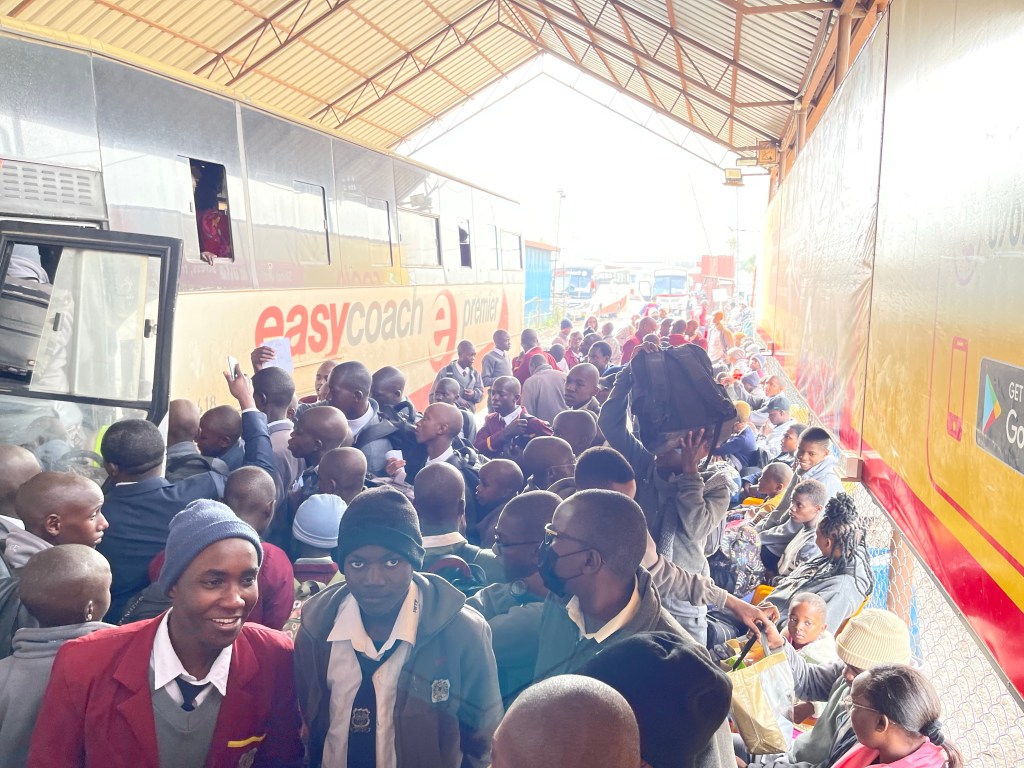
But how to describe the next journey? In almost five years of wandering about this continent – and, come to that, the other eight or so years I’ve spent roaming the rest of the world… In all that time I have NEVER travelled with TWENTY FIVE ADULTS AND THREE BABIES in a twelve-seater minibus! A clapped out twelve seater minibus. This is overloading of the top scale. It’s an intimate experience in which you find other people’s body parts everywhere as you contort in ever more imaginative ways to fit the jigsaw. Two hours! It’s the most uncomfortable journey of my travelling life, including the boot of a taxi in Syria and two days atop a cement lorry in the high mountains of Pakistan. This one is hell, beyond a joke, difficult to keep calm. But what’s the point of making a fuss? These people travel like this every time they want to move. My privileges aren’t relevant here in this remote place. The temperature climbs, we wriggle and jostle. We screech to halts, falling helter-skelter in a melee of limbs and bags (Oh yes, there’s luggage as well…). Someone, always in the back seat, wants to get out, so we must all contort to alight, and then we set off with a violent jerk, redistributing all those arms, legs, bums, bags and babies.

But really, TWENTY FIVE people – and the three babies. It’s madness… Just as well I’m not claustrophobic. But it’s airless and fifty armpits make for an olfactory assault. Thank god no one’s vomiting yet. Some people are sort of standing, bent double over the ones seated. The seats are too small for me to get my knees in, so I’ve insisted on one of the folding seats, with no back except knees behind me. I’ve my backpack on my knees – well, mine and some other people’s knees. It’s difficult to tell quite what’s where in this crush.

About twenty minutes in, I think to myself, ‘What the **** am I DOING? I’m an intercontinental designer on contract and I’m almost 74. AND I’M ON EXPENSES!!! What the **** am I trying to prove?’ Of course, I know the answer to that question, so do you. Challenge… I’m never going to give up, am I?

The 50 mile ride cost £1.43. And I travelled from Kenya, right across Uganda, almost 400 miles, for £18.

And I’m on EXPENSES..!

No one of my colleagues would consider to travel like this. They’d fly in and hire a car – a big one usually.

I’m going back to the border by private taxi.

*

Bukoba

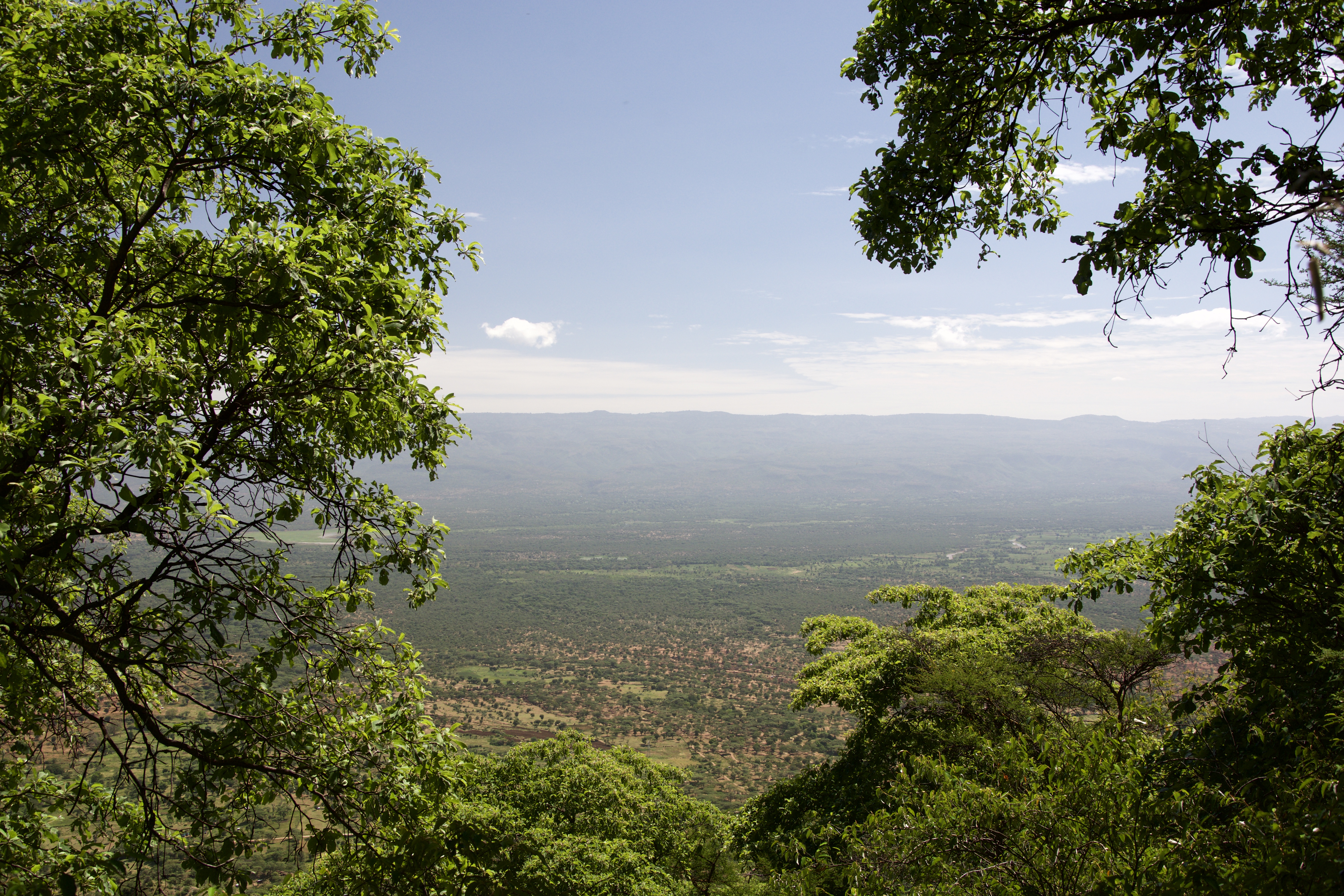
Bukoba, my destination, is about 50 miles from the border. I couldn’t see much of that journey, the window beside me blanked out by bright orange foil. I could see only through a tiny slit as the landscape whipped past. It appeared to be quite handsome savannah and forests of pines. We entered (very slowly with that load) some rolling hills and eventually descended towards Lake Victoria. Bukoba sprawls along a shallow bay, a small steep rocky island offshore with a rather romantic looking village on its west side. I expect it looks better from the mainland: it’s probably as disappointingly scruffy as the other villages around. My first impression is that this is a very undeveloped part of the world, a backwater even of Tanzania. Very few speak even a few words of English, which suggests education levels are low, and people are reserved, even with a mzungu passing by, but quietly welcoming.

After the cramped hell of two hours in that student Book-of-Records competition, I walked to the hotel, a hot, steamy mile and a half.

It’s very strange for me, on my impecunious travels, to have hotels booked ahead for me! I’m booked for the next five nights in the Kolping Hotel on a hill above the inland African sea, Lake Victoria. It’s a Catholic hotel, but I have a pleasant third floor room with a balcony overlooking the lake. At least Catholics, unlike the self-righteous evangelical bunch, don’t usually refuse a glass of cold beer…

A room with a view.

*

I’m physically weary now, but the hotel is quiet and the air from the lake below freshly cool. Hundreds of lights glitter on the lake at night, what used to be the kerosene lamps of small fishing boats but are now probably rechargeable LEDs, I assume. It’s a pretty sight from my balcony beyond the graceful palms. I pull down the mosquito net, and that’s it for a struggle of a day.

I sleep soundly, waking at some early hour to the sound of rain on the roof. The rainy season will be here very soon.

*

Regina, so happy in her makeshift wheelchair, pushed by her son Frank. An inspiringly cheerful woman.

On Monday, I walk relentlessly around Bukoba. I’m feeling unsettled: it’s so unusual for me to be working to other people’s expectations on my African journeys. What do my colleagues in Boston want me to DO? I’m in touch with the lead doctor and director of the new hospital, but she’s not encouraging me to introduce myself. ‘Relax, sightsee and enjoy yourself’, she responds when I message her to suggest we should meet so I can get a feeling for the place. I’d feel more comfortable if I was DOING something. It’s my perennial problem: that White Anglo Saxon Protestant sense that I should be earning my money. Mind you, I’m actually only contracted for three days’ work, and they don’t start till Wednesday! So I wander guiltily about town, indecisive and troubled by this odd situation. Eventually, with only a couple of hours until I have to join an online meeting with my colleagues in America, and Amin, the freelance cameraman who’s coming up (by air not matatu!) from Dar es Salaam, I hire a boda to take me the ten miles to the hospital and the ten miles back again. I know I’ll feel more comfortable if I can tell the team that I’ve made some effort at least. Jolam’s not a bad rider, even if he does freewheel down every hill to save an eye-dropper of petrol. They all do it, it’s the only way they know to ride downhill. He has no English, like most of the boda riders; only the educated have anything but KiSwahili or local tongues. But he finds the hospital project, and that’s not easy…

A hospital in the bush… Access is not obvious.

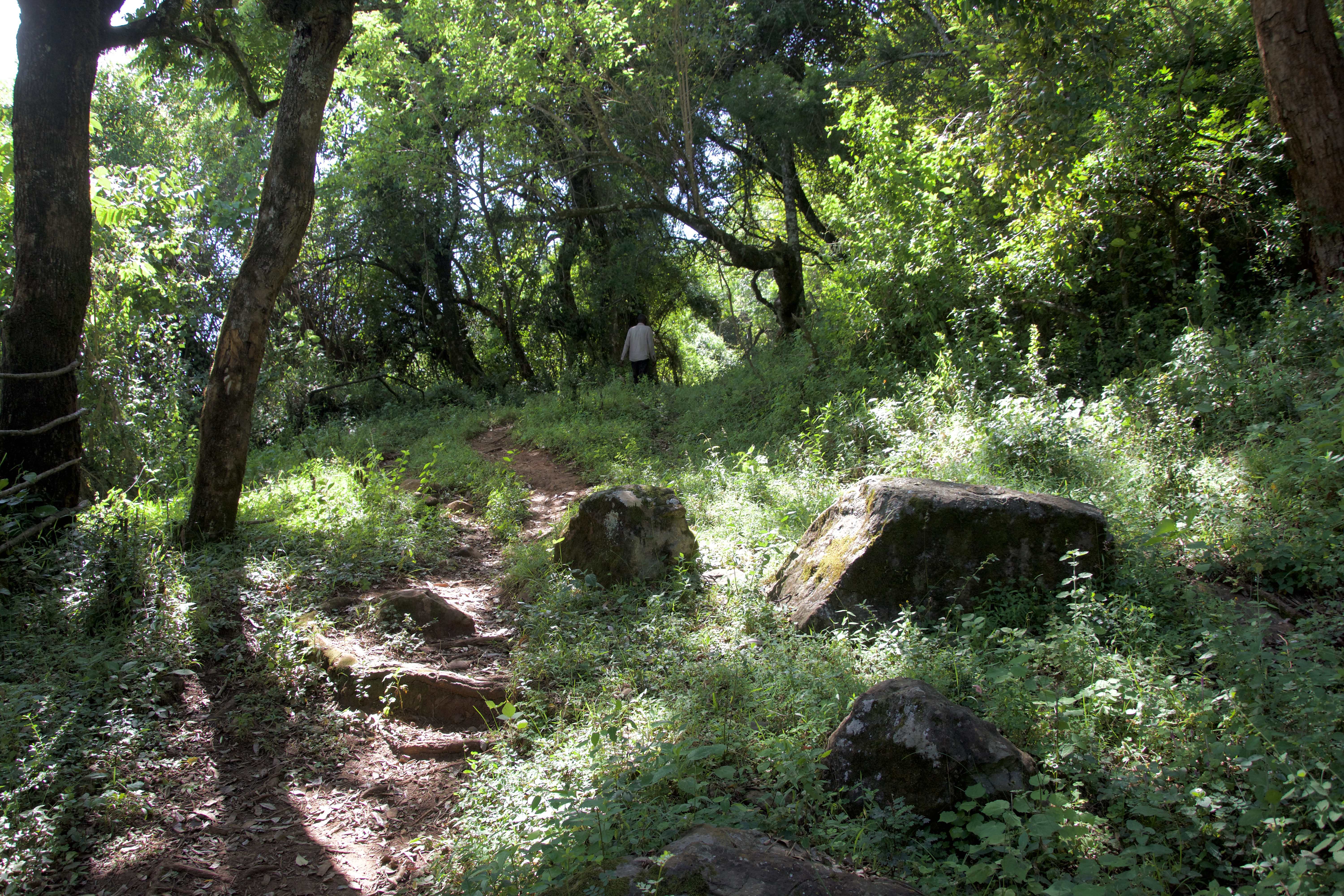
Kashambya isn’t really on the maps. Well, it is, but it’s not THIS Kashambya. This one is in the bush! It really is remote. I’m not sure why Mary, the lead doctor, wants to put a hospital in quite such and inaccessible place? The last two or three kilometres of our ride are down forest tracks deep in the bush. Then suddenly there’s a wire fence enclosing an elaborate – but strangely empty – hospital compound. It’s the baby of Mary, the doctor, who grew up here but managed to get to USA and train as a doctor. She’s forceful and energetic, and has engaged the support of a philanthropist in Boston. The philanthropist also built a museum, on which I almost worked before the pandemic, but it never materialised – for me at least: the museum is fine and I was working in its back rooms in November with my young constructor chum, Scott. “I hear you’re going to take photos for us in Tanzania!” said Chris, the wealthy benefactor, passing one day, a comment that made me believe it was more than a crazy idea.

The new Kashambya hospital.

So here I am, three months later, in Bukoba, Tanzania, with a contract to be my colleague Bob’s creative eyes half way round the world. My second job on this continent, following my consultancy role in the South African dinosaur museum.

Life turns up some strange opportunities if you’re ready to go out and meet them.

The lake shore.

EAST AFRICA 2023 – EPISODE FIVE

FEBRUARY 4th to FEBRUARY 19th

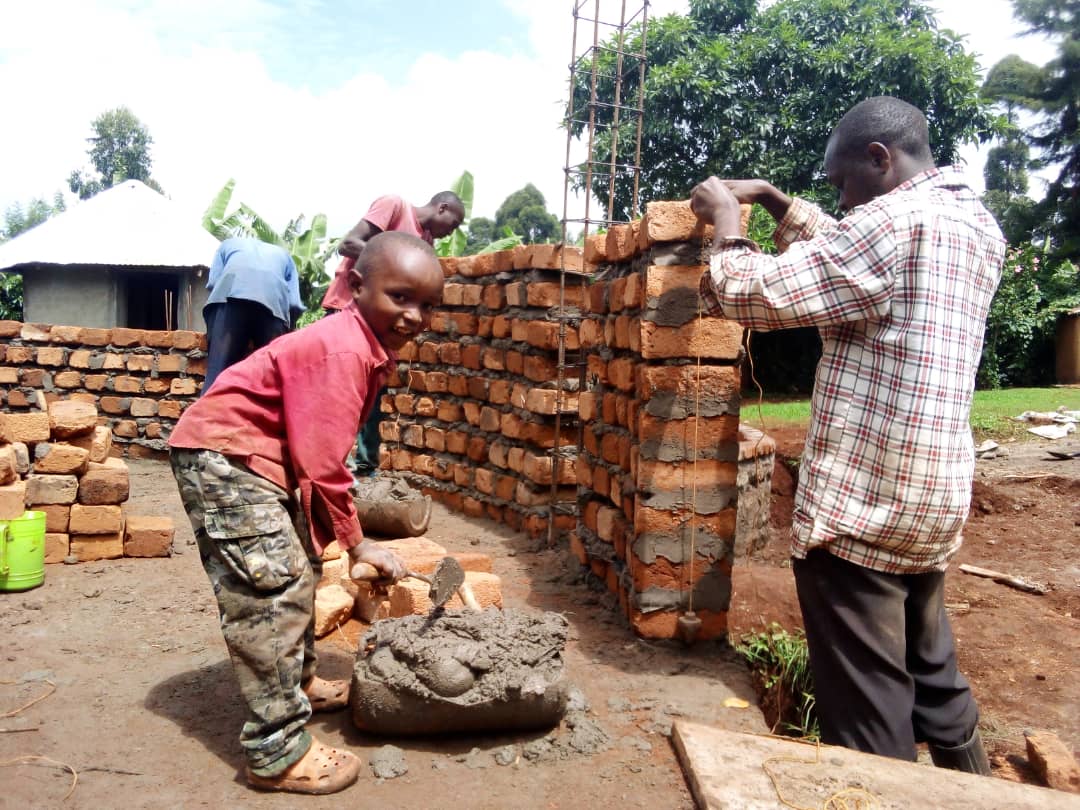
Master mason with assistant

The ride back round the mountain between Kenya and Uganda becomes easier each week, now the contractors are approaching the end of their work on the sweeping road. It’s impressive work – with attendant immense debts to one of the world’s greediest nations. As I’ve frequently commented: I have yet to see a Chinese charity on this continent – or any other…

Expecting the usual rusted tin-roofed huts of the Kenya immigration services at the border, I rode right past the new mirror-glass office, occupied rather untidily since my last visit three weeks ago, and had to turn back to complete formalities. The old bridge, the one on which both parapets had collapsed on my last passing, is now redundant, bypassed by the new – mud surfaced as yet – concrete monster over the dirty trickle that defines the international border.

I’m known at Suam Border these days, there are no other mzee mzungus passing this way on motorbikes. I’m soon on my way towards Kapchorwa, now less than an hour and a half away – a journey that used to take three or four hours of very hard effort. I’ve delayed leaving for Uganda by a day so I could join Adelight in celebrating her 40th birthday on Saturday. We have a cheerful, noisy event despite an all-day power outage. A dozen or so of her women friends come and demolish a 5 litre box of wine and eat chicken and rice. It’s turmoil for a few hours, but Adelight is happy with her day. I’d planned to ride to Sipi on Friday, to enjoy the weekend with the two children, now schools are back.

I never tire of the magnificence of the road to Sipi

Everyone’s waiting for me at Rock Gardens, although the two children are oddly shy, considering they’ve been constantly asking where their mzungu was. I’ve come to really love these two; two of the most delightful children I’ve ever known – of course, the fact that one of them has all the same names as me helped that bond, but they’re charmers: JB2 more demonstrative and noisy than his very lovely sister. They’re only a couple of years apart, so they make good companions to each other. I needn’t have worried about missing them as Alex has been too timid to admit that he hasn’t money for their school fees, so they haven’t started back yet, missing the first few not very busy days. So I enjoy their happy company for the first two days anyway, until we can go and pay the fees for their relatively expensive private school in Kapchorwa, ten miles away. The fees are increased by the transport – the minibus comes to pick these two – aged four and six – at 5.30 am and drops them home around 6.30 in the evening. I transfer the £300 that will cover their education until the end of April. A third of that is to cover their transport to school in the minibus, ten miles each way. It’s a happy investment for me. That evening by the fire pit, I tell Keilah she can be a doctor, or a pilot, or whatever she wants, in contrast to expectations for a mere girl-child in Uganda…

JBs 1and 2 and Keilah. We’d just made a video call to Leslie in Florida and excitement was high!

*

It can be depressing to listen to much of the daily life in a rural African community where education is low, ‘culture’ and ‘tradition’ rule social life and there is so little enlightenment. One of the most distressing aspects is the total inequality of half the population, the abused, downtrodden, dominated women. So many places live by medieval standards – not discouraged by the Catholic church, the corrupt ‘pastors’, the misogynistic governments and certainly not by Islam… Women are inferior: that half of the population who coincidentally do all the work. Like slaves. So says the myth that upholds ‘culture’.

Under European law (were the – largely male – police more diligent in upholding it in these cases too of course) many African men would be beneficially behind bars. I hear such awful, unjust stories: tales that would be upheld as rape and abuse in legions of cases.

The subject comes up as we sit by the Rock Gardens fire pit in the moonlit evening. Precious is sitting on the grass; I am in the larger Chinese plastic chair that’s usually provided for me as the mzee (old man) and Alex in one of the less comfortable Chinese bits of junk. “Are you comfortable down there?” I ask Precious, “or are you there from ‘tradition’?” with an ironic emphasis on the last word.

“Oh, women should always sit at the feet of men!” she responds, with a slightly embarrassed chuckle. “We should serve or men from the floor and never sit on a chair with them.”

Precious uses the new kitchen stove for the first time, chips ahoy!

So, of course, to make a silly point, I get down on the grass too. She laughs a little uncertainly. And the stories come. Terrible tales of marital torture, abuse, rape; appalling antique attitudes to child rearing; child abuse; the curse of women (never the men to blame) bearing girl children; sexual abuse of minors; male police being engaged to drag women for intimate tests at hospital; men who create so many children with so many women but take no responsibility thereafter, financial or moral. Precious tells me of the insults she has to bear for having only two children; belief of her inadequacies; of how many believe she has only one child anyway, for Keilah is a mere girl and remains uncounted by most.

This is truly a desperately backward country. The frustrations I used to feel that I couldn’t change attitudes in Ghana – a developed country compared to this social mess – is nothing to the anger that begins to grip as Precious continues a litany stories. I feel a cloud of real depression that people must live like this, with these antediluvian social attitudes in the 21st century. To live in this social dereliction, with an utterly corrupt society ruled by a disaster of a ‘government’, and influenced by outdated misogynistic religions; where in practice men have all the human rights; homophobia is at an extreme level and homosexuality remains a criminal offence; where children – even today – are sold for medieval witchcraft; where those engaging in underage sex with children and young girls are considered fortunate for the opportunity; incest is unpunished; children uneducated because the men that fathered them have moved on to other ‘wives’; where drunkenness is so common; families beggared by ‘traditional’ funeral practices…

Thank god I can go home to my comforts, even if we complain of outdated attitudes and uneven application of the laws, of unequal rights of women, of the inequities of economic distribution and so much more. My only sadness is that I leave behind a quite enlightened family whom I’ve come to love, abandoned in this appalling medieval ‘culture’. Maybe Alex’s good sense and my influence may get these two delightful children educated – equally – and make an infinitesimal change in attitudes. They are already known in this backward rural village as the two best English speaking children, bright and intelligent – but no one makes the link between a small family of a mere two children (well, one a and a bit, as Keilah doesn’t count for most) and the stimulation and better education levels that can be thus afforded.

Oh, Africa opens your eyes when you get beneath the gloss and glitz of the animal safaris and extreme sports, the big sights and the luxury tented camps. Come and live in a benighted Ugandan village and you learn the realities of much of the world’s social order. And it’s ugly.

*

But my relation with the two children is fun and charming. While the money transfers and the school minibus is worked on (they’ve just had a long holiday, and I do wonder why they wait until term starts? Perhaps it’s just that until then there’s no cash in the school coffers either?) on Monday, Alex and I visit the school. I cause chaos: a mzungu in the playground! Hundreds of lovely small children mob me as I talk to Teacher Rose. They are screaming and waving, trying to touch my hands and oddly hairy arms.

It’s quite delightful. Teacher Rose remembers me, even my name, but of course, she has a pretty good clue in her four year old pupil, Jonathan Bean Cheptai! I wonder what they think here? A mzungu granddad, whom they must know is sponsoring these two little people. There seems to be no envy or jealousy, just a realisation that these two have good fortune that so many lack – but these are educated teachers; it’s amongst the ignorant that the real jealousy occurs: people without the understanding that it’s Alex’s integrity and hard work that made us to bond. Sadly, ignorance is rife here in Uganda, almost the norm. There are thousands of children NOT at school, even on our ramblings around the villages. Well, there will be, with the average mother giving birth to seven children, won’t there? And fathers with no responsibility. The ones at Shalom Primary and Nursery are the fortunate ones, who might even have a future in this derelict country…

*

Hot water is a major step – for me at least.

Tuesday, it’s back to work. I suggest we complete the earth oven and the oil drum hot water heater, and finish off the new kitchen before we attack the latrine block. Tom, the appalling wood butcher is here today. Keep me away from working near him! He calls himself a carpenter but the work’s truly dreadful and bent nails are everywhere. Much of his day is spent on his mobile phone, or talking with friends, the rest in resharpening his ancient saw and sawing very slowly. A carpenter with no tools of his own except an antique saw, a venerable plane and a panga (machete). Why, I wonder in frustration, doesn’t he buy himself a bow saw? They aren’t expensive (£5, I went and bought one myself), cut faster and with far less effort. But it wouldn’t occur to anyone here to invest to accumulate: just not language they’d understand. Fortunately, he’s elsewhere in the compound, making two tables (with panga and saw) in the time I’d’ve made four…

The ‘sunset terrace’ on 1818 bar.

Keilah and JB2 love to get involved with our building works. We’re making a final mix for the earth oven: this one’s made from sand, earth and cow shit. It’s a bit smelly, but inoffensive, and one of the world’s oldest building techniques after all. They love slapping the mixture onto our domed oven, making ‘mandazis’ – mud balls – for Uncle Jonathan (a mandazi is a sort of fried bread ball – A popular schoolchild snack. VERY boring!) and slopping about in the mud-mixing heap in their bare feet. They are utterly filthy and having fun working with Daddy and Uncle. I’m proud of our oven and we’re all looking forward to trying it out. The hot water drum is progressing: I think I’ll be able to wash down in a jerrycan of warm water by tomorrow if the fire draws under the drum.

JB rides the wheelbarrow.

*

For two nights, William travels to Sipi from Kessup. He can’t come for longer as his precious cow, Dutch, will pine for his attention! He arrives on Wednesday evening, forced to take a boda-boda from Suam to Kapchorwa, poor fellow, as no matatus were available after lunch. He’s quite excited to be on a trip, however short. Most people seldom move beyond their communities – it’s an unnecessary expense. During his time in the police, William visited Uganda, but now he never goes beyond Eldoret, his local city, or Iten, his local town.

William and Alex cross a land slip. It always seems we walk uphill round here…

Now, with both my walking companions in one place, it’s pretty obvious how we’ll spend Thursday. We set out at ten and walk for eight hours again. By six, I am flagging – I’ve got a stomach that is earth-quaking on me. I’ve picked up parasites in my gut. A couple of days later, Alex gets it even worse than me. A hazard of the sort of travelling I do… It’s a bit uncomfortable but it’s not the runs, just grinding and gassy as a jet engine. Hopefully, yoghurt, ginger and a few days will sort it out. It saps my energy and I’m delighted when Alex spots a neighbour in his ancient, battered Land Cruiser and negotiates a ride home the last five miles (no one in Sipi does anything for nothing: there’s no concept of giving a lift to your neighbour).

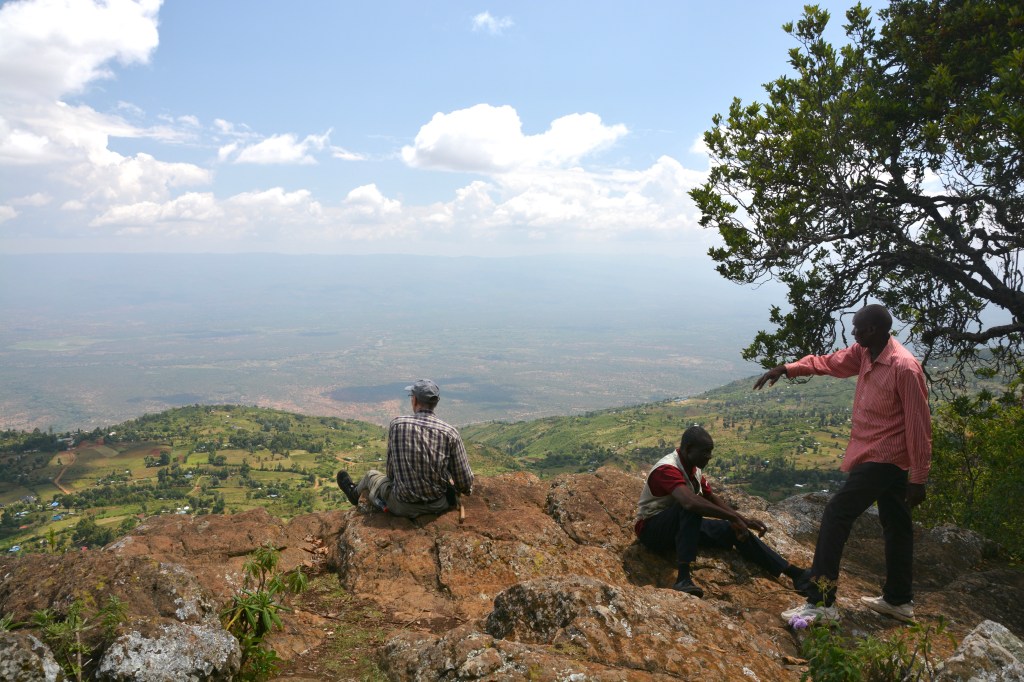
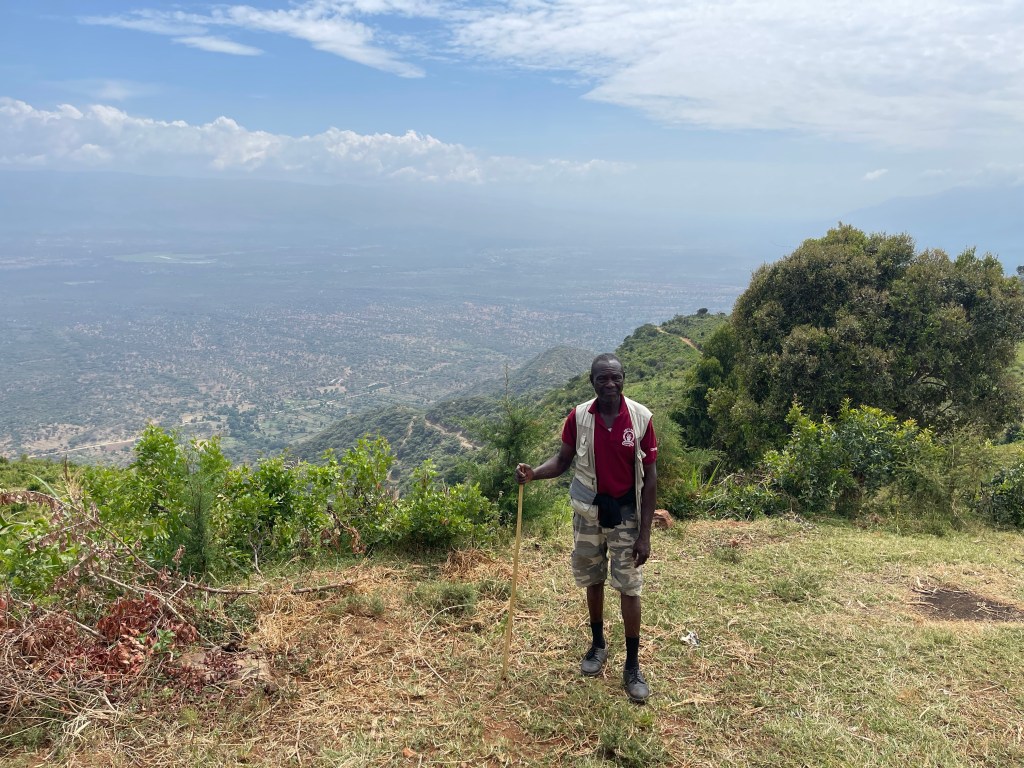
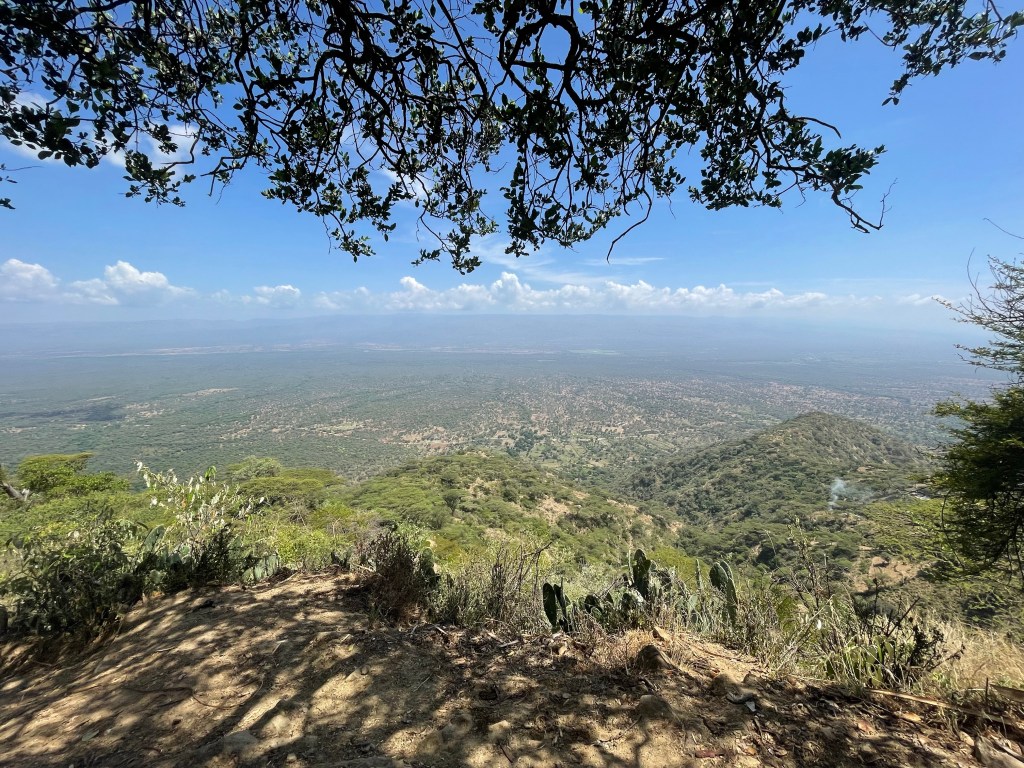
Once again, we walk to Doreen and Leonard’s home, taking the high route this time, teetering along the very edge of the escarpment cliffs. “It’s a great route to bring guests,” I say to Alex, “but make sure they are fit and have no suicidal tendencies!” The lips of several hundred feet drops are thick with grasses and scrub: it’d be very easy to slip and disappear over the edge… I love this route, one of the best we’ve taken in the dramatic surroundings up here above the apparently limitless plains of central Uganda. Walks here are strenuous, with much climbing – oddly, we never seem to descend by the same amount! It always appears to be uphill here…

Children shout excitedly: they should be in school of course, but when you’ve so many and no money, education is ignored – and a lot of them are girls anyway. “I’m not sending girls to school for another man!” is a scandalous expression I’ve heard several times here. Girls are disposable, and make money for the fathers in dowry, but an educated girl brings trouble and doesn’t increase their value. It’s a very unenlightened community.

We pass through small scruffy villages, ankle deep in plastic refuse that no one sees. Single-use bottles crunch underfoot. It’s horrible, and the plastic extends across the high slopes everywhere we venture; it’s in the fields, piled up around rural homes, stuck on thorn trees. Everywhere. What are we doing to our fragile planet? The irony is, that Kenya passed laws banning plastic carrier bags, and I’m even instructed on the aeroplane flight down that I may not import plastic bags – yet every loaf of bread, every food product, every Chinese item, is wrapped in plastic.

But Uganda’s very green too. We walk through small forests and endless waving matoke trees. Red dust swirls, as always, round our shoes. Those we pass are friendly and cheerful. “Stop torturing your old mzungu! Get him a boda!” some call. Alex and William laugh; William understands the language here. He calls this his grandfather’s home, as his Kalenjin tribe in Kenya is closely related to the tribe here; their dialect is different, but the language is recognisable. His tribe migrated from here at some time. In so much of Africa, people just a few miles apart often have another language. We don’t have to go far for Alex, a very quick linguist, to be struggling with tiny local tongues spoken in very limited areas. And, as I’ve often written, most identify with their tribe before their nationality – which is a major reason for the malfunctioning of so much of African politics. That and outright corruption.

A cheery local woman follows William up the first ladder.
Then it’s my turn.

Through the steep undergrowth and tiny fields on the steepest of slopes, we find our way to the ladder I remember so well from a walk two years ago. It’s about 40 feet high and constructed of nailed branches in an alarmingly informal way. It gets us up a small cliff to slopes on which we can clamber between postage stamp fields and crazy dangerous terraces. We pass through some more villages and then take off on a twisting path across the clifftops.

The view from the top! The ladders begin here.

We are approaching the very tall steel ladders that we now know quite well. They plunge down about 200 feet alongside a very impressive, photogenic bluff, with Uganda spread endlessly beyond. William is a bit phased by these two very long ladders. They’ve handrails – unlike some along this escarpment – but are long and steeply pitched. But we talk him down with a bit of encouragement and then delve off down the rocky precipices to the red road far below.

William wasn’t so sure about the long ladder…

We come off the semi-vertical lands almost at Doreen’s house. She’s surprised to see us, and delighted. We like these two, Doreen and Leonard – he of the father with 60 children, which I now find may be 64! His 25 year old youngest brother, a very handsome young man, last born of the multi-bigamist (not that anyone’d recognise the concept. He’s just admired as a ‘strong’ man) joins us, and seems to think he’s number 64… The old man is 83 and still alive; he lives just down the hill, but we haven’t time to visit now. Maybe he doesn’t know the final count of his profligacy himself..?

Doreen makes us weak milky coffee from her own beans, and Leonard is thrilled to find us visiting again. We agree that sometime Alex and I must visit and stay overnight, perhaps exploring further round the cliff faces with Leonard. As last time, he accompanies us many miles on our homeward journey, a most affable fellow. But by the time it’s coming up to six in the evening, after maybe 15 miles of very hard walking, we get back to the tar road that clambers up the cliff-sides to Sipi, and this is when I’m delighted to see Alex recognise his neighbour. We were about to negotiate for a dangerous boda-boda ride – and I spend time refusing to pay if they freewheel down any hills. “I shall deduct 500 bob every time you freewheel!” Twice, recently, I had to use a boda and was astonished to find that neither rider had the faintest idea how to ride downhill in gear! They’ve never done it until I insist on engine braking. Alex and I never rode so slowly to Kapchorwa and back home! I quite enjoyed looking at the roadside activity for a change…

Alex

*

William hasn’t been in Uganda for some years, and even he is shocked by the differences between it and his country. Kenya is forging ahead in development, while this wrecked country is deteriorating by the day with its corrupt, disinterested, uncaring government that works only for its self-enrichment under its staggeringly wealthy 37-year president. “Eh! If only Alex, Precious, JB and I could each pick a corner of this compound,” he exclaims, gesturing to the green pleasures of Rock Gardens, “if we could pick it up and transport it to Kenya! You’d be millionaires very FAST!”

*

For a week, I had some trouble starting the Mosquito. I always fear mechanical problems as I’ve so little aptitude for engines. I diagnosed the problem to the starter relay or starter motor, but felt unconfident about even the simplest surgery. Alex found me reasonable fundi (repair-person) who seemed to know his way about my bike. Kato has a small kiosk workshop in Kapchorwa, but came the ten miles to Rock Gardens to work on the machine, taking the starter motor away to open it up. Next day, he’d found a replacement armature and brushes, but still I couldn’t start the engine from cold, so while taking William back to Kapchorwa to find a matatu to Kenya, I called at Kato’s workshop. Of course, all work is done in the dust on the street-side, but he appears knowledgeable and better than most, whose only tool is a hammer. He’s now ordered me a new rear tyre and stopped some of the rattles (the engine was loose!) and so far I trust him. He’s tried to fix the coil connections, which may be the problem, but I’m happy to find a local fundi who seems to know what he’s doing, now Rico is the other side of the mountain.

A couple of days later, the Mosquito starts first push of the button, as it used to. Somewhere, he’s done something right at least.

*

Trees planted just a year ago are now beautiful.

Then it’s back to overseeing appalling ‘workmen’ at home. Tom, the wood butcher is making doors for the latrine. With him is a so-called mason. Having lost my rag already, I can’t bear to watch. The ‘mason’ is plastering around the crooked door frames, complaining about our cement mix – only about 1:4 instead of about 1:2 – I’m sure as soon as we turn our backs more cement goes in. He’s plastering above a heap of chippings and rubble, into which his fresh smooth plaster falls. It’s dreadful to watch. “For god’s sake, CLEAN up between processes!” I exclaim angrily. “THINK!” He’s here for hours and does almost nothing. I’d’ve finished the lot in a couple of hours. Meanwhile, a sign-writer comes to repaint the sign to go at the roadside in town. He brings an ‘assistant’, who does nothing – very slowly. They buy paint and while the ‘assistant’ holds the sign upright in the middle of the garden, the sign-writer paints both sides and the legs liberally with gloss paint thinned with copious petrol from my Mosquito. “Just watch,” I murmur to Alex, “soon they’ll wonder how to move it, covered in wet gloss paint!” We chuckle as they struggle with the unwieldy sticky board and carry it, paint on hands, to lean it against a tree. “No planning… EVER!” Maybe tomorrow, he’ll paint one side against the tree, then turn it round – or maybe he’ll have the ‘assistant’ hold it upright again… Or maybe he’ll never turn up again.

Hinges fixed with three inch nails and firewood.

Wood Butcher Tom bends nails and bodges brackets for bent hinges from firewood, a four inch nail the answer to all fixings. He hammers nails crookedly through varnished doors and bends the ends over on the inside. He planes door planks and frames from timber that’s so freshly cut it’s damp to the touch. I draw a ledge and brace door for him – a first for Sipi. He looks mystified, but makes three doors for the latrine. They might be the only doors in Sipi that don’t sag and drag on the floor. I explain the dynamics of the door; how the brace goes outwards to support the swinging edge. He hangs the first door, while I oversee. Then I go away to do something else and come back and find him hanging the second door upside down… He’s hammering in three inch nails to hold the hinges; the heads are too big and the door won’t shut. He’s about to beat another three inch nail through the door and bend the end over to hold the bolt. “Use a short nail!” I shout. “Think what things look like, covered in bent nails!” The bolt and hasp for the kitchen door are fixed with THIRTEEN bent over nails. He uses a six inch nail as a chisel to make the hole for the bolt. “You call yourself a carpenter, but you’ve no tools! Buy some tools, make life easier for yourself, get the work done faster, get more work: get more money! It’s economics…” No one looks. No one sees. No one plans.

13 bent nails hold the kitchen door bolt.

And the sign-writer measures the steel sign board with his finger span, for transfer to a computer programme… He hasn’t a tape measure. No one invests in even the simplest tools to aid their work. With forethought, planning and management so rare on this continent and absent in uneducated Uganda, no one sees the advantage to their career as they look at immediate gratification in the pennies they earn from their dreadful work.

I can’t stand to watch: it’s SO frustrating. I could do all these jobs quicker and better myself. Here in Sipi, I often do.

The only tool that is never stolen is the spirit level I bought in Kenya. No one uses one…

*

The gardens flourish…

The kitchen progresses well, and the toilet block too. I devised a gents and ladies’ urinal, using cement, and we screeded the floors. Butcher Tom managed finally to get the three doors fitted right way up. We’ve employed just young Abraham who, at 16 is a better worker than them all. He should, of course, be attending school, but his father disappeared some time back and has never been heard of again. He’s a tiny, slight lad, but willing and keen. Unlike his seniors, who all know best and certainly don’t want introduction to any new ideas, he follows instruction and even anticipates next steps as we work. He’s the only Sipi worker whom I have seen run across the garden to fill another jerrycan of water! A day’s work in Sipi is rewarded by about £3 for most labourers, up to perhaps £5 for a ‘master’ – of whom there are actually none at all…

Jonathan Bean Cheptai

Shopping for what materials are available is frustrating indeed. Buying the plumbing bits we needed for the kitchen sink took the best part of an hour in a shambolic store. The woman assistant tried to serve three customers at once, knew where nothing was and had to search through sacks and bins of fittings, had no prices to hand, having to phone a remote boss somewhere for all advice and costs. Receipts have to be written in old ledgers with carbon copies; there’s no packaging except the ubiquitous flimsy black plastic bags. In another scruffy concrete block lock-up, we bought tiles and adhesive. I suggested plain white for the kitchen counters, and on getting home, find patterned white. No one cares, except Alex and me, but we’re not prepared to go the ten miles back and argue it out, so the kitchen gets patterned counters. We purchase timber trims: 20 feet or so of sort-of four by three quarter inch wood, cut crooked on a circular saw and ‘planed’ badly from wood so wet it’s almost weeping.

Alex fires up the water heater for our evening comfort.

Back home, I try to make sense of Tom the wood butcher’s uneven, unsquare, crooked woodwork. I’m expected to apply tiles to this mess! Happily, I am resourceful and manage to sort it out more or less. Actually, despite the frustration at having always to correct others’ work, I secretly enjoy this sort of bodgery; I’m good at it: scenery making has always involved a certain informality of work practices. We work into the early evening, and by the end the kitchen begins to look better, with some right angle corners here and there, a novelty in Sipi. I’ve got the trims on, all bodged onto spacers of bits of firewood, and not a screw to be seen: you can’t even BUY them in Sipi, so everything is hammered together with flat-headed nails (you can’t get pins or lost-head nails: no one even knows what they are in Uganda). I do my best and am privately rather chuffed to make a silk purse from Tom’s pig’s ear. Well, maybe not SILK, but order at least…

*

Overloading is an art form here.

Riding to Kapchorwa one morning, people are running from all corners. There’s been another accident on the road, not an uncommon event in this country in which derelict vehicles often run out of control through lack of maintenance, appalling driving and total lack of care by any authority in this uncaring country. Not many are insured: it’s cheaper just to pay the expected bribe to any police who check. There are well over 1000 boda-boda taxi motorbikes in Kapchorwa, a town of 50,000 inhabitants. I doubt 10% have insurance. In the last two or three weeks, just here around Sipi village, a lorry ran out of control in the night and ended up crushing a house below the roadside, causing the death of a child: the truck’s still there, wheels in the air. A truck knocked down a pedestrian youth and killed him and drove on. A boda rider was killed, racing his friend on the main road – and now everyone’s running in ghoulish excitement and voyeuristic thrill to see another accident. We ride through a throng of perhaps 300 people rubber-necking, with nothing better to do than be titillated by a new horror. A container wagon is wheels up below the road, the cab crushed to a twist of steel. Later, we find that the driver was freewheeling downhill – with a hugely heavy 40 foot container of tyres headed for Kenya, when inevitably the brakes failed. Sadly, in self-administering the death penalty for his stupidity, he’s widowed a boda rider’s wife and orphaned two small children too. Says Alex, “They freewheel to save fuel. Then they can syphon it out and resell it at their destination, because the owner of the truck will have estimated the fuel use…” Of such is the blanket of comprehensive corruption in this extraordinarily corrupt land – where the examples from the VERY top, and all the way down the ladder are that corruption pays much better than work. Junior police officers are frequently tasked with a certain financial target for their desk-bound bosses before they can take their own ‘reward’. I often watch money change hands, without much attempt at disguise. It’s universal in Uganda, the norm. The country runs on corruption. Uganda’s not a ‘developing country’, it’s undeveloping year by miserable year.

*

The new kitchen. Produced in difficult circumstances in a few days’ work. HARD work…

Just as well that my best relaxation is to be busy, for I’ve certainly left some changes at Rock Gardens. Now we just need customers… I’ve completed the latrine block (both the round thatched cottages have their own simple bathrooms. The latrine is for events or campers); I’ve built from scratch – with help/ hinderance from local ‘builders’ – the new kitchen; created the earth bread oven, and the hot water heater, the lighting of which has become a norm in the late afternoon. It doesn’t take long to warm water for bathing after a long day of dirty hard work. I made a clean concrete water point around the tap. I’ve decorated the sign-writer’s rather boring signboard for the village roadside, and written the new website. And I’ve eaten bread and local honey for breakfast for the past four mornings!

Precious prepares the bread tins.

Some days, I haven’t left the compound. I feel good from all the activity, despite an inability to shake off the pesky parasites that have temporarily invaded my guts; medication doesn’t seem to work and I’m resisting antibiotics as long as I can… My energy is back, which is a good sign and the loss of an inch or more from my stomach is always welcome. Space for decent beer next month!

The first bread production at Rock Gardens.

After two more weeks of working on what’s now as much my investment as Alex’s, I must ride back to Kitale to regroup for the next section of my journey. I must be in Tanzania to direct and dress the filming, and take photos for my American colleagues between the 27th February and the 5th of March. That’s the nearest dates I have as yet. I’ve decided to ride across Uganda, dropping back to Sipi overnight on the way. From here it’ll take me three days to ride to the far border. I’ve determined on this route because In 2017, I rode through the top of Tanzania from Rwanda to Kenya, and had some trouble persuading customs men to allow me to import my motorbike to their country. Confused as to what to do, they allowed me a transit permit only. This time, I can’t afford to arrive at the Kenya/ Tanzania border to find import difficulties, as the journey from there is over 1000 kilometres. If I’ve problems at the Uganda/ Tanzania border, the hospital is only 30 kilometres away. I can leave my piki-piki in Uganda and continue by public means if necessary.

Aunt Khalifa witnesses the first loaves.
Aunt Khalifa, Precious, and young Abraham test the bread.

*

But, rather more urgently than border problems, I have a difficult ride back to Suam border. My Mosquito is sick. As soon as I ride away from Rock Gardens, I sense that there’s a problem. The bike seems to lack power on hills, even on the slight rise from Rock Gardens. Alex has thoughtfully washed the machine for me before I got up, maybe there’s water somewhere and it’ll burn off. I get to the tar road and am struggling up the hills, but maybe it’s the very strong headwinds? I nurse the machine to Kapchorwa and beyond. It’s straining. Then, after 15 kilometres, it stops. I fiddle uselessly, and then it starts again. Later, it starts to misfire in the middle of nowhere. I creep to the next village, Chesower. I remember that Kato, the Kapchorwa mechanic, had to fit a Chinese spark plug, but in Mbale I remembered to buy a Japanese one. I swap them and for 20 kilometres more, all is well. Still a bit sluggish on hills, but 80% better. I’m happy again.

Six kilometres from the Kenya border, the engine fails completely, no spark… After a while, I negotiate a tow with Wilson, a boda-boda rider. He asks £10, but agrees to £2! We set off, using a locally woven rope. I can’t tie the rope as I’d like, with an ‘escape route’, whereby I can release the tow rope, because of the silly plastic fairing on top of my bars, so we must make do. That’s the cause of my undoing when the rope gets caught around my brake disc and I am pulled heavily to the floor, bending the headlight bracket. Oh well, I bounce, which is all that matters, and we manage to get to the border. “Tow me to the Kenya side!” I call to Wilson, waving an explanatory hand at the police as we pass Uganda immigration. I can’t escape after all, and I’ll come back for the formalities.

The road to Kenya.

Chir-Chir is the Kenyan immigration officer. He’s very obliging. I have to plug in my charger: I’ve 6% on my Bezos phone and I want to ring Rico before I make decisions. Rico suggests I come on to Kitale by matatu, leaving the bike at the border. We’ll go for it tomorrow with his big Pajero. “It’ll fit! And maybe you can ride it if we find the problem.”

So I get the slowest matatu in Kenya and get myself home to Kitale. It’s now seven at night, I left Rock Gardens as 1.00, and I’m tired and out of sorts. At the matatu station I am mobbed: a mzungu who might need transport elsewhere. “GO AWAY!” I shout at the fifty touts who surround me. I haven’t patience any more. I get a boda-boda home. The house is busy, Faith, one of the original ‘Rico Girls’ is visiting from Berlin, where she lives now. She’s with her six year old son, a friend and her son. Then there’s Rosa from Netherlands, who works in Nairobi, an old friend of the family, plus the family, and now me.

Faith is a smart, intelligent young woman. I remember her 20 years ago in Lodwar, the hot, dry desert town in the northern deserts. She’s a Turkana woman, handsome and delightful. Her son has a great head of wavy hair as well. Her mother was a sister of Rico’s first wife, a Turkana woman, Anna, who died some years back. Faith’s father died in a road accident before she was born, and her mother in childbirth. She was born an orphan, and adopted by Rico into this extraordinary extended family I admire so much. It’s good to see her.

*

Next day, Sunday, Rico and I drive the 30 miles back to Suam border and work on the Mosquito. We think we find the problem: the ignition unit dribbles out water when we lift it out. It’s fitted upside down and Alex’s washing has flooded it. I’m proud that I wondered if the cause was the washing, but I don’t make a deal of it because it could have been me who refitted it upside down! It’s not the only problem perhaps, maybe I need a new coil AND ignition unit. It’s Sunday, there’s nothing we can do but load the bike into the car and bring it home. We’ll have to face it tomorrow: see if the parts can be sent up from Nairobi. I’ve the dealer’s number, maybe they’ll cooperate and I can ride to Tanzania after all, but I must also have a back-up plan of public transport… It’s funny, I’m not reacting well to this idea that I now have responsibilities to others on my journey. It’s not the way of these safaris in Africa: I like the freedom and independence.

So this rather ‘different’ trip enters it’s last phase, less than a month to go now. I’ve not done much joy riding on my Mosquito, just riding between Kitale, Kessup and Sipi: some good rides but mainly known ones. My concentration has been on my friends, some big hikes and work at Rock Gardens.

This next couple of weeks, with responsibilities to others, will be a test of my resolve. My head’s not really in work mode at present… Still, it’ll pay off most of the investment I’ve made at Rock Gardens this year.

Now, I just have to see if I’ll ride to the remote hospital site in north west Tanzania, or have to go by matatu and bus…

One of my favourite photos this year. The mobile phone is such a revolution for Africa, which largely missed the landline years. Now the phone brings fascination, sometimes enlightenment and often misinformation and junk. Here, in an image oddly biblical and medieval, Precious, Keilah and Jonathan and a neighbour’s child watch a video by the fire pit.