EAST AFRICA 2018-2019 – TEN

7CC0BC09-B23D-4130-AB09-9BBBC26EEDEF

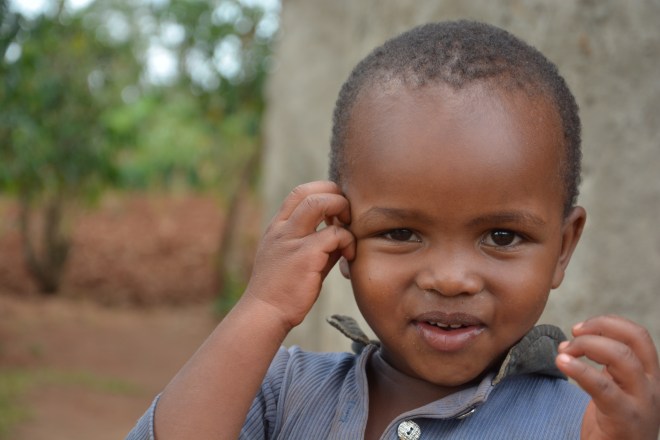
Keilah

DAY 76. MONDAY FEBRUARY 25th 2019. SIPI, UGANDA

A quick reminder about my young friends, Alex and Precious: we met by my random selection of a rough and ready guest house here in Sipi, two years ago, when I arrived, filthy and elated from the 60 mile trail ride from Kitale, the other side of the mountain. Precious was horrified, she later admitted, by my state: not far from crazy, with a face deep red with dust and clothes completely foul. I’d been looking for a decent place to stay, and seen some very bad ones, when I spotted a stained sign directing me to a ‘resort’ down red dust tracks. When I saw the place, perched as it was on the edge of a high cliff, with a view across half Uganda, I decided to stay, despite the deprivations of the accommodation. My welcome, though, was fulsome indeed. Over that and my next visits, we became friends. Alex is a young man of great integrity and charm, and Precious is indeed precious, in her kindness, thoughtfulness, good humour and unaffected pleasure at my visits. 

A couple of years ago, Alex had dreams of restoring the resort on the cliff, in which he owned a part share, left to him by a fond uncle, but cheated of the legal papers by his own cousins. Sadly, jealousy is a powerful Ugandan emotion – oddly, for this wonderfully friendly country, it’s often under the surface, especially when one party realises the truth that hard work brings rewards, and the other believes they are constantly being cheated, while doing absolutely nothing themselves. Alex’s ‘partners’ in the business live in Canada and were contributing nothing whatsoever to their property in Uganda but expecting Alex to keep the money coming in for them. Alex struggled to turn any sort of profit, with no investment from the mean-spirited, jealous cousins from far away. The Canadian cousins assumed that he was cheating them and taking the money, for that would have been their way. Meanwhile, the resort was collapsing from lack of investment. Alex has no money… They saw no need to invest their dollars; the place just dwindled away. The customary lack of understanding of management and maintenance. 

In the end, Alex changed his dreams: he’d try to build his own resort on his own plot. He trained in hotel management and is a very intelligent man. Since last year, when he showed me his land and described his ideas, I have been helping him with his ambitions. He works in a local hotel; is popular with the customers but, in another instance of opportunist envy, his employer has taken the chance to cut his meagre salary, accusing him of not concentrating on the job because he is building his own resort. This jealousy is so corrosive, as is this sort of management. How does that hotel manager expect to engender enthusiasm in employees thus treated? Alex is diligent and popular with that hotel’s clients; so you cut his pathetic salary on a spurious excuse: African management.

So here I am, the first occupant of ‘Jonathan’s House’ in the nascent resort in Sipi. Early days yet, and it’s all a bit rough round the edges, but I have a round room with a thatched roof (based on a photo of one of my favourite lodgings in Lesotho) and for my visit, they purchased a big bed and comfortable mattress. The walls and floor are still rough cement and the bathroom doesn’t function beyond a drain hole in the cement floor, a plastic washing bowl and container of water, but I am adaptable – and very pleased to see this progress. Alex needs to be running his own business; he’ll do it well and successfully, given the chance. One day, the resort will have a restaurant and bar, a number of round houses, camping lawns and bright, flowering gardens. There’s even a three storey accommodation block in his dreams. It’s a long term dream, but Alex and Precious have the persistence and determination – and rare forward planning – to make it work. Without capital, though, realising dreams here is challenging. 

****

I rode by the long route round the mountain, because of the rains in Kitale, although when I arrived, Alex reckoned the very rough road is still passable to my piki-piki. Oh well, too late now. The other road is twice as long at 220 kilometres but is tarred all the way. The Suam road, over the edges of the mountain, all that rough trail that I have so much enjoyed in the past, is being reconstructed at the moment. The ubiquitous Chinese are building a new road – more staggering debt that they will allow to wallow for a few years and then call in, in due course – in resources and minerals, with consummate greed and no sympathy for the debtor nations. The Chinese government, who do nothing in anyone’s interest but their own, must be laughing uproariously up their sleeves at the naïveté of the African nations, who don’t appear to see the future problems they are building – or don’t care, as their corrupt leaders take VAST personal  backhanders. The time will come when China makes its demands, and those demands will cost not just Africa, but the whole world, the planet indeed. There’s no compassion in China’s ‘generosity’ to this continent: the work employs many thousands of Chinese workers, utilises Chinese technology, provides a surreptitious opportunity for China to survey the geological resources of the countries, brings them huge trade in cheap goods for sale, and at the same time builds enormous indebtedness from these countries who have no method of payment except in resources that will eventually beggar them further – at which point China will walk away without compassion. This is a recipe for future conflict, disaster, extraordinary poverty and suffering. Mark my words, who’s seen it: it’ll end in tears…

****

Approaching the border, I passed a line of waiting trucks five miles long. ‘Visions of Dover after Brexit’, I thought, expecting a tedious and confused border crossing. In fact, it was quick and efficient and I was in Uganda within twenty minutes or so, the Ugandan customs officer sitting on a bollard and taking down my details in a ledger resting on a redundant steel safe as a desk on the pavement. The safe appeared to have been abandoned right outside the customs doorway.

Then I recollected that this country has the worst driving standards in Africa – that I have seen so far. Fortunately, I don’t have that far to ride here, as I will visit Alex and Precious and return at the end of the week. Kenya always seems so well organised after visiting its neighbours. The ride northwards round the back of the mountain was easy, the road good, lined by many villages and with thousands of visible children, for, like Ethiopia, Uganda’s swelling population is horrifying: 7.8 children, the average ‘download’ (as Sam, in Marsabit, would put it) per woman. Consequently, there are always children everywhere. 

For the final ten miles or so, I have to climb onto the lower slopes of the mountain, winding up a steep road towards Sipi in the foothills. “At least 100 people died on that hill in the last year,” says Alex, horrified. “Just bad driving. They don’t know to use a low gear, even though the sign at the top says ‘engage low gear’. They try to go down using gear four or five and go out of control. In one accident, 21 local tourists died.” Ugandan driving is SO bad… It’s not even a very dramatic road, nothing compared to those Ethiopian passes or many others in East Africa. “Drivers come from Kampala and just don’t know how to drive on hills,” says Alex.

I know my way to find Alex and Precious, Alex still at work when I arrived at 5.00. I’d been riding since 11.00 and looking forward to Precious’s excited welcome. Several village people recognised me as I rode. I am Alex’s ‘rich mzungu’, just as I am ‘William’s mzungu’ in Kessup. It’s that thing about going back – it shows respect. William said the other day, and it made me think, and be slightly depressed at the reaction: “Oh, for a mzungu to trust an African, it’s not easy…” What an indictment – of wazungus, not just Africans. 

Then I was on the path to Alex and Precious’s home, and hugged in a violent grip by happy Precious. It’s exactly a year since I was last here.

****

Alex was at work until after eight, so it was some time before he joined us, and supper was late. We sat on the big bed in my round house exchanging news and plans for some time. Precious always over-estimates my appetite by about double and had kindly bought me a bottle of beer and plied me with fresh pineapple. Nothing’s too much trouble for Alex’s mzungu. 

Bedtime was late and I was tired. Going out for a last piss, I looked up at the incredible black sky, a fabulous display of silver – and shooting – stars in this very dark place. There’s no light pollution here – not a lot of light at all, and no humidity in the air tonight. It’s quiet and the night is extremely still. “It’s always still while the rains are forming,” says Alex. “The rains will start about the 10th of next month. We may get showers before, but it’s after the 10th when we plant.” Rural dwellers know their weather lore; they need to know when to be ready for planting the next crop – their lives actually do depend on this knowledge.

“There’s something wrong with the lock,” Alex worries, fiddling with the new door lock. “It’s only locking from the outside.”

“Forget it! No one will murder me in my bed!” I remember that the first time I approached the guest house on the cliffs, neighbours were ringing Alex to tell him a strange, dirty white man was at his house, almost before I got there. The efficiency of the bush telegraph and bush security in a place like this is extreme!

DAY 77. TUESDAY FEBRUARY 26th 2019. SIPI, UGANDA

This was a relaxed day talking plans and dreams for the new guest house – and trying to think of a name for it, unsuccessfully so far. Alex, on his one day off, is constantly working at something – sweeping his new lawns of pine needles, the paths of dust, patching up the privy, washing, cooking, planning. He has the energy to make this business work and I do hope he succeeds. He actually acknowledges that only work will bring his rewards; an uncommon attitude here. 

The day was extremely hot. “The rains won’t come yet,” says Alex, looking up at a cloudless hot blue sky. That suits me. In the evening and into the night, a strong breeze worried round the garden trees, much warmer tonight, so that we could sit outside under the stars for supper. 

****

In the late afternoon, as the air cooled a bit, Alex and I wandered the neighbourhood, meeting neighbours. Alex grew up here and knows the place well. I am soon lost and directionless amongst the close growing banana trees amongst the many smallholdings. “How the people laughed when I cut down the matoke (bananas). You will starve! They LAUGHED! There’s a lot of jealousy here; many would like to see us fail; they just don’t understand that if you work hard and invest effort and ideas, you can succeed…” 

It’s an abundant region, still very green as the dry season ends. “I have a lot of plans! But I know it is slow. One step at a time. Oh, people were surprised: when the local MP came, where did they hold their meeting? In my new gardens! People everywhere! The sad thing was, I had no money, so they had to buy their drinks and snacks outside. But it brought a lot of people, and those people will tell other people. Oh, we’ll get customers when we open. I know we will. I have people already asking, ‘when are you opening?’, people from Kampala. I tell them, I am not ready yet. We have to open when we can offer a good service. At the moment we have much to do: that latrine is too poor, the toilets in the rooms aren’t working yet. When we get the second room finished, then we may be able to open. We did have a lady from Brazil; she loved her stay, but she stayed in the house with us. I have a lot of plans, but slowly, slowly…”

Precious told me more of that MP’s gathering. She, as the hostess, was asked to hand out his money to the villagers, 1000 Uganda bob (20 pence!) to every man, woman and youth. Enough to buy many votes, although it’ll only buy a bottle of pop. “Oh, the line was looong! From here the road!” Precious laughed, pointing across the long compound. 

****

My design skills are proving useful to Alex. “Build the next bed from earth block; build in a seat around the walls, all in earth block, filled with earth. Let it settle and cover it in a thin layer of cement, mattress on top. Two bags will probably do the bed, and earth blocks are cheap! Don’t tile the floors; paint them and then polish them and put down a few grass mats. Keep it simple, unusual and traditional – even if you have to invent the tradition!”

Alex is enthused. “It will be like nothing else in Sipi! And this bed,” we are now sitting in my round room on the big wooden bed, locally made and already probably warping, joints loosening, for all furniture is made with insufficiently seasoned timber, “This bed cost more than £75!” I think £50 is about a month’s salary for Alex. It’s hard having ambitions and no capital and not yet the independence to rely on his own imagination and abilities to sink or swim. “Without Jonathan, we couldn’t get even this far!” agrees Precious.

“We should call it ‘Jonathan’s Guest House’,” she chips in. We are still trying to think of a name for the signboard, the planned website, the Lonely Planet and (ghastly, lying, manipulated) Trip Advisor. My help through the year has amounted to perhaps £750 or £800. I will continue with my £100s now and again. These two deserve – and appreciate the support from far away. 

****

At least my aid gets to the recipient here in Uganda, more than can be said for probably the majority of foreign aid in this perhaps most corrupt country in East Africa, where graft and corruption is endemic throughout all institutions. Of course, it starts from the top; from the longest ‘serving’, fabulously wealthy African president, Museveni, now in power well over 30 years, who has recently cheated all his politicians into accepting changes to the constitution to allow him another seven years – and likely president for life. He just buys them off with huge backhanders and smart cars, new houses and the like, much of it money syphoned off from Western donor countries. It’s a persuasive argument for the total uselessness of Western aid to Africa. There’s a growing discussion whether aid works at all, except in the donors’ interests – for ALL aid is entailed in many devious ways. The argument is that aid is actually causing many, many problems for this continent. Looking close to home: to Alex’s community, there’s a lethargy that has deep roots now in African culture: hard work is a waste of energy for if you wait long enough, someone (usually wazungus) will provide, to assuage their own guilt at the disparities. Self-important white people will then ride about in first class expensive white vehicles (bought with the ‘aid’ money from their own donor countries…) and alleviate the symptoms but never actually address the underlying problems. Officials all down the pecking order take their ‘share’ of the money; large salaries are paid to the top people in the ‘charities’; considerable sums are filtered back in ‘business opportunities’ to providers in the home, donor country – much of the charity infrastructure is based around purchasing those top of the range vehicles, the practical items of relief, the emergency supplies – from local suppliers in the donor country. A lot of ‘aid’ never actually leaves the donor country. It’s an elaborate con. Aid also employs a lot of the donor population and few of the recipients’. And it causes an institutionalised dependence amongst recipient nations and encourages appalling corruption all down the line. Museveni, longest ruling dictator on the continent, were anyone able to count his millions, doubtless stashed away in diverse foreign accounts, must be one of the richest men – or families – in Africa, all based on cheating his poorly educated, cash-strapped, poverty-stricken people. One does wonder how these immoral despots can live with their own consciences? Perhaps they don’t have one…

DAY 78. WEDNESDAY FEBRUARY 27th 2019. SIPI, UGANDA

Just beneath the surface of African life there is so much brutality and jealousy that I seldom witness, seeing instead the generous welcomes and smiles. It’s only when I get to know people and hear their stories that the other aspects surface. Life is cheap on much of this continent, education levels quite low and diplomacy and reason often play no part in inter-tribal, and often worse: inter-clan rivalry. Alex’s brother, Cedric, a charming young man of 23, intelligent, educated, committed and informative, took me for a long walk this afternoon, to villages and communities on the other side of the big valleys that intersects the Sipi plateau. It’s an area he knows from his volunteer work for, like Alex, he works with one of the grass-roots groups to mentor and advise, in an attempt to bring down the astronomical birthrate and reduce gender-based violence and FGM. 

About three miles from Sipi, we walked into a crude village on the mountainsides, rich in coffee and bananas, but very low in education and civilised behaviour. Cedric knows it for high incidence of rape, violence and drunkenness; the women travel to Kenya as prostitutes and come back infected, and Alex told me later that the incidence of HIV-positive villagers in that region is 85%. It’s the first place in East Africa that I have ever felt any sort of aggression, not a place I’d go at night. My normal behaviour is to smile and greet everyone I pass. In that area, I elicited NO reaction whatsoever. It was rare enough for me to comment to Cedric as we walked, which is when he explained the character of those villages. They are off the beaten track, and keep themselves that way. They do not welcome strangers, and going there as volunteers to try to promulgate what the village saw as revolutionary ideas, was challenging, he admitted. Respect for women? That’s radical talk. Equality? Huh. The volunteers could find little link with the people. These are ignorant, proud people – perhaps humanity’s worst mix of emotions: closed to outside influences; knowing best.  

The inter-village rivalry is rough and violent amongst such people. It’s the clan system, a refinement even of the tribal divisions. “You see,” explained Cedric as we walked amongst unsmiling people, who looked unresponding, and slightly aggressively at the mzungu, “the more children you have, the stronger you are; the bigger your clan, the more powerful. The biggest clan becomes the leader in the region. It’s like that in these villages.” There were indeed multitudinous children, afraid of the white man in unusual numbers; even schoolchildren running away, behaviour that usually stops at about age five and turns to fascination. Here it seemed to turn rather to rudeness and jokes at my expense. I don’t think many of us penetrate that area. One or two people were openly rude – a singular reaction in friendly East Africa. 

“Did Cedric tell you about the wars in 1975 and 79?” Alex asked later, cooking supper on a fire of sticks, as I was telling him of my surprise at my reception. “A man from one of those clans killed one from another, and the revenge was terrible. Hundreds died. They just slaughtered each other. It was horrible. Life is so cheap to those people. But, you see, their land is rich, so they have money – but no education,” – and the ugly jealous streak that’s not far beneath the smiling surface, when I listen to Alex’s stories. Those who are intelligent and educated are somehow looked down upon for their hard work. Shades, it seems to me, of the developing ‘populism’ that is infecting the Western world so alarmingly at present, creating a ‘them and us’ jealousy, accusations of ‘elitism’, a determination of the basically ignorant to ‘bring the rest down to size’ – resulting in Trump, Brexit, hatred of immigrants and the shocking fact that those citizens of Dover who spouted racism and xenophobia, wanted their names published in that Guardian article, while the more reasoned, thinking sympathisers trying to understand the issue, withheld their names. To be ignorant and proud may be a terrible mix of emotions, but to be proud of being ignorant is even worse. 

Being so populous in the area – “They are the biggest clan, so the politicians go there and spend their money on those ignorant people since they decide the elections!” says Alex as he bends over his fire beneath a pan of sizzling oil in which he is cooking a delicious whole fish for my supper, in the dark of the starry night. “It’s all based on alcohol. The politician who buys the most alcohol wins the seat…”

Cedric has some political ambitions. He was explaining that he wanted to run for mayor but was laughed out of court by the old men. “You aren’t married!” they exclaimed. It seems that marriage is a requirement for office. “And they said, ‘you are too young!’ If you can’t keep a wife, how can you look after 1000 people?” These are hidebound people, who resist change because no one ever challenges the corrupt status quo. ‘It’s the way we’ve always done things, why should we change?’ Change is threatening. 

I told him to persevere. But the trouble is, he hasn’t the financial backing to buy the votes, for that’s how you win elections in Uganda – right from the top: the most corrupt president on the continent – down to local mayor… This is such a corrupt country. And, of course, it’s in the politicians’ interests to keep the people uneducated: it’s easy to sway them and cheaper for winning office – uneducated people are cheaper to bribe; and once you have office, you have access to all the incoming development and aid money, all the backhanders. 

A country that desperately needs the integrity of their Alexs and Cedrics stops their progress, and jealousy of the ignorant keeps them down wherever it can. But these young men have a longer view than most. I wish them well but am very glad I don’t face their challenges for change. 

****

…Or their challenges just to get through life and support their (limited and planned) families. Life’s tough for them, with their minds opened by education and natural intelligence. Cedric studied IT in Kampala and can get no work. He’s too well educated and work depends on whom you know, not your skills. He’s living at home just now. Alex and Cedric’s parents live next door to Alex’s compound, now slowly converting to the guest house. I wandered over to chat with his mother and father. “I have three children still in university,” says Alex’s father, who retired last year (plus, I later find out from Precious, two in secondary school and one still in primary…). They have a large plot of land and are obviously quite ‘middle class’ for the region but he is still held back by having nine children. Nine! Why, one wants to ask. If he’d had two or three, he could now be retired and living well, helping his three to better themselves in life. As it is, he has nine struggling children, who can’t find work – but he is probably held in high regard locally for his ‘strength’ and ‘virility’. His wife, a cheerful, large, fast-ageing woman, sat with me for a time. We talked about age, as I am older and yet infinitely younger than them at the same time. “Oh, we used to see people of 100!” exclaimed Alex’s mother, sitting sideways on her plastic Chinese chair to keep in the almost vertical shade of the overhanging roof. “But now… seventy, and they are off… Why? Is it the food, all the contamination in our food?” I hesitated to say that she might expect a much longer life if she hadn’t given birth nine times… Then her husband came, a slight, spare man, like Alex and Cedric. She immediately relinquished her chair to the man of the house and went back to her endless hard work – as he settled in for a long, relaxed chat, bemoaning the cost of educating three children at university. Almost my age, and he’s still paying primary school fees. What hope has that child that he will be around to pay university fees? That cost, if it happens, will fall to its struggling siblings.

****

After our long walk; we must have covered about six or seven miles in our three and a half hour ramble, I was weary. I haven’t been doing so much walking for a while. I took a Chinese chair and sat in the kitchen – just a swept earth area next to Alex’s modest house. Most rural people cook on the floor on fires of sticks, in sooty pans and pots, by the light of their phone torches. It struck me that those who live in the dark, work in the dark – can SEE in the dark, unlike me, who goes half blind as the stars brighten. Precious had gone to buy me a bottle of Nile Special, not a bad beer, although a bit strong at 5.6%, and I snacked on fresh juicy pineapple as Alex cooked. Little Keilah, the baby, now going to two and a half, and still terrified of the mzungu, pushed the sticks into the small fire: there’s a different regard of baby safety here, where they are so exposed to fires, knives, animals, barbed wire, sharp objects, cliff edges and all the ‘dangers’ from which we would protect them – all just part of daily life for these small children. Both Alex and Precious trained in hotel management, so it’s amusing to me to watch the little niceties they practice: the glass of juice served on a plate; the flowers by the bed; the garnish on the dishes. This is still a part-formed guest house, but it has already some of the habits of a grand hotel! I do hope they will succeed, they deserve it so much. I do hope one day I can come and see the completed version – although, like all projects with a forward-looking developer, it will never be finished, always moving forward to Alex’s rare long term dream.  

****

This morning an unexpected event occurred: my stomach rebelled. The last time it happened was over three years ago! Fortunately, it was all over in an hour. Something had got into my system that my guts didn’t like, which considering the trials I put them through, must have been extreme. Mostly, I am stainless steel down there. Well, without medication, my body worked it out and, taking it easy for lunch (Precious always wants to give me prodigious amounts of food, for she has a huge appetite herself), by evening I was eating my excellent whole fish with Alex’s homemade ‘Irish’ chips and salad, in the dark yard beneath the scintillating starry ceiling. It’s such a shame he has to work all day – long hours for a pittance from a jealous boss – but I was glad of Cedric’s company instead; another intelligent companion, warm hearted and happy for the opportunity to question me too. Very good people; funny how instinct introduces me to some very charming, generous and warm people on this continent. A happy instinct to have, and pretty well honed after all these travels.

DAY 79. THURSDAY FEBRUARY 28th 2019. SIPI, UGANDA

There’s a funny story to relate today.

Alex managed to get home from work soon after five this evening, so I suggested it was the only time I could get some family photographs. As the sun dropped through the western clouds, diffusing towards its golden glow, I tried to chivvy Precious along.

“We have five or ten minutes before the sun goes!” I warned, watching the shadow of the pine tree lengthen across the new lawn. “Ten minutes, maximum! And I want to get all three of you together, so dress quickly!”

“Three?” asked Alex, with a slightly quizzical look. “Didn’t Precious tell you..?”

“No, she’s told me nothing,” I replied as Alex’s grin spread. ‘So Precious must be pregnant with number two’, I thought as they hurried away to change from their ragged day clothes. 

Minutes later, they came out into the garden, dressed in bright red finery, looking terrific for my photo.

Alex carried a small baby in a blanket. I have been in the house for three days and saw no baby!

“Meet Jonathan! The little Jonathan,” Alex said with a big smile. “You didn’t know? Precious, why didn’t you tell Jonathan? I assumed you knew.” He held out the small baby. “He was born on November 25th, and we immediately called him Jonathan!”

“Oooh, I thought you would be aaangry with me for having more babies!” exclaimed Precious with an embarrassed laugh. “You talk how the Ugaaanda population is getting too beeg and I thought you’d be angry. I know you want Ugaaandans to have smaller families.”

“Precious, you can have nine children if you want, like Alex’s parents, but you will live much better – and so will your children – if you have two, maybe three! And Alex won’t be a retiree with six children still in education. You can have as many as you want, but my ADVICE is, fewer is better.”

“Two is enough,” chips in Alex, a volunteer mentor trying to bring down the spiralling birthrate in the villages. “Two will do. I want us to stop at two. ”

So we took our photographs; happy pictures with the two small children.

“So what would you do if I visit when Jonathan is ten years old. Send him away to hide?” I joked. Precious laughed, shy and embarrassed. These are such lovely young people. I wish them very well indeed – and of course the little Ugandan Jonathan too. So much of Africa provides such warmth and love when you really get under its skin and instinctively trust new friends.

****

It has been the hottest of days. Too hot for much activity until the afternoon. I rode to Kapchorwa and met Alex to get my beard trimmed (my trimmer has a rechargeable battery, and being made in China, it failed three days ago. Built-in obsolescence to make me buy another…) and a hair cut in a barbers’ shop in the scruffy town. It cost a pound. I bought the hair trimmer and started cutting my own when my haircuts in Devon reached ten pounds.

Alex had meetings of his hotel staff. Precious tells me that, using the excuse that he is building his own hotel – which will offer no threat to the customers of the Kapchorwa hotel, which fancies itself as a cut above all the rest, but is, to my tuned eyes, unmaintained and no big catch – his manager and his jealous daughter have cut and cut his salary. He now brings home something over £30 a month, for six day weeks. If it wasn’t for all the money I currently send down to Africa – far and away my biggest annual expense – I’d feel inclined to set up a regular payment just so he could reject the meanness of the jealous management in Kapchorwa and get on with running his own place. I do despise this way of African mis-management, common as it is. 

Back home, young Sam, a fifteen year old neighbour, took me for a walk in the vicinity, climbing the hills to gaze at the vast view that opens below Sipi, seeming to include half Uganda, an endless plain that stretches to the western horizon, lost in the mists of distance. People are burning the bush now, long plumes of white smoke exactly parallel to the north easterly wind across the plain. Many new feeder roads are being bulldozed through the village (no compensation if your fields happen to be in the way) as the population increases and more plots are needed, opened up by the new earth roads. 

I’m still chuckling about Precious’s secret baby, and have a small glow of pride that he is named after me. It shows so much love, acceptance and respect.

DAY 80. FRIDAY MARCH 1st 2019. KITALE, KENYA

This has been a great day. The Suam road is perhaps my favourite East African road. It’s the roughest of trails, with the most wonderful vistas from the lower slopes of Africa’s third highest mountain. It’s being improved, which on one hand I resent a bit – for I loved the challenge of the rugged road, and liked to be able to say that I can still ride on those trails. It’s still bloody hard work and I am happily weary, in that I have exercised muscles I hardly knew I had. Riding a small trail bike, a versatile machine, on those sorts of rocky, dusty, pitted, broken, rough tracks is so much fun! I used to love to trail ride, many years ago, and before I ‘discovered’ Africa, where trail riding is the norm in so many places: just the way people get around. Now I have a wide smile on my face that I can still find and ride such rough roads, and especially with such magnificent African scenery around me. There are the smiles and waves, the calls of children, the laughter of the people I pass as well. It’s invigorating, youthful fun, hard exercise and very, very satisfying. I feel 25 again, forgetting that what passers by see is a white haired old bloke, going increasingly red with thick African dust, smiling a bit crazily as he bounces from rock to rock, flinging himself about, standing on the foot pegs, rebalancing every second as he lurches from pothole to pothole and rock to rock. And off to my left, much of the way, are views that are stunning: vast areas of the northern plains of Uganda, seen from this vantage point on the lower slopes of the mountain, volcanic pimples spotting the boundless, sweeping panorama. The distance fades into a softness that eventually just becomes sky. I am looking hundreds of miles into the enormity of Africa. It’s a wonder to be here, steep slopes, heavily cultivated; small rural homes lining the twisting, convoluted, tangled, tortuous dust track. My smile is wide and my spirit soaring. I am riding tough trails in Africa!

****

Two hours or so from Sipi, I stop in a small, earthy village. I need to rest a bit. Mixed tea is always my choice – I’ve learned from Precious how to make it this morning and written it down in my notebook. It’s not complicated, just tea leaves boiled for a while in a saucepan of water; milk added and boiled some more, then strained into a big Chinese Thermos.

“Have you chai?” I call to the women assembled, as they probably are every day of their lives, under the shade of the crude wooden shacks at the roadside. 

“It is there!” calls back a woman. “Come!” and she enters one of the shacks in the row to fetch the Thermos. 

“Let me sit outside,” I say. “I want to watch the people!” In fact, it’s the opposite: the people want to watch me. A crowd gathers; my tea is brought in a chipped Chinese enamel mug, full to the brim as always, so I spill scalding tea down my fingers. I’m used to that now. It’s always to the top. Value for money; it’s only ten pence, but ten pence is a different sum when you may have fifty pence in your pocket, not £50 like me – unknown riches here in deep rural Uganda. 

An increasingly swelling group of primary school children gather to watch. They are neatly dressed but dusty – everything’s dusty here – in yellow shirts and blue cotton shorts, a big letter T stitched to their pockets. I guess they are of Tulel Primary School. There’s a curling A4 sheet stuck to the earth wall on which I am leaning, seated on a low wooden stool. The notice gives tantalising information about enrolment at Tulel Primary: ‘Hurry, hurry, while vacancies last’, the fading paper warns. To register, the parent must provide: ‘A none (sic) refundable fee of 2000/= (50p) for registration; 25,000/= (Uganda shillings, £5.25) per child per term on the opening date; 10kg of maize and 2kg of sugar; a mathematical set for P4 and P5; a pen and pencil’. 

The very hot sun is almost overhead; I’m still almost on the Equator. Almost vertical, I am grateful for the scant shade of the rusty zinc sheets of the rough verandah, held up by crooked tree poles. Chicks ‘cheep’ loudly round my feet, scavenging for some spilled beans, but they are dry and rock hard, so the small bundles of feathers must forego them and peck at some maize husks instead. It is still, claustrophobic, hot. Music, not offensive, fairly tuneful Ugandan pop, plays on a speaker in one of the shacks; no one has anything much to do, except talk desultorily and gaze at the hills, thickly dotted, in this astonishingly populous land, with shining zinc roofs. There’s little forest left, just patchwork fields of matoke (banana) and dug-over red earth, waiting for the rains and sowing season, soon to come. The forests have been sacrificed to firewood, fence posts and construction – or sold to Kenya. I just rode through where the pine forests were last year; they’ve gone now. I hope and assume they’ll be replanted. I missed their cool freshness, a respite on this dry, hot, dusty road. Now the hillsides are barren, punctuated with low stumps and dying brushwood; ugly blasted heath, baking, desolate. As I rode, back there, I thought fondly of the smell of pine and the greenness overcoming the scorched scent of the dust as I bounced through the tall, shady trees on previous journeys; I’ve been this way about seven times now. Gone now, those proud trees, such a feature of these hills, many of them sold to Kenyan sawmills I am told. The managers stayed in Alex’s mean-spirited hotel. 

It’s very still now; the sun beats down. It’s 1.30, the hottest part of the day. The shade of the verandah is narrow and the zinc above is too hot to touch, acting as a hot plate. A baby mizzles on a teenage mother’s back and another one suckles from a woman sitting in a locally made bamboo chair. Babies everywhere. Children too; the schoolchildren are now about thirty, watching me attentively. I smile at them and they giggle shyly. Not many wazungu stop here to be viewed so closely. I wonder what stories they are making up about me? Eight young men do nothing at all. It’s like this every day of the village life: sitting in the shade, sheltering from the oven of the sun, staring; staring at nothing… It’s not surprising so many people in this country go to church; it’s the only social event of the lazy week. 

I’m high here, over 2000 metres, here on the mountain slopes, maybe 2500. I’ve been generally climbing, the last fifteen miles, and I’ll drop down again towards Kenya soon. The village, it may be Tulel, or is it Kabokwo, I’m not sure, and it hardly matters – all these rustic collections of shacks and shambas are the same – is on a dusty hill. We can watch the boda-bodas wobble by, overloaded hugely, in the cloud of dust that I make too. 

At last, after half a lazy hour, it’s time to move on; still fifty kilometres or more of this energetic ride to go. It’s difficult to get up and start again. A move from me, pulling on my filthy, faded, fraying jacket, and the children whisper comments to one another. When I roll up and put in my ear plugs against the helmet noise, they wonder… The oddities of this being who seems so alien, yet is divided from them by only a millimetre of skin colour; few appreciate that. Leg over the bike, a few words of thanks to the amiable women and their babies, a wave to all the children; now at least fifty, and I accelerate away, the biggest thing to happen in Tulel, or Kabokwo, or wherever we are, this week; back onto my favourite East African road with its stupendous views.

Riding again, it’s difficult to find somewhere to stop for a piss. I drank about a litre of ‘tangawizi’ tea that Alex made this morning – that’s my favourite ginger and spiced mixed chai – plus a glass of fresh passion juice that Precious squeezed for me, and now another half pint of sweet milky tea. But everywhere along the track the homesteads of this remarkably populous country sprawl by the dust trail, and a mzungu attracts so much attention. The track seldom enters a stretch of open country and I’ll have to find a hedge by a maize field for relief. For a couple of miles the terrain is too steep for homes, the track hacked from the mountainside, Uganda reaching into the haze to the north, endlessly vast, blue from distance, impressive and magnificent, a good place to stop: another photo.

Suam River is the border village, a particularly scruffy place; two rows of lock up shacks, a scattering of mud and zinc homes, a lot of indigent people, a bit of sluggish business, a rutted dust street, if it can be graced with such a word. The border itself is crude and easy going; I’ve been this way several times and know the ropes. In the exit immigration building it’s difficult to hear the Ugandan woman through a small hole in the glass, for there’s a television – more cheap American melodrama – competing for attention, right behind me so the officials can watch through the glass, the opiate of TV to pass the day. It’s almost three now and I am the sixth person to pass out of Uganda: locals don’t get recorded and come and go, but I have to be registered in a ledger no one will ever read. Then I have to scrabble my way up the dust and grass bank to customs. Why have they never dug steps? Because no one was told to, and no one will take the initiative. I’ve scrambled this way every time now, grasping for tree roots to pull myself up to the dirty office, where an official sits at an old whirring computer and takes down my Mosquito’s details again.  

Then it’s bumping through rubbish and ruts, and over a colonial bridge, eight feet wide, built in 1956 it says, over a filthy trickle that must be the Suam river, and into Kenya again. A broken gate, more ruts and bumps; more dusty customs and immigration nonsense that no one will ever check, my passport scrutinised, all those stamps and visas. It’s curiosity for bored officers at this remote border post with about ten international vehicles passing each week. Last year I was the fourth to pass and be registered in nine days! No uniforms, just old mtumba tee shirts with European shops and stores, American resorts and international football teams’ names across the chest. I wonder if all this will change when the new road gets here – Chinese, of course: I’ve passed many  Chinese in wide straw sun hats and dust masks unsmilingly directing African workers on the early part of the new road build near Kapchorwa, and now I’ll pass more as I ride the new construction towards Kitale, long tracts of earth and dirt as the future road takes shape. In a year or so, you’ll be able to sweep through all this magnificent country on tarmac; pity really – I enjoy this more challenging route, it feels more like a bit of mild adventure, sixty miles of trail riding through Africa. I’ll miss this ride and the sense of achievement I now feel, face red with thick dust, muscles exercised by the crashing and bumping, fulfilled by the scenery. Pity I may never have that experience again when the road sweeps along, a hot black line back to Kapchorwa.

****

I got home about five to the warm welcome I have come to expect from my Kenyan extended family. The well is now dug – water at about 30 feet, the house renovation complete, the house tidy, the mushroom house cement-rendered over the mud blocks. It all looks good for Rico’s return next week. In the evening, after supper, Adelight loves to challenge me at Scrabble. After an hour and a half sitting on the settee playing, my hips have stiffened and I can feel the exercise of all that rebalancing and riding along standing up for much of the way on my little bike. But it’s a good feeling, healthy exercise, a couple of cans of beer, warmth of the family and now the prospect of a good sleep. Not bad at all.

****

The other good news seems to be that I may have been alarmist at the ailments of my little bike. I have ridden two days without the white cloud that was tending to follow me: white smoke of burning oil. I noticed that it tended to happen more in the morning, after I had topped up the lost oil of the previous ride, and linked that to an observation of Cor, next door, who helped me by finally fixing the drive sprocket with proper LockTite. Fiddling with the rubber engine breather pipe, I reduced the kink that may have been making the oil pressure too high, and pushing oil past the pistons when the engine was fully topped up. Maybe I have fixed the problem? I hope so, as I will keep the Mosquito for another year or two, even if I use it for only shorter trips. I have paid the money now, and may as well keep it, if Rico doesn’t mind having it stored in a corner of his garage (which he doesn’t seem to) so I can enjoy days like today: a good day indeed. Any day that makes you feel 25 again, when you are fast pushing 70, has to be notable! 

****

Precious borrowed my pen and returned later with a folded letter surrounded by hearts and ‘miss you’s.

‘We wish you a safe journey going back home God protect you head and add you more years. Jonathan its so wonder ful that you have now becom our parent we appreciate Every thing your doing We congratulate “so so” much. Pleas take care of your self. HAVE A NICE JOURNEY. Written by Precious = Family member Alex Precious Keilah Jonathan WE LOVE YOU SO MUCH. we fell like being with you again and again and again and again and again’. 

A most satisfactory day.

2AC68A63-DD44-4DC7-9236-B4302B9B2990

‘Smiler’

94FB059A-0EEB-4E22-85F6-BB88C3BDA63C

Many Africans are terrified of harmless chameleons

A9F8E180-4E19-42AF-B462-C42A8B1C5C33

The Sipi slopes of Mount Elgon

21856B3E-6738-4493-9062-3C72CE432D43

Precious rolling breakfast chappaties

22FB05B9-7E44-4504-90A9-7CAAA2FDC146

The  first room completed is called ‘Jonathan’s House’

9877EAF2-4B7C-4CC6-9C50-0A1E1DC18638

Precious

83F52943-DEDC-4F81-8D6F-A1DC1698BDF8

Keilah

A71F3017-4451-410B-A08E-B531C88C99C5

Precious and Alex with their family, including Jonathan junior

6DB3119E-FD8B-4270-A3D7-0B43A5143E49

Precious and Keilah

EDCDE91F-4823-4542-94D3-E6FC03769205

Ruth

9C0BAA0A-3148-48CD-A291-9C5C0F44501D

Cooking supper at Sipi

BA9FF9A4-50DB-49C8-8DD7-78E6740C0C5E

Alex and Keilah preparing my supper

E6B52B1B-B3C5-494B-9565-ECFDBB1FD401

Cedric

A0BDDC6F-AF89-4F75-A8D2-A9D03E3CC550

The road to Suam

5FDC8A3A-247D-4353-B26E-8FAF1283318A

The view into endless Uganda

1B15441F-3E9F-4024-BF27-EAD622A4AD37

On the road. A great place to ride!


EAST AFRICA 2018-2019 – NINE

1FCCA907-C376-40E9-A971-3A0AF3980792

Scovia

DAY 71 WEDNESDAY FEBRUARY 20th 2019. KITALE, KENYA

And so, full circle – although the ride back from Addis Ababa can hardly be said to be a circle, as I followed many of the same roads as those with which I went. But back to my surrogate home in East Africa, where I am assured of a warm, familiar welcome. I am allowed to feel ‘at home’ here: I don’t seem to disrupt the family activity too much, just an extra mouth at mealtimes, and conversation for Adelight. This week is half term, so Marion and Bo are at home with Adelight and Scovia, and happy little Maria. Also back now; she was at home for the Christmas holidays, is Sarah, the rather timid, quiet, house girl.

The house is in some upheaval just now, in the midst of renovations: an internal wall that had to be replaced, repainting the walls, new covers for the settees, painting the exterior, and later, new tiles for the floor. Life in every African household is hand to mouth, no less so in this one, which relies on income when Rico gets a contract. Right now he is in central Zambia renovating a fleet of Land Cruisers for a private safari park. It’s a good, rolling contract – there are a couple of dozen vehicles – and should keep the family finances afloat for a time. He still has school fees and all the other costs of his large extended family to bear in this most admirable ‘family’ I know, composed of so many young women, many of whom have no blood relation to one another, but form the most cohesive family I am happy to know – and even be accepted into for a few weeks each year, these past trips. It’s been Rico’s huge commitment, a real expression of absolute generosity that one doesn’t often witness: to make the formation of such a family your life’s interest. It’s had its ups and downs: a few children fell by the wayside, but it has the ultimate reward in the love and respect they feel for him. Rico’s a year older than me, and Adelight a good deal younger, so she must find some measure of independence. About the time I leave Kenya, she will go to Eldoret to take a short course in mushroom cultivation, and a couple of buildings are in progress in the compound for this purpose. She reckons to have already the main customer, one of the larger Kitale supermarkets waiting for her supplies. 

“Oh, we can’t do this work when Rico is here! He hasn’t the patience!” exclaims Adelight, as more and more furniture is pushed to the centre of the main living room and piled up away from the walls. It IS a bit of a mess, but a happy mess, as Scovia clambers on a stool, paintbrush in hand. Mike, another sibling of Adelight’s – same father, different mother: polygamy is quite common here in Kenya (although never two husbands per wife, that’s still very sexistly called infidelity… Different rules for men and their behaviour in Africa) is painting while the other girls give the house a deep clean behind them. It’s a merry bustle; no one complains that they want to be elsewhere, not doing these chores. They all know how fortunate they are to live happily together in this cheerful household. Shared chores are what they expect.

DAY 72 THURSDAY FEBRUARY 21st 2019. KITALE, KENYA

Adelight and I go to town to collect newly made stripy cushions from a tailor by the street side. We enjoy one another’s company, Adelight and I. She’s happy because I can always find things to watch in town while she does her business. Rico doesn’t have that patience – but then it’s not all new for him as it is for me. The house is in complete upheaval today, slowly getting back to normal this evening as we all return furniture and Adelight delights in her new cushions. She’s chosen a sort of zebra theme for the living room, with white walls. She enjoys this activity. 

****

Kitale is a busy town; small enough to be friendly. Under the clutter you can still see some of the colonial architecture, with an Indian influence from the earlier traders. There are still Indian businesses in town. It intrigues me to see how ‘Indian’ the Indians remain, considering that most of them are second or third generation at least and most probably no longer have any connection with their not-very-home country. They still remain somewhat aloof from the Kenyans. 

The streets are wide, filled with people and randomly parked cars. Council attendants collect parking fees. There are boda-bodas everywhere, weaving about, vastly overloaded with sacks, crates, multiple passengers, timber, bundles and even piles of trays of eggs; the riders often have to sit on their tanks. Many of them have the habit of texting or talking on the ubiquitous mobiles as they ride.

Traders fill every pavement and the areas in front of the old lock-up shops. There’s colour everywhere you look. On the corner where the cushion tailor sits at his foot-treadle sewing machine, stitching Adelight’s black and white covers, sit several other sewers, machine stitching intricate embroidery. One woman is embroidering the name of a schoolgirl onto a pile of clothing, even on the outside of the blouse collars. Everyone will know Olivia’s name: it’s even stitched onto her socks for school. In the sunshine, across the covered, arcaded shop fronts where all the tailors, and the lottery sellers sit amongst heaps of new suitcases and bags, blankets and plastic clothes’ dummies – oddly pink in hue for Africa – are stalls selling ironware. I always like to look at these, for there are so many useful items: handmade axes, hammers, spades, forks, locks, hinges, and spanners. A man pumps at a treadle sharpener made from a bicycle wheel and grinding disc. It hums as it spins; he hones one of the big axes for a customer. “Hey, mzungu!” calls a woman selling Chinese clothes, draped on hangers and a few wan dummies in a corner between crumbling buildings. Every space is utilised somehow. This is how people scratch a living. It’s a cheerful hubbub; noisy and colourful. As if anyone needs it, loud, boringly repetitive music plays from huge speakers across the street, but it’s all part of the town atmosphere, and everyone seems deaf to the chaos. Occasionally, someone pulls a protesting goat or drives sheep across the street. The fat beggar-woman, with a deformed leg, who habitually reduces the pavement to single file outside the supermarket, talks on her mobile phone; Matatus hoot and call for passengers, men load trucks and boda-bodas; horrid vultures wheel and soar in the cloudless blue above, circling for carrion. For a moment I mistake a tall, gangly crane on a roof for a sculpture, then it moves its long head and swings its huge beak and beady eyes to the distance and flies off, ungainly, legs trailing. Almost together, Adelight and I decide we might as well wait in the cafe behind the tailor’s sewing machine spot. We’ve been watching him for half an hour, probably stressing him. He can get on without us; he’s fifteen cushions to sew up and insert zips. The cafe is busy on this street corner but most of the things on the plastic encapsulated menu aren’t actually available – just wishful thinking. So long as you want goat, ughali, chips, or fried chicken you might be lucky. Ask for fresh juices and there’s no hope: soda, yes, sickly sweet, made by the evil Coca Cola Corporation that has taken over the world. I order mixed tea, and Adelight has a Coke. We both choose a couple of samosas and agree they are rather good. “Samosas have to be greasy like this!” I joke as the oil runs onto the plate in a pool as we bite them. 

****

My phone rings in my pocket. I feel it vibrate. It’s a funny story; becoming something of a running joke. You may remember that I met Jessica in Archers Post when she joined me to chat after supper. She’d arrived recently from near Kitale to work as a cleaner and bed-maker at the campsite and huts in the women’s cooperative guest house. Feeling sorry for her plight – single mother with three boys left at home 500 miles away to fend for themselves while she chased a poorly paid job so far away, I gave her 1000 bob (£7.70) as I left and told her to send it to the children. Of course, I was naive, not remembering that from a mzungu this would be seen as next to a proposal of marriage! She texted several times after I left and then started making calls to my phone, even a Valentine’s message! Wazungu are so often seen in this rather mercenary, romantic light by women of a certain age in Africa… While walking the last few days with William, I switched off my phone, but any time anyone called HIM, we’d joke, “Archers Post!” Now Adelight is in on the joke.

“Next time she rings, let ME answer it!” She laughs her cheerful laugh, imagining how she will answer and ask what Jessica wants with her ‘husband’! “Then your calls will stop!” We enjoy this joke. Adelight and I are very compatible company. She’s not only a very warm, capable woman, but has a quick wit and excellent English, although I sometimes have to unravel her Kenyan intonation a bit. “Haha! I will answer as your wife!” The trouble is, probably lonely, Jessica dreams of escape and she met a mzungu… My small gesture of generosity was typically misinterpreted. But I know she wants my email address, and once she gets it, she will bug me for months. Perhaps I am ducking the issue but it’s a lot simpler just to let her think perhaps I lost my phone..? Well, the SIM card in my phone dies when I leave Kenya in three weeks. That’ll solve the problem. My trouble is, I’m too soft-hearted…

****

Rico’s neighbour and old friend, Dutchman Cor, has set my mind at ease about the Mosquito for now. He knows about motorbike engines. He says the oil burning is an issue with the new piston rings. What’s wrong, we don’t know, but he assures me that, while not very environmentally friendly, burning the oil isn’t really any immediate problem for the continuation of my current journey: I can ride to Sipi next week, so long as I make sure the engine’s topped up. He also has an answer for the drive sprocket. “It’s even in the online manuals: as soon as you get your Suzuki, remove the sprocket bolt and replace using LockTite! It’s in the manual. A common problem. No, paint and superglue don’t work. Paint doesn’t dry and lubricates, and superglue gets too hot and brittle and breaks. You need proper LockTite. Rico and I have it, or you can buy it in town.” He’s promised to look at the sprocket for me tomorrow. I’ll probably head for Sipi on Monday – the hardest ride of all: 60 miles of serious trail riding. Fun though, and a journey I am perversely proud I can still make, pushing 70 – or 37…

DAY 73 FRIDAY FEBRUARY 22nd 2019. KITALE, KENYA

Showers, precursors of what seem, again, to be early rains, concern me a bit. They make my riding so much more difficult if they become regular, controlling my riding hours and routes. The road to Sipi, for instance, will be impassible, or at least even more challenging, if the thick dust turns to slithery mud. Oh well, what will be, will be.

****

“Why have you given me special food?” I asked Adelight as we sat down to supper. Everyone was served very good vegetables and ughali, which I quite like; but on my plate was also some meat, reheated from last night. No one else got meat. “I don’t need to be treated differently!”

“But you are the guest!” Adelight declared.

“I’m still one of the family, and anyway, I did nothing useful at all today. Can you think of anything useful I achieved that deserves extra food?”

“No, you sat on your arse all day!” exclaimed Adelight, causing all the girls to join in my ridicule.

And, I guess she summed it up.  

But it’s a grand atmosphere in which to relax. The renovations continue, mainly outside now, so the disruption is a bit less. Adelight and I went to town to purchase timber and paint; timber for the mushroom house that is drying across the garden. It’s built about half way up from local baked bricks set in mud, and from there in mud blocks made by the workers – watchman, Vincent and a couple of hired builders – dried in the hot sun. In a day or two, “Oh, they can start tomorrow,” says Adelight. They will cement render on top of the mud and bricks, inside and out, sealing the structure. A zinc sheet roof will complete the simple building. Much of Africa builds with mud. Talking with Francisca in Kessup the other day, she was bemoaning the state of her mud built house. “How old is it?” I asked. “Fifteen years,” she told me; not bad for a mud structure. Well maintained, they can survive the rains for years; the main problem is termites attacking the wooden parts and foundation posts, if there are any. Timber in Africa is always a vulnerable material.

We drove to a timber yard in the most crowded part of town. Stacked twenty foot high on racks was tons of timber, curling and twisting in the hot sun, unseasoned and newly cut. This is the customary structural material. Two men planed down planks, somewhat unevenly. I thought of my frequent trips to my local builders’ merchants and Southern Timber; how I select the straight seasoned planks, reject the unacceptably – very slightly! – warped ones. Here. It’s just a case of taking what’s available. On a devilish circular saw (no safety guard) two fellows cut rough six by twos into three by twos for us. As they came off the saw they bent away from each other like live things. 

I’ll try not to start on another tirade about TV..! But… Oh dear, this is half term, so with a group of young people in the house, the TV gets a lot of air time. The available fare (or perhaps just the selections they make) is of such lousy quality. The continent is invaded by the worst, most trivial and insidious of American TV. Young Bo, fourteen and most susceptible to the lure of the mall screen – a phone scroller too – chooses action movies directed at teenagers. They extol, of course, the American Way of Life: consumerism, romance and economic success, and denigrate ‘evil’ influences in such terrible cliches that I wonder why the, presumably adult, script writers aren’t embarrassed to attach their names to this crap. The images are all computer tweaked and the editing, to my eye, cuts together the fighting, violence and fantasy in such glaringly unsubtle technique as to remove any need for imagination. Meanwhile, the viewers – on every continent, I guess, as this culturally arid shit is now everywhere – infuse the influences; their imaginations atrophy; they become couch potatoes and set themselves up for lifetime health problems –  manipulated by global corporations for their own profit.

And as for the – African made – music video channels..! All repetitive beat music created by computer engineers, not songsmiths or composers, to images sexually manipulative (all bums and tits in tight clothes) and sexist, and conspicuous consumption: sports cars and swimming pools, flashy, tasteless mansions and the like… 

And this is what young people watch – all day long.  

Sorry… Maybe it’s always been the role of the old(er) to criticise the taste of the young? But at least I haven’t railed much about religion this year! 

DAY 74 SATURDAY FEBRUARY 23rd 2019. KITALE, KENYA

Sad to say, the rains seem to have arrived. Very early this year and not to my liking. I hoped to get out of Kenya before the wet season commenced. I’ve still about 500 miles that I have promised to ride: to visit Alex and Precious in Sipi; to revisit Nashon, the mechanic in Brooke, and to call by William’s in Kessup on the way back if I have time. It’s beginning to look as if I may have to ride to Sipi on the tar road, through the major border crossing to the south of Kitale. That’s much more of a bureaucratic hassle, and twice the distance, than going through remote Suam, but that road will be becoming almost impassible if this weather continues. I want to start on Monday, so I have a few days back here at home with Rico before I leave the country.

****

It’s been all go, round the homestead today. Adelight and Rico have decided, wisely, to become independent for water supply, and have hired a couple of well diggers to dig down to the relatively abundant water levels below the garden. Today they started, digging a hole about four feet around with a crowbar; a hoe and bucket on a rope. When we left at lunchtime, they had already progressed about two metres. The soil was completely dry every centimetre of the way, as it will be for some time yet. They expect to meet dry season water anywhere after 30 feet deep. Meanwhile, the mushroom factory got its roof timbers and zinc sheets. Work in the house was restricted to completing the painting of the porch, as we all went on a family trip to visit Betty, Adelight, Scovia and Marion’s mother, who lives about 30 miles south. 

She lives in a rural area on the lower slopes of Mt Elgon. Her children have been assisting in building her a house (designed by Rico) but it’s rather unfinished, not an uncommon state of accommodation in Africa, where many live in part-completed ruins for years, awaiting funds to continue. “We had to complete our own house, so we stopped building here…” says Adelight, looking round the bare cement walls, the rough concrete floor and the unlined roof. There’s no electricity connected yet and most of the rooms are bare shells, but that never stops Africans moving in; it saves rent and everyone’s used to rough conditions, so a few paraffin lanterns and your bed under a net in a part-built bedroom is luxury when you know you own the bedroom. 

Betty has six children: Adelight and her twin sister in Nairobi (mother of lovely little Shamilla), Scovia, Ken, Tito and Marion.

“And your father? How many children has he?” For he is a polygamist. 

“Total..?” Adelight thinks for a moment, “…around fifteen..?” with a laugh. She knows what I am thinking, but as a woman, even she’d never criticise openly. Abandon hope, Planet Earth. If nothing else brings us down as a species, African men will do the job very efficiently. 

Scovia and Marion have lived with, and been the responsibility of Adelight and Rico for a decade or more, just part of the extended family. They’ve taken Rico’s name as a surname. Betty and the children moved to remote Lodwar back in about 2003 (mainly, I infer, to get away from their father). and that’s where Rico was living, in the deep northern desert, amongst the fascinating, but very rugged and troublesome tribal area of the Turkana people, a tribe of semi-nomadic animal herders with few trappings of modern life. I stayed in Lodwar for a few weeks in 2001 and 2002, one of the most outlandish African frontiers, or so it felt. 

Days pass in easy contentment and cheerful large family fun. I’m accepted by these lovely girls warmly. That’s the wonder of the extended family, an institution I have come to respect like no other in Africa. It is so flexible that it can welcome even someone of a different generation and culture. I have my extended families all over Africa – and have encouraged a few in other parts of the world too! Our frequently dysfunctional ‘nuclear’ families are so selfishly based; the extended family of Africa is based on equality and generous warmth. We all bring to it what we have. I know that sometimes I am the money provider, but I get back so much in emotional warmth. It’s just that I am the one who has more money; as I said the other day: I never resent paying for William’s beer and food. I know instinctively that if he had money he would share with me. It’s the way friendship, and especially ‘family’ works on this continent: an entirely different, generally more healthy way of quantifying relationships, unlike the way we count the cost and feel responsibility to reciprocate equally. The most generous people I meet around this world are those with the least material wealth to give: they give whatever they have and don’t count the cost. 

****

It’s cool and damp tonight. The weather’s changing fast now. 

DAY 75. SUNDAY FEBRUARY 24th 2019. KITALE, KENYA

There’s no way I can take the scenic route to Sipi tomorrow. It’s been raining hard again tonight and the temperature has dropped. The rough road will be muddy and slippery on two wheels. 

****

I took Adelight and all the girls, with a couple of their friends, and young Mike, Adelight’s half brother, who’s been helping with the redecoration project in the house, to the archaic Kitale Club this evening. The girls like to swim and meet their friends, while some of us sit on the terrace and gaze across the greens towards where Mount Elgon would be seen, were it not for the rainclouds and mist. A chilly wind blew about us and it wasn’t the experience it can be in the warm equatorial sunshine. And the trouble with the club is that it invariably irritates me  – and then I get ashamed of my short temper, and trying to judge by my European standards. For some reason, not disconnected to its sense of superiority and wish to appear somewhat exclusive as a private members’ golf and drinking club, it just rubs me wrong. I’d probably get just as provoked in any similar institution in England, which may be why I never joined one! The waiting staff are the worst on this continent, a fault I could probably overlook, were it not for that snobbish ‘exclusivity’ the club tries to project. I have never yet got what I ordered (I specifically ordered roast potatoes – and got the usual chips; I actually wrote a drinks order on a piece of paper, but the waiter brought only five of the eight drinks – and the bill!), and the system of accounting is so arcane that I think they just think of numbers. I queried the bill. It turned out – but it was my responsibility to prove it – that they were charging me for twelve meals, while we were eight diners… The club’s made acceptable by the view of the landscape across the greens, laid out by ancient snobbish colonial Englishmen who wanted to get away from ‘the natives’ into their own exclusionary country club. Were I a member, I’ve a suspicion I’d be removed by the ‘Members’ Committee’…

Then I feel guilty! I can’t win. Trouble is, they always make it seem as if YOU ordered incorrectly – even when you have given them a written order of eight items in simple block capitals. Oh well, the girls enjoyed seeing their friends when they could draw their eyes away from their phones. (The two visitors had serious addictive problems, thumbs scrolling obsessively, attention span zero milliseconds). The Club food’s mediocre, but it gives all these lovely teenagers a trip out and a chance for the treat of an apparently bold glass of wine in as refined surroundings as Kitale has to offer! Poor Adelight has to put up with my impatience. You can sense that I was quite put out by it all, but I’ll get over it. The grumpy old(ish) man in me doesn’t often appear in Africa, where I am generally relaxed and accepting. 

****

Marion, in her last school year, has seldom said much to me beyond polite greetings; she’s a bit shy with the mzungu uncle. This morning, left alone at the breakfast table when all the others had scattered about their business, we had a long conversation, and found a lot of contact. She has artistic and practical tendencies and admits to being unacademic. Her school mates ridicule her for enjoying her agriculture lessons and their practical side of growing cabbages and kale. “Let them laugh!” I said. ‘You’ll have the last laugh. Anyone with practical skills will be able to live, while they, with their academia will struggle! At least you’ll be able to eat cabbage!” We laughed at the idea, but I can see that Kenyan schools are making all the mistakes of the British system, on which theirs is based: trying to get good marks for their schools in the fact-based subjects that can be easily tested. They value academia at the cost of making useful citizens with useful skills. I told her how much I hated my school, with its academic values, and dismissal of my artistic skills. (“You’re a bloody fool, boy. no one passes art in this school.” Words of the horrible deputy headmaster that I haven’t forgotten in fifty years. Maybe I got that single exam grade A of my life out of spite!). Marion showed me some sketches and she has ability, put down relentlessly by her school. Sometimes I think we get through our school years despite the school systems that are imagined to be good for us… 

Marion is back to school tomorrow for her last couple of terms and exams – that will test useless things like her ability to learn and regurgitate facts. Like me, she’ll have to start afresh after school and find a direction. She’s interested in design or even architecture, using and developing drawing skills, and even might like to experiment in growing less common vegetables in the shamba at home, carrots maybe, for sale. It’s so sad to see young people with potential enterprise and enthusiasm put down by the rigidity of the school system. It’s not just a western problem, as Marion proves. 

****

It’s surprisingly chilly outside tonight, down to 16 or 17 degrees. But my room in the garden is quiet and I sleep really well out here in the compound in my reasonably cosy mud and cement house, drops falling from the overhanging trees onto the zinc roof a bit noisily. Well, I am better off than Rico, down in central Zambia, where it hasn’t rained so much since 1925. Last Sunday, he writes in an email this morning, lightning took out the internet and 65mm of rain fell in 25 minutes. That’s over two and a half inches of rain. Poor Planet Earth: what are we doing to our fragile home? 

F8589084-2C9E-4861-85F5-1B16AEFCAAF4

Lucy, who mended my bags

427D679E-EF9F-420F-8C10-CE87C5D71B61

Kaptagat Hotel

85129390-5276-425D-ACD8-0537D2D2B22C

Mount Kenya dead ahead as I climb from the desert

A49AB8B6-5FFA-4DBA-88A0-13A129AC682A

Rongoe, 90, in Kessup

C051AA0C-A9C2-4BEB-A94A-F1435586EB8A

The view over Kessup

C50BE5E3-7F4B-4523-A262-1EDD96CA93B7

Mercy, Kessup

2CEEF54B-E9E8-4AD9-B86A-7B4835A8F1B9

Smart Gideon, Kessup

5AD099AE-1CE8-4EFE-8F6F-DBE537871173

William and Kimoe

0F62458B-AB7C-41A2-A8F2-89BE4EADE8E3

Fransisca, Kessup

F851AA2E-30F3-46B1-A49A-591BE4DCC560

At Kessup with William

7CD683E9-0D18-418D-AB61-51C4FD59F28C

Adelight serves lunch

C8175F98-268B-4228-980A-F9590143645B

Marion

E578270B-D3E5-4918-A79D-2B46786B5B7E

Sarah


EAST AFRICA 2018-2019 – EIGHT


I’ve been without internet again, for over a week. So here’s another rather long episode as I’ve now found an increasingly rare internet cafe in Kitale, where I returned ‘home’ to warm welcomes yesterday afternoon. Even now, I can’t upload any more pictures than this, as the connection has dropped three times while trying to do this, so, here goes, another 11 days…

AB4D091F-A43D-409A-A4C2-D1ED137AB1D8

DAY 59. FRIDAY FEBRUARY 8th 2019. MARSABIT, KENYA

What is there to write about a day spent entirely watching Sam, the mechanic and his brother Steve, work on my Mosquito in their earthy yard? 

Well, I can tell you what a charming couple they are; how they seem to be excellent and inventive mechanics; how I have listened to moral stories based on the bible and god all day; how they have little respect for their Moslem neighbours in this town; how kind they are – and then, of course, I can describe their workshop…

It’s a dusty, earthy plot on the way out of town. A lot of derelict motorbikes lean about in various stages of dissolution, some of which then turn out to belong to customers, who ride them away. There are heaps of rubbish, mainly bits of wrecked piki-pikis, that turn out to contain magic. “Don’t worry,” Sam kept assuring me, as he took more and more of my engine to bits. “You will enjoy your journey. God will provide…” I’m not sure it was god, but the magic suitcase, a description that made Sam laugh, provided. In one of the large heaps of junk and rubbish, sat an old zipped suitcase, from which, astonishingly, Sam produced two valve seals to replace the loose, leaky (undoubtedly Chinese) ones that were causing much of my oil loss. Valve seals that fitted! “Oh, we have a truck in town with 200 engines! If we’d known you were coming back (my text never arrived) I have a whole Suzuki DR 200. We could have used original parts!” As it is, he has been forced to improvise and adjust new piston rings from Indian ones bought in town. But I have faith that he knows what he’s about, even as he files down such crucial parts as piston rings. The ones that Nashon used in early December were obviously very second rate, Chinese rings. Even I can see that they are half the thickness and already worn and ridged. 

As immigrants, “WE are Christians, they are all Moslem…” dismissively, they are fairly deeply prejudiced against the townsfolk. It appears that to get on in this town you need to be either Moslem or very faithful that the Christian god will provide. Happily, Sam and Steve have the latter confidence, a deeply held belief that shapes all their lives and keeps them optimistic and positive. It’s such a firm belief that I have to respect it. The morality tales wore on a bit as I sat there on a low stool from 11 until 6, but one thing I have discovered on my travels is that when someone helps you, you must go at their speed. Sam broke off all other engagements to work the whole day on my Mosquito. I’ve a fear that may extend into much of tomorrow, as he still has to reassemble it from its component parts, all stored in a rusty old iron bowl and a blue plastic mudguard on the dust. But, despite my faint impatience, the Mosquito will probably carry me onward without trouble. I doubt I’d have had much more trouble free riding if I hadn’t had the good fortune to meet Sam six weeks ago. He’s even made gaskets from the correct material, “It’s British!”, holding it up for my inspection, instead of the copious quantities of gasket cement that he is peeling off from various earlier works. 

****

The two young men who run the hotel in which I am staying; really a very pleasant one (although I have to step into the shower, shimmy round the door, which  doesn’t open because the washbasin is a mere centimetre too far to the left, to get to the lavatory, because the builder didn’t calculate the door swing), are friendly and welcoming. It’s intriguing, though, how little I sometimes understand of the life around me. Sam tells me, and he’s been observing this town from his very Christian viewpoint for many years, that these two – and many others of course – are immigrants from Ethiopia, originally Orthodox Christian, but converted to Islam to be able to get work in this region… Sam and Steve also have little time or respect for the Chinese, a pretty common prejudice, who come in entirely self interest to Africa, eat all the dogs and export donkeys by the lorry load for consumption in  China. They tell stories too of clandestine Chinese expeditions into areas not remotely related to their usual road building; the extraction of soils and rocks that will be secretly analysed back in China in the constant search for minerals, the Chinese obsession with Africa. They are here for themselves, looking to build up vast debts amongst African governments for which repayment will one day be demanded in mineral rights. China does nothing in anyone else’s interest. I have travelled far and wide on this continent, seeing frequent signs: ‘furnished by the peoples of the United States of America’, ‘provided by the European Union’, ‘United Kingdom Aid’ and so forth. I will probably fall off the Mosquito in shock, should I ever see a Chinese charitable project, but I think I am in no immediate danger of being so unseated.

****

Not a single person, young or old, asked me for money today. Many greeted me, shook my hand as I walked by and wished me well. Sam and Steve tell me that Ethiopians even beg from THEM when they cross the border, recognising (as I don’t) the racial difference. To some extent, I can see why a white man might be seen as a cash cow, but a Kenyan? Times are hard for them too, especially those who live in these distant desert extremes… 

I planned a day of rest on this journey south through the big desert. I’ve had one. I may end up with two! I need to get moving by Sunday though, or I might be kindly invited to spend it praising god with the charming but very devout Sam and Steve! That may be assimilation too far for me.

DAY 60. SATURDAY FEBRUARY 9th 2019. MARSABIT, KENYA

It was well after dark by the time I left Sam’s ‘workshop’ at 7.00 this evening. I’d been there since ten this morning. He’s a very charming man – but he talks a great deal, and he’s one of those people who cannot talk and work at the same time! He uses his hands to explain his stories. A few times I had difficulty keeping my patience, especially when, in response to my retort that Christians often fought each other too, not just the evil Moslems, he told me that HE could resolve Ireland’s 100 year old animosity because God would be with him. “Yeah, but whose god?” I bit my tongue from asking, “the protestant’ or the catholics’?”

And I did listen to a LOT about god and the bible, and an equal amount of anti-moslem rhetoric. It’s an unappealing thing about many devout Christians, that THEIR version of god is the only one to be considered. I accept that I have certain prejudices against Islam but I acknowledge, that to Moslems, their faith is as important and valid as any other. My prejudice is against a religion that is so repressive, appallingly sexist, and somewhat drowning in misery – and tries to make me feel guilty for having to seek out, at some difficulty, the only beer bar in town, a place of thick curtains, hidden on the fourth and top floor of one of the hotels. In my own hotel, I can get tea… However, I DO accept that all faiths have equal validity for those who believe, even if I speak from a viewpoint of no belief in any of them. But for God-will-provide-Sam, there’s only one true religion. I’ve met this extreme Christian focus amongst Afrikaners, and of course in America too, a real hotbed of ‘my god’s the only real one; theirs is an impostor’. 

However, he’s so kind to have rearranged his Sunday duties – teaching his rather literal interpretation of bible stories and Christian morality to children – to make the necessary adjustments to my Mosquito, which he has completely rebuilt over the last two days. I’ve watched every move, and he’s a competent mechanic. He has removed huge amounts of silicone sealant, the African answer to engine repair. He has made proper paper gaskets and peeled yards of silicone from every surface, and quite a bit out of the oil filter too! Pity he’s in remote Marsabit, as he’s a good mechanic – so long as you can tolerate the endless Christian evangelism.

****

Well, I was determined to pace myself on this journey back across the deserts to central Kenya. I didn’t quite mean to take so long, and Marsabit is a dull place, but there’s no rush: I have time to spare with still a month to travel. And I will know I can rely on my wheels. Without Sam’s ministration (unfortunate choice of word!) I’d probably have had no more than another 300 or 400 kilometres before a serious engine breakdown. The piston rings and valve seals were failing.

I’m just a bit nervous about setting off without properly testing the machine within reach of help. When Sam rode it this evening there were top end adjustments still to be made to get it starting and running smoothly. My next ride is over 200 kilometres, with very little habitation on the way. I’d hoped to be on my way tomorrow but perhaps I should ride around Marsabit and its desert first. It may mean a fourth night here. At least I sleep well in this hotel. I’ll assess the wisdom of making that journey when I meet Sam in the morning but a glimpse at the map shows just how empty are the next 150 miles. Not a region to in which break down! 

DAY 61. SUNDAY FEBRUARY 10th 2019. MARSABIT, KENYA

My little Mosquito seems to have gained about 50ccs since Thursday. New piston rings and new valve seals have increased the compression and made it go about ten kilometres an hour faster. It was mid-afternoon before we completed the work. Sam’s a very good mechanic I think, and doesn’t do jobs by halves. “I think we’ll just drop down the rear wheel and see to the brakes. When you go, I want you to enjoy the journey and god to go with you…” So off came the back wheel, and many creative changes made to bits that have been bodged badly by various African mechanics. Now bodged much more efficiently and inventively by impressive Sam. I have watched every stage of the lengthy process – accompanied today by several hours of bible reading on a small phone. Thankfully, it was in Swahili, so just noise to me, and as the battery died, it got quieter and quieter. Like I said, when people help you, you have to go at their speed and adapt to their ways. I’ve made myself very popular and respected by the two brothers as their ‘father’ and by being ‘so patient and respectful’ to them. I pointed out that the bible says, ‘do unto others how you wish others to do unto you’ (or whatever is the correct old saw). 

Marsabit is a bit of an end of the world place, a really very uninteresting outpost in the Kenyan desert. But I must say, it’s friendly. I’m now recognised around town and various young men have asked me if my bike was ready yet as I walked through town. Not many wazungu spend four days in this backwater. Almost everyone greets me in a warm manner as I walk, shaking hands if near enough, and waving greetings from their motorbikes. They’re all strangers, but Kenya is a remarkably amiable and convivial country. No one, young, old, destitute, dressed in rags or suits, has asked me for money. It’s just so uncommon in the old British colonies. “Ah, the British taught us to stand on our own feet!” explains Sam. “They made us to know that money must be earned, not given out. They brought us development.”

****

I’ll be glad to get away from the Islamic influence that forces me to hide away in the bar of the Silvia Hotel with its over-priced food, in order to drink a simple Tusker beer. My hotel is very congenial and the room comfortable, but it too is Moslem. I sleep well and am very laid back these days. There’s not much stress, beyond Sam’s god-talk, which eventually I just let flow past me, with an apparently appreciative grunt now and again. Sam’s such a knowledgable mechanic that I just take it on board as much as I can, without reaction. Oddly, he’s never once asked me about my belief. I suppose he just assumes that a white man MUST be Christian, as that’s where his religion came from, or at least the vehicle that brought it, with all those missionaries and ‘pastors’. I think he follows the latter, but I avoided any too intense enquiry, often diverting the conversation with a well aimed question about my engine instead! 

Sam’s supplied me with absolutely delicious, succulent mangoes, these past days, as I sat on an upturned paint can and watched him work. This is peak fruit season. Forget the stringy things we may get in England, just think soft flesh, ultimate sweetness and total freshness. This afternoon, he very charmingly boiled two small eggs from the hens he keeps in his ‘garage’ (ie. dusty, junk-filled plot). I told him I’ll eat then in the desert tomorrow. 

No way could I work in the fashion of so many practical Africans. Why not put down a simple floor and erect a sun shelter of old fabric, rather than work in squalor on the dirt and dust in the hot sun – “Oh, don’t worry, I have a big magnet…” as I worried about the tiny steel valve collets disappearing into the sand, oil and petrol slush? Occasionally, Sam would delve into one of the vast heaps of junk and old, rotting bike parts, and come up with some treasure, like new, efficient valve seals. But why store all this stuff in a derelict Land Rover covered by old canvas and zinc sheets flapping in the wind, or in fading suitcases in piles of scrap metal? I know money’s tight, but surely a rickety shed, a sheet of sun shade, a piece of old metal sheet on which to work, a small stand to put the bike on, so you’re not always curled up (with bad knees from motorbike accidents for both brothers) on paint cans and eight inch high stools? But I know I can’t apply my logic – from another culture and another economy – and must just accept that this is the way people do things here…

DAY 62. MONDAY FEBRUARY 11th 2019. ARCHERS POST, KENYA

Goodness, today took a lot of bloody minded determination! I’m glad it’s behind me, and I begin to understand my loss of confidence on the way up to Ethiopia. When I rode these incredibly long roads before, I had no idea what was in front. Now I have that information, I know what to expect and still it daunts me. How I managed those ridiculously long days, I have no idea. Today I rode from 11 until 4, five hours, with a 45 minute break in the middle. The sun beats down on my helmet and shoulders, my face becomes dry and parched, the air is harsh and hard in my lungs, I am increasingly dirty and just a little deranged by the length of my ride. The bush lands change very slowly; there’s not much to engage attention: large herds of camels watching me imperiously and scornfully; some ostriches that make me laugh as they lope away, feathers waving in disgust, their dignity so affronted by my motorbike. They are such funny birds, so out of kilter with the norms of nature, cartoon birds. Somewhere on my road I passed a dead animal, killed in a collision with a vehicle. I’ve never seen an aardvark before. What a strange animal, sadly deceased. 

It’s so empty and lonely out there as I bat along. But actually, I am almost never really alone. In the middle of apparently nowhere at all, people walk the roadside, follow padding camels, sit on a bridge abutment, sit under a tree, walk the distant red soil through the bush. Where are they going? Where have they come from? Why are they there? I guess I’ll never know, but I do know that in Africa, whenever I think I am alone and far from anyone, someone will appear at the roadside, wave from a distant hill, be hanging washing on bushes beside a crude dwelling in the middle of nowhere, watching a few sheep, staring apparently mentally asleep into the shimmering distance. 

Every ten minutes or so, a vehicle appears in the far distance, enlarging from the road mirage a mile away and passing in a flash of dust and wind. There’s little traffic up here – nowhere much to go and not much reason to go there. Sometimes the driver will wave; as often just pass in that fleeting moment, neither of us knowing why the hell the other is there, in this godforsaken wilderness. I don’t think I’d be here by choice: I have to travel this road, it’s the only one to Ethiopia that is viable. The others are even more madcap: hundreds of miles of soft sand and rock, emptiness extreme. Until a couple of years ago, this too was a gravel road, across what feels like half Africa, but is really only a mere 400-odd miles of inhospitable bush and desert. It’s just the heat, the desiccated wind and the relentless sun that make it so hostile. Now at least it’s a fine smooth sweeping road.

Half way, at Merille, a town that seems to have no reason to be, except perhaps there just needs to be some basic civilisation to break up the huge distance, I stop for sweet, milky chai, tasting of woodsmoke. I’m back at the Travellers Choice Hoteli, where I stopped six weeks ago. “So you are back!” exclaims the young server. “How was your safari?” Children peek in the door and wave from the street. This is a tribal place, mainly cattle herders, largely Samburu tribespeople, one of Kenya’s more colourful tribes, the sort many people imagine when they hear the word ‘Africa’, National Geographic people, all colour, beads and ethnic tradition. Sitting on the porch around my piki-piki are women with many large round shoulder-resting circles of multicoloured beads, their heads shaved, with beaded and buttoned caps. They have lots of shiny wrist and upper arm bangles and dress in wrapped cloths. Some of the young men are magnificent: beads, beads, beads, with fantastical headdresses created from all manner of coloured plastic, metal and beads. Most have earrings, many of them shaped like animals’ teeth, beaded and hung with glittering items, worn from the top of the ear, pointing outwards. I can’t help wondering how they sleep with them. Many older men have extended ear lobes from the weight of earrings I assume they wore when they too were young and dashing. A man sitting on the doorstep in front of where I am dozing a bit from sun and dry air, wears a jerkin from World Vision (the American version of Oxfam, sometimes known as Blurred Vision); across the back is the advice – heeded by next to no one here: ‘Healthy timing and spacing of pregnancies’. Huh. Beneath that he wears Manchester United strip, a jacket made of entirely manmade fabric, probably by a sweatshop in China; it’s shiny and cheap, probably cost a rip-off fortune for some supporter before it became ‘mtumba’ wear – ‘used and thrown’, similar to Ghana’s ‘Broni Wawo’, or ‘white man dead’ clothes, the western charity shop rejects that end up in bales, sold by middle men and retailed on every African street market. Under his mismatched outfit he wears the local wrap-around cloth, worn skirt-like, from which protrudes a large panga (machete) in a bright beaded scabbard. He wears heavy ear studs the size of small egg cups, across which I can read the words, ‘Al Abassa Stores’. Everyone uses plastic sandals these days, not even the old car tyre sandals of a few years ago. The People’s Republic of China can make the plastic ones more cheaply, even if it does local craftsmen out of their time-honoured work of recycling rubber tyres. Nobody interferes with my peace; a few men gather curiously to ask where I am from and where I am going, and why I’m doing it. They just want to know; no one wants anything from me but to satisfy their curiosity and then to wish me a safe journey. They are universally congenial, greet me and shake my hand. My mugs of sickly sweet but reviving tea cost me 20 pence each. I hand the server a filthy, flimsy, grease-infused, sellotaped, floppy note worth 40 pence, ‘fifty bob’ here. We shake hands again and I get back on the Mosquito, watched by thirty pairs of eyes amongst ethnic beads and coloured clothes, pangas and babies, cabbages and onions, and ride away, out of their lives in a few moments. 

Down the road I reconvene my daydreams and listen for the breakdown as I do so much. But Sam and Steve, who ‘have never met anyone like me before’ (apparently simple and friendly and meeting them as equals) have done a good job. Sam’s wife is in the final stages of pregnancy. “She might download today. Or tomorrow! If it is twins and one of them is a boy, I shall call it Jonathan after you, our dad!” Sam thinks it may be twins. “God may bless us doubly…” but the doctor thinks it’s only one. “I don’t like this scanning. The rays…” As such a fundamental Christian he has suspicions of science, preferring his certainty that god’s got it all worked out for him.

****

Nearing Archers Post another child waves from the roadside. He holds up a battered water bottle. It’s not uncommon for herdboys to beg for water from passing vehicles. I’ve only fifteen miles or so to go, so I stop and reach for my water bottles. The child must be about seven – African children are always smaller than western ones and he looks about five… The poor waif is skinny and dusty, dressed in tattered shorts, a cloth thrown over his shoulder. He’s probably been here with these few sheep and goats all day. There’s no habitation in sight, but they are often camouflaged by being made from the bush lands in which they sit. The boy is so shocked to have a mzungu stop that it takes moments to persuade him closer, fear all over his tiny face. I sign to him to give me his bottle, which he does, wide eyed, and I pour in some of the earth-flavoured tap water I have been drinking from Marsabit and pass it back. He is still apprehensive and just stands watching the white man on his motorbike, allowing just a tiny, timid wave as I ride away. He’ll probably never go to school – although it’s supposedly mandatory in Kenya, but these bush children slip through all those demographic nets. He’s just a small child, out there on his own. ‘It’s all they know’ is again the only explanation to what his life will be; he’ll herd the family sheep and goats, maybe promoted to donkeys then camels. He’ll wear the beads and headdresses, be a father by his late-teens, send out his sons to tend the sheep and goats, probably not live long, but it’ll be hard and deprived of all but the necessities to sustain a fairly short life. And so the cycle goes on in rural Africa, where people somehow eke a basic subsistence in the harshest of conditions.

It takes me until 4.00pm to reach Archers Post. By now I am cooked but the sun is getting a little more red, less of the searing brightness, more shadows and sculpting of the landscape. Archers Post is an outpost indeed, just some lock-up shops, some crude zinc and block homes, a few businesses – all here because of the national park around the town. Rich, fly-in tourists are secluded in lodges in the park, safe from local people, eating exotic food in their luxury ‘camp safaris’. Elephants wander through the town now and again, and there’s a lot of wildlife in the park. I went there with Rico back in 2001. But now I am heading back through the sand lanes to Rebecca’s women’s cooperative and it’s bandas (huts) and bar by the river. It’s six weeks or so since I was here and Rose, Rebecca’s assistant, remembers me. There aren’t that many white haired wazungu on motorbikes so I am something of a phenomenon. Sadly, Rebecca’s away for a few days, but I am made welcome and given a pleasant, quiet hut with a netted bed, a simple bathroom and a good meal. It’s the cool shower I need first though; a rest on the bed and then a couple of Tuskers. No need to feel guilty – or feel I should feel guilty – here. The river’s just a sluggish trickle now, dribbling through the desert in the gathering gloom. I am joined for supper by Carolyn, a lone traveller from Colorado, my age. She’s a bit disconcerted to be put at a table with me; she quickly admits she’s a loner, but we soon bond over our chapatis and VEGETABLES (!!!Wow, at last), as we agree about the joys of travelling as older people. She’s here to see the animals, excited by a cheetah she saw today; I’m here to meet the locals, more intrigued by the life of that roadside waif, but we make congenial supper company, as travellers passing like ships usually do, with the dark African night around us. She’s travelling – with her driver and guide – back to Nairobi tomorrow, and flying back to America tomorrow night. “For the first time I am embarrassed to be American! I saw a bumper sticker, ‘If you elect a clown, expect a circus’! Of course, it’s only one of many…” 

****

About a month ago, an American tourist was killed in a random terrorist attack in Nairobi. “Thousands of Americans cancelled their bookings! Thousands!” says Carolyn. “People are so frightened of Africa. But there’s nothing to be frightened of!” It’s only her second visit to the continent, the other being to South Africa, and she’s learned this already. 

“Yes,” I ask, “and how many people died in America that week from completely random mass shooting by some loony who bought an automatic gun in Walmart?” 

“But mass shootings aren’t NEWS any more! (Even though they happen on average more than one a day in the US. ‘Mass’ being four or more dead). The media in the west makes so much of one poor tourist who happened to be in the wrong place at the time. If it’d been a Kenyan, it probably wouldn’t have made the news, but one American… Oho, that’s NEWS!” 

****

It’s hot here. Even now at 9.30 I am sweating as I sit on my bed in the very silent night. How unlike the last time I was here, the night before New Year’s Eve, when the whole area shook to the beat and thump of the loudest music from a nearby bar until 4.00am. Now it is the peace of the African night, with the bush around me. Recently, elephants wandered past these bandas. That’s how I want to see my animals – not from a zebra-striped safari vehicle in radio contact with all the other safari cars, a cheetah in a circle of vehicles like a Tesco car park: just crossing the road or walking through the camp is much more compelling. 

I’m tired tonight. The heat and dry air take their toll on these long rides. I think I shall sleep well in my small round house tonight. Time to sleep…

DAY 63. TUESDAY FEBRUARY 12th 2019. ARCHERS POST, KENYA

I’d like to think I learned my lesson a few weeks ago, and am taking my journey at a much more leisurely, satisfying pace. My character is to be busy all the time; to feel unproductive if I am idle; that White Anglo Saxon Protestant guilt. Of course, on all my earlier journeys I was making a delicate balance between limited money and the wish to see as much as I could, so I used to push myself relentlessly. That really doesn’t apply any more, one more advantage of older travel. I’m relatively financially secure, I have plenty of time – another month still to travel – and I am learning that I enjoy it more when I am not weary and tired. Maybe it’s an advantage of age that we learn to slow down and contemplate a bit. And when you find a place as congenial to satisfying sleep, that’s worth appreciating! Last night, under just a sheet, I slept deeply as I always do in very hot African nights, and dream-filled hours, a rarity for me.

****

When in flood, the sluggish trickle before me as I drink my Tusker this evening, is a wild torrent 100 yards wide, difficult to imagine now, as large wader birds peck at the sand amongst the slow meanders. “Oh, that tree over there,” says Rose, pointing at a spindly palm on the opposite slope, “that tree is in the middle of the river!” But it’s one of those rivers that doesn’t really go anywhere, just filtering away into the vast deserts to the east. Many rivers in this region do that, start as springs and dissolve into thirsty distant lands. I can never forget the Okavango Delta in the far northern desiccation of Botswana, a huge, wide river that flowed freely and fast, long log canoes negotiating small rapids, when I slept beside it one March night – which has no outlet at all. It just fans out and disappears into the boundless, illimitable arid wastes of gigantic sandy Botswana. “It’s springs that keep this river flowing,” Rose says, “springs in the desert there,” pointing west into the setting sun, a brilliant ball of gold that is losing the intensity and burning heat of the day here in Archers Post.

Earlier, I walked upriver in the heat of the midday sun, but not far, there’s not a lot to see and it’s too hot and dry to be a pleasant stroll. “Watch out for crocodiles and snakes,” warned a couple of fellows sitting beneath a tree upriver. But what did I see? A scampering squirrel. I’ve no doubt the crocodiles have retreated, along with the elephants that Rose, watering the plants round the bar, tells me are to be seen on the opposite dusty bank sometimes. I’d like to be able to say I’d seen elephants as I drank my Tusker, but it’s very unlikely at this dry time; most of them go to the artificially filled water holes in the parks, where the tourists are. Here in Samburu, big animals are big currency.

I’d love to photograph the wonderful beaded finery of both men and women in this Samburu tribe, fascinating headdresses and bangles, bright colours and brilliant decorations. But their glamour and style has become a commercial opportunity, here where white tourists abound for the big game park that is not unlike a zoo, only with better, more authentic scenery. I have never paid for a photograph; all my portraits are freely given, reactions to me as a fellow human, not commercial deals. So, sadly, I will probably have no record of these spectacular styles. Some of the younger women are dazzling in their hundreds of bright necklace rings.

****

Meandering the single, scruffy street that is the main road through Archers Post gave me more opportunities for observation – of my fellow animals, the two-legged ones. Many of them want to speak with me, curiosity that I enjoy. Mangu, a lined chap of 72, ex-military, wanted to talk about Margaret Thatcher (Grrrrr!) and the Falklands’ War, Winston Churchill, Tony Blair and the Gulf War (Grrrr!). Alexander wanted to talk about his army pal from England and life as I had seen it in Ethiopia, as I drank chai in a small hoteli. Larry was drunk on some local spirit – friendly enough, but to be eventually rebuffed for my peace. Several men, lounging idly about in the back alleys of what must be a market sometime in the week, were volubly inebriated on local brew and probable lack of food. Alcohol is such a huge problem all over Africa; alcohol combined with lack of decent sustenance. It was only lunchtime; the sun was high and hot – but many were cheerfully drunk to the point of instability. They’d continue drinking this poison for several more hours, more garrulous and rambling, destroying their livers, drinking to an even earlier death. Meanwhile, thankfully, most of the women stay sober – and do all the work… Just as well someone does, for most of the men are useless.

****

Jessica joined me after supper; I’m the sole guest here tonight. It’s sobering to understand what people will do for a job in these countries. Jessica is a single mother of three, aged 20 down to 13. She has left her children alone in Natiri Corner, a dusty town I recollect from an earlier journey, when I wrote on my map, ‘very bad road!’. It was a short cut; one of those that turned out to be gruelling and broken, to take me back to Kitale. For Jessica has travelled from near Kitale on the promise of work here in hot, remote Archers Post. She sends the money home of course, but her children have to fend for themselves far away in Natiri. It’s an economic fact of East African life. Her eldest is in technical school, studying plumbing. “Well, Kenya desperately needs plumbers!” I joked. “I haven’t been in a bathroom in East Africa that hadn’t a plumbing problem!” But I doubt the technical school in Natiri Corner has the wherewithal for much practical training, and I am sure he learns plumbing from a book. 

****

The sun is now below the low western mountains, a dull fiery glow, on its way round the back of the planet to light us again tomorrow, beating down to heat my way south towards the highlands. There it’ll be blissfully cooler as I climb. The rise starts about fifty kilometres from this oven-parched town. Now the sky is utterly, crystal clear, a dome of translucent blue, with a tinge of metallic green that you only see in the African sunset. In an hour the stars will fill the eternal ultramarine vault with an unbelievable density of glittering galaxies and planets. If you haven’t seen the heavens from an African desert, where there’s no moisture to disguise the view outward to infinity, you can have no concept of the terrifying scale of the universe. I hope I remember the experience of sleeping on the sand in the middle of the Sahara as long as I live – the best days and nights of my life; and another reason for my warm friendship with Rico, for you cannot share such an experience without a long look at life and your own place in it. 

DAY 64. WEDNESDAY FEBRUARY 13th 2019. NANYUKI, KENYA

There’s a man in Archers Post who makes ends meet, and doubtless supports his family, with what’s probably his main material possession, an old, much-repaired petrol-driven pressure washer. He washed off the Mosquito for 100 bob (75 pence) for me before I rode out of town, back across the remaining desert lowlands. So, twenty minutes later, when the bike began to cough and misfire, it seemed reasonable to think that there was water in the petrol. I struggled on a few miles to Isiolo, the largest town in the area, where I drained the petrol filter. The problem persisted, so I searched for a mechanic for advice, finding a scruffy alley of mechanics’ shanties, where I sought out one of the older men – with the assumption that they know more and try less to impress. Alex, a quietly amicable fellow with a soggy handshake, diagnosed a failing spark plug. I replaced it with my spare and Alex even walked with me to a shop where I could buy another spare. Happily, all is now well.

****

From Isiolo, the peak of Mount Kenya comes into view right ahead, patches of tenacious glacial snow still visible on its almost 17,000 foot peak, despite being on the Equator. Soon the climb begins back to the highlands. What a joy it is to leave behind the pressed, lifeless air of Archers Post and Isiolo, the parching heat, the stifling atmosphere of the last few days. Slowly I climb back to the fresh, clean, sweet air of the mountains, almost smelling those glaciers, and really sensing the fresh pine woods, the green fields, the waving green barley and wheat, the grey-green rapeseed fields. In just 10 kilometres or less the entire character of the landscape changes, back to the refreshing heights of central Kenya, leaving behind, in an endless panorama, the limitless, dry expanses below. What a physical and mental relief. My heart warmed to all the new aromas as my body cooled back to comfort. 

Lucy and her sister, Isabella, welcomed me back for a couple of coffees and some carrot cake at the top of the hill, in the tranquil coffee house in its garden filled with geraniums, dahlias, sweet Williams, roses, lilies and fuscias like any English garden, but not in February. But coffee is forever spoiled for me by Ethiopia! I’ll never drink such delectable coffee again, unless I return. At breakfast this morning, instant coffee was proffered. I told them just to bring me Kenyan tea… 

****

I DO like Kenya and its charming people! I grow increasingly fond of it. As I checked into the hotel tonight, my pannier bag broke its strap. Within moments, the car park guard was advising me where to find a repairer, and a few minutes later, someone from reception was walking with me to a street a little way off where I met delightful Lucy and her father Joel, working magic with old bags and zips, canvas covers and containers at a pair of elderly sewing machines. Kenyans love to joke and have a lovely curiosity. Lucy adroitly stitched up my bag for £1.50. Of course, I mistakenly asked her to stitch it the wrong way up, so soon I was back, amidst much laughter to have her redo her work, the other way round. That done, I wondered if she could fit a new zip to my camera bag? “Bring it!” she suggested. Back I went, and in the next hour, with a lot of banter and cheer, she put a new zip into my bag. Anything can be mended in Africa. In Europe I’d have been told to throw away the bag and buy a new one.

Kenyans are so concerned for my comfort and enjoyment. Jessica, the new employee at Archers Post, to whom I had given a banknote – about £8 – to send home to her children, rang this evening to see how my journey had been. Was I relaxing? How had my ride been? It’s very engaging, this solicitude. Everyone greets me, from boda-boda boys to businessmen. There’s always a smile and a quip, a sense of equality despite our skin colours. I am instantly discerned of course, by all and sundry, but I never feel any antipathy, any hostility, just a sense of warm welcome, helped of course by the smile on my face. It’s a real gift this nation has, making me feel so accepted and sometimes even cherished. Another text came from Sam in Marsabit: ‘Hello dad, I hope you’re on the road with good health and your bike is working well. Cheers good times God bless you.’ 

****

Nanyuki is at 6300 feet or so, so it’s much cooler and more refreshing tonight. This town is used to wazungu, for it’s a major British army base town. They practice manoeuvres in the deserts and bush around here, big open spaces. They add a lot to the economy of the town – and that of Kenya. My hotel tonight is adequate, a room with two large beds, bargained down to my usual 2000 shilling budget (£15.30). I’ve a room on the front so the road may be a trifle noisy by morning. I’ll miss the heat of the desert, in which I always sleep so well. However, tomorrow, on the road, I won’t miss it at all! I’m so happy to have that long, hot desert road behind me. 

****

At 10.40, long after my bedtime, my phone vibrates and flashes its light by the bed. I use it for its torch and clock. A text message from Jessica: ‘May dear lord b with u as u retire to sleep miss u big!!’ 

And people still ask me, ‘aren’t you frightened, these places you go’? 

DAY 65. THURSDAY FEBRUARY 14th 2019. NYAHURURU, KENYA

This is supposed to be Kenya’s highest town, but for a traveller who’s recently left Ethiopia, it no longer impresses in the same way. I’ve been here various times before, up in these rolling highlands, and today I had a calm, easy day and a very relaxed ride. Well, undemanding except for thirty hard kilometres of a rough short cut. That section gave me all the exercise I needed for the day, a rocky road across country to save tediously wending through the ugly, traffic filled town of Nyeri. 

I’m heading back to visit William at Kessup, on my way home to Kitale, just a couple of days’ ride away now, but sometimes my journey just doesn’t split into convenient segments, so today I stopped early up here. Tomorrow I want to stay at one of my favourite hotels, another old colonial relic, also high and cool, surrounded by the tranquil gardens so loved of the white men who came to Africa a century and more ago, and tried to create a bit of England in these elevated places on the Equator. I’m writing my journal tonight in the bar of the Thomson’s Falls Lodge, another anachronistic survival from that period. I stayed here once, in 2001, but it’s shot up out of my budget range (I can’t imagine why I was able to stay here before..?) and now charges £50 a night. So I rode away to town and found a quite adequate  rambling concrete hotel, where I can get a room for £8, but I will use the facilities of this amusing heirloom for my Tuskers and supper. The way I see it is that my eyes are shut when I’m in those cheap hotels asleep so, so long as I have a cleanish bed and a door I can lock, I’m fine there but may as well enjoy this sort of place while my eyes ARE open! Food is almost always reasonably priced by my European standards and tonight’s bed is very adequate, even if the hotel is a bit run down. And this old place, with its well-tended gardens running down to the Falls; baboons rather sinisterly treading the lawns, and its wood-lined old bar; its fake half-timbered exterior under the painted zinc roof sheets; its garnished pathways and faded glory, is really rather fun to enjoy for an hour or two. Sadly, it’s not warm enough to sit outside so I have to put up with the pounding bass beat from the room behind me and ubiquitous football league on screens that I have positioned to be out of sight, but I can still hear that ritual, aggressive chanting.

****

Traffic was light on my road today. When I went the other way a few weeks ago, it was racing and competing in the run up to the New Year holiday. It’s a fine ride, elevated, mountains all around on the horizons, including Mount Kenya, Africa’s second peak, and the Aberdares away to the south. 

Twenty kilometres south of Nanyuki I had been advised to turn right at the police station in a small town. I’m not sure that I took the correct short cut, but eventually the one I took got me to the road I needed. “Nineteen kilometres; safe road!” Joel had told me, having dissuaded me from taking the longer rough road as I’d ‘meet lions and bandits, Maasai with guns..!’. It was probably just prejudice, I reckon, and a road he’d never taken and never will. But the policeman at the other end of it, when I stopped to ask if that was its point of issue: a vague dusty track emerging from the bush, did agree that it was in very poor condition, so maybe I would not have appreciated 60 miles of that. As it was, I took the Solio Road, as I’d been told. But it wasn’t 19 kilometres the way I took it; more like 30-plus! Maybe I got it wrong. It’s not easy finding your way on these remote roads; there are few people to ask – at least, few who have any idea where the other end of a road actually goes. People just don’t move much out of their immediate area on this continent; they’ve no material reason to do so and probably can’t afford it anyway. I bounced and bashed over a good few miles of bad rocky road, getting all the exercise I needed to make me doze part of the afternoon away when I got to Nyahururu. To one side of my road was an efficient fence. In the distance I saw three rhinos; most of Kenya’s animals are behind fences these days, for their own protection and because they represent big tourist dollars. 

It’s high and cool, this road across the top of Kenya. From here I drop back into the Rift Valley and there’re no viable places to stay for the next 100 kilometres or so, so I decided, after a pot of masala tea (with ginger and spices, my favourite Kenyan beverage) and a plate of samosas in the Thomson’s Falls Lodge garden, served by waiters in white shirts and ties, to find a place in town. I’d been unable, despite fifteen minutes cheerful chatter with the Lodge manager, to persuade them that they could find me a room for less than a third their normal tariff! I soon found the Spanish Lodge in the town centre, a warren of rooms and floors with a bizarre external steel staircase. As I inspected and chose a room a heavy shower fell outside. “The first this year,” the pretty receptionist commented. It’s only the second time I have felt rain in 65 days, the other being brief showers near Nanyuki, that I left this morning, back at the end of the year. 

The Mosquito has to stand in the busy street tonight next to the hotel door, a practice I usually avoid, but there’s no yard or car park in this cheap town centre development. There’s a guard though, who assures me he’ll watch it through the night. The crumpled 100 bob (75p) note I pressed into his hand will probably provide for its safety until morning. 

DAY 66. FRIDAY FEBRUARY 15th 2019. KAPTAGAT, KENYA

It’s been that journey of multiple Equators again, for on yesterday and todays’ journeys I crossed the invisible line many times, some of them, as I’ve suspected before, being merely opportunistic commercial conveniences. But I am indeed on and around the middle of the globe; the sun itself tells me that as I ride along on my own shadow, even now, two months after the equinox. In the sky behind my hotel here at Kaptagat, I descry an early treat of the rains that will come within a few weeks; the clouds look heavy, but not yet weighty enough for rain. I’m high again and the climate here is that of the highlands, having dropped into and climbed out of the Great Rift Valley today, a westward journey that is distinguished by the enormous loss of altitude, down to the fiery temperatures of the valley bottom, then slowly back to the coniferous growth and cool of the other cheek of this vast fissure in the earth, clearly visible from the moon, that splits Africa from Jordan to Mozambique. I am happy to know the Rift Valley as well as I do now, one of the Earth’s most impressive geographical features. Once again, I used the dusty and rocky short cut across the bottom of the valley, fifteen rough miles criss-crossing the old colonial railway tracks, past small villages and shambas through bush country. People in these rural areas are so friendly, waving enthusiastically to see a mzungu on their remote trails. 

****

I do begin to wonder how much longer I will be able to ride these places, though. The time is coming for some serious assessment of the continued viability of my little Mosquito for further long journeys. I am losing confidence in it, and wonder if I have just pushed the small machine too far, these three winters? Despite the recent major rebuild – and, remember, I watched every bit of that, and while I may be a crap mechanic myself, I do have enough knowledge after 40 years’ of biking, to be able to tell when a job is done well. I believe Sam did an efficient job. However, the little engine is burning up to half a litre of oil a day, and this in an engine with an oil capacity of less than one litre… It is ailing. Also today, I was fortunate to spot the drive sprocket coming loose once again – the fourth time. Happily, I have left off the chain cover so I can watch the bolt spinning round, and saw, just in time, that despite a lock-washer and superglue on the threads, it was unwinding. Suzuki must have a better solution – but it’s not readily available here.

Well, it’s going to be time to consider my longer term plans anyway soon. For now, I am almost back at Kitale and have just a few shorter journeys planned for the remaining three and a half weeks of this safari. Maybe I’ll keep the Mosquito a bit longer so I can still visit my very valued friends in Kitale, even on shorter trips, and then maybe it’s time to consider further investment in wheels elsewhere? I turn 70 soon, but am still capable and interested to ride on these terrific journeys; travelling is so much part of what and whom I am after all. While I can still swing my leg over these tall bikes, and still put on my socks while standing up (as I do on principle, having once read that the first sign of old age is sitting down to put on your socks!), I want to continue with these minor adventures. This has been my eleventh African bike journey. 

A major review is due. The little Mosquito has performed valiantly, considering its size. It now has 95,000 kilometres on the clock and maybe it’s just asking too much to expect much more. I’d like some extra power, as this year’s journal must have witnessed! Well, to be pondered at leisure…

****

Last night’s hotel proved entirely adequate for its purpose: a night’s sleep in a comfortable, clean bed, with a part-functioning bathroom (it’s not reasonable to ask for more, just about anywhere on this continent, in my experience). It turned out that even breakfast was included. I elected to pay £11.50 instead of the £8 I could have paid, to get a bigger bed in a sunnier room. It was just fine. Eat your heart out, the old colonial Thomson’s Falls Lodge at £50! 

Tonight finds me at the Kaptagat Hotel again. I’ve stayed here several times and routed myself purposely to return. It’s another colonial relic set in delightful mature gardens. The rooms are faded at best; there’s no water during the day and the candlewick bedspreads suggest another era. My room is large, bay-windowed and rather charming in an old fashioned way. The floors are polished wood, the furniture was once quite good: solidly built hardwood; the bathroom with an ancient cast iron bath. It is peaceful, this Friday night, the bar just far enough away, with its habitual local drunks, who were probably here, imbibing injurious ‘KK’ (Kenya Kane spirit that should be banned on health grounds, also known as ‘kill me quick’) last time I stayed, a year ago. A bunch of semi-comatose men drunkenly watch a noisy TV, showing a silly remake of King Kong, with insultingly stereotypical scenes of half naked natives dancing round a fire; the sort of thoughtless characterisation that, to this day, portrays Africa as ‘backward’, made in a culture whose president calls Africa ‘shithole countries’. I prefer to bring my beer to my porch, gazing over the gardens, amused by the tall poinsettia bushes that remind me of the sorry Christmas pot plants of home. Here they grow into multi-flowered trees. I hope the cook will come up with some decent food (I visited the kitchen last year, but decided once was enough) and that Ellen, the friendly attendant, from whom I got a warm hug, will remember to light the log fire in my room. It does get cold up here at night, and the big cedar fire is a feature of my stays. There’s an inglenook in the bar big enough to park a large car, and with investment and better management – the eternal African problem – this could become a charming ‘niche’ hotel for rich tourists. I’m glad it hasn’t…

****

My health remains excellent on these journeys all over Africa. I’m sure stress is the major cause of ill health in our western lifestyles, and I don’t have much of that on these free and easy trips. I had that chest infection, now pretty well worked out. Most world travellers will tell stories of the runs – not me! I eat from street stalls, drink tap water, and even well water on occasion; I share utensils as is the fashion, eat from the same dishes with fingers, as in Ethiopia; take virtually no precautions beyond the obvious; drink local brews from old plastic containers. Last time I had diarrhoea was in Ghana about three years back, when I ate contaminated food at a big funeral. “We never eat at funerals,” said Perry. But I was enjoying the – very loud, actually – music, and replied, shouting, “Oh, don’t worry, I’ve a stomach like stainless steel!” Perry was reluctant, but bowed to my confidence. Later I understood his concern, but, hah, I carry some pills for just this incidence. That night I dosed myself regularly – with no effect whatsoever. My disquieting ailment continued. It wasn’t until after twelve hours of ineffectual treatment that I noticed that my tablets were out of date by 10 years! The last time I had had reason to purchase medicine for my stomach was 12 years before, and I had been carrying them in my travel kit way beyond any effectiveness! More often, I suffer the opposite, from sitting all day on the bike and dehydration; it seems laxatives keep their efficiency better; mine have a price label in South African rand! 

Now I have a severe itch on my lower back. It’s just sweat rash from wearing an elasticated back support in the extreme heat. The support is very helpful on the long rides. This morning I found I had parked the Mosquito outside a pharmacy under the hotel overnight. I went in and asked for calamine lotion. “Oh, I can give you something much better!” exclaimed the shopkeeper, for despite a white jacket to inspire confidence, these are not pharmacists, just shop assistants. He proffered an ointment. In Africa, I always open the box and read the enclosed papers. The stuff he was offering would probably have flayed the skin off my back! It actually stated that this medicine was for treatment when all lesser preparations had failed. At least he didn’t offer the customary antibiotics… It’s so dangerous, playing with these western medicines without the necessary training and information. Old Akay, Wechiga and Perry’s mother, would have had an effective local remedy, cooked up in a pot from some leaves. I’d have been happy with that, but all that knowledge is being forgotten by the younger, ‘smarter’ and commercially manipulated generations. They buy white man’s potions, and the profits zip right back to laughing executives in multi-national corporations in Switzerland and India.

****

I got my fire. The two Ellens brought a fire lighter and sticks, piled on logs from my room and I am now soporific, after a surprisingly good dinner cooked over sticks behind the grim kitchen (chicken, with stew, rice and spinach) beside a wonderful flaming, aromatic blaze. It’s such a feature of this quaint old hotel, with its bungalow rooms and quiet garden. One of the greatest pleasures is to go to sleep with the ashes glowing in the bedroom fireplace and the gentle smell of the cedar and pine smoke curling around the warm room. Where in the world else would you get this delight, firelight flickering across the room, for £15 after a ride in scenery such as today’s? 

Life is good. 

DAY 67. SATURDAY FEBRUARY 16th 2019. KESSUP, KENYA

Back to familiar Kessup, where William directs the guest house to my exact comforts. “I’ll go and see where the food is,” he says. It is three minutes past seven. “I ordered it for 7.00.” William likes his punctuality. “Oh, we learned this from the British! The British, they like time!” He still operates from his mean little shamba and his four cows, with the discipline he had when he was a police inspector in the Nairobi CID, a post he left, you may recollect, after a brutal machete attack that almost cost him his life and did cost him all his sense of security. He preferred life, living on a shoestring in a broken shack in Kessup.

I am ‘William’s Mzungu’ here. “Jonathan, you have given me such a good name in Kessup! Everyone knows you come to see me; it was very good what you said to Francis (the guest house owner), that you come to Lelin Campsite to see William! I was very happy!” It’s a pity it takes the endorsement of a white skin, but I reckon William is pretty well regarded round here anyway, for his steadfast, honourable qualities. He doesn’t like dishonesty in any form, even emotional and social. It’s difficult to see how he operated in a corrupt police force. He’s a decent man and well respected by his community. He leads a very simple life – I have no idea how he makes ends meet, except small gifts from me once or twice a year, the support of his daughter, studying nursing in Perth, and an occasional guiding job for a couple of guest houses. But I know he pretty much lives on the vegetables he grows and the milk of his cows. He looks smarter and more spruce and healthy since I saw him two months ago. I greeted him with the information. “I have left the cigarettes! I knew they were bad, and I didn’t need them. About a month and a half now.”

“Tomorrow, we will walk in the villages. Rael, she wants to make you lunch, and this person up here,” pointing over his shoulder up the hillside, where we sit drinking slightly warm beer at The Rock bar, “she wants you to photograph her children. Oh, people love your photographs! And I read your book. Haha! How it made me laugh! ‘William likes his punctuality’, you wrote, ‘we have 26 minutes left to drink our beer!’ Haha. I laughed!” 

“Oh, you have given me a great name in Kessup. They will all be pleased to see William’s Mzungu!”

****

It was  a light day’s riding. I came back to Kessup – all roads I know very well by now – by my favourite route, down that incredible staircase of a rocky, dirt road deep into the Rift Valley once again. How those engineers made a road down that steepest of escarpments, lined by towering cliffs, the extensive misty vistas of the Kerio Valley, an arm of the Rift, opening to the east, trails visible through the thorny bush far below, I cannot imagine. It is a feat.

The road has been hacked down the steep mountainsides, twisting this way and that, using whatever natural reductions in the sharp incline it can. It’s something over ten miles, warmth increasing as I ride downward, just to reach the valley floor and the trickle of river – at this season – with its sign about crocodile awareness. Then it’s a further 15 or 20 to the tar road that sweeps down from Kabarnet on the eastern flank of the valley and winds it’s way back up to Iten, via Kessup, on the western edge.

Equator notwithstanding, it’s altitude that makes the climate here. I awoke in Kaptagat to a cool, cloudy morning, cool enough to search out my fleece jerkin from my bag as I went to sit in the garden to order breakfast. The remnants of a light shower were visible on my bike seat and in the rich gardens. The rainy season is beginning to creep nearer. It’s the one mismatch between my desire to spend most of the winter out of the gloom and greyness of Devon, and the actuality: that the rains start in mid-March in East Africa. Otherwise, I’d stay away until the end of March, when the clocks change and spring is in the Devonian air. As it is, rainy weather takes a lot of the pleasure out of motorbike journeys, even in the warm rain of Africa.

Tonight there are rain clouds gathering above Kessup, blowing in from the great valley below. “It will only be a shower,” says William, who knows the weather of his home. “It might rain a few minutes; the rain here doesn’t come until the 10th to the 15th of March.” And, sure enough, it was but a brief shower that fell as we ate supper, little more than a refreshing smell of damp earth and a susurration of drops on the thatched roof of the shelter under which we sat. 

****

I was joined at breakfast, under another thatched palaver hut in Kaptagat gardens, by one of the many runners, for which this region is famous. For some reason, maybe not unconnected with the altitude, this county of Kenya is known for the prowess of its runners. Many of the world athletes train around here. Mike Keegan is a fellow I met in the same garden, at the same seat last year. He trains every morning in this harsh environment: “Sometimes we are taken down to the barrier (the one by the river in the valley bottom on that serpentine road) and run up to the top.” It must be a climb of four or five thousand feet. Mike now has a Turkish passport. “Do you run in their colours then?” I asked. “Yes, unless I am running in the Olympics or some of the other marathons, because I am sponsored by Nike, and must run in their colours.” Mike trains with the three-time marathon world champion, whose name, a little shamefacedly, I had to admit I didn’t know, and with the engaging Sir Mo, amongst other luminaries of the running world. “Excuse me, I must go and relax. This is a picture of my family in town,” offering a snapshot of a pretty young wife and two small girls. “Safe journey, I hope to see you next year!” It was not quite ten, and Mike, 33, had already run twenty five kilometres or more. I’d just about crawled from a comfortable bed into the consciousness of a new day that would bring me, on wheels, through the great valley once again. 

****

I’d texted William that I would arrive today, knowing that he would arrange my usual accommodation at the campsite: ‘my’ room, Mexico. He had done just that, ordering supper (for 7.00 on the dot) and assuring that all my preferences were complied with: “Did they bring the soft pillow? I told them to put the beer to cool, I know you like it ‘baridi’! I brought the green vegetables you like; Timothy will cook them. He’s the manager now. The one you didn’t like was sacked!” 

So we sat and caught up over a couple of bottles of Tusker at the bar across the road. The beer’s 20 bob cheaper there and William doesn’t like me to waste my money! Then we repaired to one of the thatched huts in the campsite, where William brought a small brazier of charcoal to keep me comfortable. Nothing is too much trouble for William, looking after his mzungu. Everything must be just the way I like it (as if I really cared!) and he must be a pain for the guest house management – but they also know that I would not be here if he didn’t have his scruffy little shamba next door. He’s a decent, kindly man. Okay, I pay the bills, but he’s one of those Africans that I know instinctively, would pay MY bills – if he had any money in his pocket. In these circumstances, I don’t feel exploited or resentful. A few pounds is worthwhile, for a warm friendship and a generous introduction to the entire community, for whom I am not just ‘William’s mzungu’, but theirs too after all these visits. 

DAY 68. SUNDAY FEBRUARY 17th 2019. KESSUP, KENYA

A day spent ambling the dusty paths between the small fields and shambas of a Kenyan rural area, doesn’t sound very interesting, but to me, who enjoys meeting people and finding out how they live, it is satisfying, especially so when it’s the latest of several visits and I am meeting people, and recognising them, for another time. I’ve written it before: going back is important in Africa; it shows respect and confers status: it shows that these people, who generally have little respect shown them, are important and worthy of revisiting. William’s Mzungu also gains a lot of respect. So, of course, does William in his own community.

After a leisurely breakfast in the campsite gardens, gazing out over the enormous Kerio Valley below as I spooned down William’s homemade, delicious yoghurt, infused with blemishes of black ash from some medicinal tree, we set off down the hillsides to visit the old man who lives below my campsite room. Rongoe is 90 years old, a great age in this community. Not many make it to such a great age in Kenya, let alone in these rough, rural areas. But life in Kessup is not bad; the climate is somewhat temperate by Kenyan standards, the area is fertile, and it’s peaceful. With a large family to care for the occasional aged survivor, they may keep going a long time. Rongoe cannot walk any more, but lives in a small earth house in reasonable comfort (for the edges of poverty in rural Africa), looked after by grandchildren aplenty. I love to take portraits, and Kessup has provided a multitude, thanks to William’s sensitive knowledge of his community, and the almost legendary status of his mzungu guest, who brings back packs of photos after each visit. But old people in Africa, unused to cameras and now mobile phones, always pose rigidly in front of a camera. Maybe Rongoe remembers being photographed in a formal situation for a colonial work pass. A smile was definitely out of the question. 

Not so for so many others in Kessup as we wandered the quiet Sunday tracks and fields towards a terrace on which sits a homestead and bulsa bar where we are well known. Everyone smiled and greeted the visiting white man, some of them even remembering my name. William has done a great job in giving out the photos I have taken and in taking round his valuable possession: the books I have made from my trips, these past couple of years. 

****

It’s so gratifying to become known in such a place. I can feel the respect in which I am held for my return visits. I’m also becoming a bit of a legend for adapting to the ways of the village – not that difficult actually. I will drink bulsa – the maize and millet home brew beer, thick and fibrous, not very much to my taste, I admit, but I don’t have to imbibe it very often, so I can handle it. I’m respected for drinking it from an old plastic container. Why not? I told William that I was only concerned that the pot had been rinsed out, not for the fact that it was covered in writing about the cooking fat it had originally contained. Atanas’s father, Gold, an elder of the village, with whom I have taken bulsa before, won’t deign to drink from a ‘plastic’, demanding a mug, as he thinks befits his status. Atanas, a friend of William’s, was making big jokes at his absent father’s expense. Gold is in for a LOT of ribbing whenever he goes next for bulsa.

****

We clambered slowly back up the hillsides, greeting and shaking hands with everyone. William knows his community and is obviously liked here for his straightforward nature and integrity. We repaired to The Rock once again. Two beers each, even though it’s the mid-afternoon, and elsewhere beer time is 6.00 for me. In Kessup I just adapt to a very relaxed schedule. “We have 36 minutes more,” says William, and it’s now becoming a joke against himself. “We will leave at 4.00, then you can relax for one and a half, maybe two hours. I will organise your supper for 6.30!” And so he does, cracking his ‘British time’ whip back at the campsite so that ‘his’ mzungu can eat a little earlier to avoid the indigestion of last night.

There’s been a delightful breeze all day, enough to temper the searchlight heat of the equatorial sun a bit. As I write, at 8.30, the windows rattle and the wind is getting up. But it’s a bright, clear moonlit night now, no rain in sight. The huge valley spreads calmly thousands of feet below my window, up here on the edge of the escarpment. Down below, it is much hotter and more oppressive, bush lands sprawling to the northern horizon, for we are towards the southern end of the Kerio Valley. Elephants roam in the centre of my vast moonlit landscape. I know that but of course I can’t see such detail. Somewhere down there, the magic of storybook Africa is manifest under the sharp, white moonlight, the stars reaching in a vast arc overhead. It IS romantic to gaze from my window at this very small part of the wonder that is Africa. 

8.47, be blowed to William’s schedules and time keeping, my body and brain tell me it’s time to sleep! Me, who seldom sleeps before at least the midnight hour of any day at home; often in bed by nine here.  

DAY 69. MONDAY FEBRUARY 18th 2019. KESSUP, KENYA

“You are my guest. I have to make sure you are cum-fort-ible!” says William fifty times a day. He brings my enamel mug of milk fresh from his cows first thing to the guest house, before I am even up and about, orders my breakfast, arranges the menu for supper and so on. How the staff must curse him! Or maybe, as a long term neighbour, they just accept it and attempt to keep to his timetables? It’s amusing for me to watch!

****

I just came to bed. It’s 8.30 and a glorious, dazzling African night outside. We have sat at a table on the grass terrace, overlooking the fabulous valley, miles wide and now bathed in the brightest milky moonlight. I guess tomorrow is full moon, for the shining disc is just faintly elongated up there tonight. We sat as the sun set, somewhere behind the mountains above us, casting its pink glow on a few wispy clouds to the east, the bright circle of the moon already clearly visible in the crystal blue sky. Darkness fell slowly tonight, aided by the brilliance of the moon. The air was still and the evening silent, a magical end to an oppressive day, during which temperatures had soared under a spectacular arch of endless deep blue equatorial sky.  

There’s a brittle, deep, deep dark sky tonight, the stars like shining jewels. The moon is clear, all its features etched on its iridescent surface, for there’s no moisture in the air this evening to dim its brilliance. 

****

Once again William and I meandered the paths and tracks of the rural Kessup plateau, meeting many more cheerful inhabitants, welcomed universally, entertained and interviewed by all and sundry. Everyone has time here, unlike the way we behave in the sophisticated west: time to spend in valuable conversation and communication, exchanging information and opinion, learning and educating, broadening knowledge, enjoying companionship. It’s something we’ve lost in our ‘time’s money’ fixation: just that pleasure in social interaction, sitting on a rock, standing beneath the shady trees, just being together despite our differences. For half an hour or more I chatted in a circle of shady mature trees that form the local community meeting point. Six or seven village people gathered round to quiz me on life in Europe and my experiences of Ethiopia, a neighbour about whom most know almost nothing – (except perhaps an innate inherited prejudice of slight superiority!). One young man in particular, Gideon, a recent school leaver of 19 or 20 was very bright, asking and phrasing his questions with great intelligence. Very seldom do people in communities like this ever get a chance to listen first hand to a foreigner. They may see a few wazungu staying at the campsite or sailing remotely overhead on para-gliders – for this is an ‘adventure sports’ location – but those people almost never interact with the people; they fly in, soar about on their expensive devices, land and trample on people’s crops and are whisked back to their exclusive hotel on the clifftop. Not many wander into the ‘poor’, ‘undeveloped’ villages, possibly dismissing the people as mere rural peasants – but hidden here, un-dismissable, is so much human warmth, humour, kindness – and yes, intelligence and knowledge; hidden amongst these agrarian folk, scratching a living, through necessity not choice, in their shambas. Gideon’s father was a junior officer when William was in the Flying Squad in Nairobi, so he will have the opportunity of university. Some do. Parents, those educated themselves, will struggle to help their offspring through tertiary education, to move their families forward to better futures. Everywhere I have travelled on this continent there’s huge respect for education and teachers. It’s only in uneducated, illiterate families that this is allowed to waver. I’ve so much enjoyed getting to know one small area, just a mile or two in extent, so well; becoming familiar with, and to, many of the people, as “William’s Mzungu’.

“This is the poorest part of the villages,” said William as we walked towards the south of Kessup’s fertile plateau. True, the houses looked meagre, untidy and less orderly. “Why’s that? The soil looks the same..?”

“Education. Only education. The families here just don’t encourage their children.” I’ve developed another rule of thumb assessment of education levels in Kessup for myself; teeth. If teeth are stained and brown, as can be the case even in small children with their milk teeth, the family is often less educated. 

But I have met many charming people and children too. Children are excited to shake a mzungu’s hand, most probably for the first time. They ask for nothing; not a soul has demeaned themselves to beg for anything. There’s a self-respect and pride here which is entirely admirable, and a generosity to the stranger that is most engaging. It’s manifested as an openness and in the smiles and warmth of my welcome everywhere, into compounds, in the fields, in the small, simple houses. If anyone has anything: fresh avocados, bananas, a flask of tea – they will offer me sustenance and rest. My wanderings here help me to understand the lives of ordinary folk in Kenya and put my own journeys into perspective – let alone life in privileged Europe! 

****

Our days take on a certain pattern. I eat my breakfast, multiple omelettes and a flask of mixed tea, under the shade of a tree with the wonderful view before me. William has brought me fresh milk this morning. He will arrive with his invariable query about how was my night; we’ll sit a few minutes, William nursing his phone for its clock. At ten we leave on our wandering, down the dusty paths and rocks amongst shambas and small homesteads. At 1.30 we find ourselves in the same chairs as yesterday at The Rock bar. Two Tuskers and a relaxed chat until three, when, clock in hand, William tells me, “We can go now..?” Then he looks to his cows while I relax until six. Then he is in supper-controlling mode, making sure my supper is being cooked as I like it, and on time! A couple more Tuskers (in the evening I mix a bottle of light lager Tusker with a Guinness for a darker, more satisfying mix), and by eight we are ready to part, William perhaps to watch his beloved Manchester City on the satellite TV his daughter has subsidised, perhaps as a diversion from drinking beer – for which he has no money anyway, and me away to my room and diary writing and indigestion from a meat-heavy meal that makes me yearn for my home vegetarian diet. But I know the meat is fresh and natural: it was led, protesting, past my table as I ate breakfast! 

Accompanying the goat are delicious local potatoes fried whole and crispy and vegetables that William has arranged, that grow wild at this season. “Only ten bob!” he assures me. He eats the meat and potatoes, leaving the thick rich vegetables to me. “Why should I eat vegetables? I eat them all the time!” But it’s not often he can afford meat, so he takes advantage of my rather small appetite for the goat. Sometimes, he slips the remaining potatoes and meat into the cling film from one of the serving bowls – for the kitchen is 70 yards away across the gardens. “Breakfast!” he declares. “Why should they throw it away?” He’s kindly though; he always asks the serving girls if they have eaten, for commonly, what goes back to the kitchen in Africa, feeds the staff… Tonight, no left-overs for William. “Oh, I have my yoghurt, I will be very OK!”

DAY 70 TUESDAY FEBRUARY 19th 2019. KESSUP, KENYA

Our third day didn’t much vary the programme. William, with his disciplined mind, likes a routine. And as for me, I’ll just adapt to pretty much anything so long as I am having an interesting time. Today we walked further, down to the edge of the escarpment, out below my window. The landscape rises in a series of large steps: a steep rise of thousands of feet up from the burning valley floor, then the Kessup plateau; next some gentle rises up to the main road, beyond which the ground rises more sharply until it meets the base of the cliffs that form the final thousand feet or so up to the highland plateau, that stretches all the way to Kitale and Uganda.

The day was very hot; this evening a light shower and drifting heavy clouds have ruined any hope of a repeat of the magnificent moonlit glamour of last evening. Tonight, we had to retreat into one of the shelters to eat our supper and drink our beers. The day, though, was sweltering, the sun beating down as we walked, me grateful for the slightest shade of trees. Down on the outer limit of the plateau, just before the land drops sharply away to the final huge slope to the valley floor, the land is dry and dusty, life harsh for the inhabitants who have their shambas so far from the water supply that drops from the top cliffs. Not much grows down there, except hardy maize. And the maize is planted on any patch of soil that can be garnered from the rocks and undergrowth. Small homes: rude shacks of zinc that must be like ovens, stand in the dust and rock on the inhospitable slopes. Around them, every tree has been sacrificed to firewood and to make way for maize. So the world gets hotter, the soils wash away and get exhausted, life gets harder. It’s the short-termism of African life; the constant need for immediate subsistence taking precedence over any long term plans – should there even be the consciousness of such ecological imperative, which is doubtful. It can be a strength of Africans, to live in the moment, to think of today, to deal with the immediate needs – but it’s a dire weakness that almost no one thinks of the future. It’s just not the mindset of most people on this continent, so preparation for future benefit is unknown – hence many of the famines that happen, when people eat their seed crops to survive the present emergency. I was SO impressed two years ago, when Alex, whom I hope to see in a week or so, told me that he and Precious had used the £35 or so that I gave them, when I was about to leave Uganda, to buy seed potatoes that enabled them to weather a terrible season, and even provide their neighbours with food when many were going hungry, having eaten their seed stores. But it takes the intelligence and wisdom of an Alex to think thus. That fortitude and foresight is uncommon. 

****

It’s showery tonight as I write. I can hear rain drumming lightly on the zinc roof of my room. I hope the rains won’t come early. It’s fun, though, to hear the croaking and singing of happy frogs after just a brief sprinkling of rain, just about enough to produce a bright rainbow above the parched Kerio Valley as the sun sank behind the confining cliff face above us. 

Apart from the fine view, one of the best things about the Lelin Campsite (where only once I saw anyone camping) is the peace and quiet to enjoy the gardens and the valley views. It’s so rare to have no amplified bad music and no roaring football league. Here we can sit and gaze and listen to the birds, or tonight the frogs. There are three blocks of rooms, four to a block, two upstairs opening onto the hill and with windows to the big valley, and two below, opening onto the earth terrace from which the valley drops away. It’s 200 metres from the road, so there is no disturbance. The only drawback is when other rooms in my block are occupied, for they are built of the commonest East African material: reinforced concrete frames – and no African closes a door he can slam, the crash resonating through the structure! But usually I am on my own, and can just listen to voices floating up from the fields and homesteads spread below, the lowing of cows and the fussing of goats. After all my visits, the management does me a deal of under £12 a night, and seem content to feed William on my ticket. My bill for four nights, four breakfasts, 17 bottles of beer and four dinners – bearing in mind that two of us eat and William takes away the remaining food (!) will be £100. If I DO come to Kenya next winter, even on a shorter trip, William really wants me to bring Rico and Adelight and family for a short holiday. We might well do that. It’s a lovely location.

So tomorrow back home to Kitale, about six thousand kilometres since I left. Just three weeks of my East African safari left – for now anyway. 

E7DFE60E-1198-4051-AA2B-41D8E8192B77

Sam the mechanic makes a gasket

46D480AB-BCFE-4C4C-BFDD-770696C557C49A720CED-462F-43E9-865C-1928549A1F1F9F1A953C-86B1-4A30-AC0E-BC8B17F9CD17