EAST AFRICA 2020 -ONE

Before the journey begins, a brief diversion.

The complete unknown on this trip is my ability to overcome, or cope with, my injured leg. For those who don’t know, I ruptured my Achille’s tendon on September 13th. A ‘sports’ injury: playing rounders on a beach on the Isle of Mull in Wellies! Plaster cast for two weeks, and Star Trooper plastic support boot for a further seven weeks, day and night. I’ve been out of the boot for less than six weeks, and my right ankle is still very weak, with recovery time ‘from three to six MONTHS’ from removal of the boot… So I have no idea how this trip will be compromised by that injury. Only time will tell. As it is, my foot swells through the day and feels weak and rather wobbly. I am not so worried about riding my motorbike – for I will be wearing big bike boots, with as much support as the orthopaedic boot. I am more concerned how I will cope walking on uneven surfaces off the bike.

So how this trip will play out, I have no idea. Only time will tell. At present my foot swells and the ankle is weak and sore.

DAY 1. SATURDAY DECEMBER 28th 2019. UTRECHT. NETHERLANDS

It’s such a joy to keep in touch with old friends. Especially old friends with whom I shared the best weeks of my life. Tonight I am with Marti in Utrecht, one of my three companions from that life-changing first crossing of the Sahara, back in 1987. On Monday, I will be with Rico, another of our foursome of desert adventurers.

For those weeks really did change my life; Rico’s too: our first experience of the continent of Africa, that has become such an important influence in our lives. The continent that I am approaching for another footloose safari until late March.

It’s always a bonus when I can book my flights through Amsterdam to give me a night’s stop-over to visit Marti and his wife Marta and three delightful daughters. This is a brief stay, arriving mid-evening and flying out again at noon tomorrow. Kindly facilitated by Marti driving to and from Schipol airport for me.

These trips have become a habit! This is the eighth winter running that I have got out of Britain’s drear, damp darkness. It’s a relief to be on my way, the lists either complete or abandoned now. Different concerns ahead. Different pleasures too.

Especially when it means temporary divorce from my increasingly populist ‘culture’ as it races to the bottom, vulgarity legitimised. No less than FIVE books on the WH Smith ‘best sellers’ shelf at the airport contained the coyly asterisked word f**k n their titles. On the flight to Amsterdam, children fought over their iPads and were abused by irritated parents in similar vocabulary. Sometimes I feel prudish to be offended by the lack of imagination that causes this aggressive offensiveness.

Roll on Africa and the ‘dodgy places’ that so many people imagine I visit. Try Bristol Airport if you want dodgy places at New Year holiday time. An ugly exposure of the underbelly of British – or Brutish – ‘culture’. Thankfully no hen or stag parties off to vomit in European capitals today. They probably went yesterday. In past months of multiple dentistry visits I have come to know how the Poles, a quite conservative nation, look upon many British visitors…

Marti scrapes off the ice before we drive to Schipol. A thing of the past for a few weeks, for me at least!

DAY 2. SUNDAY DECEMBER 29TH 2019. NAIROBI. KENYA

My flight to Nairobi and back is the cheapest of my life. Shortly after my return from Kenya last March, I was asked to go to South Africa to consult on a new museum to be built in the Drakensburg Mountains, the same range that hold up my world favourite, Lesotho. My friend Mike is project manager and wanted my take on the plans so far. “We can’t afford to pay you any fees, this is South Africa! But we’ll pay all your expenses if you’d like to come out for a week’s holiday with Yvonne and I?” Well, that was good enough for me! I’d see my old friends. I booked flights to Durban and set off ten days after I’d flown north from Nairobi.

My flight in early April was delayed out of Bristol when the rear door of the aircraft wouldn’t close properly. At last we left for Amsterdam, four hours late. Schipol airport was in chaos, with strong gales and a runway closed for maintenance. I waited most of the afternoon – happily in the lounge – to be rebooked on flights the next day and was then ferried to a decent KLM hotel for the night. Meanwhile, I had a hotel booking at the airport hotel in Johannesburg as I was to arrive late in the evening and leave for the final flight to Durban in the morning. Of course, I had to book that for the next night too. When I got home, I emailed KLM asking if they would refund the £85 for my no-show hotel reservation. You may imagine my delight when I received a voucher, valid for 12 months, for £689! An EU law that makes provision for flights delayed beyond a certain limit. (‘Bollocks to Brexit’ – public vulgarity that I consider somewhat more justified than ‘f**k’ book titles!).

My flights to Nairobi and back have cost me £1.46! And remember, Mike’s project had paid for that flight to South Africa. In effect, I got fees after all.

In the light of that bargain, I spent a few air miles on an ideal seat: an exit row where I can put my damaged foot up on the emergency slide container on the inside of the aircraft door. I also spent £55 on a hotel opposite the small airfield from which I depart for Kitale tomorrow morning.

So here I find myself in a rather smart hotel three minutes from the airfield. I chuckled to see how my travels have sometimes changed, for my taxi, laboriously haggled for from the main international airport, pulled into a glittering portico beside marble steps, potted palm trees and uniformed concierges to open my door, a sprawling marble tiled lobby and a reception desk thirty feet long. I’ve a decent room on the first floor and am about to sleep under a sheet and blanket with the windows open to the pleasant night. This hotel is owned, my charming taxi driver, George, told me, by the vice president of the country himself, doubtless laundering a few of the corrupt millions these crooks manoeuvre out of the nation’s economy. And thereby hangs a small disappointment tonight – when I discovered that Kenya has reprinted its banknotes in a sudden attempt to stamp out the trade in illegal money, rendering my £70 kept since March, as useless as scrap paper! Oh, the joys of African travel. Oh well, if it cost some of the rogues their Swiss pensions, all well and good.

The Alps and Dolomites in a crystal clear sky were wondrous as we flew south at 35,000 feet at 621mph in a brand new aircraft, a 787-10 Dreamliner, of which KLM took delivery on December 22nd, the cabin attendant told me. After several hundred flights, there’s still some magic that enchants. Crumpled snow and shadows, the glare of the high altitudes, clouds hanging in some of the deep shadowed valleys, the dazzling brilliance of the searchlight of the sun above a gloriously designed wing. A short while later, a wonderful sunset as we flew above the African continent that’s been so much part of my life these past three decades.

And now, shortly after midnight, I shall sleep once again on African soil.
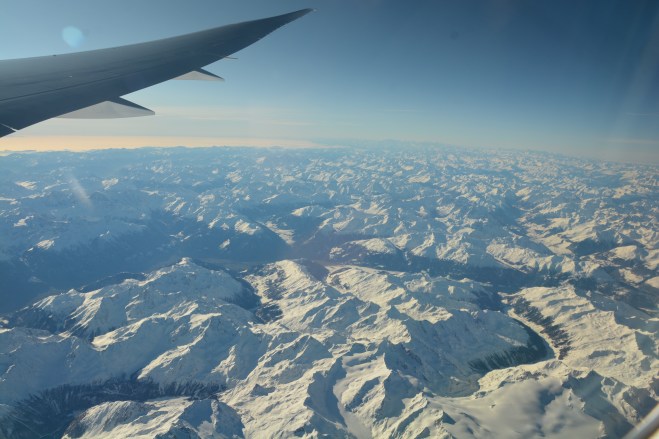
DAY 3. MONDAY DECEMBER 30TH 2019. KITALE. KENYA

Travel frustrations, of which there can be many in Africa, are made insignificant by the smiles of Kenyans. On arrival at the small airport to check in, it transpired that the Kitale travel agent had booked me on a flight TO Nairobi, not the one FROM Nairobi to Kitale. So the plane had gone and I was stranded in Nairobi. I know too well that there’s no point in frustration and irritation. The only option is to smile and find a solution. A long walk to another airline office found me a flight to Eldoret in the mid afternoon.

Everyone was sympathetic and cheerful. It was difficult not to join in and smile. Everyone greets, shakes hands, welcomes and expresses such goodwill. Life in Africa is made easy by this interaction. It’s largely this attitude that brings me back year after year. Counter clerks, Jane and Sheila, accompanied me about their offices, organised a ride for me and collected my bag from the first airline half a mile across the airfield, looked after me and made my day bright. All it takes from me is reciprocal smiles.

So I landed in Eldoret, forty five or so miles from Kitale at almost five in the afternoon, not in time for breakfast, as planned. Adelight meanwhile had arranged a ride for me in a car of the new charter car service to bring me a couple of hours from airport to home, and the warmest of welcomes from this, my Kenyan family, as darkness gathered in the mild evening. It’s a delight to be back amongst my good friends, treated like a brother and uncle and companion. It hardly feels as if I left.

Maybe smiles and relaxed discussion will allow me to change my flight payment to my return instead. One thing I do know is that argument will get me nowhere!

DAY 4. TUESDAY DECEMBER 31st 2019. KITALE. KENYA

Another year ends in Africa. When I asked what were our plans for the last evening of 2019 there was a slight embarrassed pause. It appeared it depended on me. This has been a lean year in the household, with Rico having almost no contracts as the main wage earner. It’s expensive, caring for all these young women – school fees, food, subsistence and all. They are all uncomplaining and accustomed to privation. So Christmas has been a low key family gathering.

We all saw in the year together tonight at the old Kitale Club, that provides a huge buffet and disco in marquees on the edge of the golf greens. Adelight, Rico, Scovia, Marion, Bo, Shamilla and little Maria. The girls enjoy this night out, celebrating with an uncommon glass of wine and meeting their friends. It’s a busy night, and while Rico and I may despise the raucous disco, it’s a night for them. And I am happy to share my time with these lovely young people. Happy indeed.

In Totnes it’s 7 degrees, cloudy and 50% chance of rain. In Kitale as I write this morning it’s a bright sunny 25 degrees to start 2020.

DAYS 5-8. SATURDAY JANUARY 4th 2020. KITALE. KENYA

And now four more days have passed. Pleasantly but unremarkably, enjoying the calm life of this true family. Some of the girls are related in the most tenuous ways, but together they accept and form a close family unit, loving, sharing and content. They share out household duties with no discord. They sweep and clean, do vast family washes in buckets in the garden, care for little Maria, wash up from extended meals and share the cooking and preparation with Adelight. They do it all with a goodwill I seldom see in Western children. They all choose to sleep together in one somewhat chaotic room on two large beds, mixing and matching their wardrobe and belongings. The extended family is such an admirably adaptable unit. It accepts white uncles with the same facility as various visitors.

The days pass quietly. I am pacing myself for these first weeks. My ankle grows daily stronger and the propensity to swell reduces. I do my exercises in the hope of being able to soon ride my piki-piki once again. At present that resides in Rico’s big garage, lifted on a steel box as he prepares the new piston and cylinder that I carried with me. I’m happy for his attention to my wheels. They have been bodged, using Chinese parts and bits and pieces; worked on by multiple mechanics – probably better than many, but without the knowledge and expertise of Rico’s long experience and orderly European ways. After his ministrations I will feel more confident in my little motorbike than I have for the past three years. Some weeks ago he sent me a list of parts to source, which I procured online from Devon, original parts that will be so much more reliable than the assorted Chinese spares of the various African mechanics.

The sun shines down. We eat. We converse. Adelight is happy to have her Scrabble partner once again. We shop – an experience that I quite enjoy with Adelight. One I hate and despise at home. How odd that is! With Adelight it has an element of novelty – and she knows half Kitale, which makes it a congenial exercise with plenty of people-watching for me. Meanwhile, we tinker with the motorbike and I sleep and dream deeply in my cool ‘Jonathan’s House’ out in the garden beneath the avocado tree. Life is relaxed and I am sure that with this calm, stress-free atmosphere my foot will be restored quite soon. The warmth and sun help, and so does wearing only flip-flop sandals. As soon as I put on my walking shoes and socks, my foot swells.

DAY 12. WEDNESDAY JANUARY 8TH 2019. KITALE, KENYA

You can see that I am forced to take the beginning of this journey a little slower and more relaxedly than my usual energetic fashion. I am now just eight weeks into the recovery period – that may take six months before normal use of my ruptured Achille’s. It’s been a time to enjoy the family. It’s very easy, and my enforced calm is easier for having an unarguable reason.

Yesterday, after rather more swelling than usual on Monday, (perhaps caused by a slight localised trauma when I stepped awkwardly on a stone in the morning) I asked Adelight to take me to consult a doctor. I just needed to ask someone who might know, whether the edema was a natural result of the recovery and why, despite the tendon now having obviously healed, I have a lot of soreness beneath my ankle. We went to the Galilee Health Centre on the edge of town. There, said Adelight who knows just about everyone in Kitale, was the senior doctor of the region. The health centre is modern, single storey, of the usual style, including wooden doors that have warped in the Kitale climate, never to fit their frames again. The customary whispering receptionist took my details. I wonder why it is considered a mark of respect to murmur in a show of privacy? Thankfully, the doctor, after waiting an hour, was a cheerful, forthright man, large and blunt.

“On September 13th, I ruptured my Achille’s and I still get plenty of swelling and I wanted to ask if that is to be expected?”

“You can walk,” observed Dr Kassembeli correctly. “At you age you should be happy it is mending!”

“But I don’t feel that old!” Of course, in Africa septuagenarians are a small portion of the populous. Seventy is considered ‘old’.

“Ah, so you are 30 but with an extra 40 years’ experience!”

Well, as I walked to town, where Adelight was doing one of her endless shops, a mile or so away, in the warm sun, I chuckled at the doctor’s straightforwardness. There’s no place for vanity in Africa. He prescribed an ointment that will help the edema and packed me off. Twenty four more people waited outside his ill-fitting door as I scraped it closed across the terrazzo floor tiles.

The consultation cost £11.70 and the ointment a further £8.25. “It’d better be good!” I exclaimed to the pharmacist, surprised at the cost of a tube of gunk. Made in Italy, with precious little of the high cost benefitting any African economies.

****

As of this afternoon, my blue Mosquito almost runs again. Rico, the best engineer of my acquaintance, especially in Africa where one must create any missing parts, has rebuilt the engine. I brought with me a new cylinder, piston, rings, timing chain and various required parts. At 4.45 the engine fired back to life, sounding better than for many a kilometre. It remains for me to test ride, but a passing shower has delayed my first motorbike ride since September 5th until tomorrow.

For now, I enjoy the warmth and love of this true ‘family’.

Rico and I met 33 years ago on January 6th!

DAY 14. FRIDAY JANUARY 10TH 2019. KITALE, KENYA

Fourteen days already. I haven’t stirred much from the bosom of the family. It’s interesting how the past four months have taught me some patience – not normally one of my qualities! Being ‘grounded’ for so many weeks, almost literally anchored to the spot (the spot being Rock Cottage, Harberton) by a weighty orthopaedic boot gave me no choice but to settle back and for once let nature take its course. It seems finally to be doing so. Yesterday afternoon I rode the little blue Mosquito, my small Suzuki DR 200cc motorbike, now veteran of three long journeys, for the first time. Rico completed the restoration works with about half a new engine. I bought oil and at last we were able to start the engine and for me to take a test ride. Despite attempting to kick start – using my injured leg – and doing plenty of exercises through the day, the swelling last night was decreasing. Maybe the Kitale doctor’s expensive ointment does help after all.

Before I can set off on the Mosquito I need to procure a new carburettor diaphragm. Such things can only be found in Nairobi, where the Suzuki dealer proudly claims to have been representing the company since 1959 and in the business of motorcycles since 1921. I am, however, shocked to find that it’s going to cost £116! More than the cost of half a new engine that I brought with me. Huh. Running a motorbike is something of a luxury way to travel. Worth it for those who are obsessed by independence and the ability to go where the whim takes us though.

Tomorrow we will all go – in Rico’s Pajero 4X4 – on my favourite road in East Africa, to Sipi, Uganda for a few days to visit my other family in the region. It’ll be something of an adventure for the girls – Scovia and Marion – who haven’t been over the border before.

On our return I shall begin my 2020 safari.

Shamilla

EAST AFRICA 2018 – 2019 – TWELVE

JUST TO ROUND OFF, HERE ARE THE LAST FEW DAYS OF THIS VERY ENJOYABLE SAFARI…

DAYS 89/ 90. SUNDAY/ MONDAY, MARCH 10/11th 2019. KITALE, KENYA

Quiet days winding down to leaving Africa once again, and here in another ‘Jonathan’s House’ – that’s what the family call the house in the garden – I leave my bags containing my African helmet, rinding trousers, jacket, goggles, gloves, and various items of clothing and effects for another safari, whenever that may occur. I’ve no plans just now, beyond the fact that I have taken the bike for a thorough wash and now it returns to Rico’s garage pending a visit at some other time. Meanwhile, I must decide what I want to do next winter! I know I don’t willingly want to spend it in the cold and damp: conditions to which I become increasingly unequal. 

DAYS 91/92. TUESDAY/ WEDNESDAY, MARCH 12\13th 2019. NAIROBI, KENYA

It’s mid-evening on the 13th and I just checked in with KLM for my flight home to Europe late tomorrow night, so my safari is essentially over. Here I am in Nairobi, a capital changed more than I can comprehend from the city I first experienced in 2001, when it had the sobriquet ‘Nairoberry’, for its violence, crime and decrepitude. Now it’s a modern city, impressive amongst African capitals, and a calm, relaxing place to visit – unless you happen to be on foot, when it’s considerably more stressful as no provision is made for pedestrians. Such pavements as there are are dug up to drain the all-important roads leaving a yawning obstacle course, or they peter out, leaving no choice but to risk crossing eight lanes of speeding traffic to join an insignificant pavement on the other side, or more often just a stretch of dust littered with trip-hazardous debris and abandoned cars – which their owners think they’ve parked. 

But beyond the irritation that the car always demands and expects precedence – a status by which I refuse to cowed, much to drivers’ astonishment – it’s a disciplined, quiet city, probably one of the best in Africa now. It wasn’t thus in 2001 or 2002 when crime was rife and even I got mugged in the street: two youths tearing off my shirt pocket while other pedestrians watched. Those petty thieves must have been disappointed by the museum ticket and scribbled notes for my diary. 

Happily, the city feels nothing like that now. Drivers are quiet and relatively courteous to each other, if not pedestrians. Traffic moves and there’s evidence of a fairly vibrant economy. It’s an expensive city, cosmopolitan and smart. People are well dressed, polite and respectful, buildings relatively well maintained and purposeful; public spaces rather threadbare, but they exist. The main thoroughfares have kept their trees and provide a bit of shade and soften the cityscape considerably. 

I’m helped in my accepting mood by finding one of the best places I have stayed on this journey. Adelight told me of the United Kenya Club, and I decided to try it. It’s terrific. It is bang in the city centre, set in its own quite expansive grounds. A private member’s club in that rather colonial mould that somehow survives and is kept alive by the older breed of Kenyans, it is slightly old fashioned, in a 1960s sort if style, with funny habits and rules on which these places seem to thrive: reserved parking for the President, ‘First Vice’, ‘Second Vice’, ‘Past President’; no moving the chairs in the lounge; no mobile phones in the restaurant; members only in the library. I can become a temporary member and have a very pleasant room, with a balcony overlooking the gardens, en suite (everything WORKS in the bathroom!) and access to the terrace and restaurant in the gardens. The roads beyond are a little noisy, as I am right at the hub of the city, so ambulances and sirens do make for a bit of disturbance, but I will remember this place for future visits. And it’s ‘only’ £27 for bed and breakfast. On my incoming night I paid £47 for a gloomy room in a suburb. This IS an expensive city, and to find a room so central, civilised and comfortable for 3500 bob -with breakfast – is excellent. 

****

Yesterday morning – I’m writing on Wednesday evening in the Club bar terrace – I left my kind, generous and close friends, Adelight and Rico, at the Kitale Airstrip and flew down to Nairobi.  The flight’s not the fun it was when the planes were 13-seater Cessnas; they are now 36-seater Dash 8s and fly at twice the altitude. Flying at 8000 and 9000 feet (when Kenya is at 5000) was such fun. It’s all remote from 19,000 feet, and I struggled to pick out the roads I have ridden these past weeks, the unsurpassed scenery that surrounds the Great Rift Valley, itself less impressive from so much higher. Best ever, of course, was the time – in 2001 – when I flew across the deserts from Lodwar to Nairobi in a six-seater, single engine aircraft, sitting beside the pilot for a couple of hours, skimming the escarpments of the Rift, flying over the red dust of roads that I had ridden on the borrowed Honda for three memorable weeks. 

Well, this time, I arrived prosaically at Wilson Airport, busy with many small planes that fly all over Kenya: safari companies and commercial internal flights. From there I bargained hard for a taxi to downtown Nairobi. “Help the youth!” was a new encouragement (from a taxi driver well past youth!) that I hadn’t heard before. It’s funny: if there was a fixed price, I’d pay up as required, but if they insist on no fixed price and hoping to rip me off, I will bargain aggressively. It’s their choice, after all. From 1500 bob, I found a driver for whom the bird in the hand weighed in at 800. John, was his name. “Are you a Christian?” I find the question intrusive and loaded, but it’s so common here. I usually just grunt and that passes for some sort of admission with those who hear what they want to hear. I’m not going to have a philosophical discourse about atheism versus blind belief with a taxi driver!

****

I checked in to my sunny room over the garden and walked (much to the shock of the receptionists) to Westlands shopping area, a mile and a half away, where I had an appointment with the people who repaired my iPad screen before Christmas. It’s still malfunctioning, which is why I came to Nairobi a day early. Today I got the probably bad news that it may not function again… For now, I have a replacement pad that I will have to return to Nairobi in due course, when the very pleasant, diligent people with whom I have been dealing, have assessed, with Apple, whether the screen will be replaced again and my own iPad couriered to me, or it will have to be scrapped (£700 or so out of the window thanks to my stupidity of strapping that bag on the back of the Mosquito on the first ride from Nashon back to Kitale). Technology is all very well – but my faith that Apple will feel any sympathy for the fact that the initial ‘repair’ didn’t work, is slim. They’ll want me to buy a replacement, which is why as soon as even an authorised repairer replaces the glass screen, they absolve themselves of all responsibility… 

Sarah, the woman with whom Adelight and I have dealt, was kindness itself. A quiet, chubby young woman, she has been diligent and impressive in her customer care, even ringing Adelight while I was travelling to see if the repair had righted itself. Nicodemus, the engineer, spent an hour and a half this morning, copying all my files and trying to provide me with a useful alternative. Well, I will be at home in 36 hours and, being of the analogue generation, all my important stuff is backed up in notebooks and handwritten lists, and all my photos still on my camera card. Nothing irrevocably lost – just none of my own films or operas to watch on KLM tomorrow night. I guess I’ll manage. I managed for 60-odd years without an iPad, after all. 

****

It’s grand to be sitting outside on the bar terrace in downtown Nairobi after nine at night. I’d better savour the feeling: it won’t be like this in 36 hours…

DAY 93. THURSDAY, MARCH 14th 2019. KLM from NAIROBI to AMSTERDAM/ BRISTOL

Another trip ended. I spend so much of my time travelling these days that it comes easier to complete a journey; I know there’ll be another one, all being well, and probably quite soon. 

Check out time was 10.30, so I was at a bit of a loss for a day’s entertainment. The club looked after my bag, which left me free to wander. I needed reading matter, so I thought I’d try to find a bookshop. Huh! I walked for hours – in fact six hours – and found one decent bookshop filled with very expensive imported books, and all the street stalls, selling second hand tomes imported from USA, sold mainly ‘motivational’ and self-improvement books, old text books, or god-bothering literature – the popular lines here in East Africa. However, I did meet Amos, a delightful fellow, sitting on the pavement beside his display of old books. I was attracted to talk to him because he was reading his own books, unlike all the other salesmen, who swiped obsessively at phone screens, with their ten second attention spans – while surrounded by books… Amos is charming and intelligent, trying to eke a living from his book sales. He buys his books, imported in containers, from middlemen, the books rejected by charity shops and thrift stores in the Western world. Amos seems to have a better eye for books, and buys them a little more selectively. Then he sits and reads them. “I want my children to learn to love books!” he told me. I gave him a somewhat pertinent book to sell, one I just finished, about the addictive nature of devices. “As soon as I finish reading about the soldiers in the Gulf, I shall move to that! I learn so much from my books. When I sit in the matatu to my home, I take a book.” He must be the only passenger old fashioned enough not to be swiping a screen on his journey home. 

Francis is another man I met, of obvious integrity and knowledge. The central market is these days overwhelmed by touristic craft stalls, all selling slight variations on the same not very well made or imaginative souvenirs, presided over by the most irritating, intrusive stall holders. I spotted Francis’s shop from the lower floor: hung about with fine old pieces of creative value seldom seen any more. Those pieces were made from belief and superstition, and because few items could be bought and China was a far distant place beyond the ken of most Africans. His shop was hung with masks and carvings and interesting art works: the ‘antiques’ that are fast disappearing from African markets. I used to enjoy Accra craft market twenty years and more ago, finding some of my favourite possessions there. Francis has travelled much of Africa collecting his own merchandise, with a very good eye for quality. I bought my most expensive spoon – by a factor of many times. I saw it two days ago, and had a pleasant conversation with knowledgeable Francis. Today, I was greeted like an old friend and left to my own devices to browse his collection. He knew I liked the spoon from Gabon and we negotiated politely, agreeing on £42. My most extravagant spoon by far – but a centrepiece of my considerable collection. 

****

Amos and Francis are representative of many, many Kenyans: courteous, warm-hearted, curious and charming. I do like Kenya and Kenyans increasingly. It’s a country with hugely improved infrastructure and an increasing economy, and its filled with friendly, respectful people. Even the capital city is friendly, people greeting and helpful. In places it gets irritating and I did lose my rag with one persistent hassler. These are agents for tourist companies, constantly trying to attract me to a safari or tourist shop. They CAN be very annoying and sometimes rudeness is my only defence. The insistent nuisance was an older man who approached, asking questions and assuring me he wasn’t selling me anything – which, of course, he was. “Are you a racist?” he asked rudely, as if it was any business of his. “No, certainly not, but you ARE! You are hassling me because I have a white skin and you hope to profit by that. THAT’S racism! Go away!” But such irritation is rare, and I am largely left alone. I can generally walk the streets quietly and apparently safely. It’s been through astonishing changes, has Nairobi. 

****

At eight minutes past midnight, the giant 747 lumbered into the skies over Nairobi on its way north, leaving African soil once again – after my 31st visit I think, amounting to almost exactly four years spent on the continent that has shaped much of my thinking over the last 30 years.

This has been a good trip, varied, contented and with the added attraction that I can now visit friends as much as explore new places. And a certain familiarity with the cultures makes travelling much easier. I’ve ridden 7555 kilometres this year, bringing the total I have ridden on my little Mosquito, to a little less than 24,000 kilometres since I bought it. I’ve spent about £4700 in the past three months, £1000 on fares, about £800 on maintaining and using the bike, £270 on visas, £325 given away, and £835 on 63 nights accommodation, an average of less than £13 – considerably raised by the first night in Nairobi at a scandalous £47 and the last two at £27. 

Ethiopia was challenging but very rewarding; I’m happy I persevered after my uncharacteristic loss of confidence – caused by sheer exhaustion on the early part of the journey from Kitale to southern Ethiopia, and probably by the recent physical stress and strains of all my intrusive dental work, still less than three weeks old when I made that extremely long ride. I met more travellers this year than on past journeys, on which I met mainly local people. I’m sure I’ll hear from cheerful, chatterbox Alice again, from Addis; Nick from Lalibela and the Isle of Man; Daniel from Addis Ababa, now living in Zurich; and perhaps I will visit Frenchman, Gérald, who lives in rural France and extended a warm invitation when we met in Awassa. Then, of course, there are the East Africans who befriended me: Abdurohman in Ethiopia, Sam the mechanic in Marsabit, and my older friends, William, Precious and Alex, with all three of whom I have cemented warmer friendships each if the past three years. 

Lasting memories..? The ride over those highest mountains from Debre Tabor to Dessie, via Lalibela; the first taste of buna, after which coffee can never be the same again; the day on Lake Tana with Daniel and his mother, Aster, ending in that most memorable traditional music club; the harshness of riding both ways across the northern deserts of Kenya; laughter and relief with Alice the night I got my passport back from charming Tedla, MD of that hotel chain; Precious’s secret baby, Jonathan; the wonderful ride from Sipi home to Kitale, the best ride of all; and of course, the deep pleasure of sharing ‘beer o’clock’ with my old friend and African brother on the porch, and enjoying the warmth and comfort of extended family life amongst Adelight and all those cheerful respectful and cheeky young women. Nothing really surpasses that and my admiration – once again – for the African institution of the extended family, of which I am privileged to be accepted into several. The warmth and sociability of people on this continent, over which I am now flying once again, is a wonder that has enriched my life immeasurably.

****

And in three months, winter months back here in chill, wet Europe, as we fly through thick grey clouds above England, in three months I pulled on my waterproofs once, to ride through a brief shower around Nanyuki, below Mount Kenya.

*************************************************************************************


EAST AFRICA 2018-2019 – ELEVEN

The penultimate episode for this safari. Just a few days to go now…

1097A1A7-9754-4566-BB8E-2D1B7543F625

Basiliza

DAY 81. SATURDAY MARCH 2nd 2019. KITALE, KENYA 

Not a bad idea to relax for a day after yesterday’s exertions, I thought, and I have a few days in hand with no particular plans now. I promised I would go to Brooke to greet Nashon, the mechanic, again, and William encouraged me to go via Kessup – so that’s pretty much my plans until I fly down from Kitale to Nairobi on the 11th or 12th. Adelight booked my flight for the 11th, as I had asked her – and then I checked my KLM booking and found I actually fly home at midnight on the 14th, not the 13th, as I thought all along. Should have checked first… Now I must decide whether to pay a fee to change the ticket, or the cost of an extra night in rather boring and very expensive Nairobi. Probably cheaper to change the ticket. (LATER. It was: less than £4 with a bit of bargaining by Adelight. A night in extremely expensive Nairobi is £36).

So, a quiet day, ‘sitting on my arse’, as Adelight put it so succinctly the other day, just the chores of travelling and enjoying family life on a showery day. Odd, how this side of the mountain is so much wetter than Sipi, on the other side, less than fifty miles away as the crow flies. Here the rains are threatening and at some time on my rides I am likely to get wet. Well, in that I have no control.

DAY 82. SUNDAY MARCH 3rd 2019. KESSUP, KENYA 

I suppose my journey is essentially done now. I’m sort of on a farewell tour, keeping promises to my East African friends: Alex and Precious, William and Nashon. My trip to Ethiopia pushed all my attention into the beginning of the journey, with my visa valid only until February 11th because I needed my passport for those visits to Poland in November and December, and because I had a long way to go, so perhaps I didn’t plan enough for this section of my travels. I don’t really want to take any more lengthy rides and I have seen much of this area in detail, so I am left with a rather aimless last couple of weeks. Oh well, Rico is home tomorrow and I very much enjoy the family life in the Kitale compound.

****

The clouds are gathering up on the highland plateaux around Mount Elgon. It won’t be long now until the rains begin. I rode away in the late morning on a cooly cloudy ride to Kessup, so much more comfortable than the burning sun – but the African landscape just doesn’t smile at me without the bright sun; the colour is dulled, the brilliance dimmed, the multitudinous greens less defined, the shadows less blackly graphic; it becomes a disappointing semblance of its squint-inducing splendour. The Africa I know and love bakes beneath a mighty sun, deep shadows etching its shapes and forms. When I imagine Africa, in dull, grey England, it’s the startling, blazing light over views like that of the ride from Sipi – vastness, expansive haze-enveloped vistas shimmering beneath an equatorial sun. Rainclouds I can keep for England. 

But I got to Kessup dry, just the customary not very interesting journey, about 70 miles, with light Sunday traffic and people dressed in church finery walking their dusty villages and straggly towns. It’s an agricultural ride, fields now ploughed or dug ready for the next sowing season when the rains come in a couple of weeks. “Oh, there may be a light shower,” says William, looking at the rather grey clouds spinning above the high Kessup cliff wall. “But the wind is from the wrong side. We’ll get the rain about the 10th, not before.” But Climate Change is making that less certain, and in Africa, that certitude has governed the cycle of life for centuries, and when people lose that traditional sureness, they become unsettled – only the educated understand that the causes of this uncertainty is overpopulation, the appalling loss of trees, overuse of the soils; the overgrazing, artificial fertilisers, encouragement to rampant materialism, unimaginable swelling cities and the belching filth and fumes of millions of ancient vehicles – piously discarded as ‘environmentally unfriendly’ in Western nations, finding new pollution-pumping life here, where the self-congratulatory Westerners can’t see them. Where do people think their old vehicles go? Many of them end up on the roads of Africa… 

Travels of a thinking person in Africa don’t lead to any comfortable prospects for the future of our species. That’s sort of been a theme of this journey for me: despondency for our destiny on the planet.

****

Well, here I am in Kessup again; William delighted and again telling me how his status has been lifted as high as he can imagine by having a white man trust him and become his friend. “You aren’t just William’s Mzungu now, you are Kessup’s Mzungu! Everyone is always asking me, ‘where is your mzungu? Is he coming back?’ They will be happy to see you when we walk in the village tomorrow. We will go down and greet my father. He’s looking old now; I was with him two days ago… How old? He’s about 84, 85 now.” We drink our beer companionably in the garden of The Rock, beneath the high cliffs. William wants me to save money – he’s always concerned about that – by moving here to sleep, but it’s nearer the road and doesn’t have the spectacular view when I open the curtains in the morning: the view over the mist-filled Kerio Valley, a real ‘African’ view. And The Rock guest house is right under those high friable cliffs too. Only last year a boulder the size of a family car rolled down and came to rest in a – fortunately empty – guest room above the gardens! I’ll stick to Lelin, here on the edge of the escarpment, with its spreading gardens and the splendid view.

Now as we walk, we meet people related to those I have photographed over my many visits. “This lady is daughter to so and so, who you photographed last year… He’s in the book… That’s the son of so and so; we went to her house on your visit before Christmas.” I am a familiar figure here now. I like that. It brings a small sense of belonging, of equality, of engaging with the people around me. I’m in Africa to meet the people, and here I get to understand something of their lives, the differences – and similarities – to mine. It’s satisfying. 

Supper, gazing over the mist-shrouded valley, and a sharp shower as I come to bed. William must have just about made it home before it briefly torrented from the gathering clouds. But he’ll still maintain that there’ll be no more than these brief showers until the 10th. He’s probably right, the locals usually are, especially if they rely on their shambas for subsistence. 

****

Marion dropped in at home during the morning, my new friend giving me a warm greeting and hug. We’ve bonded since that long conversation about her creative versus academic life at school, and her pleasure at growing vegetables. Scovia is soon off to her classes in beauty and style at Eldoret, so we’ll be a depleted family when I get back. Rico’s in Nairobi tonight; on the flight home to Kitale early tomorrow. 

Meanwhile, I am here with William, checking his phone frequently, but he checks the time not obsessive about calls! He’s such a stickler for punctuality. “We learned it from the British! They like TIME!” as he hassles the poor guest house staff for being ten minutes late with supper, cooked in their smokey outside kitchen over fires of sticks in the growing dark. I don’t care if supper is late, but William likes discipline… And he likes respect to be shown to his mzungu.

DAY 83. MONDAY MARCH 4th 2019. KESSUP, KENYA

“Why aren’t you in school?” William asks Faith, a shy, skinny girl of about ten, a sort of niece: child of his half sister, by his elderly father’s other wife. 

“I have lost my pencil…”

“How much is a pencil?”

“Ten bob…” About 8 pence.

“Her parents may not even have ten bob in the house,” William explains to me over his shoulder as we walk… 

I give Faith 50 bob, it’s the smallest note I have in my wallet. “Buy five pencils, then you have no excuse!”

“Her parents will be grateful…” says William, who probably hasn’t a coin in HIS pocket either. I’ve 32,300 Kenya shillings in mine. And two credit cards. It’s an unequal world.

Ten bob. Eight pence. A day’s education lost.

****

We meander the dust pathways of Kessup’s plateau, meeting villagers once again. We’re on our way down to the edge of the plateau, where the escarpment plunges down to the burning Kerio Valley; the Great Rift Valley of Africa. William’s elderly father has his lands down there on the edge, remote and quiet. We shake hands with dozens of people: working their fields, carrying water – for all the streams are dry as dust now; doing endless washing of ragged mtumba clothes; just sitting and staring into space. We chat for a few minutes to a young woman, probably only in the first years of her twenties. As we walk on, William comments, “Poverty! It’s like you were saying yesterday: too many children, and they can’t manage! Look at her, young as she is and already five children!” Of course, the Catholic church does less than nothing to encourage a lower birthrate amongst their poverty-stricken adherents. What’s the point of sermonising on ‘abstinence’ and ‘self control’ to African men? They haven’t any. The moslems perhaps do less. I’ll never forget meeting that man – in one of Alex’s meetings of volunteers, whose purpose was to encourage lower birth rates, planned families, gender equality and reduction of FGM in the rural villages. That moslem proudly told me he had 26 children by four wives. “WHY?” I asked, scandalised. “You can’t hope to educate or look after so many, it’s ridiculous!” 

His answer? “The Koran tells me to!” I can’t bring myself to even comment, except to point out the irony of this volunteer’s role as a ‘mentor’…

****

Kenya banned plastic carrier bags a year or so ago, with a fanfare of righteous publicity. Good on them. But all products are still packaged in plastic: cooking oil, soap, BREAD!, toothpaste, tea bags – well, you name it, it’ll be in plastic and cellophane. And this country, like most of the continent, has no organised rubbish collection. The fields through which William and I wander are dotted and disfigured by plastic trash. It has nowhere else to go, and no one educates the people about the dangers as it gets ploughed in, enters the food chain, strangles the cattle. It’s everywhere – probably not as bad as some countries (Ghana comes quickly to mind) where the banana leaf or paper wrapping for food changed to thin black plastic bags by the million from generous China a few years ago. Now they have become the national flower of so many African nations, waving and flapping from every thorn tree and stubble field, and the animals eat them – and die of internal strangulation, stomachs full of plastic. Kenya is actually better than many countries, yet everywhere I look colourful plastic is blowing about or half buried in the newly dug-over shambas. As for countless, ubiquitous water bottles, I’ll say no more: ‘Spring water filtered for your health and safety’ – doing the opposite by reducing natural immunity and encouraging ill health – but there’s a snob value message in carrying your single use water bottle: it’s modern and sophisticated. 

I drink the well water.

****

White clouds are boiling and bubbling above the cliffs over the Kessup plateau. “The rains are forming,” says William, glancing up. “But there’ll only be showers for a few more days yet.” As we sit over our beer, a few stray raindrops sprinkle us from clouds to the north. “There’re showers over Baringo. They won’t come here.” And they don’t. With some money I gave him when I left last time, he has contracted a tractor driver to come and plough his small shamba. He knows the weather lore, does William, like all his neighbours. 

****

Across the enormous valley, as we eat supper, a fire has got out of control on the far escarpment. “It is the forest. It will go out naturally,” William assures me. “Probably some charcoal burners or a farmer clearing the bush for the new season.” It looks hot and impressive, perhaps 30 kilometres away. It’s such a huge, ‘African’ view, this one, darkly viewed from our simple bamboo and plank hut on the edge of the valley. Kessup is immediately below, on its plateau, quiet now, lights twinkling in small homes, many of which I have entered and been welcomed within. With its red fields of turned earth, waiting for the rains: “next week,” as William insists, the plateau spreads to the edge of the steep drop to the hot valley. It’s probably still sweltering down there, even at 7.30 in the evening. The night is still and calm, silent except for a distant barking dog. A deeply quiet, rural African night. No wind; broken cloud now; that distant golden glow of a bush fire that flares now and again, far away across the silent bushlands. Another magical night in equatorial Africa. 

As I prepare to sleep, there’s a sprinkling of raindrops on the zinc roof of my room, an atmospheric sound, but William’s correct: no heavy rain tonight. Suits me, it can rain all it likes after the 14th!

DAY 84. TUESDAY MARCH 5th 2019. BROOKE, KENYA

I noticed a little while ago that Nashon, the mechanic, uses a picture of me standing by my bike before Christmas as the home screen picture on his phone. Once again, it’s that thing of gaining status when a mzungu trusts an African…

****

It’s 200 kilometres from Kessup to Brooke, most of it on roads I know well by now; I’ve made this journey a few times, but there are some rides on my East African wanderings of which I never tire. Kabarnet to Eldama Ravine, via Tenges is one of them.

Leaving William in Kessup about ten, I rode off down the long curling hills into the hot Kerio Valley, a descent of three or four thousand feet, heat building. Then the long, slow effort to regain all the height on the other side of the huge valley. The Mosquito struggles, winding upwards to Kabarnet – called, I was told by a cafe owner when I stopped for chia and samosas – after an American family called Barnet, who moved here as missionaries 100 years ago, and whose descendants still live in Eldama Ravine. The Kerio Valley is a parallel spur of the Great Rift Valley, its southern ends sloping back up to the highlands somewhere west of Kabarnet, which sits on the ridge between the two yawning, deep valleys. And along the top of that ridge runs one of my favourite roads, the one through Tenges. In many parts of the world, this’d be a famous scenic drive; here it’s just a way from A to B, from the scruffy trading centre of Kabarnet, to the scruffy trading centre of Eldama Ravine, via the even scruffier trading centre of Tenges. But the road is magnificent. 

It clambers up to sweet smelling pine woods, my ears popping. For a few miles, the road balances right on the ridge: push ten yards through the undergrowth to the right as I ride south, and I can gaze far down into the white mists of the Kerio Valley; push to the left and I can see mile upon mile across the Great Rift Valley itself, so wide here that I can’t make out the other side in the haze, Lake Baringo a flat grey sheet amidst the endless bush of the valley floor. Huge vistas open, the mountainsides plunging steeply downwards into the tree-filled depths. The road teeters on the very edges of the ridge with the most famous topographical feature of Africa displayed dramatically on either side. I’m happy to be here, even if I’ve been this way seven or eight times; first when this was just a rocky, dusty, bumpy track, before the Chinese made this tarmac road. It’s easier to daydream and watch the views now, but I enjoyed the slight sense of adventure the first time, imagining that down there was the real essence of African life as I bumped over rock and dirt. 

I’m in the vast African landscape, about to cross the Equator again, at the whim of geography and topography, my route running through such magnificence. Not many come this way; it’s quiet and relaxed, 60 kilometres of natural delights. A quick flip left and then right through a couple of sharp hills, like portals; two right angle bends, and I am now on the eastern slopes, looking down into the Great Rift Valley, endless expanses far below, fading to indistinct haze. My inner smile is broad today: I love this.

Then, reaching the winding summit, the road tilts forward and spins quickly downwards, through the warm scents of pine sap and eucalyptus, dodging potholes and wandering cows, towards the valley floor, where the scents are just the smell of hot soil, dust, dryness, warmth beating up from the road itself. Thorn trees, strange cactus-like plants, aloes, odd water-storing plants – the only things that can survive here, all defensive spikes, thorns and rubberiness against the voracious goats. Everything adapts: mankind’s down here too. In Africa humans adapt to the harshest environments – keeping goats, woolly sheep, quite good looking cows. The women all have babies on their hips or backs or breasts; I guess they’ve had to adapt too. The incidence of primary schools speaks for itself: equally voracious, irresponsible African men. They father children everywhere and run away. It’s difficult having teenage daughters here: many parents end up caring for the babies of their schoolgirl daughters, the fathers soon beyond the horizon. 

Chittering social weaver birds dangle their woven nests, swaying from the long branches of trees; the sky’s filled with cotton wool clouds, sparkling white against the wondrous blue of the African sky. It’s good to be here, satisfying, uplifting, rewarding. My inner smile is very broad today.

****

Wanting to find a new route to Brooke, that avoids the highway that races traffic from Mombasa, via Nairobi and Kericho – five miles past Brooke – to Uganda, Rwanda and the interior of the continent, I took an appalling rock road short cut today. I crossed the hurrying highway near the Equator and took off down a terrible, punishing track for nine miles, bouncing and bashing on my little Mosquito. It was hard and energetic, but fulfilled the purpose of getting me onto calm meandering backroads towards Brooke. This year I am refining some of my better used routes, finding alternatives that avoid the towns, traffic and speeding roads that I dislike. And, of course, I enjoy the physical challenges of these tough byways! 

By these wandering backroads I reached Brooke in the late afternoon, checked in at the usual hotel and rode round to see Nashon, as I had promised. He wasn’t in his workshop: business is slow, he says. He has a dwelling nearby. It’s a room, twelve feet square, in a block of similar rooms, under noisy zinc roofs and in the closest proximity to neighbours. Across an eight foot, washing draped, child-filled alley, are more rooms, exactly the same. This is African life. You can see these homes the length and breadth of the continent. Whole families live in these rude dwellings. Nashon and his wife and three children: a girl of about ten, a boy of perhaps seven and a baby of ten months – well spaced. Nashon’s put the double bed up on stools, and I guess the children sleep on the lower deck, under the parents’ bed. Perhaps the girl sleeps on the settee, for there’s also a settee, two chairs, coffee table, simpering Jesus posters, inevitable TV, heap of pots and pans, plates and cups and a pile of suitcases – African wardrobes – all in this meagre space. As I arrived, a heavy rainstorm drummed and battered on the zinc roof, so Nashon’s wife had to bring the gas bottle and ring inside and boil water for chai behind the curtain that encloses the bed. She fried omelettes (that spoiled my appetite for supper badly!) and nursed the whining baby. Neighbours’ children pressed into the tiny space to be near the mzungu. Cramped, basic, concrete-floored, grey cement walls, rudimentary, minimal comforts – home. They’ve a home in a village miles away, but for most of the time, this is home; home for the schoolchildren, home from Nashon’s nearby oily lock-up, home for the family, cheek by jowl with fifty other souls: arguing, watching loud TV, crying children, washing endless tattered clothes in the alley, cooking, getting drunk, fighting the wife, screaming kids, smelly drains, disgruntled neighbours… It’d be hell on earth for me by the second day, but for most on this continent this is HOME… Remember that next time the neighbours piss you off for a minor infringement of your privacy, convenience, parking, peace or comfort!

But I have to remember also that most on this continent cannot understand the Westerner’s need for privacy. They feel comfortable and confident amongst close neighbours. The need or expectation of personal space is little known here.

****

I’d just made it into Nashon’s home when the heavens opened. The rains have arrived. As I write, on the chilly balcony of the hotel (the bar has deafening music and the ‘restaurant’ has gabbling American TV) the rain is hammering on the zinc roof over my head. I’ll try to get going early in the morning as the rain tends to be an afternoon event and I have a longish ride home to Kitale. I’d like to be able to claim that I’d ridden for three months without getting wet, but I think I may be just days too late… 

Must head to my room. It’s cold. I’m at high altitude again and it’s damp. Out there in the dark though, are the tea estates: brilliant green carpets forming some of the loveliest scenes Kenya has to offer. I hope the sun shines tomorrow for my final journey home.

I need to get beneath a blanket.

DAY 85. WEDNESDAY MARCH 6th 2019. KITALE, KENYA

I awoke early to a perfect, cloudless, washed blue sky, condensation on my window, for Brooke is at a chilly altitude. In jersey and jerkin I ate breakfast on the hotel front balcony and made a note never to stay in Brooke Hotel again: built entirely of concrete, it has no absorption whatsoever, doors slam and echo, mobiles ring and men talk loudly (few in Africa can talk quietly on their phones), the TV in the bar was already raging with trivial American news that doesn’t interest me or involve anyone within thousands of miles; numerous 22-wheeler trucks squealed to a halt to bounce over the speed hump on the highway beneath my balcony and empty trucks bucked the other way in a tympani of loose panels and metal parts. If I go to Brooke again, it’ll be to somewhere quieter through the night than beside one of the main East African highways.

The one attraction is the spreading tea estate over the road. It’s difficult for the colour green to dazzle, but the carpet of low tea bushes really does dazzle in the morning sun. Dark trees in the distance enhance the brilliance under the clean, fresh blue sky and for now I can ignore the screaming, drumming trucks and screw my eyes at the fabulous green, drink my ‘mixed’ milky tea and eat a plate of local fruit: water melon, tiny bananas, half an orange and delectable pineapple – the astonishingly sweet fruit you get only in Africa when it comes direct from the field. 

****

The best of the weather is earlier in the day now, the clouds forming and gathering into the afternoons and rain by evening, so I rode away promptly, riding down from the bright tea estates to the lower plains of sugar cane, then back up again on more of my favourite roads to Nandi Hills, where tea spreads again across rolling hillsides in the mountains, my Mosquito struggling upwards to the Kenya highlands once again. I know all these roads well by now.

Two years ago I was moved to write on my map, ‘lovely road’ about one road on the way back to Kitale. Sadly, its continuation got the note, ‘V bad road!’. Once through the ugly town of Kapsabet I turn off the main road, onto the lovely road that meanders through tall trees and past shambas and schools. Some miles on, a sign says, ‘Tarmac ends in 150 metres’, and the road turns to murram – red dust. The rains of the night have settled the dust and it’s a smooth ride; I can keep up 60kms an hour on these hard surfaces. I thought of a chai stop as I rode through Kapsabet, but I like to stop in smaller places if I can find a local ‘hotel’. In a very small village called Sangalo, I found just the place. Parking my motorbike in the roadside dust, I asked some elderly men, “Can I get tea?” 

“There! Tea is there.” They pointed up the opposite embankment to a zinc shack standing back above the road. I clambered up the embankment and asked for mixed tea and carried a Chinese plastic chair onto the small verandah in the shade of the tin roof. 

It causes a stir when I stop in such a remote place. People gather to look and greet in the friendliest manner, polite, respectful, curious. They want to know who I am, where I’m from, what I am doing in their small village and which Premier League team I support. It’s the one thing everyone knows about England – that and how rich we are, everyone espousing the African Dream: ‘take me to your country’. Once again, I tell of unemployment, homelessness, white beggars, the cold, the prejudice, the ugly ‘populism’ and how my mug of tea, I expect about 20 bob in Sangalo, will be over 300 bob in England, trying to point out – once again – that our perceived wealth is in the contrast between our economies, not in the fact that everyone in England is rich. 

Luke owns the hoteli. He’s in the Kenya armed forces, serving in Somalia, home for leave. He joins me and talks. Most of the village come by to shake my hand. They all want to know why I have stopped in their village. I tell Luke that the most common question I am asked at home is, “Aren’t you afraid, these places you go?” How could I be afraid here? The whole village is passing in a welcoming parade, smiling, shaking my hand, encouraging me to stay for lunch. Elizabeth totters up the dust slope; she’s Luke’s elderly mother, coming to pay her respects to a visitor. A few moments later, her senior sister, Basiliza (“It’s an English name!” declares Luke when I ask him to spell it) clambers after her sister, two very charming old ladies, full of smiles, come to greet. There’re quite a lot of elderly people around here, retired back to their village in some cases, passing through, stopping to meet and greet one another, including me warmly in their welcome. 

Luke’s used his tough but reasonably salaried work to invest in the small cafe and a parade of shops. His mother is the shop keeper – the usual commodities: flour, soap, matches, plastic water, cooking oil, tomatoes, onions; the everyday needs in a small village. Luke’s made one of the units into a bar as well. There’s an expansive view of wooded highlands, deeply green, from the dusty terrace where I am sitting, surrounded now by village folk. It’s so congenial that I stop almost an hour, risking the build up of clouds in front. It seems an oddly well educated, urbane place for a village so small and remote: a lot of school teachers, retired professionals, a tall ex-professor who used to play volleyball. It’s a very sporting area; they are proud that many of the world athlete runners originate from round here. The high altitude makes them fast. 

Time to move on; Luke insists on paying for my tea. “You won’t make money if you run your business like that!”

“You are our guest!” They all want photos with the mzungu who stopped in Sangalo; I have to submit, getting photos of the two old ladies for my own collection. I am waved away by many hands, with the wish that some day I’ll stop again in Sangalo. Perhaps I will.

****

The road continues well for another few miles then deteriorates to new-build, soft earth, rough diversions. Then back to the roughest track I have ridden – well, since yesterday anyway! It’s good exercise as I bounce and bucket through the villages and high landscape, then down a long staircase of rockiness that will eventually bring me back to one of the major highways. Somewhere I have taken a wrong direction and added five miles to the journey, and five miles of dire trail too. At the main road, asking a bunch of friendly, inquisitive boda-boda boys, it seems I am a few kilometres west of where I wanted to be, but there’s a wide, tar highway to get back there. It’s a small town called Turbo – but it’s not pronounced that way, quite obviously, for no one understands my intonation. Just five letters, how many ways can you enunciate them? Enough that no one knows where I am going, it seems. “Oh, you means TURBO!” Eventually the penny drops. It still sounds like ‘Turbo’ to me…

From Turbo, or TURbo, or Turrrbo, there’s supposed to be a short cut that will cut off a 25 kilometre triangle and join the main Nairobi-Kitale highway. It’s quieter in that part of the road, so I’m not so desperate to avoid it, and anyway, the alternative is worse than the terrible trail I just descended. I recollect it as one of the worst roads in East Africa. Eventually, I find the short cut, but again I take a wrong turn somewhere… The short cut, that should be about 12 kilometres turns into 30. Pleasant riding, through the Nzoia forest on good hard murram, but two sides of a triangle the other way, to cut short the main highway triangle that would have been faster, as it turns out. That’s riding in Africa: as likely as not short cuts are long cuts, but it’s a way to see the country and fun to be in these remote areas off the main roads. 

****

By the time I got home to Kitale, I was weary. 245 kilometres, over 150 miles, some of them very punishing. Rico’s home now, fixing the suspension on his car in his big garage. A necessary rest on the bed for half an hour for me and it’s just about beer time, to catch up with my old friend and white African brother, stories of Zambia and my safari to Ethiopia. My 2019 safari is just about over now. I’ve another five days here in and around Kitale, without much plan, then down to Nairobi and home to damp Devon. It’ll be a shock – as usual: not to sit on the porch of an evening, in my shorts, with a couple of £1.30 beers…

But, excitingly, an email in tonight from my friend Mike, in South Africa, tells me that a museum project for which I attended an early meeting in the Drakensburg Mountains three or four years ago, while staying with him and Yvonne, is back on. ‘May need to bring you over for a short while this year, if you are interested and available’.

‘Interested and available..?’ Apart from anything else, the Drakensburg Mountains hold up Lesotho, one of my favourite places in the world.

Another email tells me that the big project I completed in Boston in September, has its grand official opening on May 2nd. ‘I think you should come’, writes my colleague, Bob. I’ll think about that too. Already 2019 is filling up.

DAY 86 – 88. THURSDAY/ FRIDAY/ SATURDAY, MARCH 7/8/9th 2019. KITALE, KENYA

The weather is changing fast now, the rainy season about here. In the afternoons the clouds build and gather, the temperature drops and then comes the rain. Mornings, so far, are fine and sunny. Fortunately, I have few plans and little occupation that will be interrupted, just the domestic chores of the end of a long journey: washing my filthy riding clothes and boots and motorbike, getting things mended and leaving everything ready for another safari sometime. 

It’s relaxing and comfortable to be welcome in the family unit, even if we are so depleted now. Scovia is at her new college in Eldoret; Marion and Bo at school, leaving just Adelight, Rico, Maria and Sarah, the quiet house girl. “Oh, I hope you will come next Christmas!” exclaims Adelight. “All year, I have no one to play with until you come…” She’s referring to Scrabble, our evening entertainment. “Shall we play..?” her usual query after supper. We are a congenial unit.

Rico works in his garage. He’s invested in a solar panel and pump, and a solar security light for the compound. The new well, at over 12 metres deep, is producing good clean water and he aims to be as self-sufficient as he can in coming years. Public services here are unreliable. 

Cor, next door exiled his  cockerel for making too much noise at night. Unfortunately, Adelight gave the damned thing migrant status in her compound, so now I sleep with earplugs handy again for its chorus at 3.30. Still, that’s life here on this noisy but fascinating continent!

On Tuesday morning I fly down to Nairobi, spend two nights in the city and fly out late on the third night. My trip’s almost done now. A period of relaxed contemplation prepares me for getting home to normal life – although I sometimes wonder if THIS is not the ‘normal’ state in my peripatetic existence?

F8C2CAD8-1A5A-4E11-A141-55E19801CEE6

Kori

D01483F7-C196-4FF5-B706-9EDF91CDEBA0

Maureen

ABDED8A1-E8C4-4789-B748-99FFA5A10A0F

The Kerio Valley

9EFE4C0B-CFFB-4140-A4A5-CFFF3F5D7838

Making chapatis

959E045E-10F2-4D64-850B-961A8F160167

On the road to Nandi Hills

F9EA1BF3-691F-4CD7-8E6A-26B0F9319071

Nashon and the Mosquito

38CAB606-B8F0-4161-BF3C-DB317BF96066

Dazzling tea

715C992E-DB0B-45BE-B4F7-1BA500F7682A

Elizabeth

7A9612EC-8116-4EE0-A7C4-48FA2F626C2B

Enter a caption