
FEBRUARY 27th 2025

A MZUNGU COFFEE FARMER, AND THE MOSQUITO, SWATTED AT LAST..?
It’s been a costly but rather exciting time, these past two weeks. I’ve become a land owner in Uganda again (by proxy of course, since it’s really Alex that benefits), half killed my ageing body in equatorial heat on a near-vertical slope at 7000 feet, stayed five days doing NO work at Rock Gardens in Sipi (unheard of), spent a shedload of money, and probably said goodbye to my trusty, flighty friend, the Mosquito.
It all means thinking anew about my African safaris…
****
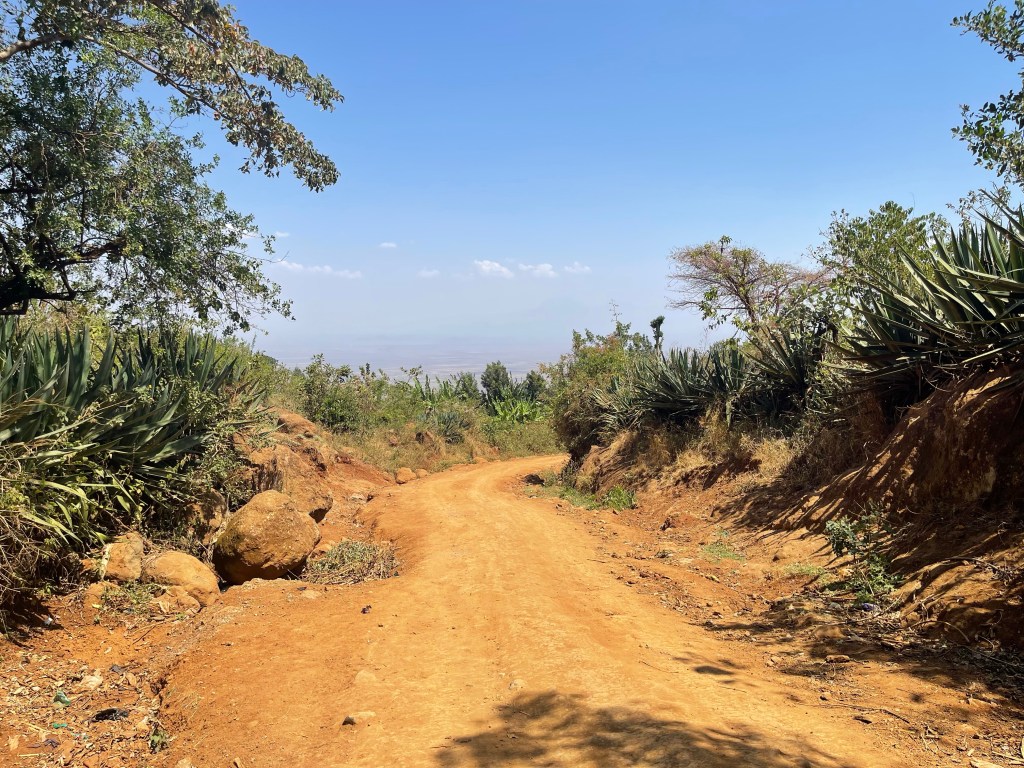
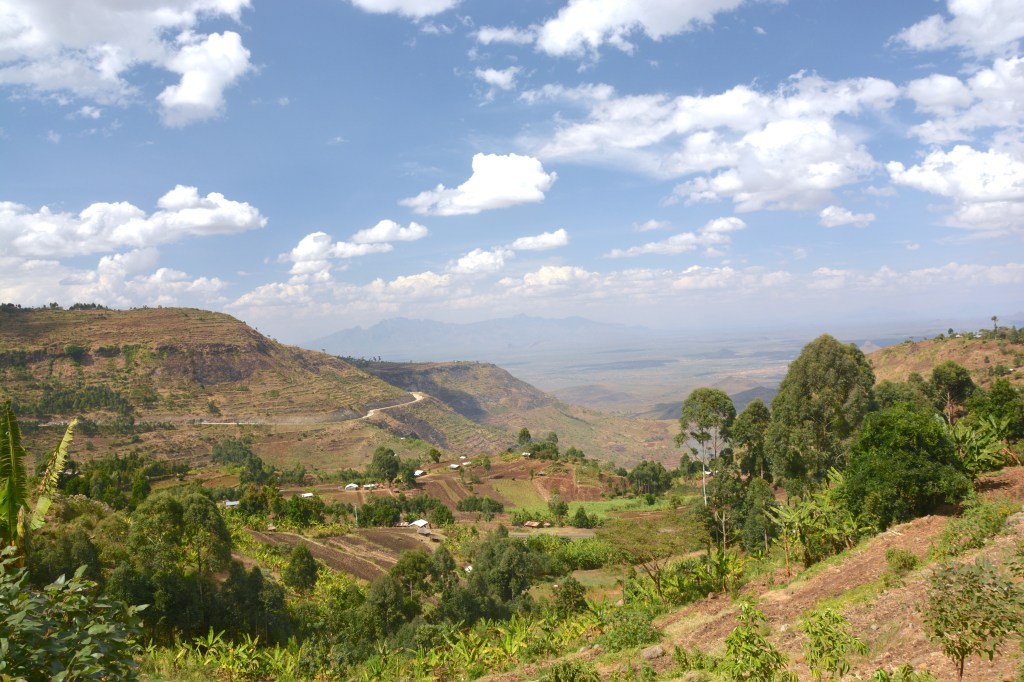
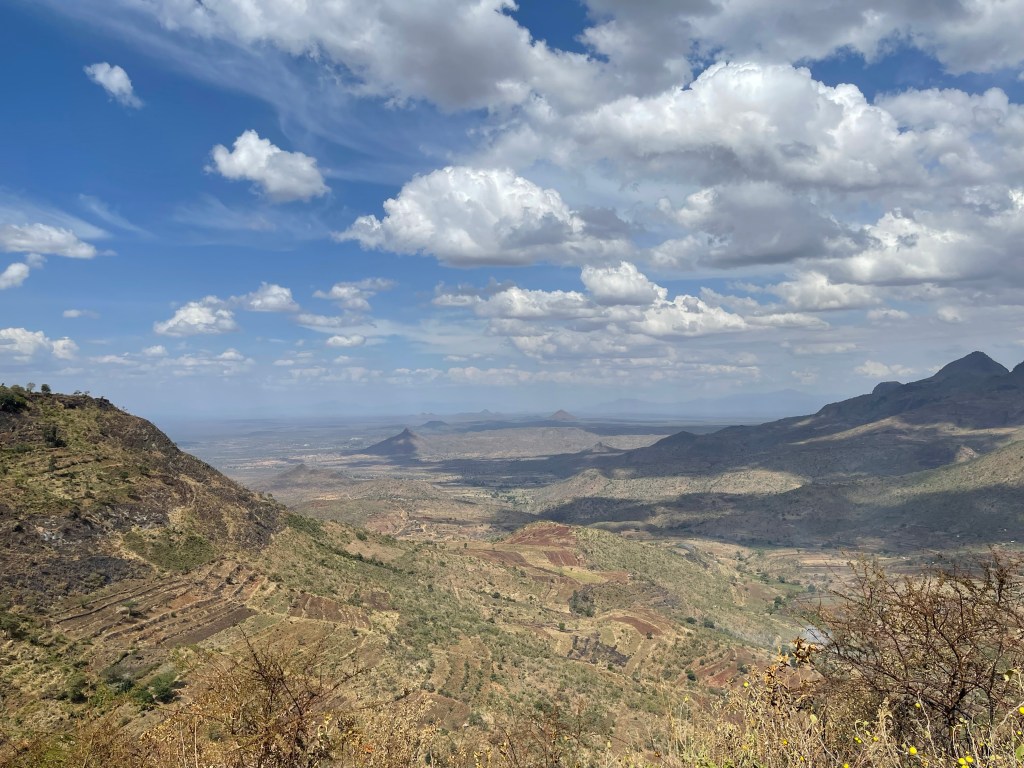
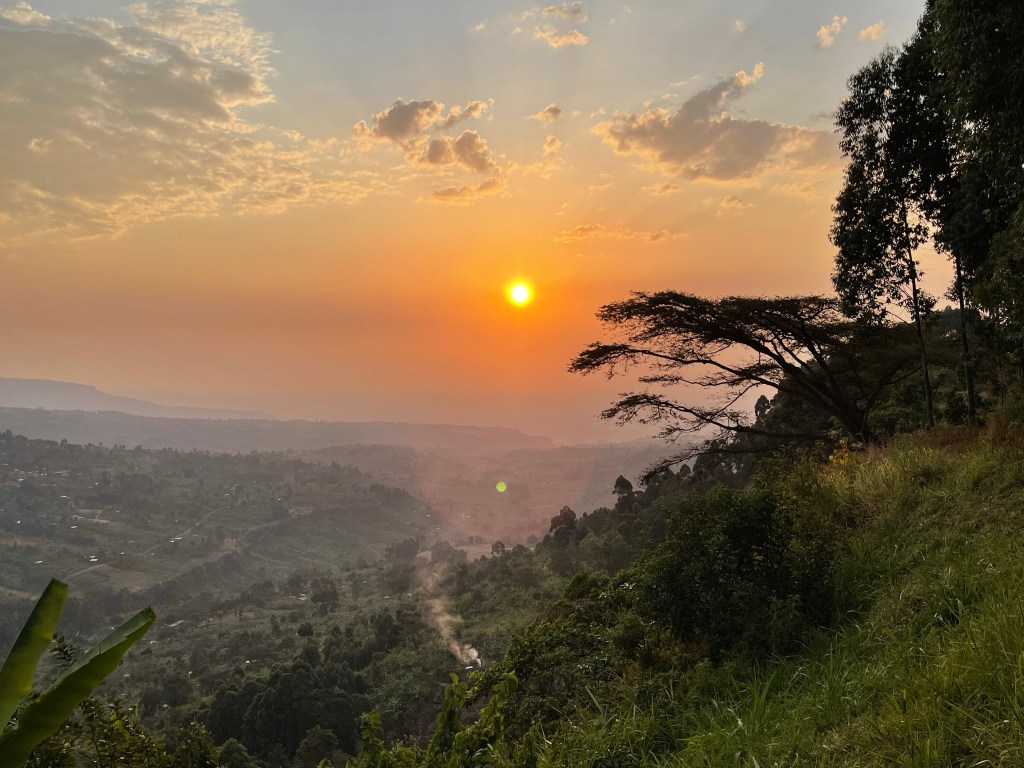
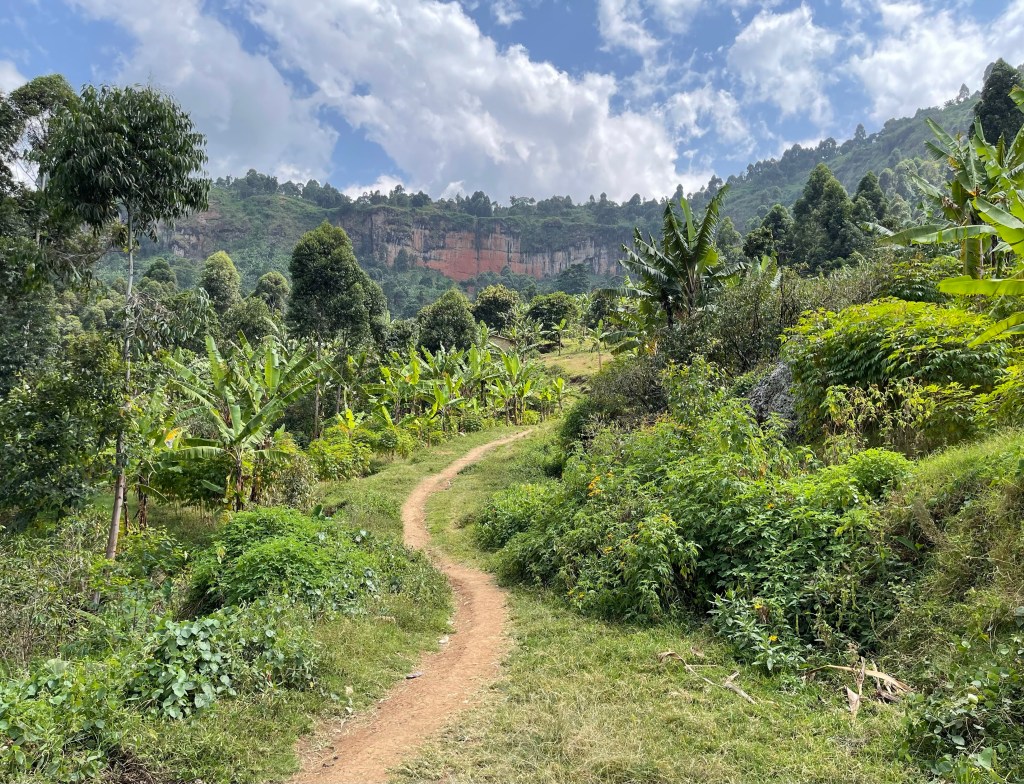
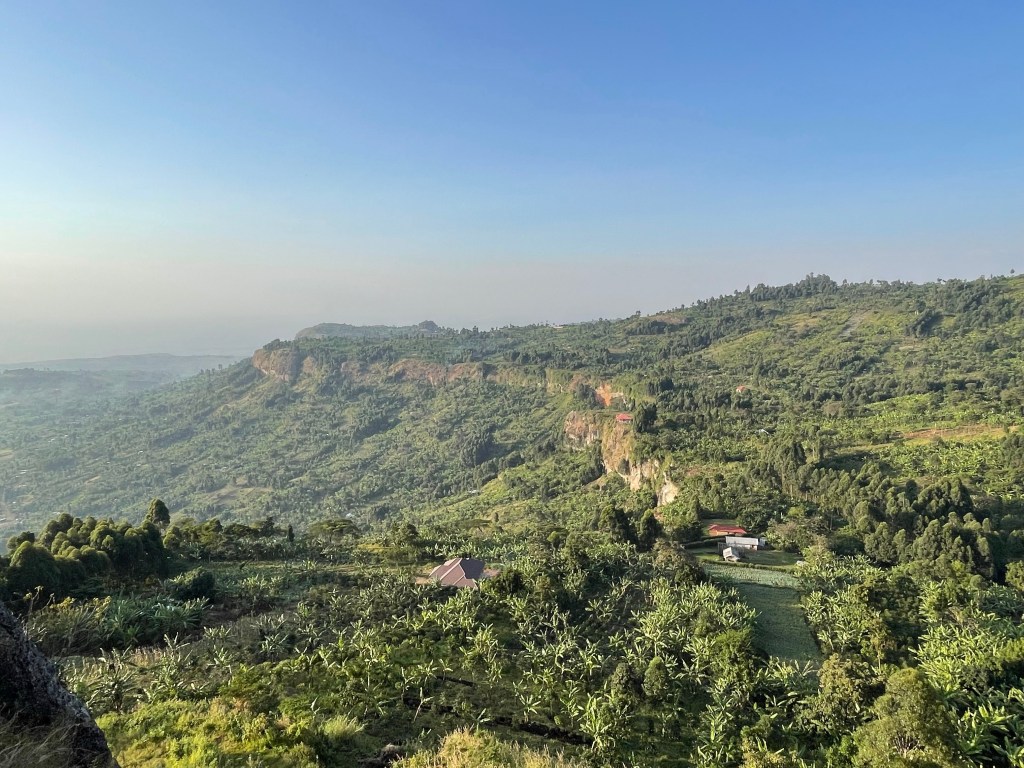
Slightly overlapping with the last episode, I’ll start with the exhilaration I felt at purchasing what must be about two and a half acres of Uganda for Alex. (Well, actually, to be honest, probably for Keilah!). We hike one day, dropping down into the hot plains below Sipi, a dramatic walk, slithering down the steep escarpment, the heat increasing with every metre. The red cliffs soar over us, trees fringing the top edge with a feathery silhouette against a huge blue sky. It’s beautiful on these slopes, many shades of green, colourful bushes decked with blue and yellow flowers.
As we walk, Alex’s phone beeps constantly, an irritating jingle that indicates messages. Many of the interruptions are bookings for Rock Gardens, such a success story. Today, though, it’s busy with a series of voice calls that take his attention. Something’s afoot.
****
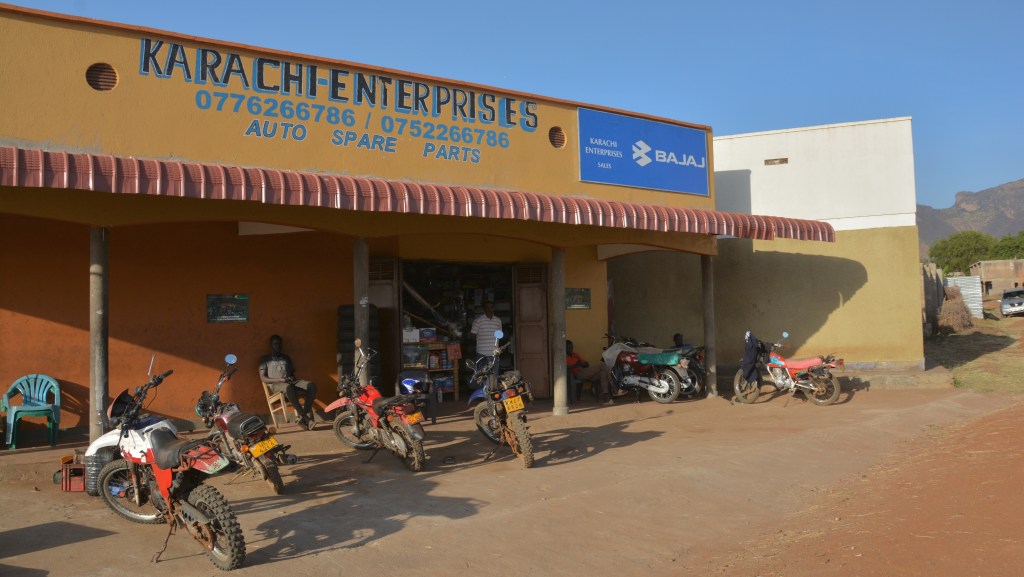
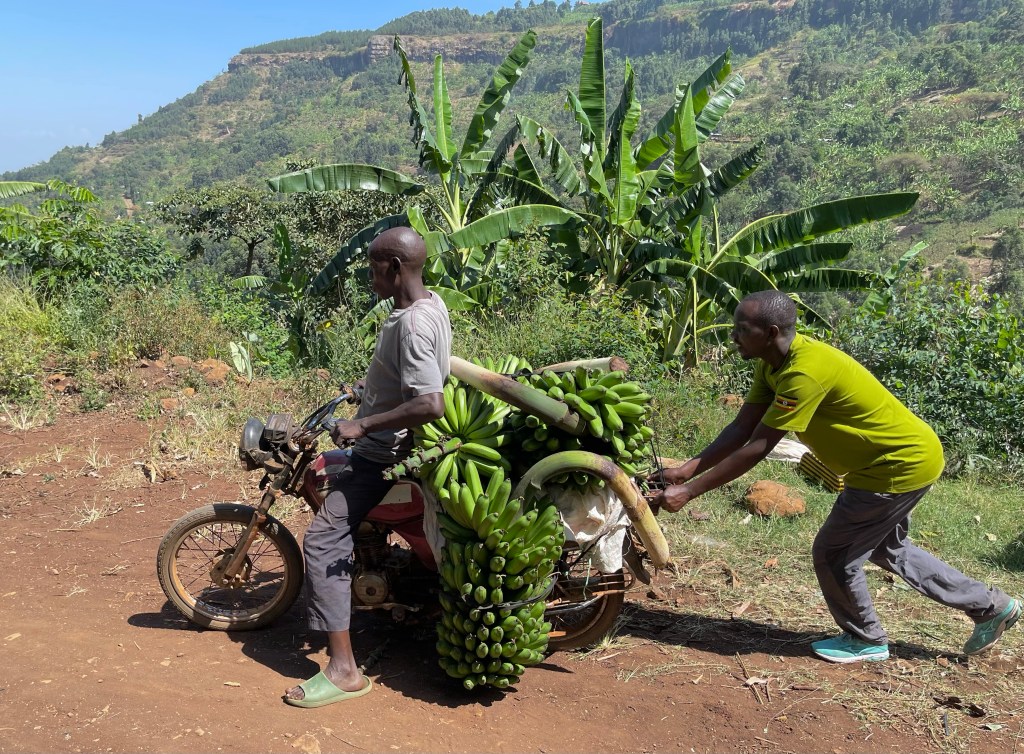
A young man overloads a decrepit boda – almost nothing of the motorbike seems to work, except the engine – just. The clutch pivots on a bent three inch nail. The rider is securing – riskily – a VAST load of weighty matoke banana bunches on the 100cc machine – of which probably few more than 50ccs are operable. The curving green fruit-laden branches scrape on the dust but he ties another hundredweight bunch on top. He’s going to ride these grossly overburdened bits of motorbike about fifteen miles, sitting on the tank, to a village I know, where Alex and I have walked. I wonder that these red tracks even join up, let alone that what’s left of this wheezy machine can wend around these bumpy mountain lanes. How the heck does it get up the hills? Alex give him a bump start. It’s not difficult to turn over the few ccs of engine that are left. The rider wobbles away. I think of the banana that breaks the camel’s back…
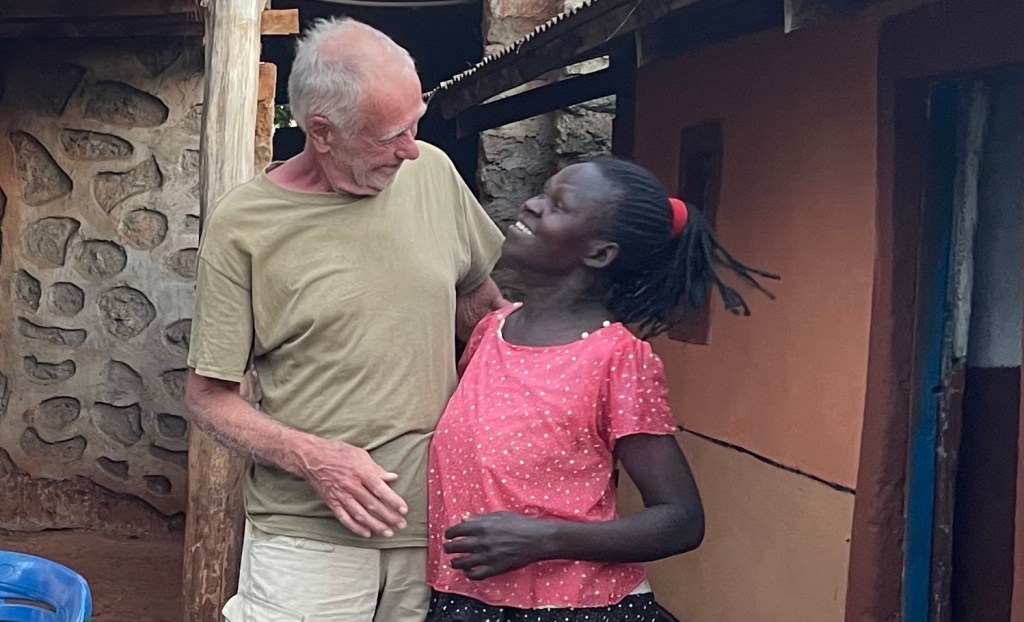
Alex’s phone rings again. You’re never alone with a mobile phone, certainly not in Africa, where phone ownership is higher than the EU. Alex’s conversations are in Kalenjin, so I understand nothing, but there’s an urgency to the repetition, and Alex’s mind is elsewhere, only reluctantly pulled back to my questions and observations like a good host and son. I know Alex so well that I recognise his preoccupation and earnest talk. After all, I see so much of myself in him. It’s a deep bond. He really does feel like a son by now, just as Wechiga in Ghana feels like a true brother. But Alex isn’t sharing the calls with me. In time, I know, he’ll tell me what’s up…
****
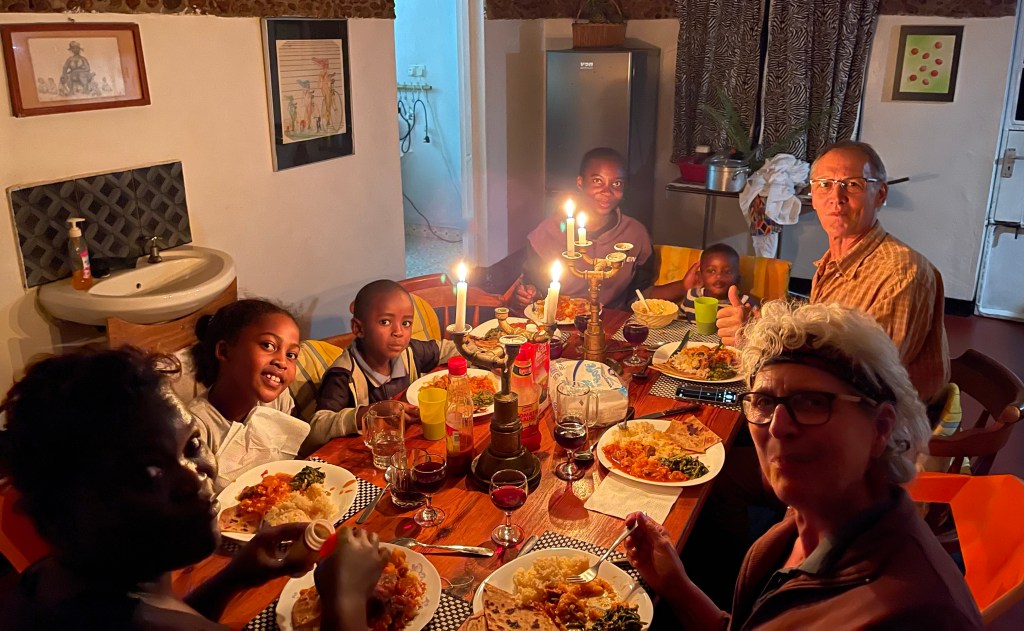
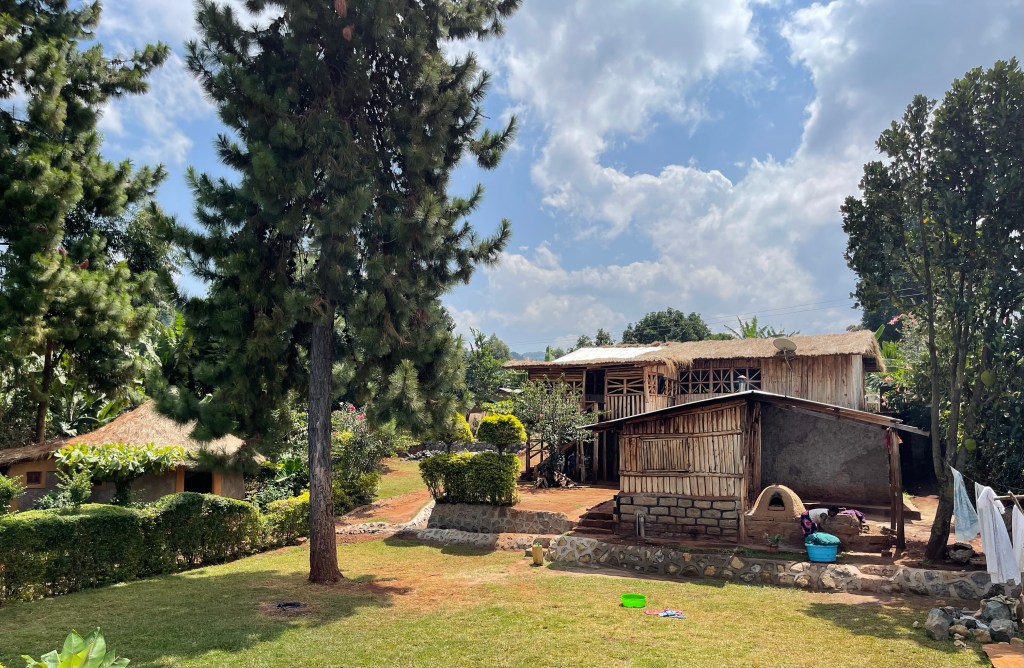
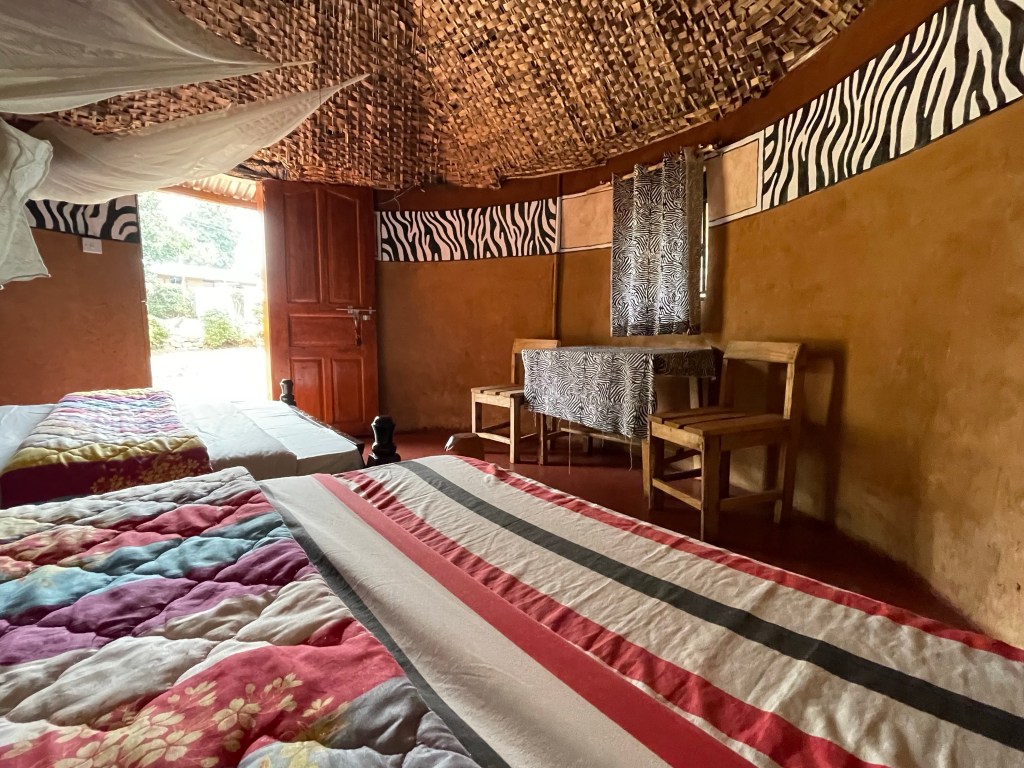
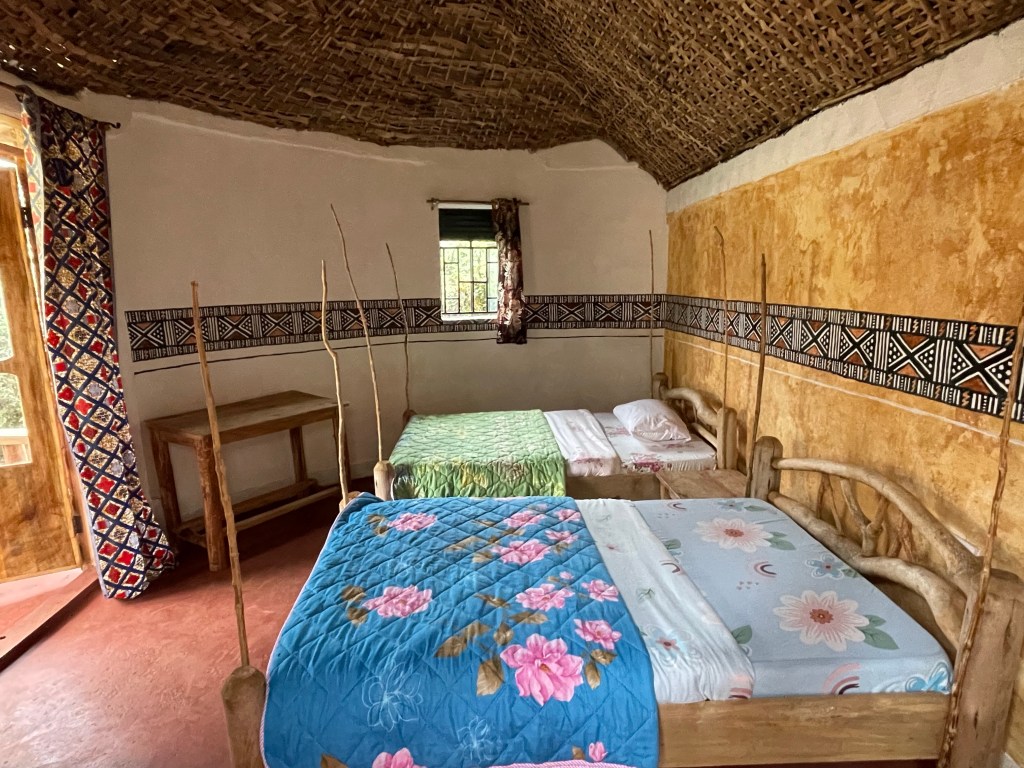
We get home in the late afternoon. The guest house is full again. It’s such a success! I smile to think that I’ve been partly responsible for lifting this charming family into another sphere of confidence that’s securing their future. Yes, it’s taken the sort of money that many, back home in profligate England, spend on a totally unnecessary, planet-threatening modest 4X4; but isn’t THIS a better use? The future of my ‘grandchildren’ is assuredly more positive, and that effect is exponential. It’s like planting and nurturing a small tree: one day maybe there’ll be a forest.
****
Next morning, I’m at my breakfast when Alex comes to greet me. He’s already been out somewhere, since he got up to prepare our buffet meal at 5.30. I woke briefly to the sound of chopping wood for the cooking fire: a sound that daily prompts my earplugs before dawn.
Later in the day, as the heat wanes from the intense sun – it’s forecast to be 35 and 36 degrees in Sipi all week, and the rains look to be coming late this year – Alex encourages Precious and I to a walk. “There’s somewhere I want you to see…” He fools Precious that it’s not far, although it’s probably a couple of miles of hills. The final hill, “Just one last hill..!” is steep. Precious rebels. She’ll wait for us at the bottom. I tell her she might get attacked by bears – of which there are none within several thousand miles! It’s enough to spur her up the last sharp incline, where a small gaggle of local people await us.
Above the road, atop a ten foot embankment, we are shown the plot for which Alex has spent the past 24 hours negotiating! I’d suspected this. I sort of know what’s coming next…
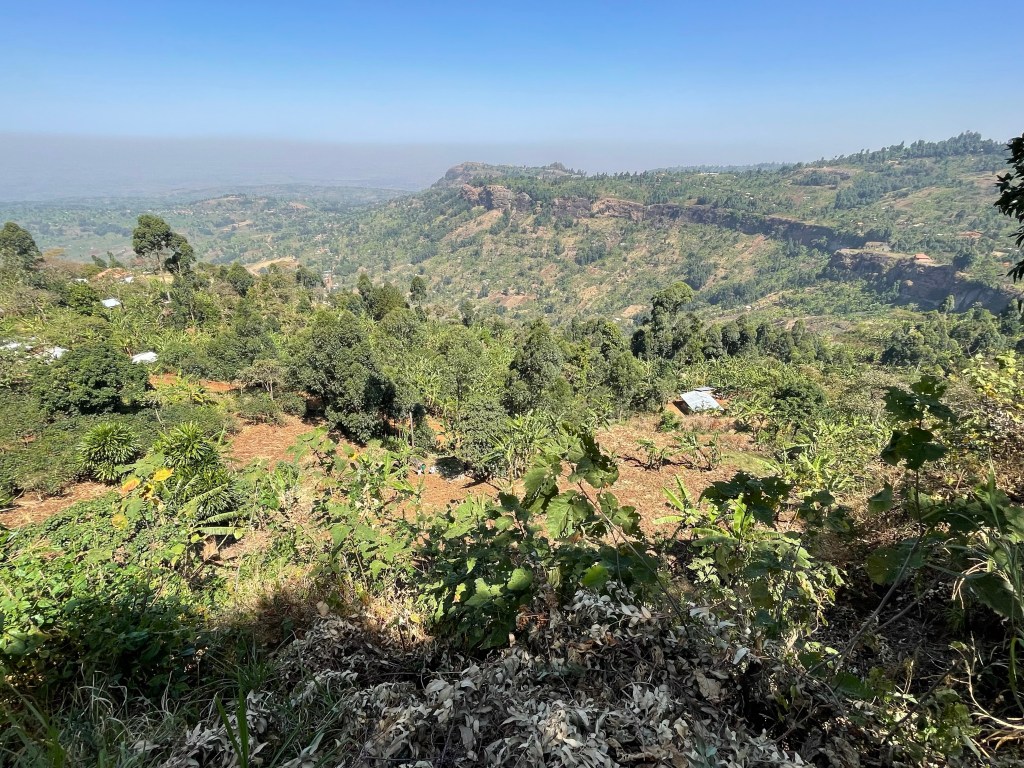
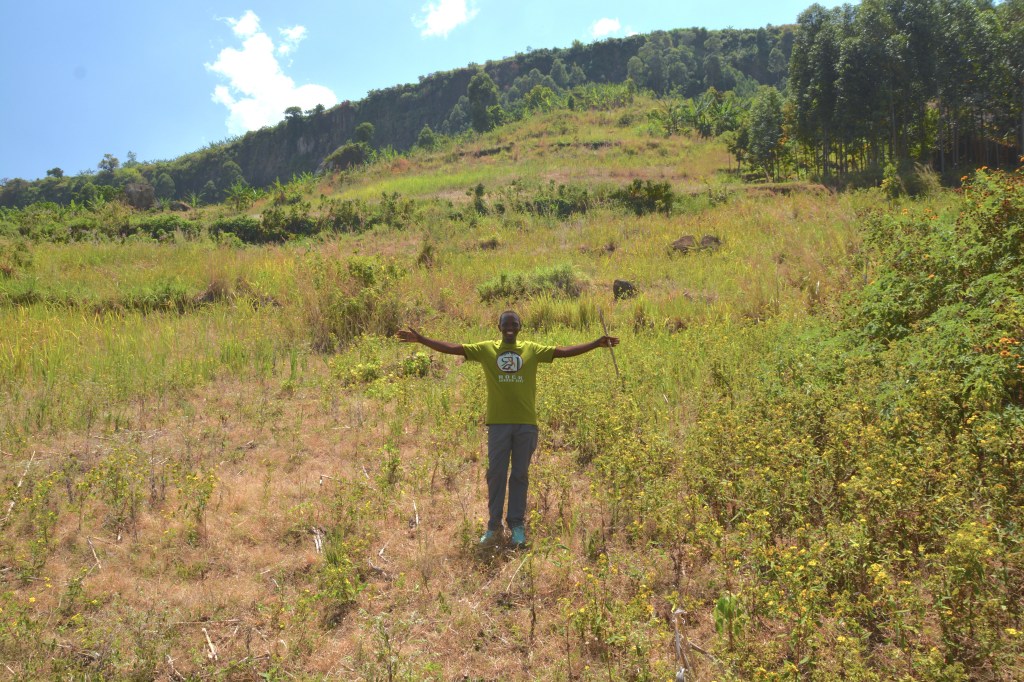
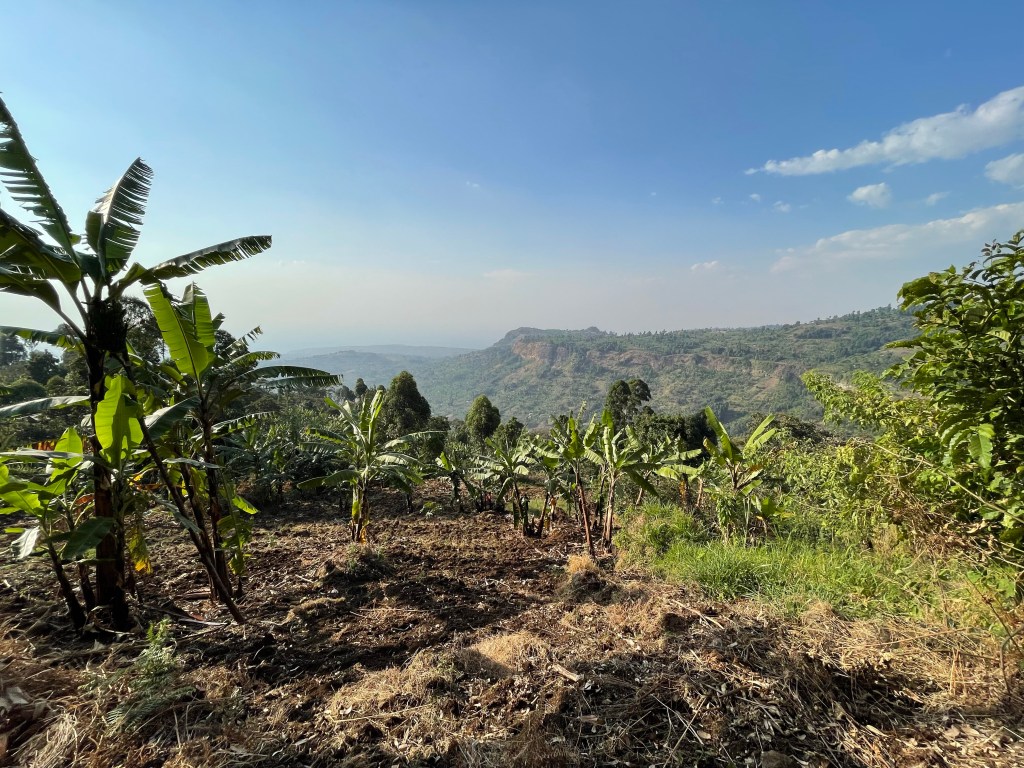
It seems that this family has been given the land by their grandfather, but there are many brothers (no women of course) who want to share the proceeds of selling it. Most of them are scattered about the area, but not here in Chelel. With his new status, Alex has been identified as a potential buyer. It’s a large plot; I can’t believe quite how big it is, it looks well over two acres. I’m keeping a low profile as I don’t want them to think a mzungu is behind this deal: the price might go up. The land slopes steeply upward to a 50 foot bluff dominated by some slender eucalyptus trees. It’s been hoed. There are some waving matoke trees, quite a few old coffee bushes – and a wonderful view back towards Sipi.
“This will be at least twenty million!” whispers Precious. “TWENTY MILLION!” I wander away with one of the nephews. The soil looks very fertile, even to me. Best of all, there’s a stream burbling down one side. But 20,000,000 Uganda shillings..? I clamber to the top, pretending to be disinterested in the discussions below. The view expands, but we’re not here about views, this looks to my untrained eye like valuable land.
I slither back down the turned clods of earth to Alex, Precious and the assembled sellers. Alex confides that he’s bargained down to fourteen million shillings. But I know it means a quick agreement. It’s £3200 and I can’t get that much immediately! I do agree, though, that it’s a great purchase! We all shake hands and Alex, Precious and I walk home in the setting sun. It’s so beautiful along this escarpment at this hour. We are a bit excited, even me, who’s about to shell out a large chunk of my annual state pension!! “This is the BEST coffee growing area around Sipi! Chelel it’s called,” says Alex.
“If this goes ahead, Alex, I expect a lifetime supply of my own branded coffee! And I mean that. You have to find a way to send it to me!” He laughs happily.
****
Tonight, another bloody disco funeral thumps expensively and disrespectfully away at the top of the road, about 400 yards from Rock Gardens. I hope I can cut most of it out with the earplugs. What a ghastly parody of culture all this is. Bass notes pumping. Thankfully, I’ve agreed to return to Kitale tomorrow.
The man who’s died, in his 60s, was the one who spread the mean opinion that Alex was stupid to cut down the matoke and try to build a resort here. It’d never work, he told the neighbourhood. Alex was a fool. “Well, at least he lived long enough to see Rock Garden’s success!” says landowner Alex with a chuckle and a confidence that is heartening.
He won’t be paying his respects at THAT funeral!
****
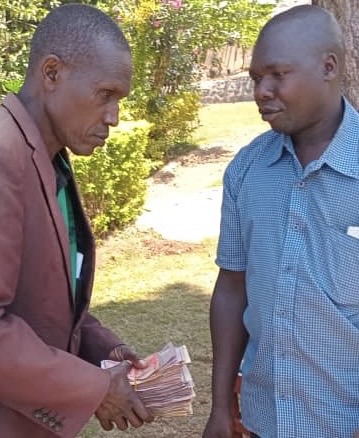
Next day, I ride back to Kitale. The thumping funeral lasts for several days this time, Alex tells me in a WhatsApp message. Some of the children had to gather from far away and the noise pollution continued until the final burial. He also sends me pictures of a gathering of his clan elders under the shady pine tree at Rock Gardens. One photo shows the chairman of the clan handing a five inch wadge of crumpled Ugandan banknotes to the family head of the Chelel field.

Later, he tells me the story of that picture. “Hey, I was busy! BUSY! It was a long day for me! The five million (£1126) you transferred to me that morning was enough to keep them interested, but there was another man, one of the RICH men of Sipi, who wanted the land! He was offering a million more. So what I did was, I sent motorbikes to collect all the selling family members and all my clan elders to Rock Gardens. I told Precious to make plenty of tea and chapatis!” Alex laughs as he tells me. “Then I raced to the bank in Kapchorwa… I asked the bank manager for a loan of six point five million (£1500) and said I’d pay it back in two weeks. He wasn’t sure. But I convinced him I already had the five million. I sent transport to bring the old grandfather who was giving the land to his family. I phoned Precious to supply beer and more chapatis! Eh, it was close! I got in by inches ahead of the rich man!” Canny Alex, he deserves his growing reputation. I’m so proud of him.
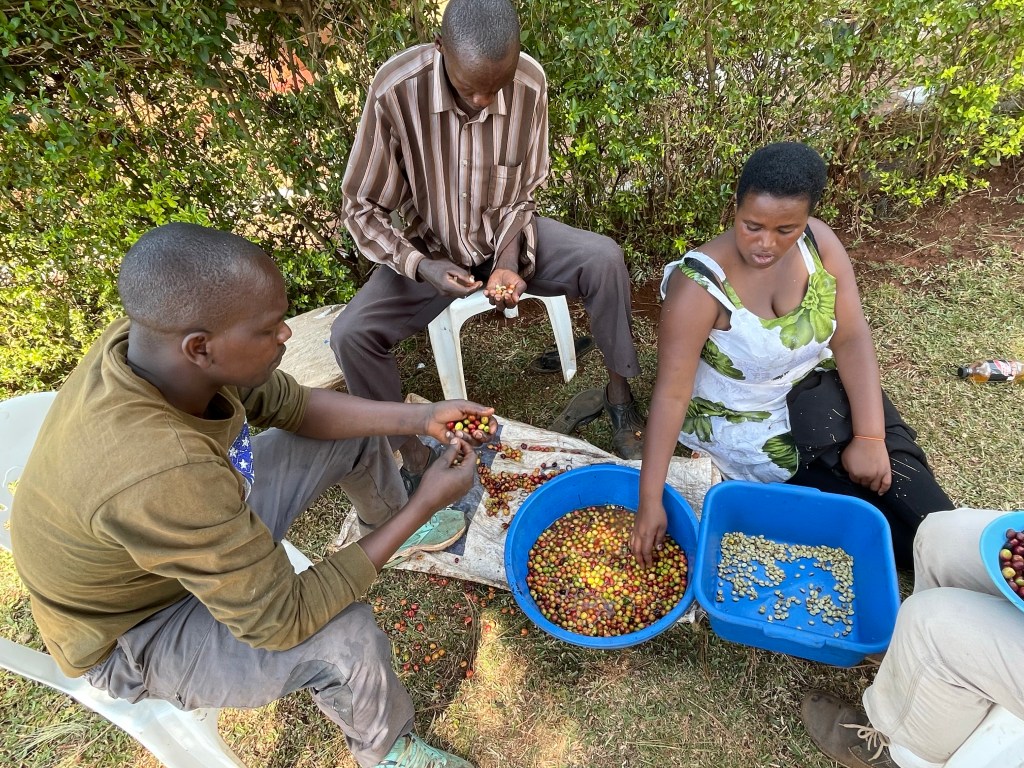
We are now coffee farmers. In one of Uganda’s best Arabica coffee growing areas. And coffee is one of the country’s richest exports. People in the know tell Alex that properly managed, his land could return the investment in two to three years. What’s more, he repaid the bank in nine days, gaining the manager’s confidence and paying just £12 in interest.
****
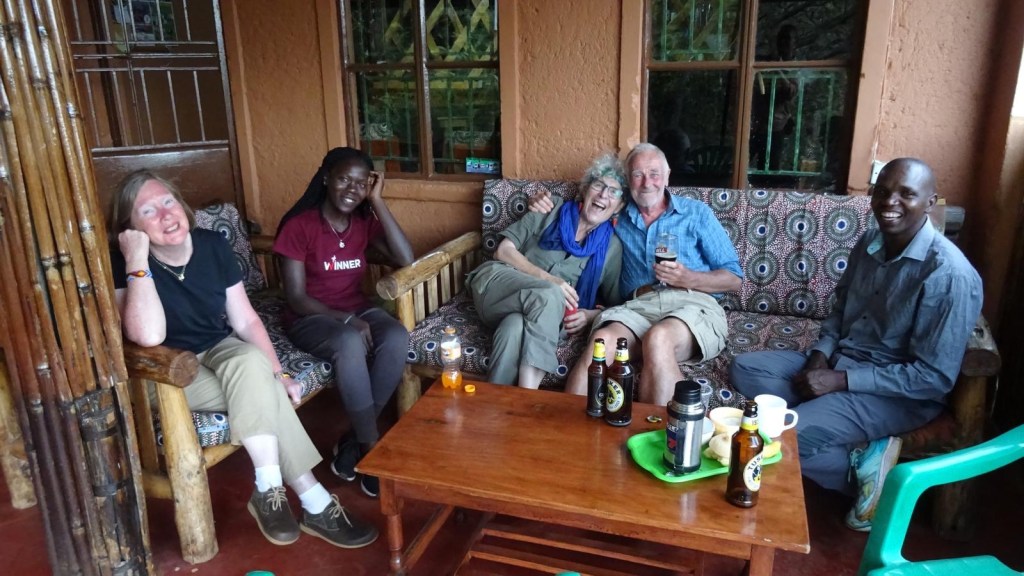
Meanwhile, I ride away to the Rift Valley for some days. Then I’m back to Sipi to see Debra from Melbourne, and her protege, Rebecca, an AIDS orphan from Jinja, a sweetly innocent young woman with a warm heart. They visited last year and quickly and instinctively became part of our family.

Debra, at 67, is an older traveller who’s seen a lot of the world and 30 years of Africa, in the old pre-tourist-trail days. We share many similar views on travelling and the world – both widely influenced by our travels. She seems comfortable in her skin and is probably enjoying her 60s the way I did: nothing much left to prove, knowing herself well, a good social presence and a great sense of humour and way of looking at life. Alex has invited Rebecca to join his small staff at Rock Gardens to cement the friendship. He’ll be a good mentor and protector for the young woman. She will develop confidence there.
****
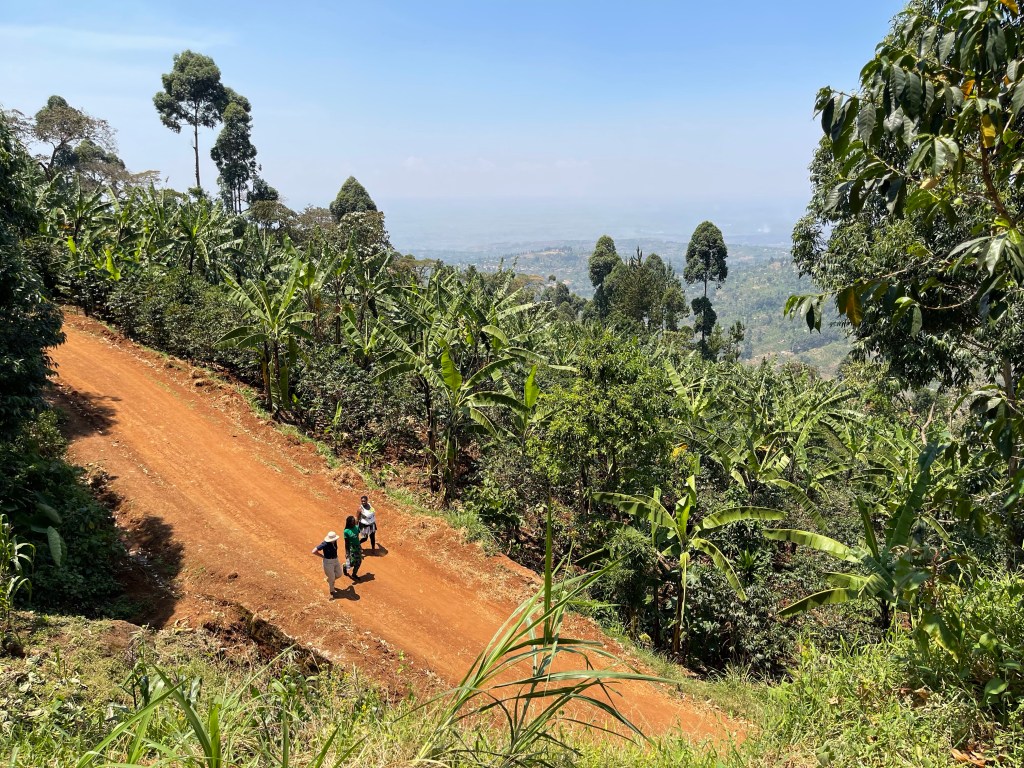
A few days after Alex has signed and sealed the deal, we all set out to walk back to Chelel, a happy, rather excited bunch, going to look again at what’s now OUR land. Alex, Precious, Debra, Rebecca and I are joined by Tom, the wood butcher and friend of Alex, and Moses, the best worker he’s ever had at Rock Gardens – who already has plans for terracing and water channels as he and I clamber about the slopes of the plot. We are all exhilarated to be here. Precious has brought a pineapple for the first picnic. Tom climbs up the mountain to a small village with a kiosk, for sodas and biscuits. He comes back and relates that the gossip around is that a mzungu has bought the big plot.
I’m a bit embarrassed. I don’t like this perception of my privileges. But Alex is delighted! “That’s GOOD!” he exclaims to my surprise. “You see, JB, if they think a mzungu owns our land, it will be MUCH more secure. Mzungus don’t mess with wrongdoing: they chase and prosecute! We Africans just shrug and say, ‘that’s Africa’.”

As we drink our pop in the shadow of a big rock (“Very good rock for building!” exclaims Moses happily) we are all a bit high on the ownership of Chelel Coffee Garden, as I’ve begun to call it. We’re already planning a small terrace from which Alex’s customers can enjoy the spectacular view, fresh coffee and our own coffee tour hike from Sipi.
“But remember, Alex, I expect a lifetime supply of ‘Chelel Jonathan Bean Speciality Coffee’!”
“Oh, I’ll find a way, JB!”
****
In the midst of all this excitement, I rode back through Kitale to Kessup and some hiking I’d planned with William. In Kitale, Adelight has employed a ‘house girl’. She’s there to look after Maria when she comes from school while Adelight is busy at her new work site, overseeing the construction of a government primary school, now that she’s licensed for that work. My families are entrepreneurial and prospering. It’s so satisfying that their initiative, given a leg up by my support, leads to success. House girl, Brenda, is quiet as the proverbial church mouse, and terrified of mzungus. I don’t know her story, but I know she was abused in her previous job. She finds a mzungu who helps to clear the table, does his own washing and is polite, something of a mystery. She lives in a corner of the living room, no privacy, no independence. What an odd life, typical of so very many here: grateful to have some form of work, however menial. She’s a hard worker but a completely blank page of personality for me. Ah, Africa: STILL a mystery…
****
In Kessup, William is so proud of his cow, Dutch, a Fresian, and her male calf, British. Dutch is pregnant again, with a guaranteed female Holstein. Even I’m learning about cattle these days! Apparently, with semen imported from Netherlands, William gets a female milk cow or compensation. Holsteins, he says, can give up to 20 litres of milk every day. “Eh, JB, you’ve made me a dairy farmer!” says William proudly, stroking his pampered cows.
Next day, we walk up to the main road and take a boda to Iten, the town on the lip of the great valley. We’re going to hike in Singore Forest again, a favourite of ours. I’m glad I’m not running though, like the Olympic athletes who train here at 8000 feet… The forest is protected government land, edged by shambas and grazing. It’s handsome scenery, dappled by the high sun, blazing from a deeply blue sky. The undergrowth is thick and the tracks red dust and rock. It’s peaceful and restful, filled with huge mature trees; pity so many are eucalyptus, the thirsty weed of Africa, but they’re still giants: some must be 80 or 100 feet high, soaring overhead. It’s magnificent. In one place very tall conifers dance together in the stiff breeze. As they wave high above, they make a wonderful clattering, groaning noise as if they were talking. Magical.
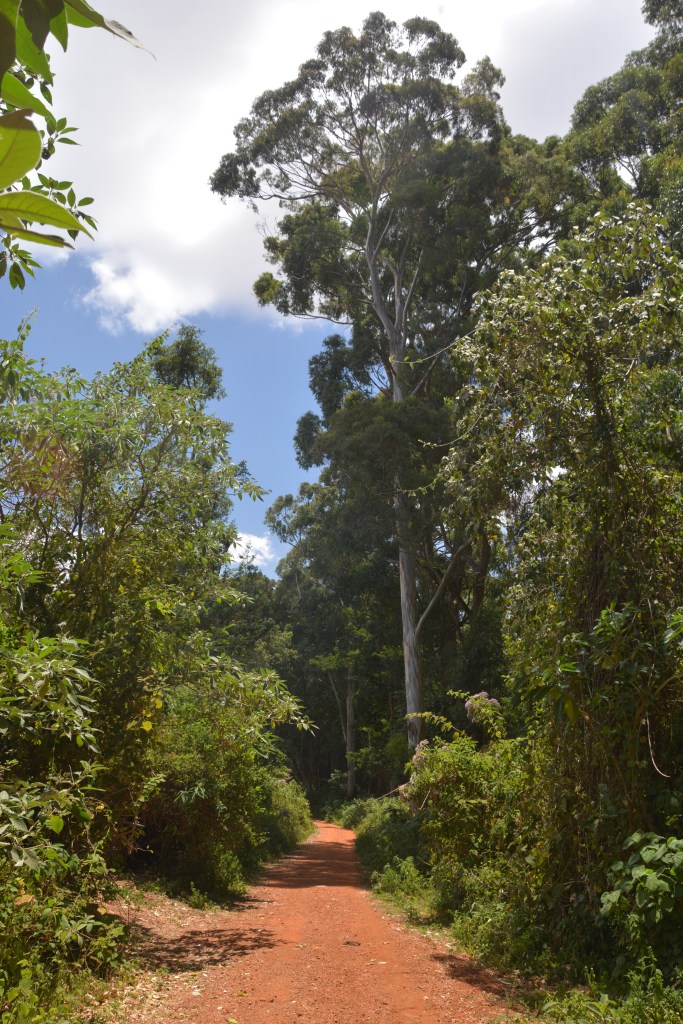
It’s tiring up here. We greet and chat as we walk. William’s an easy companion. I shake a hundred hands and return a multitude of smiles. Away to the east, the great valley plunges below; the giant void that splits the length of Africa.
****
The following day, despite weariness, we launch ourselves into the enormous valley. Crazy? It’s very hot at present, up in the mid- to high-30s.
It’s a hard walk, down a new track. I don’t like the loose rocks. I’m more anxious and wary now. I know that a slip can be disastrous. I don’t think I like old age much!

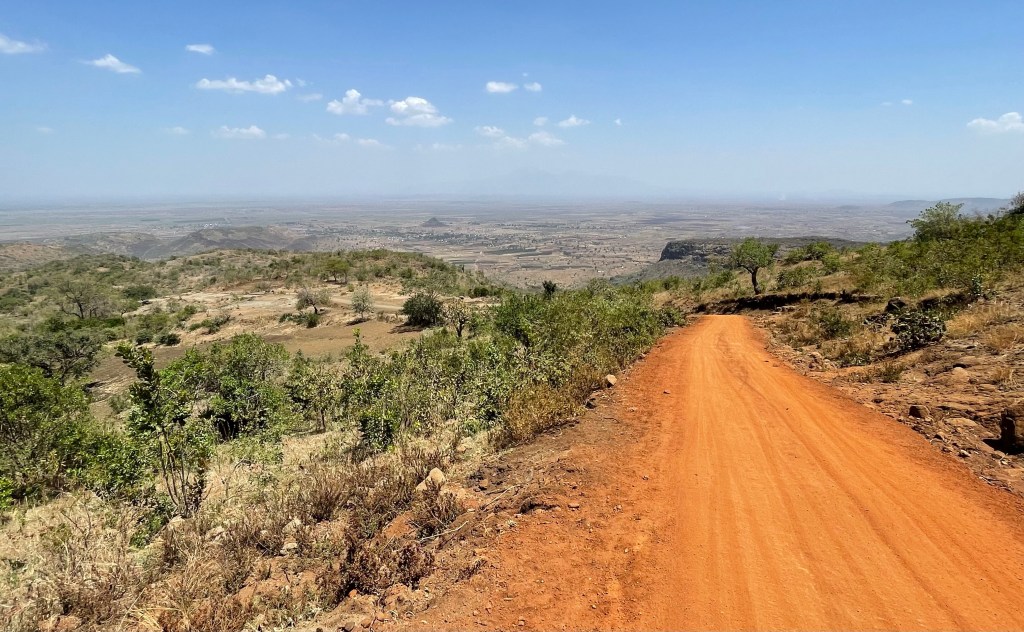
Still, we make it down yet again. An uncomfortable hike, dropping 2700 feet. This is a remarkable part of the world. I do love this region. The expansive views are astonishing, stretching into the heat-hazed distances and depths; overhead, the blue sky seems almost a physical surface, rather than an intangibility of air and light.
At last, we are at the bottom. We meet people again, a group of older men, watched by youths and children, sitting on a big low rock amongst homesteads. Friendly folk, a woman brings us a giant, ripe pawpaw. It’s a welcome to strangers. A fine gesture. As usual, it’s the people with little to give that prove to be the most generous.
We need the fruit and sugar; I’m exhausted, more than previous years. I suppose it’s inevitable… And it’s as hot as Hades down here. On the boring white road in the valley bottom, we take a boda to a tea house, and then the very basic hotel at Kipkoywo, to a bucket shower in water warm enough to make tea, and meagre food.

My room’s a hothouse; no more than a bed with a sheet, a basin and a burning tin roof. It hardly warrants the name ‘hotel’. Sweat pours as I go to bed at the bottom of the Kerio Valley.
****
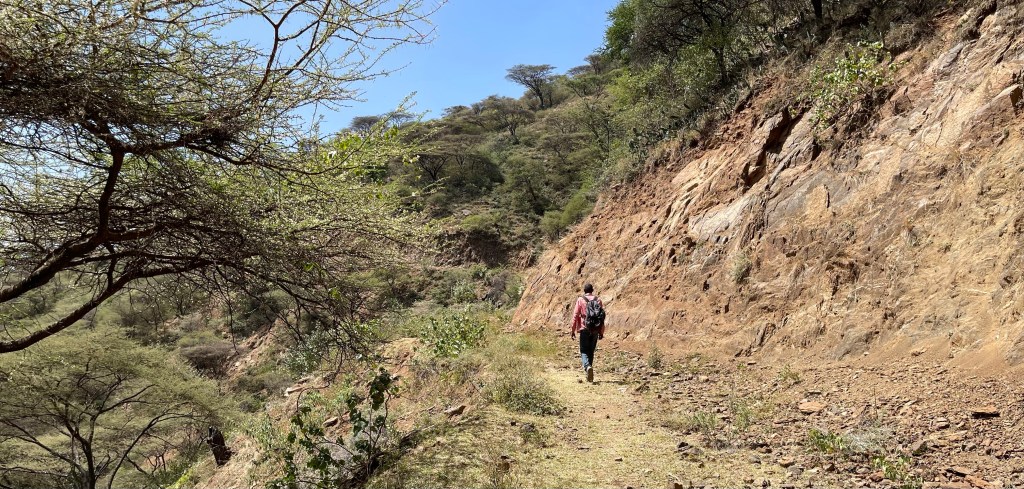
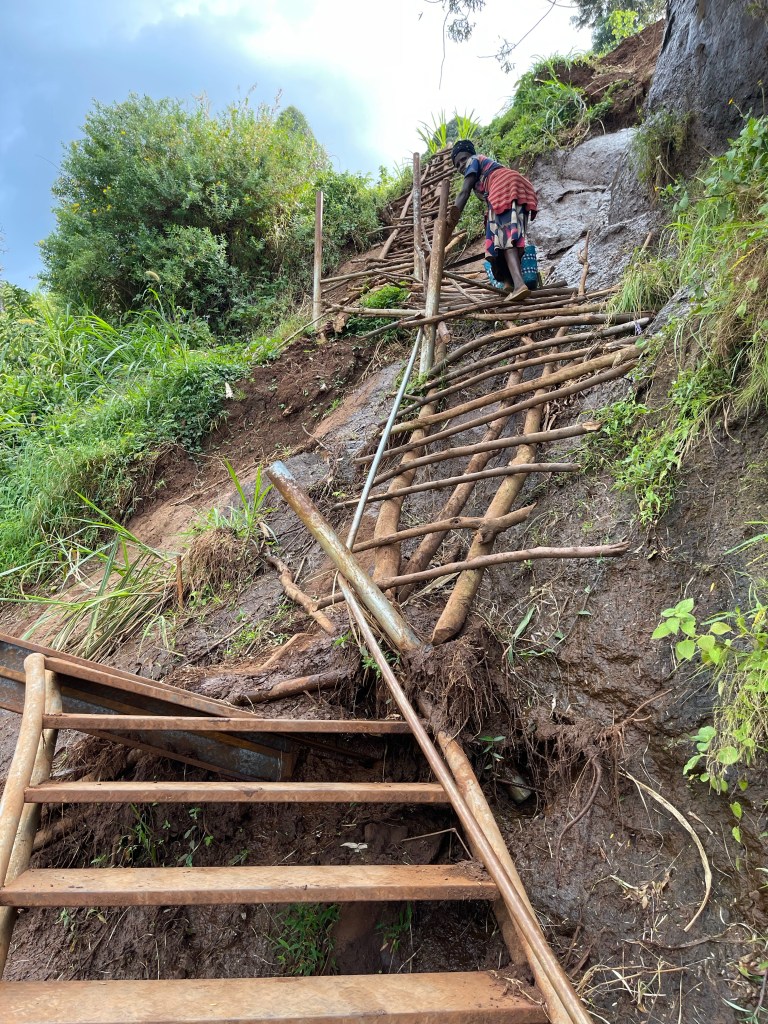
A sweaty night and a second HARD day. Never too old, but sometimes I wonder… Maybe this should be my last climb out of the Rift Valley? I’m almost beaten where the unfinished rock road turns into a rocky clamber for 850 feet, straight up the crumbly mountainside. Last year, I laboured, this year I’m REALLY struggling!
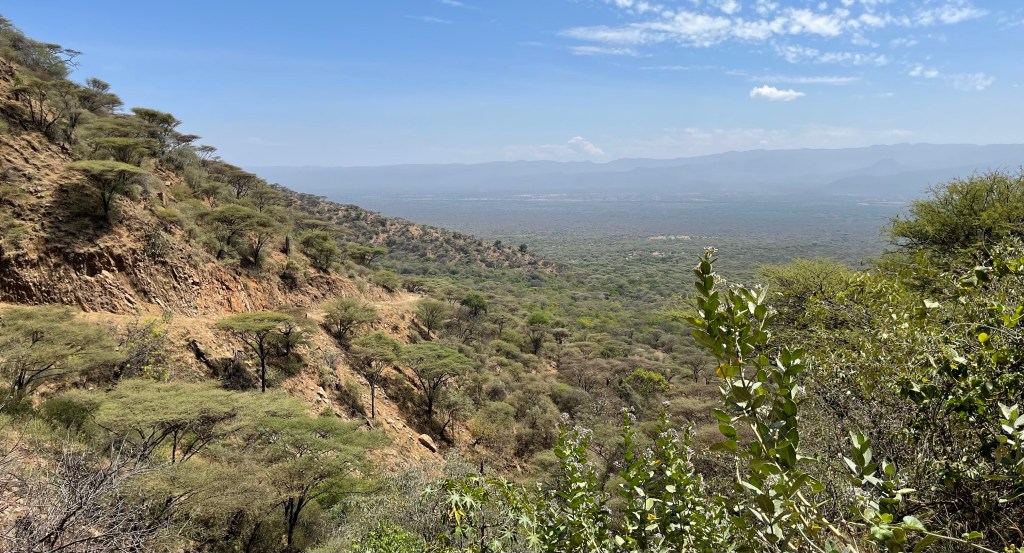
But the day IS extremely hot, floodlit by the immensity of the equatorial sun, half a degree north of the Equator. We climb 2663 feet in eight and a half miles, having somehow survived on half a litre of warm water, a mango and some peanuts. At the top, I shock William. “You’ll not believe this, but I’m craving a bottle of pop!” Last time I drank high fructose corn syrup poison is years ago! Thankfully, a kiosk provides a small bottle of ‘energy drink’, a disgusting concoction of chemical sugars. It works.
And I DO prove I can still hike into and out of the 4000 foot Rift Valley, even if it’s becoming more challenging.
****
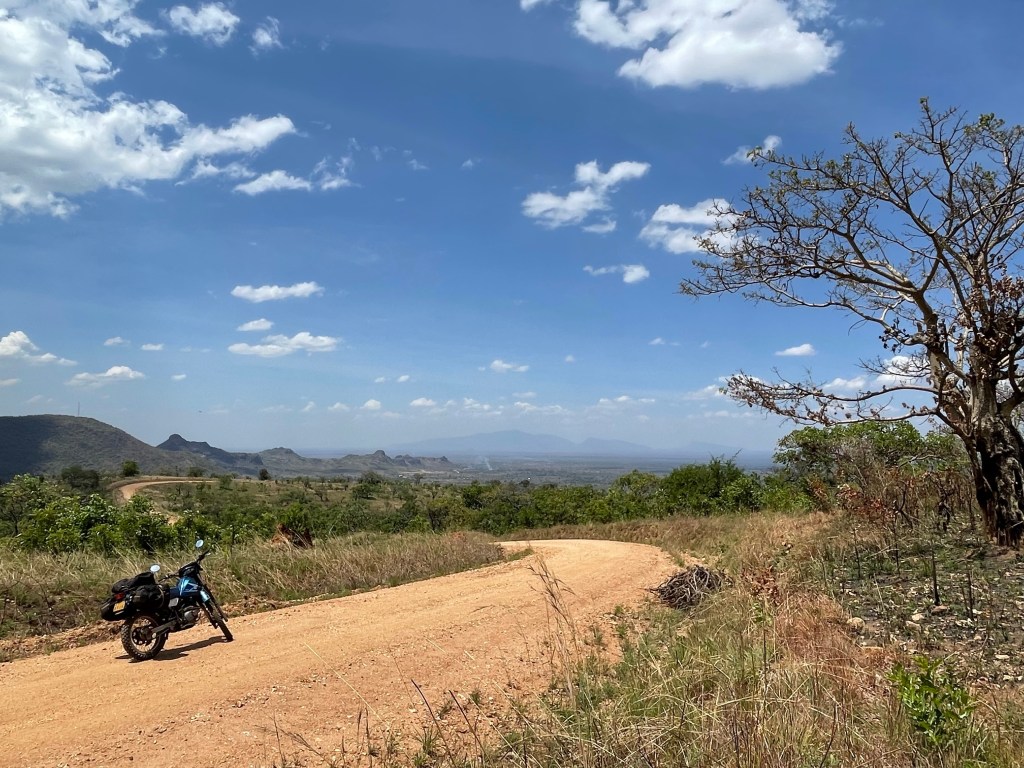
So what of my poor Mosquito..? Ten days or so ago, I was riding to Uganda, the engine misfiring and hesitating. Twenty kilometres from Kitale, I did a U turn, deciding to send my ailing motorbike by road to the Suzuki dealer in Nairobi. Perhaps I should’ve done this months ago? Before I spent all the money that Kato the mechanic wasted on bodged repairs.
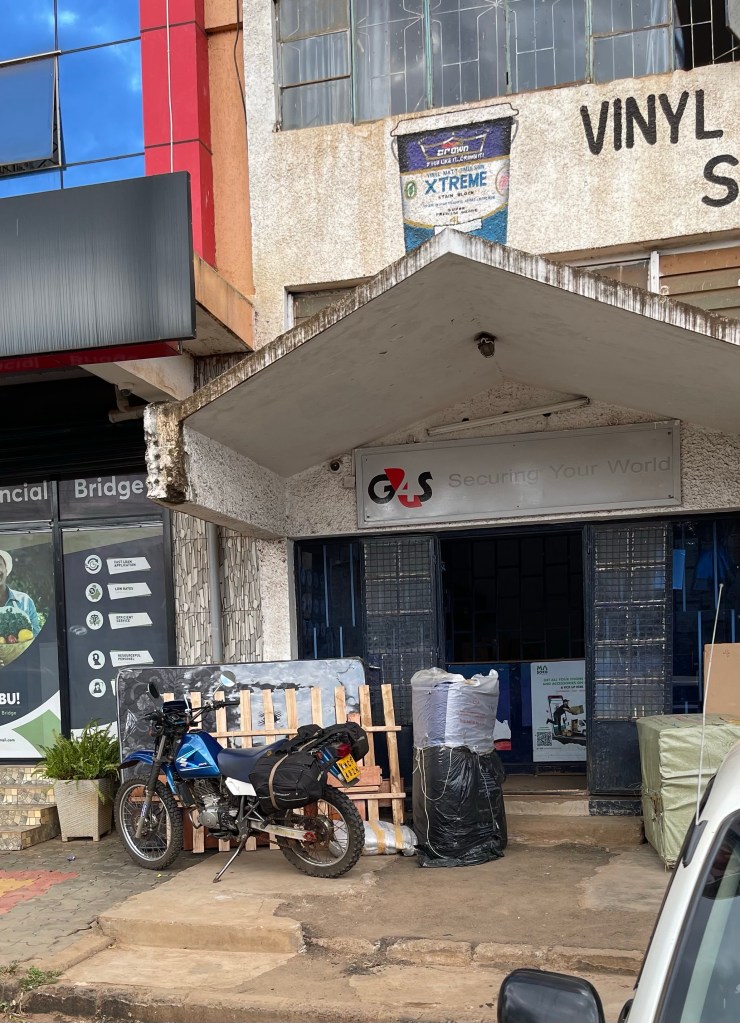
A week later, after a trip to Sipi and back by other means, I flew down to Nairobi, hoping I’d collect the bike and ride it home. Some hope. I came back the 250 miles by bus yesterday!
The owner of the dealership is a Sikh, proud, honest people. He broke the news, telling me in no uncertain words the state of my poor butchered Mosquito.
He’s amazed that it’s still running; that the clutch hasn’t seized, since much of the clutch-plate material was littered in the housing and infiltrating the engine; the crankshaft is loose, missing a C clip that should locate it, causing a leaky seal; the electrics are a knitted, knotted mess; the control unit (that Kato replaced at huge cost – best part of £300? “It’s original!”) is for a boda-boda and unsuitable to run the 200cc engine; the regulator for which I paid £90 is worth about £20; the rings need replacing as the barrel is a mess; the inlet valve has a ridge in it from the use of an incorrect size of front sprocket sometime in the past, and a list of disasters.
To put right just the engine parts, not including the electronic bits, would cost £980! The control unit would be hundreds of pounds more! So, after an hour’s discussion and helpful compromises from these decent people, they will rebuild the machine with some substitute parts, get it running (without a new control unit) and ship it back to Kitale, all for about £150.
Now I must make decisions: sell it as seen, for which I might get between £400 and 600; risk riding it more – but with a dicky control unit, or..? Well those are the choices. I’ll have to rethink my winter journeys.
I could buy a boda-style machine perhaps, but they’re small and uncomfortable and unsuitable for the trails I still enjoy. I could travel by public means – a terrible hassle as a mzungu. Not coming isn’t an option, when the families mean so much, especially Keilah, Jonathan and Alex, and I can’t stand the thought of winter in Devon until there’s no choice!
I could afford a new ‘proper’ bike, but it’s a lot to spend on a few journeys for however long I’ll be able to do it… I’d rather have a trail bike, but don’t want to keep eating my savings. If only we knew how long we had to live, life’d be simpler economically!! Oh dear, I hate these decisions!
Said my German friend, Jörg, when he and Wanda stopped in Sipi overnight last week on their way back to Tanzania, “Wanda and I think you are sponsoring all these people; you should sponsor yourself! To a new motorbike…”
To be continued.
****
To finish on a cheerier note…
I went back to the Uganda border by matatu while my motorbike was in Nairobi. The slow matatu minibus took an hour and a half to travel 44 kilometres – 18mph, slowing to a crawl for every speed hump, of which there are 60 between Kitale and Suam. None of the doors opened from the inside, there was a pungent stink of petrol, the seat had lost its springs, elbows poked, we were four people including the taciturn driver across the narrow front seat, passengers shouted into phones. The reality of African travel. Another reason for some hard thought about future transport.
Alex arranged for Boy to ride to Suam to pick me up; one of the only riders I can contemplate for this journey. Like most untrained African riders, he can’t quite understand engine braking as a concept, so it’s a bit jerky, but he rides quite well and looks after his TVS 150cc bike, that’s surprisingly able to deal with the hills. The bike is small and my knees seize up by the time we reach Sipi – but I might ask for a test ride next time…

Sitting on the back of Boy’s bike winding along the wonderful mountain road between the border and Sipi, I’m thinking what a charmed life I lead. Not bad thoughts to be having. The scenery’s spectacular, even if it’s become rather familiar, the times I have ridden the road. The sun’s blazing down and Boy rides reasonably safely, such that I can gaze over the wide views of northern Uganda. I’m fit as a fiddle despite my age, no worries, surrounded by caring friends and self-created families, seem generally liked, financially stable, doing what I want, have a lifestyle full of incident, interest and friendship.
It’s been a life of riches: no wars to fight (I remember the day military service was abolished – with relief even as an eleven year old!); we had antibiotics, the NHS, free tertiary education, now pensions, bus passes and senior citizen rewards, and possibly we’ll be one of the longest lived generations too. But most of all, of course, we’ve had the unearned wealth from the housing boom (that at the same time will prevent future generations from ever enjoying our comforts).
I DO get tired more quickly. I DO get more irritable when things go wrong. But I’m also finding that the satisfaction of my relationships and families overwhelms my restless escapism and search for new experiences. My urge to see new places has reduced. A bit. My ability to relax has increased. A bit.
I’m in Africa, making stories. What fun!
****
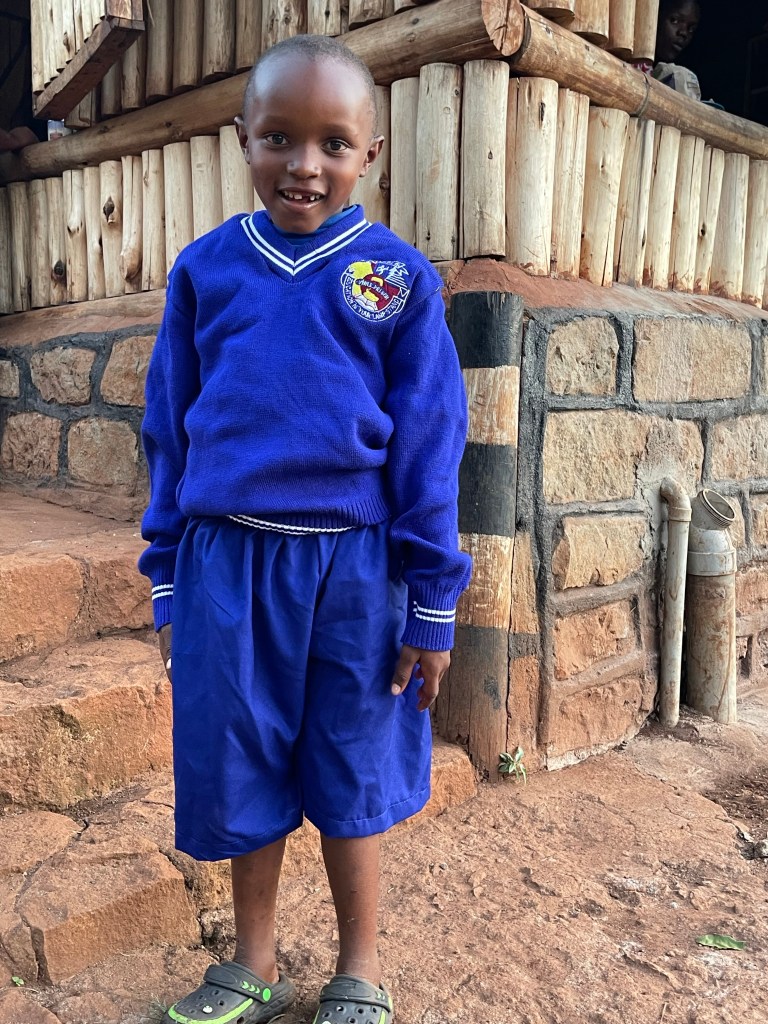
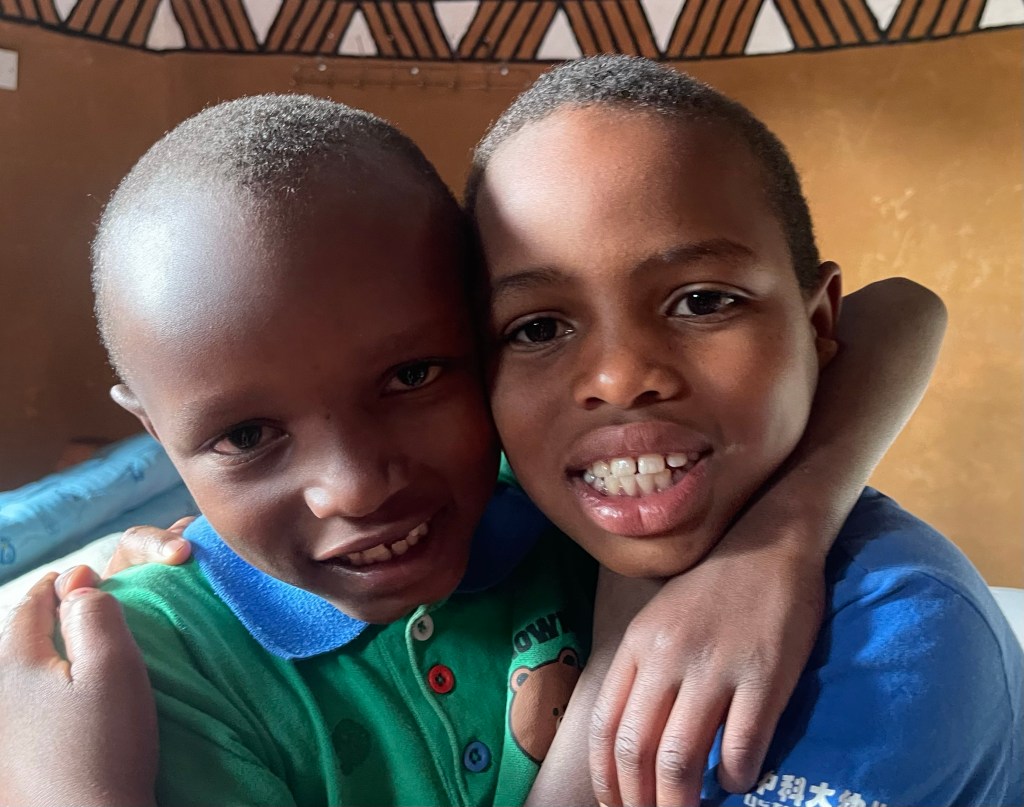
Alex visited the children on Sunday. He Whatsapped happy pictures. “I didn’t want to leave them!”
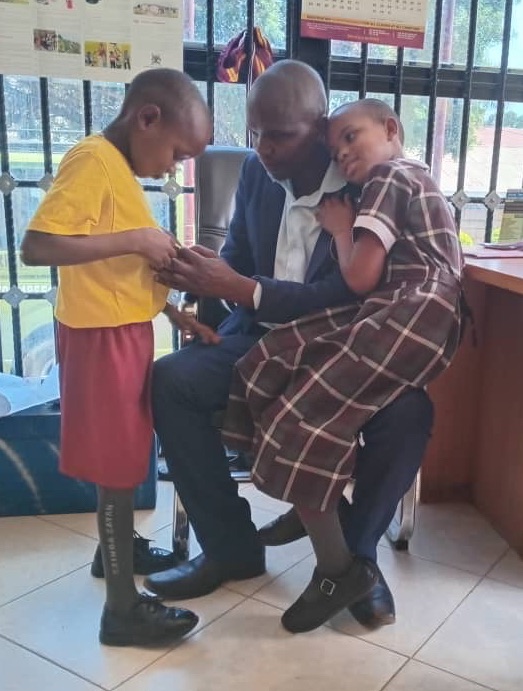
When they were left at school a couple of weeks ago, Alex had to rush to the supermarket to buy supplementary treats. The school allows them to augment their basic school diet with biscuits, bread, peanuts and treats.
Six year old Jonathan had finished his considerable supply.
“Where’s it all gone? You can’t have eaten it all already!” asked his astonished father.
“Well, Daddy, I have a lot of friends now. I shared it with them!”
Alex went to the supermarket again…
I’m on my way back this weekend. We’ll take the children out for ice creams!
****













 jonathansjourney.net