EPISODE ONE. CHRISTMAS 2021.THE DOOR HANDLE’S STILL ON MY SIDE

ANOTHER JOURNAL OF TRAVEL IN EAST AFRICA DECEMBER 15th 2021 to (at this point, I hope) 14th MARCH 2022

Despite all the naysayers, prophets of doom and pessimists, I am in Africa again. Only eight and a half months after I left last. It’s funny how the anticipation of travelling has been made so negative, encouraged by our hysterical media, while the actuality, although more bureaucratic than before, is just rather tedious but fairly logical.

The only unknown, of course, is what hurdles will be erected to hinder my eventual return – but that can wait. As I told the pessimists, “I’m not speculating. I’m an optimist and it’ll all turn out right; and if not, I’ll deal with it at the time.” Soon, I’m to be involved in a new project at the military museum on which I worked last in USA. One of the veterans of the appalling prison conditions and torture meted out to downed flyers in Vietnam described his fellow prisoners thus: “The pessimists said, ‘We’re never going to get out’. They were wrong every day except one. The optimists said, ‘One day we’ll be released.’ They were right – every day.” One of those long-term prisoners also said, “Any day the door handle is on your side is a good day.”

It’s a good motto for travellers: the door handle has always been on my side.

And it still is.

*

My journey was the usual compound of misery and elation that is every safari by long haul flight, enhanced by the sense of escape but frustrated by the current restrictions. Now I must have all the papers, QR codes, application numbers, negative test results, phone numbers and personal information in the correct order. It all makes ‘1984’ seem very innocently naive. But all that online stuff, done at home, can add efficiency too. With all those papers I was soon past the formalities and free to bargain my taxi fare to town with Anthony, a cheerful driver on an easy journey at 11.15 at night. Anthony’s jaunty merriment in the face of the realities of scratching a living for his family in overcrowded Nairobi was the customary tonic of arrival on this wonderful continent, to the happy secrets of which I have been privy for half my life.

*

Nairobi is an unlovely place full of humanity and Chinese roadworks. To wander the streets of downtown Nairobi is thought-provoking. Its broken pavements, elephant trap craters, mud pools and miscellaneous mounds of dirt separate hawkers’ stalls (laid out, inevitably, where the pavement is occasionally in good order), newsstands, and bales of secondhand clothes – cast out from the rich world from which I have just come. Its sauntering crowds, congested boda-boda taxi motorbikes, inflated killer 4X4s, driven by the proud men: made-it-and-determined-to-show-the-lowly, customarily overweight and haughty by demeanour, make my European pace impossible. I’ve just arrived: I must slow down. It’s warm: the sun’s blazing from almost overhead, here 1 degree and 16 minutes south of the Equator. My shadow’s about a foot long. I’m walking on it.

Men yell and beckon beside rattletrap buses bound for suburbs and slums; boys push trolleys, pushcarts and hand barrows between rusty buses and the bully-boy cars. Mostly, people drive on the left, which makes my adaptation simple, but it’s dangerous to assume ALL the traffic will follow the code. Security guards catch my eye from every store door; they had some terrorist troubles a few years ago, and now ‘security’ provides a lot of employment. They smile behind their ubiquitous face masks – mandatory everywhere in Kenya just now, even in private cars – and call, “Welcome mzee! Welcome mzungu!” ‘Mzee’ is ‘old man’: vanity is useless here in sub-Saharan Africa, where average life expectancy is only 61.4. I have to emphasise my smile so they can see the lift of my cheeks and the smile in my eyes above my – inevitably slipping in the warmth – snood mask. Women peddling vegetables and highly polished used shoes, slightly tattered clothing and bananas unlike any I ever ate in the North, catch my eye and greet. Bollards are dressed in secondhand dresses and jackets, impromptu tailors’ dummies. Food is sold from grimy barrows; homeless women, with toddlers, sleep on heaps of dirty blankets and cardboard; street children beg; city women totter in unsuitable heels; mad, sci-fi and worse, hair styles make me laugh. It’s fun to be a relaxed mzee mzungu here in Africa, an object of respect and sometimes celebrity. My smile is widening already. I love to be here. Again. At last.

*

Kenya, with a mere fraction of cases of coronavirus that we have allowed to breed in England, handled the whole pandemic quickly and decisively. They required negative tests from incoming travellers a whole ten months before the UK. My temperature is taken in every office and shop – I won’t be admitted if it’s over 37.5 degrees (even on a hot day!). Disgusting sanitiser is sprayed on my hands everywhere. There’s no complaint of ‘Stalinist procedures’, ‘lack of free will’ – cries of the Tory back-benchers and the privileged thoughtless; no antivaxxers. Here, people would love the opportunity of vaccination, to get on with trying to earn a living apart from disruption, to bring back the all-important tourist economy – decimated now. There’s no furlough or assistance here, and access to all government services is restricted to the vaccinated, no shilly-shallying and bowing to mad theories of lack of free will: here everyone’s in this pandemic together and ready – if the vaccines are available – to get on with life as best possible. Infection statistics are low here: it’s a young population; most people are fit and don’t suffer from the often self-induced maladies of the West: obesity, hypertension, heart disease. It’s a cruel African fact that if you get seriously ill, you probably die – without any subsidised health provision. So far, Kenya has recorded 255,000 cases of Covid (to our ten million and soaring). There are more people in hospital in UK today than have died in the whole pandemic here. I have 40 times less chance of infection here in Kenya. And yet, and yet… The chances of getting vaccinated here are minimal as well. The G20 countries snaffled up 89% of the vaccines. There is only ONE G20 member in the whole of Africa, a continent with 54 countries and a population of 1.2 billion: South Africa. The rest of the continent provides, and will until our despicable greed abates, an ideal breeding ground for variants; and viruses are clever than us. They have only one ambition: reproduction by any means. Sometimes I wonder, if Gordon Brown and I can see this, why can’t our ‘leaders’, supposedly intelligent beings (with notable current exceptions), see that until we share resources and intellectual rights, we’ll never beat this thing by pulling up drawbridges and looking after ourselves. Face the causes rather than fiddle with the symptoms! Africa’s average vaccination coverage is a pitiful: a mere 5% continent-wide have received two doses, and about 10% a first dose. Almost half African countries have rates below 2%. Many rich countries are discarding the excess doses they bought, some enough to vaccinate their populations NINE times. Variants will continue to emerge in Africa.

And there the lights went out. This is Africa.

*

With Christmas approaching, I discovered that all the better buses, and all flights up-country were fully sold out until the 26th, so my choice was limited to the regular African transport option of matatus: minibuses that ply the roads everywhere, short and long rides to all corners. The last time I took the long-distance matatu from Nairobi to Kitale, a distance of about 240 miles, was 20 years ago. My memories are not comfortable; but in the intervening two decades, Kenya has made many advances in infrastructure: the minibuses are now controlled and under national legislation, and a lot more comfortable and roadworthy too. It’s still a long ride – three minutes short of ten hours on Friday – but those hours are no longer spent with my knees round my ears, packed in with 17 other passengers, their bags, livestock and babies, plus the miscellaneous boxes, crates, sacks, tractor tyres, goats and all the stuff that people have to carry from one place to another. Now I have a seat to myself amongst only 11 passengers, in a reasonably well-maintained vehicle behind a driver who is as safe as can be expected on this busy road, frustrated by lumbering lorries struggling on the hills up to over 9000 feet. Mid-afternoon we cross the Equator, that criss-crosses the roads of Kenya. All around are tall conifers and grassy banks; it’s fine up here, a landscape that seems unexpectedly like parts of Europe rather than the equatorial regions of East Africa. It’s easy to understand why the colonialists wanted to settle here and exploit this richness, sometimes in landscapes not unlike Scotland or the heights of Europe. It’s cool at these altitudes too, the heat of the sun calmed to a balmy warmth.

But today the road is busy. Well, it’s busy every day: it’s the main and only road from the Indian Ocean coast to the interior of Africa at this point. It carries all the goods and fuel from the ports to Uganda and even Rwanda. It carries the containers of imports to those countries, rumbling slowly over these heights towards Lake Victoria and the shops and businesses of several countries. It wasn’t made for so much traffic: there was a railway, one of the wonders of Africa, 100 years ago. Parts of it are now being restored – by the Chinese of course – and Kenya is investing eye-watering portions of their economy into road building. Actually, in fact, into crippling debts to a country that gives not a fig for the interests of Africa. I hear that, in the inability of Uganda to begin to repay their VAST debts, China is fighting to seize Entebbe International Airport in reparation, Uganda’s only international airport. I’ve prophesied it for years past, that this is how that country operates: it ‘generously’ gives huge loans at attractive rates, that it knows full well the poor countries cannot repay. Then it bides its time, letting the debts accrue, before pouncing on the weakened states and demanding payment in their minerals, resources and land. It’s alarming, not just for African countries, but for the planet: that this nation that cares naught for ecological crises or human rights is gaining so much control over the minerals and resources of the world. China does nothing except in its own interest. As I’ve often observed: I have yet to see a Chinese charity on this continent. It’s just not in their vocabulary as they work towards world domination.

Nairobi is transformed in just nine months by Chinese construction. I’ve stayed the first couple of nights in the old United Kenya Club with its colonial overtones; reminders of those days in its dark-stained bar and faded elegance of its cheap ensuite rooms. From the small balcony of my room I chuckle at another colonial relic: its car park with bays marked: ‘Director, Chairman, Treasurer, 1st Vice-Chairman, 2nd Vice-Chairman, Former Chairman’ and so forth (note the misogyny of the old club, formed in 1946, probably as White-only). Now, across the gardens, the view of nearby downtown is obscured by a huge concrete flyover of a raised highway that wasn’t even intimated when I stayed last on March 29th. Roadworks are everywhere, with the attendant chaos. Leaving Nairobi, the matatu stayed in almost one place for 50 minutes, battling with seven or eight informal lines of jostling traffic to pass a blockage. Drivers are extraordinary, forcing into the lines, bouncing over broken ground amongst road-making machines and piles of earth and debris to inch forward in fume-belching queues.

At last we break loose onto the highway north-westwards to the even higher lands – for Nairobi itself is so unexpectedly high at 5512 feet. From here the road is single carriageway, crushed with all that traffic. We must go at the pace of the slowest, with occasional bursts of overtaking – often in the face of oncoming traffic – in an attempt to keep the journey to Kitale down to eight hours. On Friday we failed: ten hours minus three minutes…

*

My Kenyan ‘sister’ Adelight, waited for me at the entrance to Kitale town, for a warm welcome home. I’ll be here for Christmas. For the first day or two, Rico and I stripped the rear end of my Mosquito, my little Suzuki DR200, and fitted new bearings, bushes and all the bits that will hopefully make it less rattly. In so doing, we discovered that at some time – before my ownership I’m happy to say – the machine has had a powerful hit, sufficient to bend the central frame a few millimetres. Ever-resourceful Rico, an ideal mechanic for this continent, where you must make-do and invent, found ways to cut and weld the frame so that we could extract the swinging arm to fit the parts I brought in my luggage: expensive parts that had to be obtained from a Dutch company, with all the over-priced bureaucracy and costs brought on by Brexit importation. Good to know we achieved our ‘sovereignty’ and ‘self-determination’, eh? Our new ‘freedom’ added a £12 handling fee for Fedex to sort out the shambles of various VAT rates and delays en route. Oh, happy days in Little Britain. Good to be able to observe the mess from a distance.

*

For one who takes pride in the infrequency with which I manage to penetrate the horrors of Morrisons supermarket in Totnes, I take a perverse delight in going shopping with Adelight in Kitale. The experiences could not be more opposite. Morrisons is a bleak, miserable fact of commercialism, of comestibles ungraciously presented, an anonymously dismal and dispiriting necessity. In Kitale it’s great fun! I smile and laugh, jest with traders, chat everywhere, have my leg pulled as an ‘mzee’, break conventions for fun: carrying Adelight’s sack of charcoal (a man! White, at that!); stepping into the busy road to halt traffic so she can reverse from parking spaces – “Hah, we’ve waited long enough!” I exclaim, “They’ll all stop if a mzungu stands in the street!” And they do, with big smiles and jokes at my expense that make me chuckle again.

A gigantic hoarding brings us greetings of the season from a local politician. Funny how all politicians are well fed and fat, even the regional ones. “Oh, they feed on money!” says Adelight with dismissive irony. Another big hoarding advertises a promotion for one of the ubiquitous mobile companies, the biggest business in Africa these days. The main competition prize? ‘1000 goats to be won!’ it screams in two foot high letters.

Music thunders from yet another mobile phone promotion, a disc-jockey hired to fill the street with cacophony. Boda-bodas are everywhere like insects, loaded with multiple passengers, their riders in outlandish garb, helmets back on top of their heads. Many wait, double and triple parked, or blocking pavements, for fares. It’s a desperate business, for there are thousands of small-time riders even in this fairly small regional town. But a few pennies here and there make the difference between supper for the family, medicines in illness, school fees, or hunger and destitution. It’s a fine line…

Like Nairobi, the Chinese debt is bulldozing a four lane highway through the centre of Kitale town. It meant sudden, almost overnight, demolition of big swathes of the informal, illegal, unauthorised trading area through the town, now relocated in chaos somewhere behind the market. The old railway tracks, and the colonially toned ‘Railway Canteen’ are up for renovation; more Chinese exchange for resources and power.

A security guard walks round the car as we enter the fenced supermarket car park. He languidly carries a mirror on a shaft to check for bombs under our car, but he doesn’t look at the reflection, his attention is on a pretty young woman passing by.

A dusty plastic Santa and his reindeer romp across the portico of the shopping centre and plastic elves and bespectacled Santa effigies jingle in grottos beneath snowy scenes unlike any that anyone here has seen for real. The only snow in this country is a few melting hand-sized glaciers on Mount Kenya, half way up the sky. An unconvincing fake Christmas tree appears to be oddly sporting oak leaves. In the supermarket the staff wear Father Christmas hats and the old schmaltzy Christmas horrors, ‘White Christmas…’, ‘Jingle bells…’, ‘Mary’s boy child…’ tinkle above the shelves, above family groups gathered to chat and greet – and block the aisles. Everything goes slower here in Africa, but I have to smile, as I squeeze between the congenial people. I wouldn’t be smiling in Morrisons…

In a roadside workshop, a young man jiggles to inner music as he nails dried and twisting timber into a simple coffin that looks like it’ll rot long before the body that will be buried in it. Beside the potholed town road enormous bulbous settees are formed on ragged frames amongst shavings from already curling bedsteads. Heavy skeletons of cheap wood are covered in blue foam and lurid fabrics. Dust billows from the wheels of vehicles lurching through the roadworks. One huge over-stuffed sofa is tied to the carrier of a 100cc Chinese motorbike boda-boda for delivery. It’ll wobble over the potholes and through the crowded streets to some new owner for Christmas.

A flock of pale blue shrouded chickens, disguised as small girls, flutter out of a mosque, anonymous beneath obscuring veils, destined for a life of servitude after their medieval Koranic schooling in their male-dominated world order. About 11% of Kenya is Moslem, mostly far away down on the coast. Up here in the highlands every variety of deranged Christianity flourishes amongst businessmen ‘pastors’ and self-promoted ‘priests’, often subsidised by evangelical right-wing lunatic Americans. It’s big business, is religion here, fleecing poverty-stricken adherents in the name of God. The other well fed Africans, the continent over in my experience, are Catholic priests. Forgive my cynicism if you’re otherwise inclined…

On a dirty waste ground, two women cook chips in sooty pans over fires of sticks beside rickety stalls shaded by worn nylon woven sacking. The aroma of frying oil drifts on the warm, suffocating air. An altercation ensues; one young man chucks his chips at another in temper. It’s diffused in moments by the women’s laugher. I guess he’s drunk. Nearby, a street boy, perhaps 15 or 16, clutches a plastic bottle under his nose. It contains a broken tube of spirit glue and a dash of diesel fuel. Half his short life probably already behind him, he has the glazed look of the heavily drugged as he stands amidst peelings and debris on a dumping ground behind small lock-up shops. A shapely young woman taps and totters past in a tight skirt on shiny gold high heels, rising to a distinctly athletic challenge on these broken streets. A slave to fashion. A middle aged man saunters through the rabble: cream trilby, maroon blazer and cricket whites.

The streets and waste grounds are workshop, kitchen, sales-place, meeting ground, dining room and even sometimes bedroom of these busy, chaotic, noisy, frenetic, aromatic, extraordinary African towns.

*

I treat Adelight and the two small girls to lunch on the balcony of the Iroko Hotel in town. Even here there’s dust, and noise rises from the busy street below, where vehicles fight through the traders, boda-bodas and stalls in the madness caused by the major roadworks. Adelight choses smoked beef with a stodgy ball of pap made from brown millet and a very tasty soured milk sauce; I select simple vegetable curry with a chapati; the two girls – Maria’s four now, and Shamilla 11- take ketchup and chips like children the world over.

A day or two ago I bought a fruit new to me from a roadside trader. “What are they?” I asked, indicating small yellow globes not unlike very small cherry tomatoes, only more golden. “Gooseberries,” he told me. “Not like any gooseberry I’ve seen in Europe,” I replied, and bought a box for 70 pence. They proved to be delicious, a sharp citrus flavour that was approved by the whole family. I looked them up in the inevitable Wikipedia to find they are Cape gooseberries. Now I go back and the boy recognises me, greets me with a wide happy smile. This time I purchase three boxes. He’s happy. So am I. It’s such fun: I’m a figure of curiosity and celebrity, sometimes a figure of fun, always a figure of cheerfully genuine welcome. Everywhere, my wide smile is mirrored; there’s candid eye to eye contact, merry quips, greetings for the mzungu stranger.

I’m surrounded by cheer and warmth – from people who have so little in material terms and so much in social ones. A lesson in life.

*

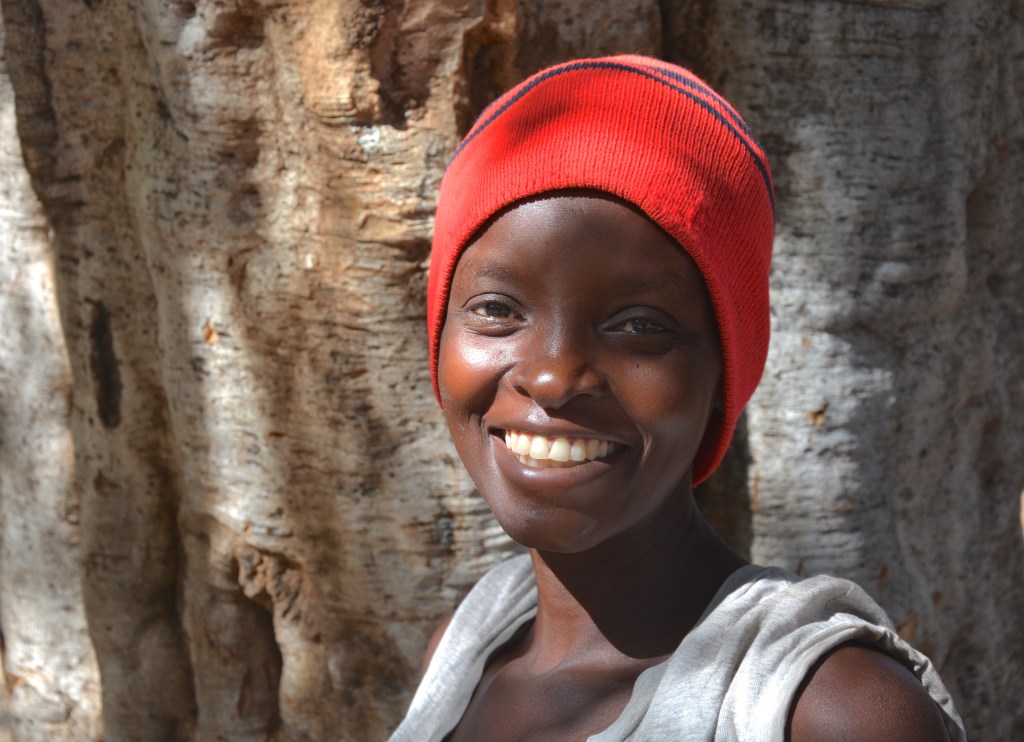
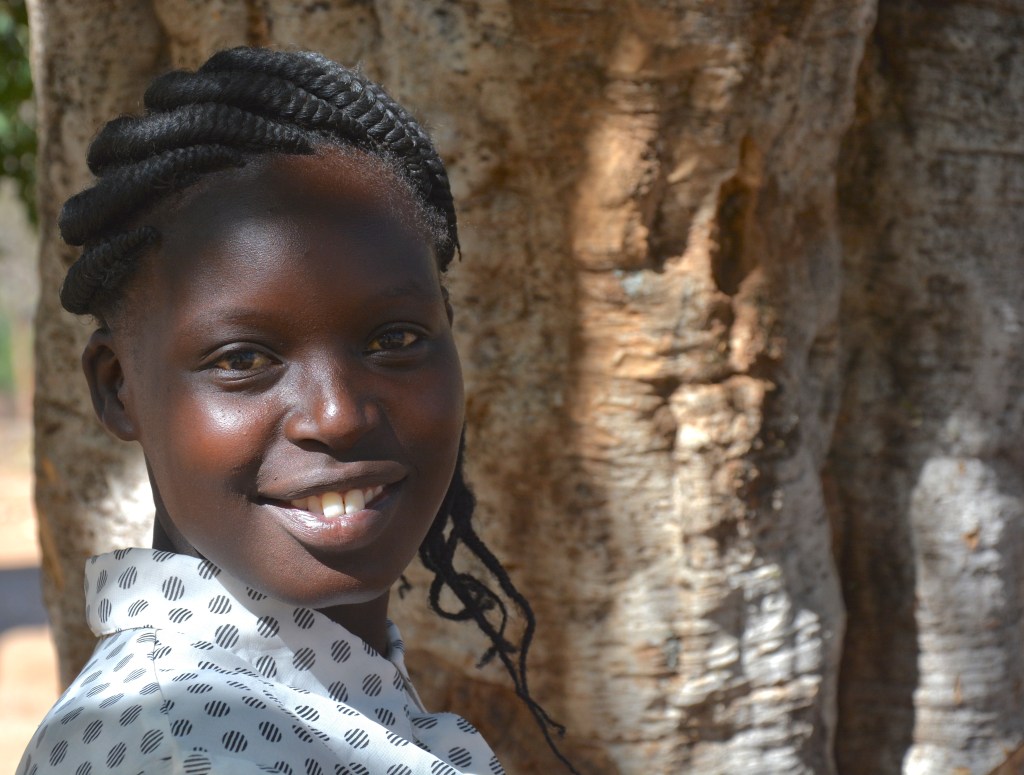
My favourite, Scovia, came home on Thursday. I smile just to look at her, this cheerful, pretty young woman. Since I left in March, she met the love of her life, a Kenyan chef, son of an old colleague of Rico’s from his time in Lokichoggio, a parched town at the far northern ends of the Turkana deserts. She’s now engaged to Webb, a very fortunate young man. Scovia is a prize indeed. She’s Adelight’s junior sister and has a character full of fun, cheek and charm. It’s such fun to see her.

*

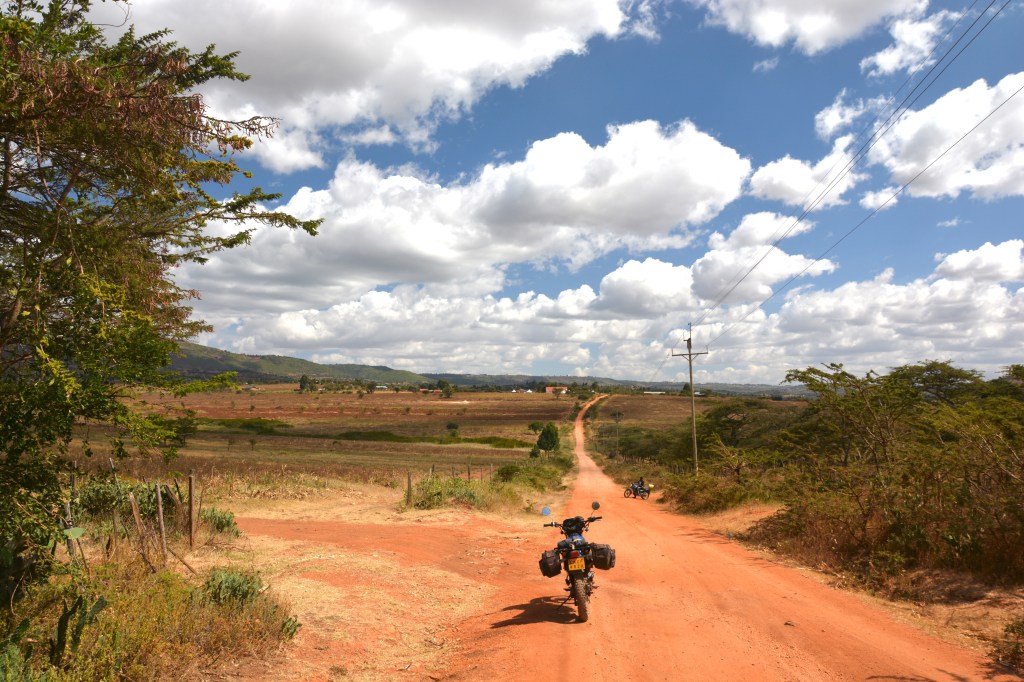
Meanwhile, I rode the Mosquito on a settle-down ride, with its new parts in the suspension, out to Suam River border post, the remote border I like so much to use on my safaris to Uganda. Not many tourists, and even fewer old mzungus go that way. Immediately, as I put the Mosquito onto the stand, I am recognised. “How did you get on with that visa extension?” asks the immigration officer, for he tried to help me back in March. I am remembered. I’ve come to discover the regulations this year for my journey across the border. We walk down through the mud of yet another new road – soon there’ll be a four lane, six metre high bridge across this creek. The adventure will be gone for me, on this, my most loved of African trails round the base of Mount Elgon. But it’s selfish of me to resent the trade that a new road will bring to this remote region of the two countries. I’ll have to find another adventure route. There are plenty left, maybe not quite so beautiful as this one with its vistas into northern Uganda. For now, we walk over the tumbledown colonial era bridge and up the dirt track to the Ugandan medical officer’s dusty tent. “Eh! Mr Bean! Jonathan!” exclaims Harison, the MOH, back on duty, he says, these past two weeks. We greet and exchange fist-punch greetings. I note that no one’s bothering too much about their face coverings, hanging below chins. It’s fine that way, we can express so much pleasure with our smiles. From Harison I find that the regulations haven’t changed since the beginning of the year, when I last came this way: I still need a negative PCR test result within 96 hours of travelling, and it stays valid for 14 days for return to Kenya. There doesn’t seem much logic in this, but then, logic has been a primary casualty of the pandemic. If I can’t find a place to take the test in Kitale, Harison assures me he’ll do it at the border and I can ride home and await the result from the labs at Entebbe Airport, far away across country on Lake Victoria, that airport notoriously being wrangled over as a debt repayment to China. I’d rather ride to Suam than to Eldoret, the ugly, dirty, noisy city down the Nairobi road, a dangerous ride on packed roads clogged by slow lorries. And here at Suam, I’ll be a personality recognised by everyone and treated with fun and respect.

At least it appears that my travels to Uganda will be no more complicated than last year. I’ll get to see the Sipi family again. We’ll all be happy for that.

*

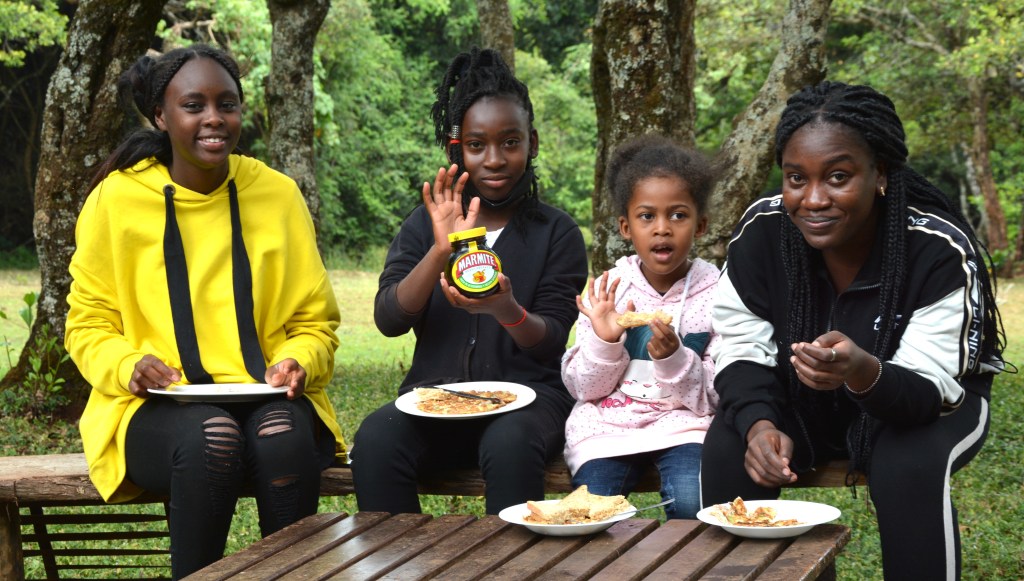
And so along comes Christmas Eve. We’ll be at home in the verdant compound; incredible how things grow here in the sun. Tonight, Adelight will use the charcoal in the novel bread oven that Rico designed last year, to grill half chickens from her chicken-rearing business. Before that, Rico is to take the two small girls out for ice cream while the rest of us decorate the interior of the old chicken house that Rico has renovated into a play house, a fine Wendy House on stilts. The other day I bought vinyl for the floor and tablecloths for the walls, and I bought 100 balloons, with which we plan to fill the inside for when the chicken house is revealed to the small girls as, actually, a play house. Later, we’ll have a few simple presents: money from me for the older girls, with some secondhand clothes selected by Adelight in the mtumba-wear market in town – the rejected clothes from the charity shops of the North. The small girls will get sketchbooks and coloured pencils, Rico a block of cheese from Schipol Airport; a big jar of Marmite (from Morrisons!) for the family, who all relish it. Adelight had her present: 200 new chicks that suddenly came available for her rearing business.

This will be a reminder of Christmases past, when rampant materialism and cost-counting was less obnoxious.

*

On Christmas morning, as I upload this episode, the two small girls are singing in their new play house and drawing pictures with their pencils and sketchbooks. The sun’s shining and one of the older girls is washing pans from last night’s cheerful party on the porch. It feels to me that this was how Christmas used to be – and should be. I hope you, reading this, have as much fun as we’ve enjoyed in our simple celebration!

The old chicken house becomes a play house. Behind is Adelight’s chicken rearing shed.
Shamilla enters the play house for the first time
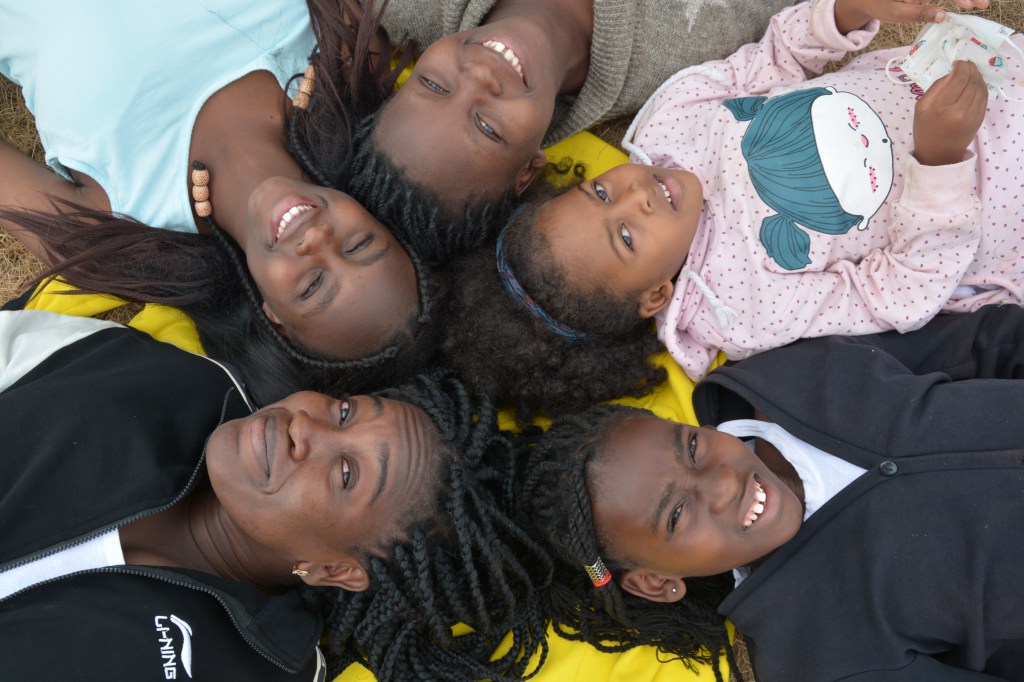
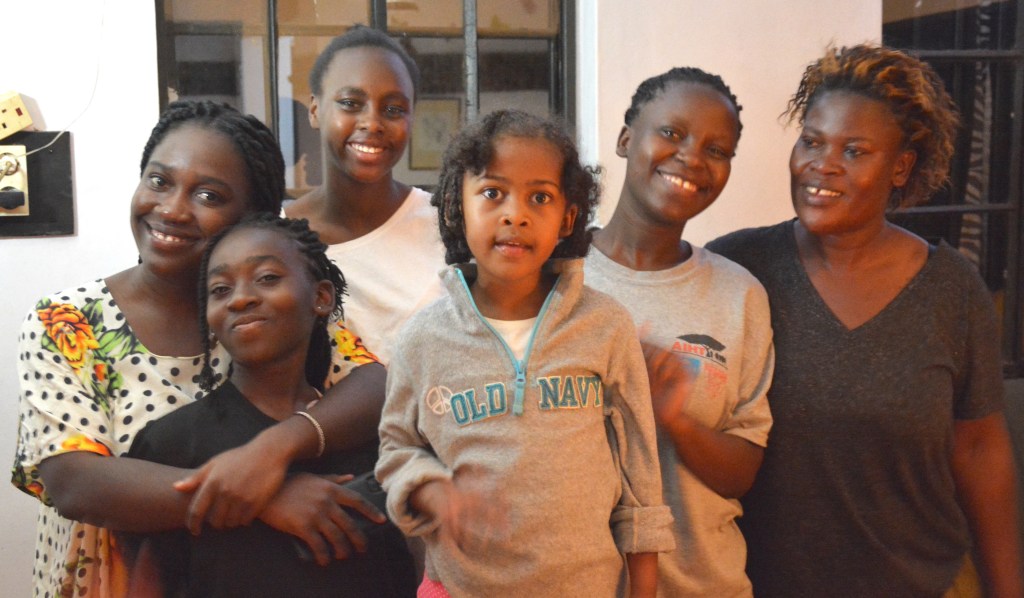
Marion, Shamilla, Bo, Maria, Scovia and Adelight
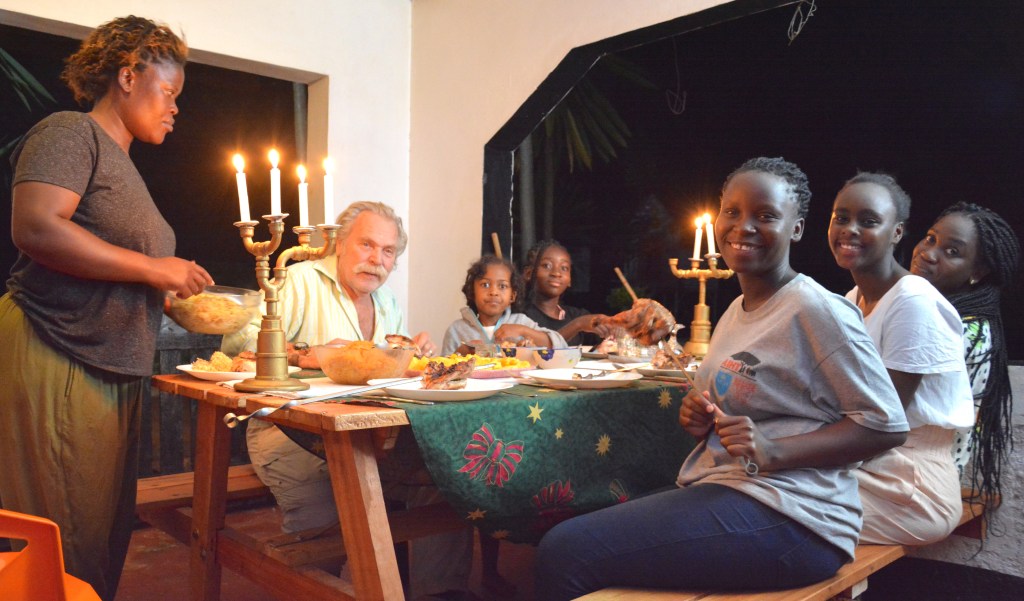
Christmas supper. Adelight, Rico, Maria, Shamilla, Scovia, Bo and Marion

EPISODE THREE. “WE ARE WORKING ON IT…” A brief update. January 1 to 7


“Oh, we are working on it! Come tomorrow.” It’s the call of all African officialdom. 

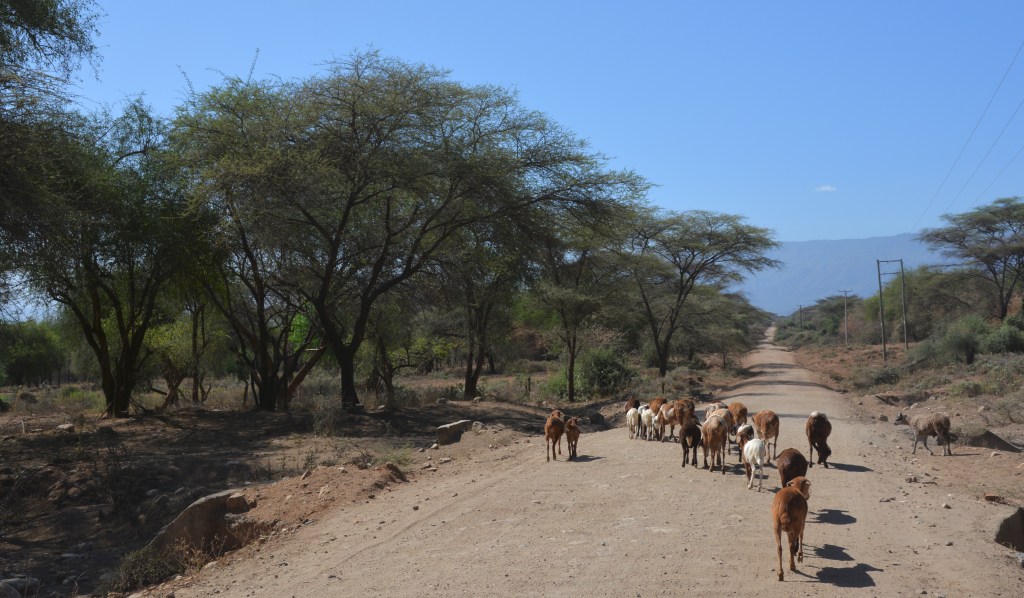
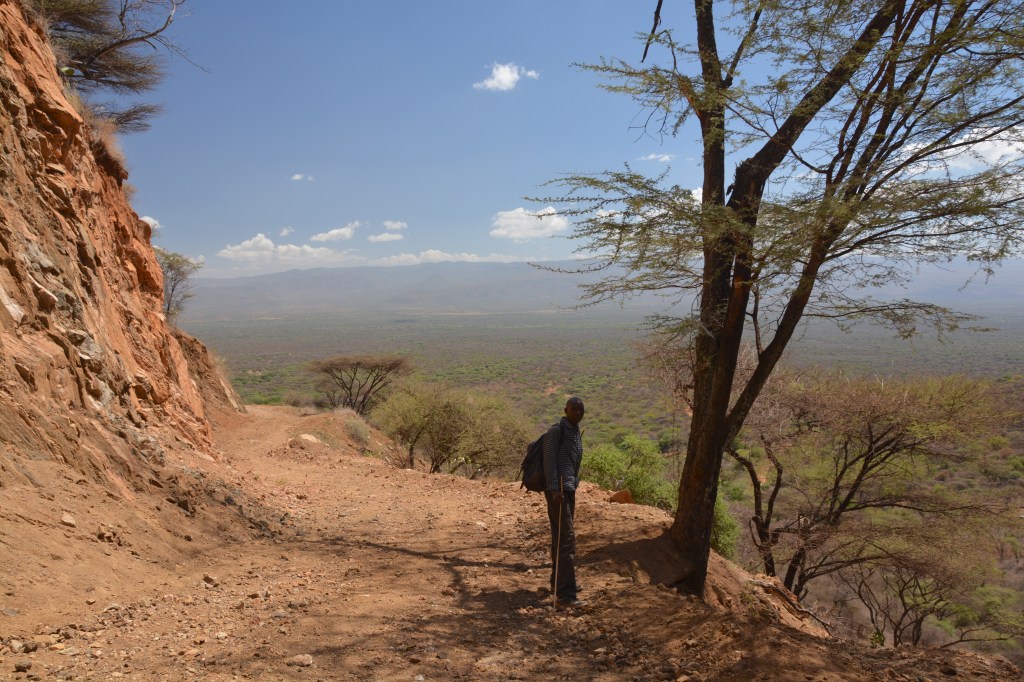
On Monday, I set out to visit the family in Uganda. Alex and Precious and the two small children live only 100 miles or so from Kitale, around Mount Elgon, the spreading mountain that raises its shoulders over the west of Kenya and the east of Uganda. My ride there is one of the finest I know in Africa – hard, rocky, incredibly dusty and endowed with magnificent scenery. The track winds about the slopes of the mountain, sometimes carved from the hillsides, with misty views into the expanses of northern Uganda. It’s rural and lined with friendly people who don’t see many mzungus going that rough way. 

At the remote border post, Suam River, marked by a muddy trickle beneath a tumbledown colonial era concrete bridge, I discovered that to enter Uganda I needed a negative Covid test within the last 72 hours. Checking the Uganda government website, the information is ambiguous at best, referring to arrivals at the international airport but not to those at the land borders. Wanyoni, the Kenya medical officer of health, was helpful. He would walk down to the broken bridge and talk to his opposite number, the MOH on the Uganda side. 

To save a ride back to Kitale and a wait of a day or three, Harison, the Uganda MOH, agreed to do the test and let me in. It would cost me £48. If it was the only way in, then so be it… I was checked out of Kenya, immigration stamp, customs for the Mosquito. I rode over the bridge and parked up before the nail-porcupine barrier dragged across the rutted track that forms the international highway. 

Harison took ages to input my details, take my money, issue receipts and exchange phone numbers. As he wrote, his colleague put on full sci-fi anti-hazard gear, from hooded white overalls to slip-over shoes and face visor. Then he poked a swab uncomfortably up my right nostril and wriggled it about, before proceeding to remove the entire anti-hazard gear as Harison bagged up the sample. 

I walked over to the immigration building in the hot sun. Lucy, overweight and quite bizarre in a hat-like wig of magenta Afro-curls, took one look at my papers and asked where were the results of my test? Well, across the track in a plastic tent so far… 

“But you can’t enter Uganda without a negative test!” I referred her to Harison, who limped over on his different-lengthed legs, poor fellow. A quite impassioned discussion ensued. Finally, I was stamped into Uganda. Then it’s a clamber up a broken two metre embankment to Customs for the motorbike. “Still no steps, then?” I called to the watching policemen.

“But where’s your test result?” By now it had all taken two hot hours. The final policeman, it seemed, had the veto and he wasn’t going to relent. “You must come back on Thursday, when you have the results; if I let you go now, you will be stopped often and people will make a lot of trouble for you, and ask for money everywhere.” Quite possibly correct…

Of course, I had to be stamped back out of Uganda and into Kenya! “That’s my shortest stay in Uganda!” I called to the officials – all of them charming and friendly. “We will let you pass quickly when you return on Thursday,” they all promised with big smiles for the old mzungu on his motorbike, who really ought to know better, in their opinion. 

‘Lay an extra place for supper!’ I texted Adelight.

So, home to Kitale.

*

Now Thursday is here. At 08.00, boots on, bags prepared, I phoned Harison. “Are my results back?”

“We expect them today or tomorrow. We are working on it! Be patient, come tomorrow!”

“But tomorrow will be 96 hours since the test and you say it must be 72 hours maximum…”

“No, we will let you go! Come tomorrow.”

Well, we’ll see, I suppose. But it’s equally likely that the final policeman will exercise his veto again. Just another day in Africa…

*

I have a quite philosophical attitude. I’m the lucky one. I have time on my side. If I have to, I can afford to take yet another test, maybe at Kitale Hospital. I am not shut in my house in Harberton in the gloom and cold. I am free to wander the roads of Kenya in the sun. I have a comfortable base here in Kitale, where I am surrounded by warm, cheerful people. “Don’t worry! You can stay in Jonathan’s House!” says Rico as we sit and drink beer on the porch in the equatorial sunset. And Adelight keeps her Scrabble opponent. I am still determined to go to Uganda for a few days somehow, if I can. “I don’t know how I will tell Precious!” exclaimed Alex when I rang to tell him I was returning to Kitale. “She has been cooking and preparing the whole day!”

In those uncertain reaches of the night in my garden house here in the compound, I have woken and worried a few times about the decision I made to escape – those hours when you ponder anxiously in the dark. Should I have stayed and waited out the dramas at home? What if things change here? How and when will I be allowed to go home? Did I compound the difficulties and uncertainties of life in these odd times?

Then I rationalise… I made my decision and must make the best of it. Nothing I hear from home convinces me that it was mistaken. On an online calculator, I checked the assessment of when I might expect a vaccination. A day or two after Christmas, this was put at between February 7th and March 12th. Checking two days ago, this had extended to the 29th March to 23rd May. Already. There are between 6,029,525 and 9,926,645 people ahead of me in the queue, despite our inept prime minister’s foolish promise that ‘all the over 70s will have been vaccinated by mid-February’. He’s not managed to organise anything else as promised yet, so this seems equally as vacuous as all other predictions. I’d like to be wrong. 

Yes, I made my choice – and so far, it’s been a grand one. This journey may be a little more circumscribed than usual; I may be less able to roam easily and I will probably have to stay within Kenyan borders except for a brief trip round the mountain to Sipi in Uganda. But Kenya is a huge country, and there’s still plenty I haven’t really explored much, and a lot of places I’ll be happy to revisit. My way of travel is much more relaxed these days and I am philosophical about the restrictions I may face. These countries seem to have a hold on the regulations and the virus has a low statistical profile. Africa in all has recorded just 66,672 deaths (out of one point two billion population) and has 2.8 million cases and 2.3 million recovered. Kenya, a land with pretty good infrastructure and statistical recording, has 96,802 cases, 1685 deaths and 79,073 recovered. My temperature is taken in every shop and business and, as I found this week, I cannot cross land borders without a recent negative test, and require one to come back if it’s after two weeks. Hotels and restaurants are open (and probably rather desperate for business) and life does not revolve around the crisis – it tends to be on about page three in the national newspapers. I do note, however, that the government just extended the nighttime curfews for a further 69 days to March 12th, and – surprise, surprise – bans all political rallies and demonstrations! A very convenient excuse for an authoritarian government… 

*

It’s been a relaxing week, with plenty of goodwill around me. Each afternoon, I try to take an hour or two walk – often in the hot, high sun. We live just far enough from town – about 6 kilometres from the centre – to have rural areas around the house. I can walk into fields and tracks, undisturbed by traffic. Small homesteads and rural shambas (smallholdings) stretch away towards the floating mountain to the west, eucalyptus trees wave and shimmer and new crops grow. The orchestra of birdsong is a joy down in the fields – natural woodwind and tympani in the trees. Hornbills, with long ugly curved beaks, break cover with a strident HAAAH! HAAAH!, a flash of viridian on each wing but shimmering with a deep indigo ripple as the fly up, alarmed. A tall heron stands on the dust road, flapping ungainly away as I approach to twenty yards. Two giant crested cranes, over a metre high, lope off across a field, their topknots flickering, their gait somehow expressing offence at my presence. Pigeons call everywhere – and unseen children chorus, “Mzungu! Mzungu! How are yoooo?” from amongst shambas and crude homes of earth, sticks and rusty zinc. 

*

Maria started school yesterday. She is a very bright three year old. We went to inspect the new school, run by Eva – Kitale born, married to a mzungu, who trained in Kenya, did a masters degree in Slough and lived for a time in USA. Her private school is impressive, neat, tidy and well cared for, with a patch of green grass and a huge sandpit too. Maria watched all the activity around us as we talked to ‘Miss Eva’. She has been excited about going to school, and not disappointed by her first day. 

It’s not cheap, at about £550 per year, which includes her tuition, uniform, three simple meals a day, books and activities. Extra options include swimming – at the Kitale Club, where we all spent an afternoon last weekend; skating in the big school hall, and chess, a popular pastime in Kenya. Rico has found these sums for many years and for many girls, now mainly young women, but Bo and Marion still needing fees. And now Maria. He’s paid for education from primary to the end of senior schools and training colleges for his clutch of a dozen or so Rico Girls, who all look to him as their father, despite no blood relations, except Maria. A selfless generosity to be much admired. 

*

Tomorrow I will phone Harison and attempt once again to get to Uganda. If I go quiet for ten days, then perhaps I got there! If nor, I shall abort the mission and replan later.

“We are working on it!” Yeah…

EPISODE TWO – CHRISTMAS 2020 TO NEW YEAR


Precious, Nora, Ivana and Mercy

I’m settling in and just adapting to African rhythms. Much of the past week’s been spent in the warm atmosphere of the Kitale family, with a short trip to Kessup, to greet my friend William and be, for a day and a half, ‘Kessup’s mzungu’. “Oh, that’s our mzungu!” William reports people say as we pass. Everyone waves and calls out. Returning to see people again confers respect in Africa. The fact that I have been to this rural area so frequently in the past five journeys allows the populous to ‘own’ me and know me. I receive great respect myself. For many, I am the only mzungu with whom they have felt some equality or even greeted close up. It’s always fun to go back to Kessup on its green plateau threaded with red trails, part way down the wall of the Great Rift Valley. I stayed just the 29th and 30th, back to Kitale in time for New Year celebrations, which said more about saying goodbye to the grim year of 2020 than greeting the uncertainties of 2021. 

On the Cheringani Highway

Every time, I forget how chilly it can be to ride a piki-piki up here at the altitudes of the Kenyan highlands. For the trip to Kessup, I decided to ride the new Cheringani Highway. It’s not the first time: I have been riding this way for several years, but never in this direction, always the other way; on one of the finest rides in the region, over high rolling hills and along the dramatic edge of the huge escarpment into the Rift Valley, sometimes five or six thousand feet below, apparently stretching implausibly far away into hazed blue infinity. I knew this road first before the Chinese highway was constructed. It was, for me, more fun, more sense of achievement, as a long rugged dirt and rock road through rural scenery. Now, as elsewhere across this continent, the Chinese footprint is heavily imposed in a new sweeping road that carves through the hills and along the high ridges. It’s fine engineering, this largely empty road to almost nowhere. Of course, it’s opened the region for the local people, mainly the Pokot tribe, a rather aggressive lot, quick to fight their disagreements bloodily. 

*

It’s still a mystery to me why such a bad mechanic should enjoy so much to ride motorbikes in rural Africa. I sit and worry almost constantly, listening for the knock and rattle of disaster, or the silence that spells trouble. Oddly though, when it happens, I am calm – and if I diagnose the problem (not that difficult on such a basic, simple machine actually) I am inordinately proud. It was the unsettling silence of complete engine failure this time. It didn’t take long to discover that I had ruptured the earth lead from the battery, leaping rather too enthusiastically over one of the thousands of speed humps. I cut some barbed wire from a nearby fence and effected a temporary repair to get me to the next town, where a boda-boda butcher stripped the cable and knotted it around the terminal. Most of the boda-boda boys would call this a permanent fix, but I shall be going back to Rico in due course. He won’t accept this bodge. 

*

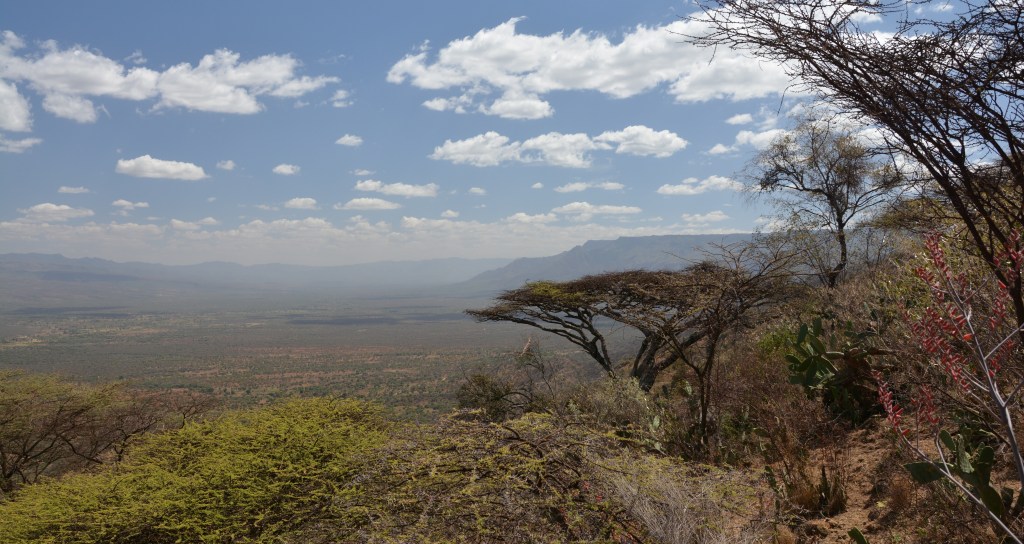
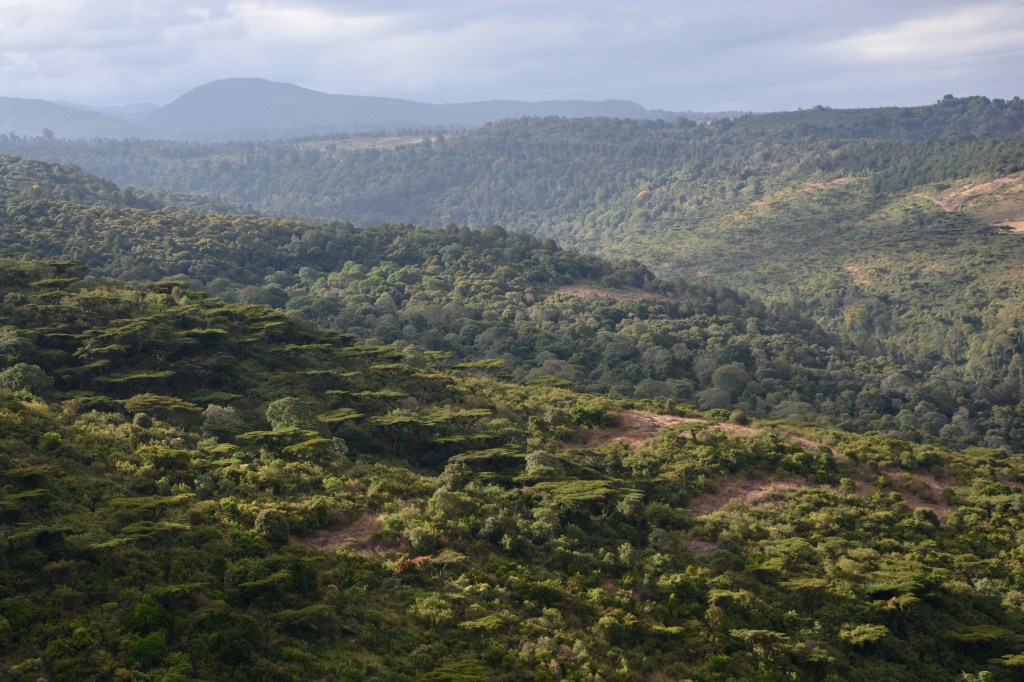
It’s chilly up there, even in the searing sun beneath a vast dome of uninterrupted azure sky. I’m chilled, riding at altitudes around 2500 metres, sometimes above, where the air is cool on my chest. The valley below simmers in the heat of its depths, so far below, where the landscape spreads in endless bush lands. I am only half a degree from the Equator. Then, after the high town of Iten, where many international athletes train at its altitude, the road plunges down the side of the Rift, starting with an almost laughably theatrical reveal as I turn the corner out of the untidy commercial town. Suddenly the Rift explodes dramatically ahead and below as I start down the edge of the escarpment in a series of tight loops. I vividly remember the moment I first saw this thrilling reveal twenty years ago, on my first bike journey in East Africa. The temperature rises for every metre I descend. Down the bottom, another fifteen kilometres ahead, the warmth is dramatic. But my destination is only 500 feet or so down the escarpment, on the long narrow plateau that forms the villages of Kessup and its satellite communities. It’s like a big green step in the landscape, the vast valley as a constant backdrop, hazed by distance and heat. 

The Kessup plateau

I first stopped at the Lelin Campsite at the start of my earliest journey in Kenya with my Mosquito. Rico had recommended a road I would enjoy, the one I can gaze down on from my ‘banda’ at Lelin – my room on the edge of the world. Rico knows the rides I relish and suggested the steep track down into the Kerio Valley – an arm at the side of the Great Rift – and the white dust and rock road along its floor. I was new to my small motorbike then and unaccustomed to distances that looked so insignificant on my map of this large country. I slithered down the steep curling dust over 3000 feet into the valley, the escarpment looming above to my left. Then, at the bottom, I turned right, south, and bounced through the bush lands on a remote trail. Habitation was thin and the bush dry and hot. In the only small, remote village I stopped for refreshment – the last time I drank Coca Cola: the ONLY refreshment available there. I didn’t yet know to ask for sweet milky chai, far more energising and healthier (and so much more morally justifiable than supporting the multinational corporation that has done so much to damage the health of most of the world in pursuit of vast profit). If I’d known that I still had fifty miles to slip and bounce to the tar road, I’d perhaps have stopped at the basic hotel in that village, Arror. But I assumed that fifteen miles or so would bring me back to civilisation with a wider choice of accommodation. When at last I reached the junction I felt like giving the tar a Papal kiss. I was exhausted. I rode back up the curling road looking for a place to stay. Which is how I found the campsite at Lelin. It’s a bit of a misnomer, as I hardly ever see anyone camping there. It serves the local community as a place for outings, and relatively few guests enjoy the self contained rooms with a huge view across the valley. Next morning the then manager introduced me to William, a neighbour to the guest house, retired from the police in Nairobi after a serious attack by a criminal with a machete that shocked him so much that, lying in hospital with a possible brain operation looming, he decided to return to his humble shamba at Kessup, his home village. Sometimes he worked as a guide for the few mzungu tourists who stopped at Lelin. “So, shall we walk to the waterfalls?” he asked. “I’m not very interested in waterfalls,” I demurred, “I’d rather walk in the villages and meet your neighbours!”

And so I became, first ‘William’s Mzungu’ and then ‘Kessup’s Mzungu’. 

Ivana

“Jambo!” people call cheerfully, giving me a fist bump, the Covid greeting that has been universally adopted from the previous acknowledgement of the youth. Voices of children cry, “Eh! Mzungu!” lost amongst fields and vegetation, running to greet and follow me like the Pied Piper, laughing self-consciously as they joke and jest shyly behind us. Rills ripple and worry down from the wooded escarpment rising almost sheer above us, water that brings life and green richness to this agricultural plateau. Water gurgles and fizzes from breaks in the many snaking plastic pipes that feed homes and locally made sprinklers in small fields wrought laboriously from the hilly terrain by generations of Kessupians. This is the planting season and there are small seedbeds of brilliant green as we walk, people bending and planting expanses of young onions on terraces distorted by the rocky landscape. “We will harvest in about two and a half months,” says Robert, bending all day long over his small earthy steps of onion seedlings. 

As well as Kessup’s Mzungu, I have become Kessup’s photographer, with now hundreds of portraits of the people hereabouts. William clutches a small folder of photos that we distribute from last winter’s journey. And Robert and his handsome, happy family want to join the rolls, many of them on my walls at home. “I need some shade!” I say, for photos of black faces in this high-overhead bright sunshine make only silhouettes. So we repair to the family homestead below the red dirt track that winds through their small fields. It’s a typical home of rough boards and zinc sheets, dusty and rusty. There’s some fine stonework too, sharp-edged volcanic rocks, black and purple, with grimy (very photogenic as backgrounds) doors and metal framed windows that sport no glass. Many houses here are constructed from red mud plastered on sticks, the local vernacular. There aren’t many possessions or comforts inside, just the basics for life here – some foam-cushioned wooden settees, low tables, religious posters, simple crockery. Cooking is done outside, on charcoal or sticks and the crockery, cutlery, pots and pans drain on a stick platform in the yard. A clutch of banana trees gives a little shade. I am made very welcome and offers of chai come quickly. But we drink local water from chipped enamel mugs. It’s untreated, but clean and tasty. Later, we return here and eat some kitere – local beans and maize that serves most here as lunch. Now, the family lines up, laughing for my photos. “You have to smile for me,” I joke. They all begin to laugh, for Robert is my first subject. “Oh, he won’t smile!” says his wife Zedi. “He has no teeth!” Everyone breaks in peals of laughter at the joke, and I tell them that I have all-metal teeth, smiling widely to show my implants. “Oh, you must tell us how to do that!” says Zedi, but for the price of my teeth, I could probably purchase much of this village. My privilege… 

They’re a nice looking family, poor Robert’s teeth notwithstanding. Young Kevin, 15 years, smart and respectful but questioning, makes a lovely photo, and wants a photo with the old mzungu too. The family has wide-spaced, almond-shaped eyes and the customary bright smiles. They laugh and joke, and William is well practiced at parrying the jests and easing my way into these warm family gatherings. We’ve done this many many times on these slopes. We order 50 bobs’ worth (about 35p) of black nightshade, a rich dark green vegetable leaf that I like. We’ll call on the way back and collect a bulging bag, freshly picked from the dry fields, to take back to the cook at the campsite for our supper. 

Kevin
With Kevin

William is known everywhere about the plateau. He was born here 55 years ago. All his extended family lives hereabouts and he is related by distant convolutions to many. His father has two wives and relations are complex. A boda-boda stops and William greets the rider, his cousin, he tells me. As the motorbike with its rider and three passengers moves on along the rocky red track, I ask William his cousin’s name. “Oh, I don’t know!” he hesitates, chuckling. “He’s the son of a half sister by my father’s other wife… I can’t remember!” 

William’s unknown cousin and passengers
Mama Tabitha and family

Mama Tabitha has a new baby. The baby, Jaden, is the great granddaughter of Rongei, whom I have photographed these past couple of years. But Rongei died in late November, shortly after Jaden was born. Rongei was 92 or 93. Latterly unable to walk unaided, he lived in a small mud house, looked after by his grandchildren in shambas nearby. It’s one of my photos the family used for the funeral leaflets, something that happened many times at Navrongo funerals in Ghana over the years too. Sadly, in the photo I brought back this year of the late Rongei, I managed to elicit a small smile from the old man, who was accustomed to pose formally for his rare pictures. William encouraged him in February to smile for the mzungu, who had brought him a small twist of chewing tobacco. 

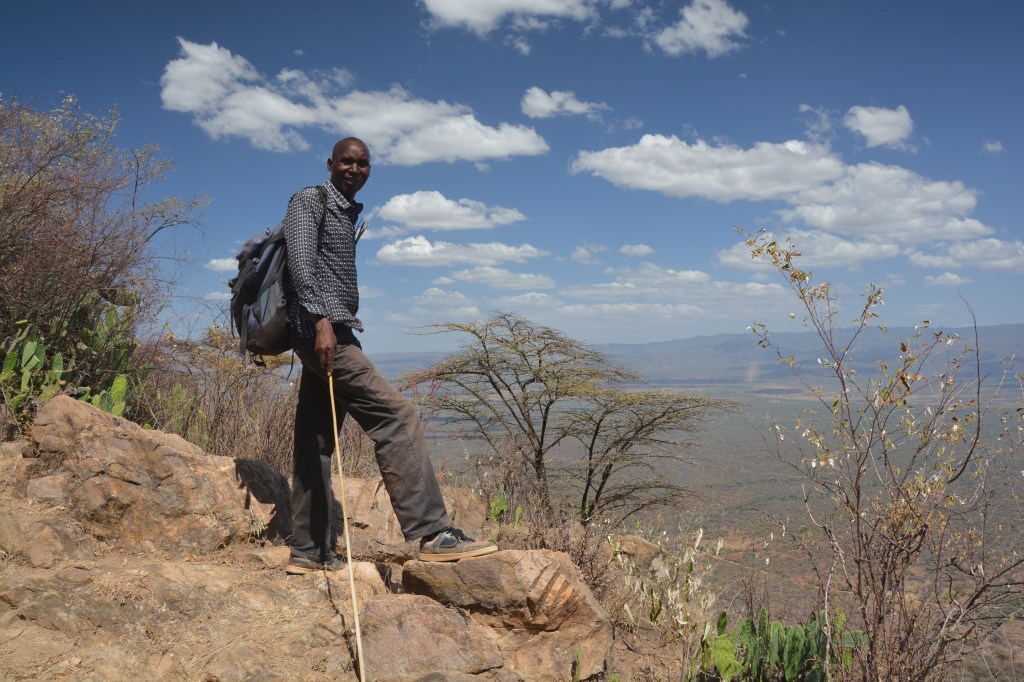
William

We walk thus for three or four hours, meandering the red tracks winding across the low hills of the plateau, the plunging valley always away to our east. Meeting and greeting. There’s a precious breeze rising up the slopes, tempering the heat of the sun, but I can feel the tips of my ears reddening and becoming sensitive again. I’m wearing an ugly cap to protect the top of my head but I need a pint of water to regain my flagging energy. It’s like magic. Suddenly all interest is renewed and the spring back in my step. For I love this activity. It’s largely what brings me to Africa so often: meeting such warmly welcoming people and investigating their lives. 

Now it’s time for William and I to repair to The Rock, a bar set in lovely gardens amongst vast boulders that have plunged down the steep mountainside, most of them back in times immemorial. But there is one, the size of a family car, embedded in one of the rental rooms at the back of the terrace, from two years ago. Bright magenta bougainvillea spreads over some of the trees, backed by the dense dark green of the conifers clinging to the cliffs above. It’s very beautiful, all this luxurious growth amongst the giant rocks and green lawns. We drink a Tusker or Guinness, and chat to William’s friend, the local vet, who rides his Chinese motorbike about the whole region. I tell him how expensive is his calling in Europe, mainly tending to pampered pets at huge expense. He laughs at the very concept of pet insurance. “Wow! It’s BIG business!” I assure him. His trade is more down to earth, keeping alive and healthy the cattle and domestic wealth of the small-time farmers everywhere. He has no permanent clinic with nurses and fancy operating theatres to treat illness in pet dogs and cats. That’s Western luxury. “Here’s the tools of my trade!” he laughs, holding up a leather holdall as he mounts his 100cc Boxer motorbike to attend to more chickens and cows. “We’ll meet again!” he promises as he rides away. 

A new hen house

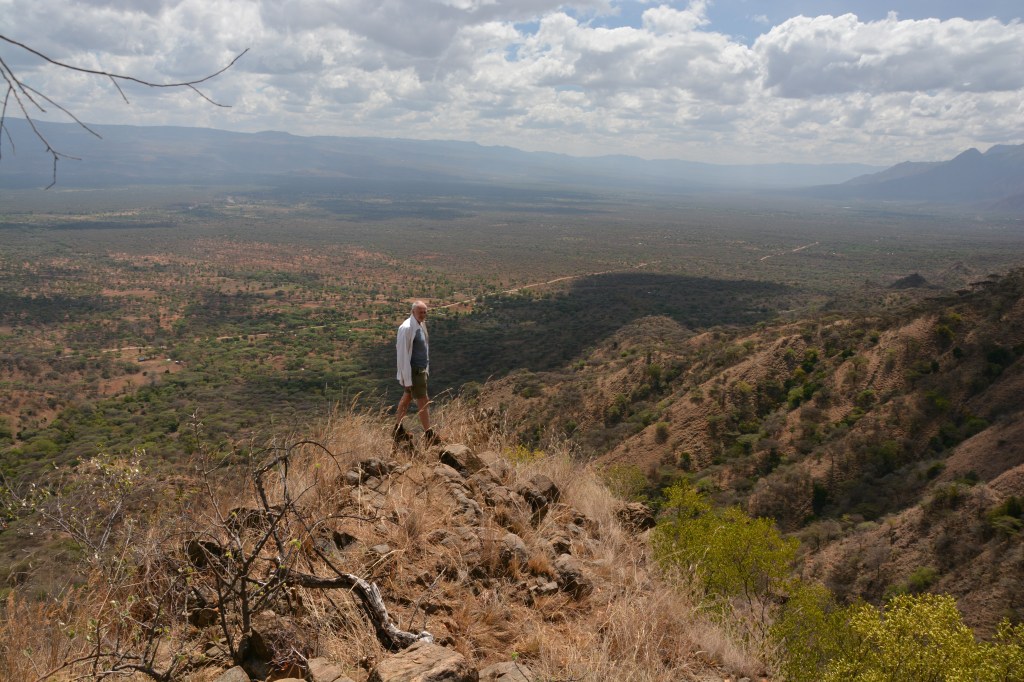
We return to the guest house to rest for a couple of hours. “I will water my cows and come at 5.30.” William is a compulsive time-keeper. “In the police, they LIKED me for my time and organisation!” He was in the Nairobi flying squad. I know he will be at my door within minutes of the time he says. Later, we sit at a plastic table overlooking the enormous view into the valley. Elephants roam in a small reserve down there. There’s a green weed-filled lake that puddles in the middle of the bush-filled expanse on the flat valley floor. A range of mountains rises at the other side of this side-valley of the Great Rift; they’re perhaps fifteen miles away. As darkness falls, the valley takes on mysterious dark depths, just a few lights, probably small fires and an occasional boda-boda headlight glinting on the one dusty white road that snakes the length of the valley. It’s the one where I fell off my Mosquito, laughing as I was helped off a sandbank onto which I had reclined, my foot under the pannier bag when my rear wheel shook loose, that day I discovered Kessup. 

Now a fabulous full moon soars magnificently from behind those distant dark mountains and climbs into the enormity of the equatorial African sky, beaming brilliance onto our supper of Zedi’s black nightshade, and ughali – the dry maize flour mash that forms the basis of most East African diets – and some surprisingly tender goat meat. The young cook knows his trade this year. William, as usual, eschews the vegetables: “Why should I eat vegetable? I live on vegetable!” He gets much less chance to eat meat, so he takes the lion’s share of that while I eat a whole dish of black nightshade, the rich spinach-like chopped greens, with slivers of tomato and onion. 

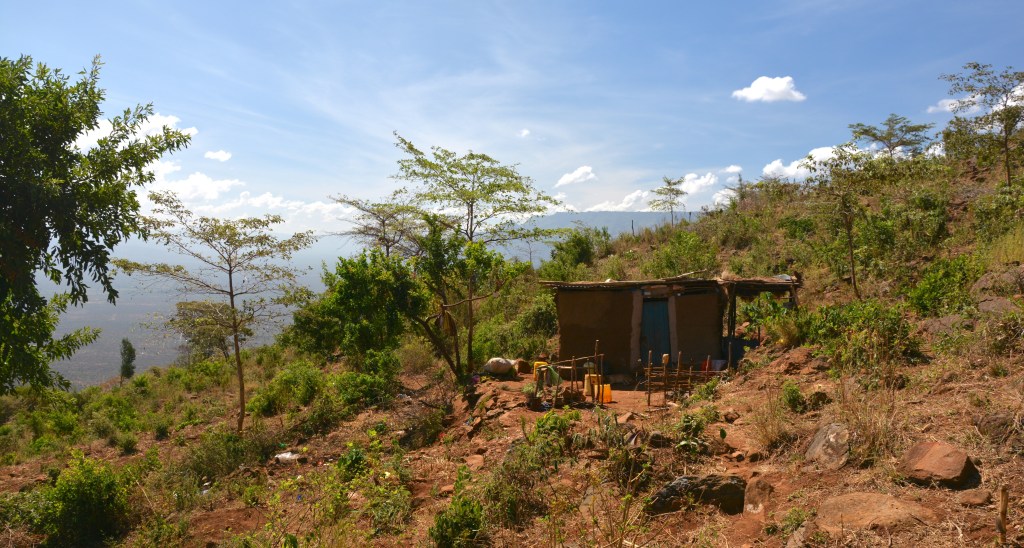
William managed to raise the considerable money and papers to allow his daughter, Lydia, to study nursing in Australia. Now she is sending money from her student nurse’s salary to build William a proper house to replace the crooked timber shack in which he lives. “Next year, when you come, you won’t need to pay Lelin,” he assures me. “You will be guest in my house. We will take our beers at Lelin, or maybe on the terrace of my house. It will be complete then, God willing. I’m a Catholic, you know!” He always adds this in deference to my lack of belief – we’re both quite comfortable about that. 

*

On the morning of the last day of the grim year of 2020, I ride back to Kitale. From a pharmacist in Iten, the ragged town at the top of the escarpment – Kessup’s ‘big city’, I hear that the new road is now completed, through the village of Moiben to Kachibora on the Kitale road. I once tried to come this way before the road was built, and got comprehensively lost in muddy field tracks. I’ve tried various routes home, with varying success. Some have been wonderful bumpy rides on the old rough trails, but today’s ride is fine. It’s a sweeping Chinese road, with no traffic at all, spinning through lovely scenery, curling over hills, with bends to make a motorcyclist smile – but it’d be better with another 200ccs, I must admit. Still, it’s a memorable ride, even if I don’t really know where it’s taking me and I realise, half way along the 80-odd kilometres, that I have put my trust in a random pharmacist in Iten. I know better than to put faith in a single informant. Usually I ask a series of boda-boda riders, for they use these local routes. It’s no use in Africa to ask a non-driver for directions. People will tell you what they think you’d like to know… I’ve learned the hard way. 

But eventually I recognise Kapcherop, a small regional town through which I struggled on broken dirt roads some three years ago. I know now that I will descend to the main road back to Kitale. And I sweep down the bends that replace the rutted trail I used before, and emerge in the chaos of the small roadside mess of traffic, boda-bodas, jostling matatu minibuses, market traders’ stalls, scruffy lock-up shops with obtuse biblical names, cows, goats, and noise that is Kachibora. I’ve another forty kilometres or so back to Kitale. 

*

Adelight’s having her hair done at a salon for New Year. I’ve three missed calls on my phone. She wants to liaise on our plans for the evening. But the line is bad, a lot of background noise from the town. She says the car is opposite Best Lady, a bright pink emporium of make up, hair braids and glittery confections. I wait. And wait. I’ve parked the motorbike amongst boda-boda riders, always friendly to me, admiring my ‘big’ piki-piki (all 200ccs of it). Finally, she comes and I say I’ll head to the supermarket, agreeing what I shall contribute to the evening: a bottle of wine, a bottle of not-bad champagne (£8.50), beer for Rico and I, a block of local ‘Cheddar’ cheese – expensive here at about £10 for a half kilo, some more peanut butter and honey. My bill is about £45. It’s bedlam in the Indian supermarket. Why, on such a busy day, in aisles too narrow for comfort, does everyone indulge their small children to push their trolleys? People stop and chatter in throngs, amble the narrow ways and debate long over small purchases. Outside, it’s not much better. The steps are crowded with traders, a woman carries – or tries to – a folded double foam mattress through the mess of people conversing, selling tomatoes, greeting and chatting; begging street boys sniff plastic bottles of diesel mixed with glue, brains half-gone; security men watch the cheats and traders; women sell phone time scratch cards beneath dangerously spiked umbrellas, tannoys screeching tinny advertisements over and over; boda-bodas jostle, heavily overloaded; driver discipline is scant, everyone just wants to get ahead. 

I’m happy to get back on my Mosquito and take the back way home: a rutted dirt road that exits town avoiding traffic and police check posts, where few other vehicles bother to go. I seldom use the tar road now. I’ve ridden over 100miles today, senses alert as they must be here, for ill-disciplined traffic; wandering cows, goats and sheep; creeping, smoking antique trucks; mad matatu drivers desperate for a fare, and the ever-irritating boda-bodas that clog the roads. 

*

Adelight does a huge wash with Shamilla and Maria
…and no washing machine

So, back to the kitchen-chatter and cheer of the family. We’ve spent the past few New Years’ Eves together, but this year there are no celebrations at the Kitale Club – everyone has to party at home. I’ve promised the bottle of champagne. Adelight says she’s never tasted it, so it’s something to make the evening special. We decide over supper – pizzas with very tasty tomatoes I’ve brought from Kessup, where I sponsored William to buy the seeds earlier in the year to occupy his lockdown time usefully and make some income – to make New Year at 10.30. A sensible decision that omits that long dragging wait for midnight. “After all, it’s midnight for someone!” says Adelight logically. “Some people are already in 2021!”

I don’t think anyone’s very impressed by the champagne really, but the cork ricochetting off the ceiling and the novelty is fun for everyone. We take a family photo and make toasts to a better year than the one to which we are saying a thankful farewell. We toast the members of the family dispersed around the country, and Faith in distant Berlin. Then, happily, it’s time for bed. Let 2021 bring what it will, I suppose. It can’t be much worse for anyone than 2020. 

A toast to 2021
cynthia and Sharon
Clouds roll in, in the Kerio Valley
Cynthia