EPISODE FIVE – February 6th to 21st 2024

TWO WEEKS IN UGANDA, WORKING LIKE A SLAVE. I LEAVE THE GATES OF THE COMPOUND TWICE. I BECOME BUILDER, ELECTRICIAN, PLUMBER, DECORATOR, AND (I hope) WISE OLD TRAVELLER BY THE FIRE PIT AT NIGHT. ELIO, THE FRIENDLIEST COW IN AFRICA DISAPPOINTS US.

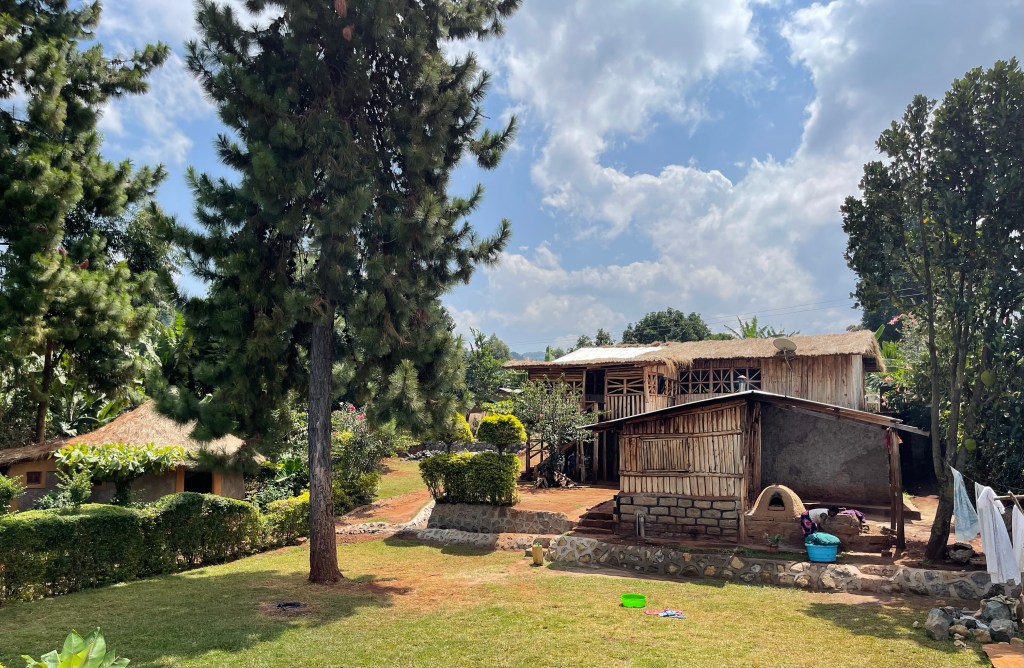
Rock Gardens, the three round rooms

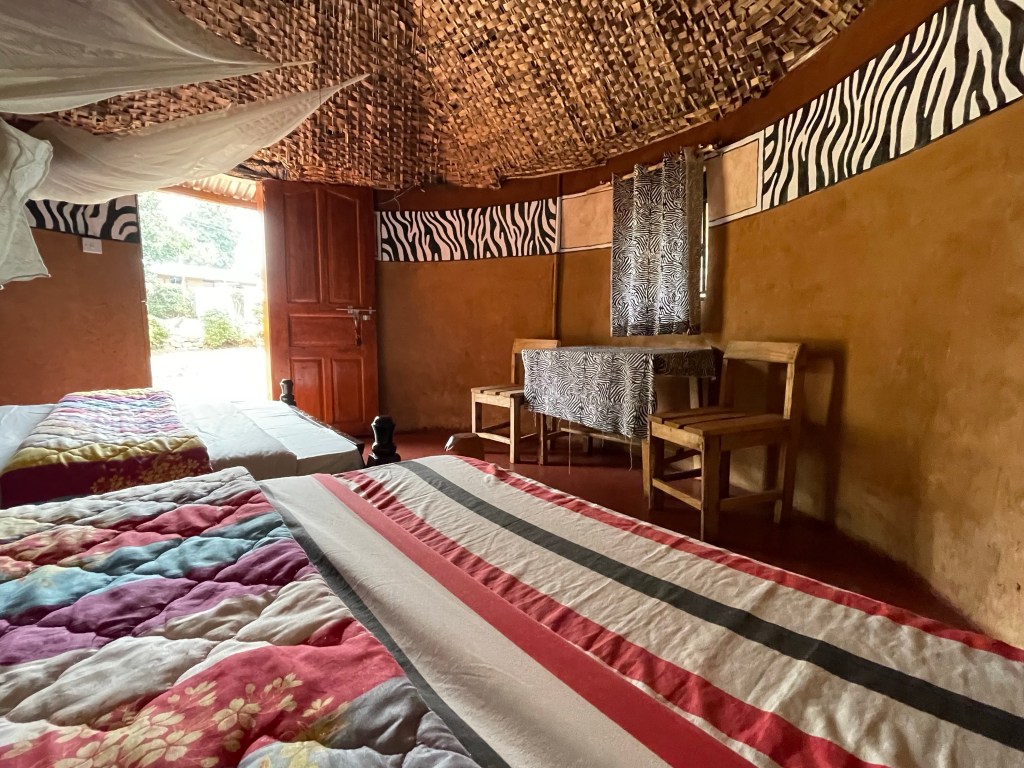
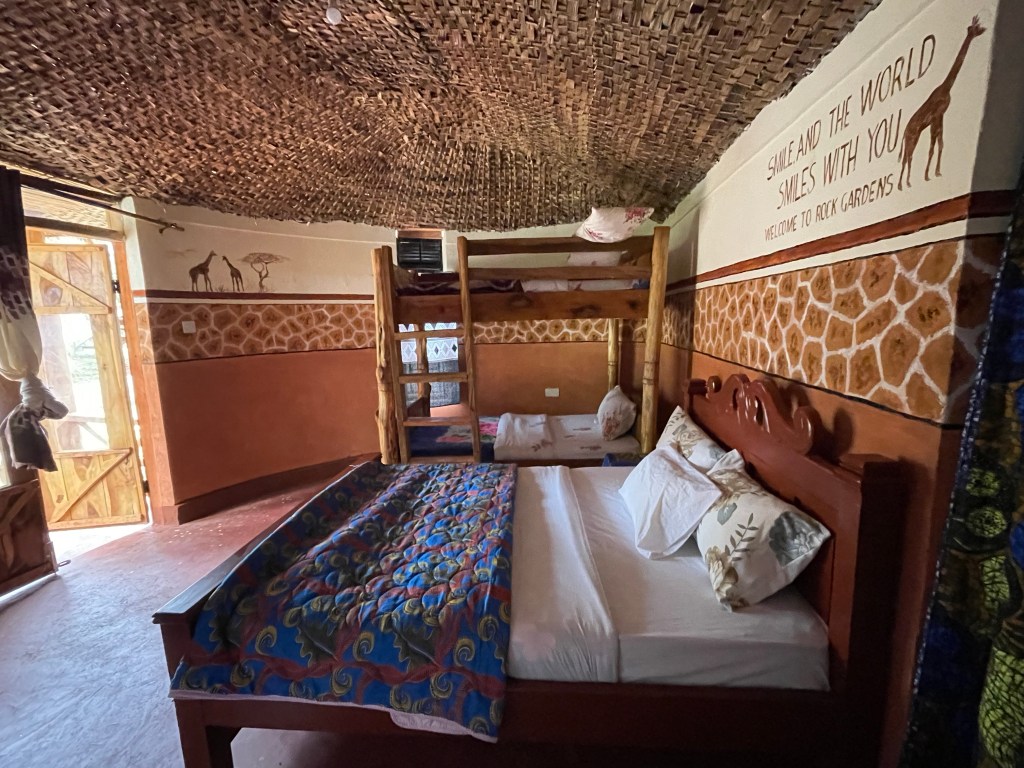
Painting the stripes of a zebra’s bum on the walls of the new round house at Rock Gardens, it struck me that I have built the sort of guest house for which I’ve always searched in my travels! Funny, that.

Keilah by the fire pit
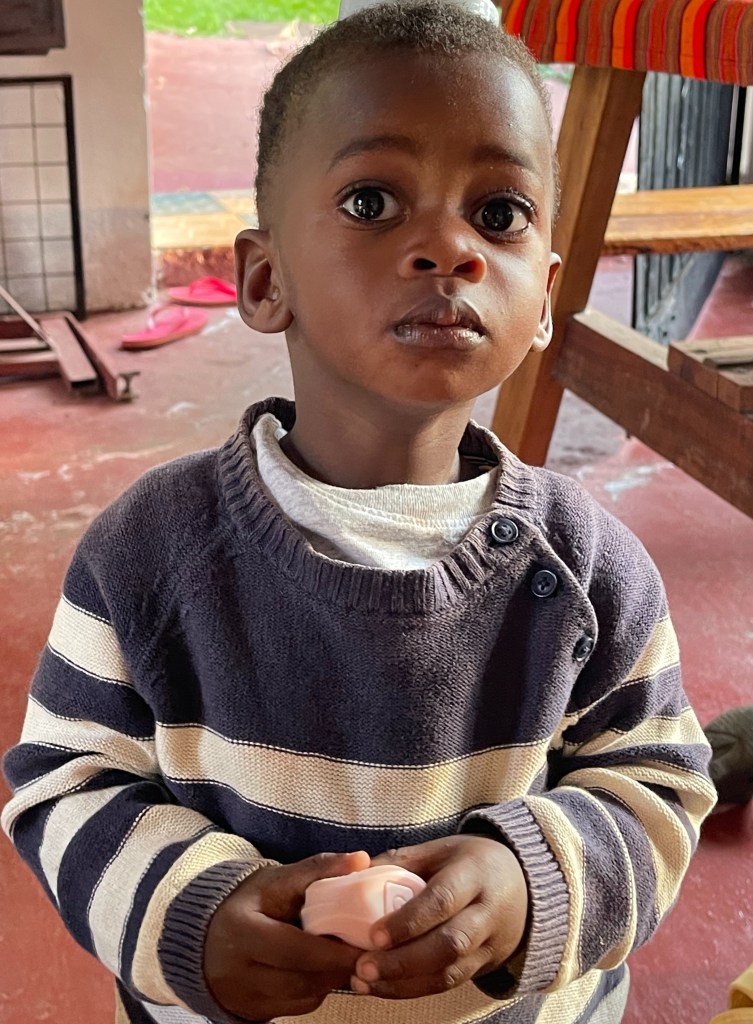
Jonathan Junior by the fire pit

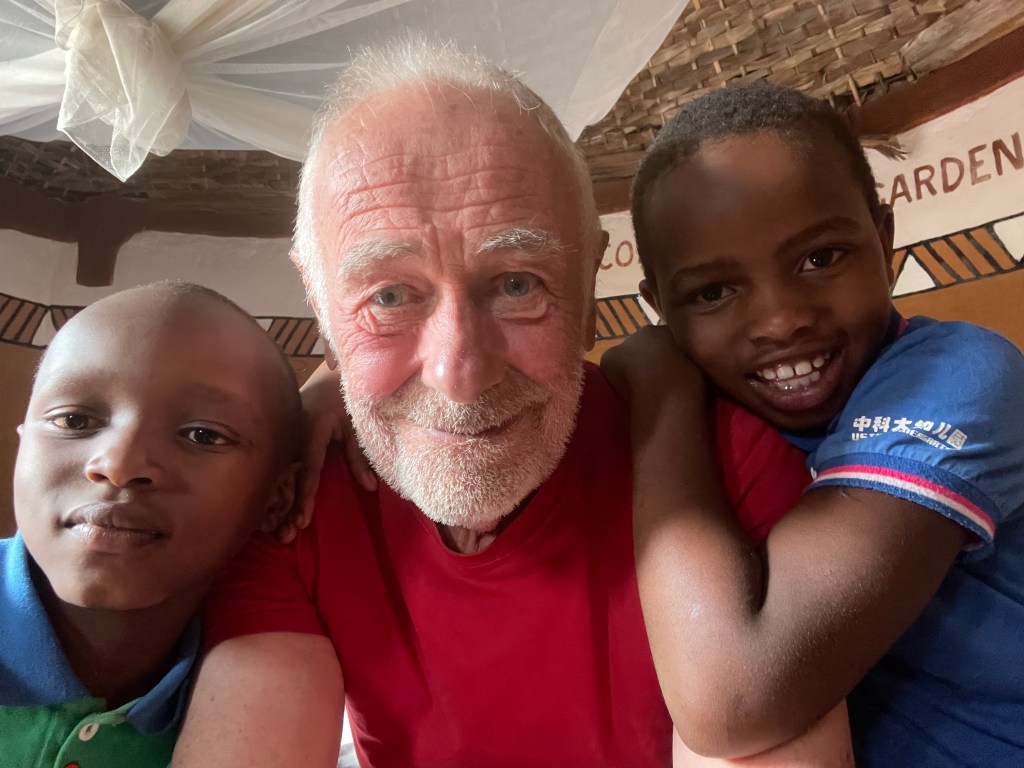
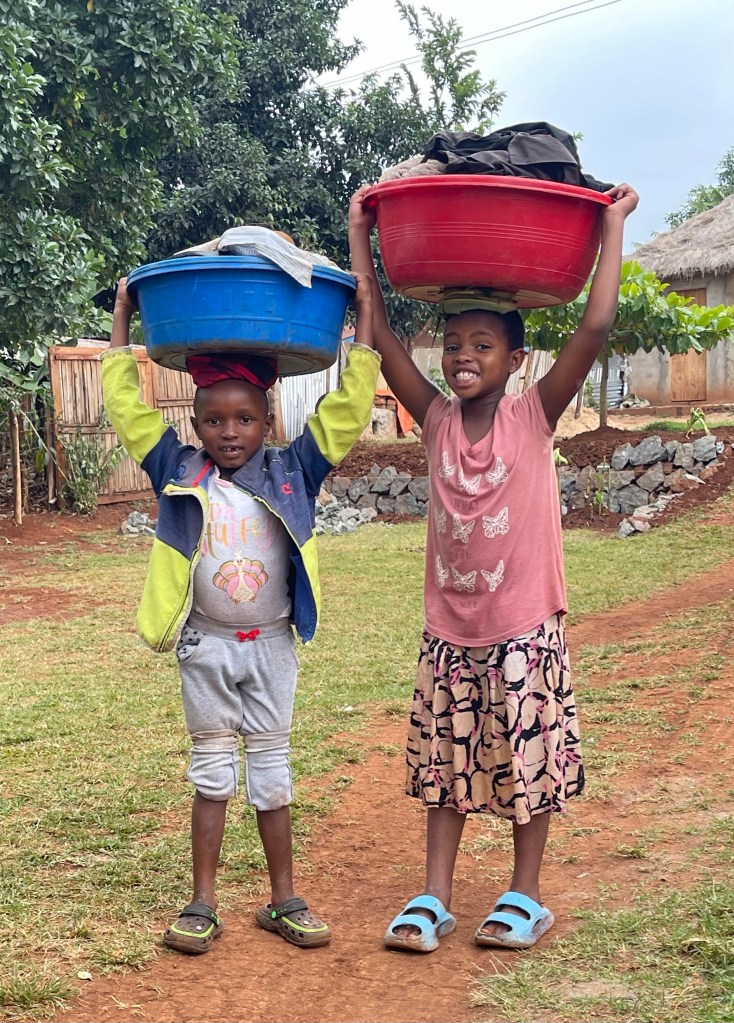
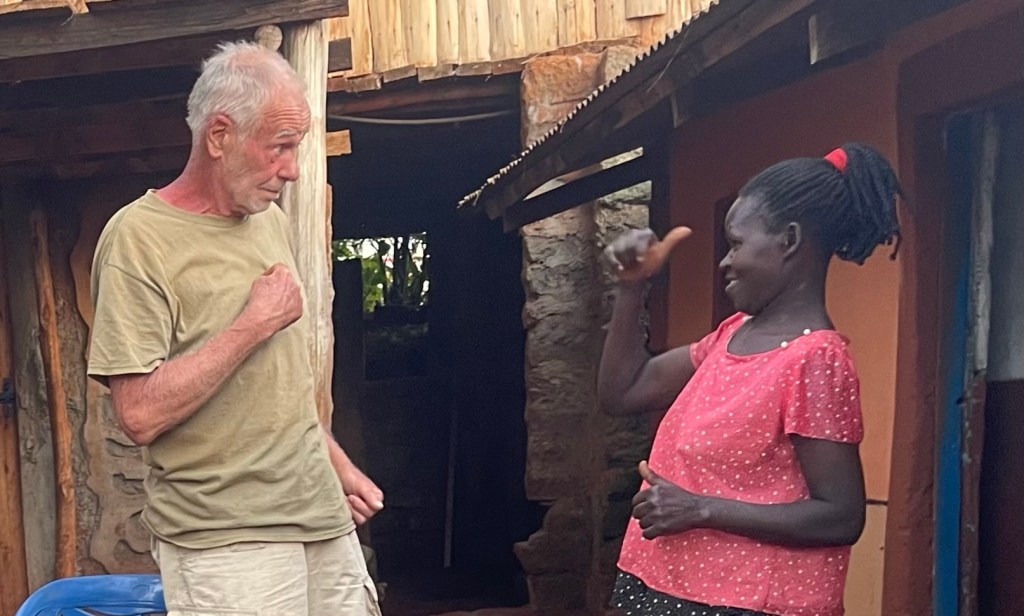
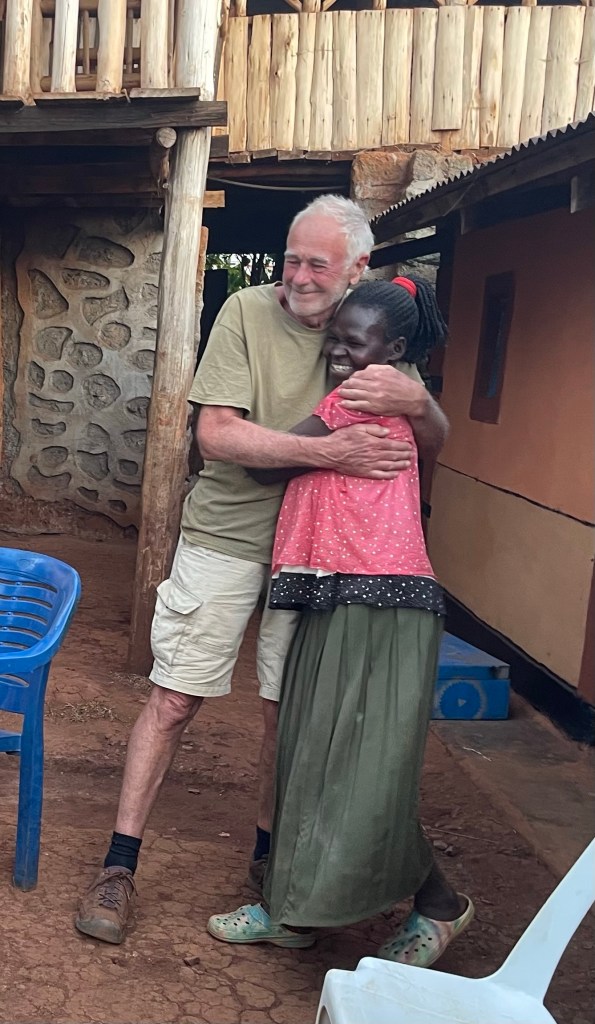
This journey has been different to many others. I’ve concentrated on my African families and travelled independently for only a few days. As the families become an increasing influence in my life, it’s fitting that I spend more time in theirs. And my surrogate grandchildren have become a joy of my journeys here. Funny that in my childless life, I should come to love these two so well in my dotage! Haha. Maybe that’s what happens with age? None of us know, until it begins to hit us, just how to handle old age, that’s a fact of life. We never listen to older people’s experience, always thinking age is something that happens to others. Then up it creeps. Suddenly you realise that the image others have of you, is not at all how you see yourself. I remember my mother telling me she could be shocked to see an old woman reflected in shop windows and it’d bring her up sharp to see what others saw. But did I ever think it’d happen to me? No, of course not. Old age happens to others! But now I am called the ‘mzee’ (old man) and must adapt reluctantly to the fact I am no longer seen as a youth.

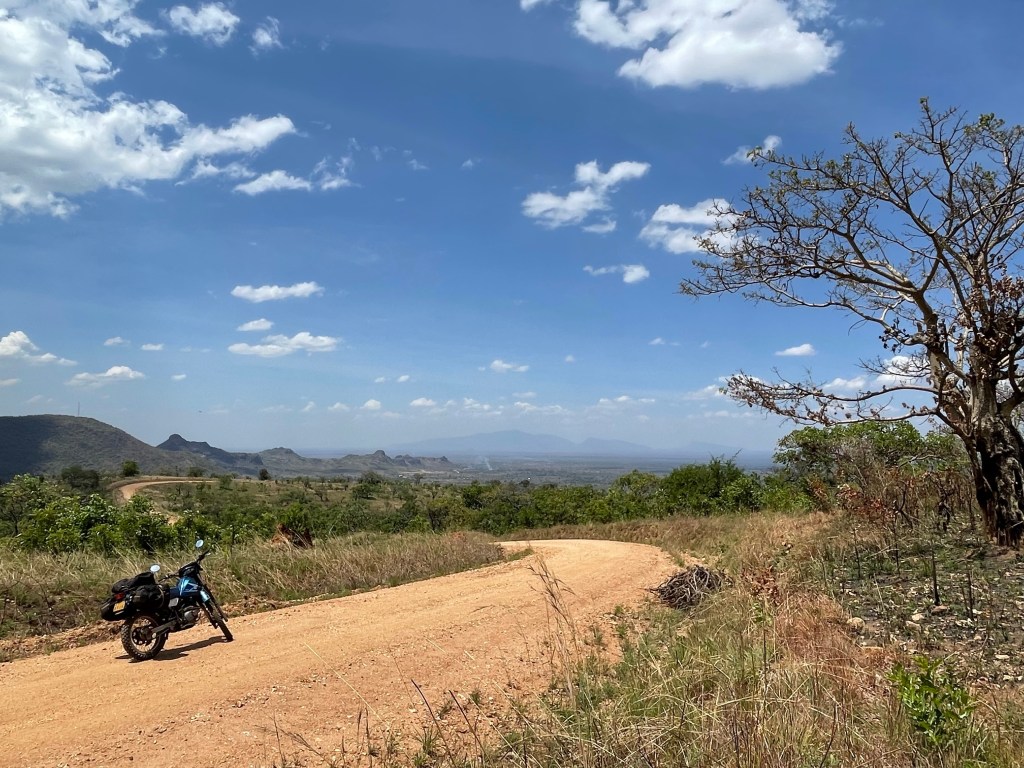
Oh well, it’s only vanity. And I can still throw my leg over the (quite high) seat of my blue Mosquito and roar off into the African hills with some aplomb and a good deal of energy. I can still dance about on my footpegs and fling the little bike round the Chinese bends on the mountain roads. I can still be plumber, builder, painter, joiner and instigator of guest houses in rural Uganda! I can paint zebra’s arses on the walls of my grandchildren’s guest house in the hope of making that family independent in the collapsed economy of Uganda.

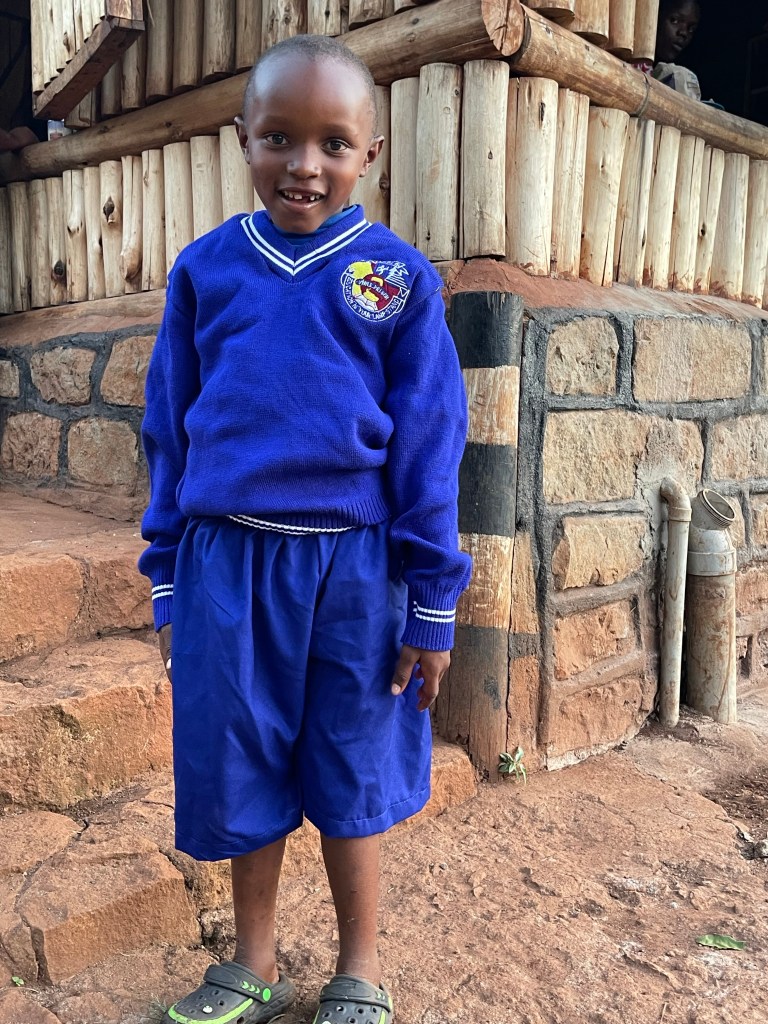
JB’s school tee shirt is embroidered, ‘Cheptai Bean J’!

***
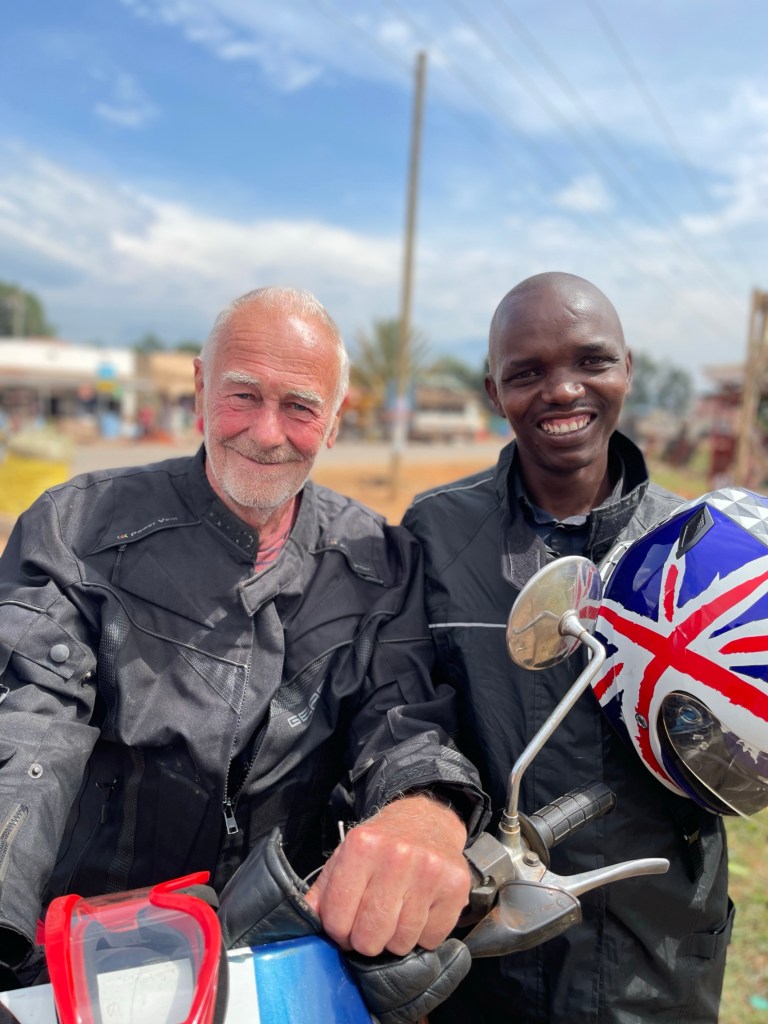
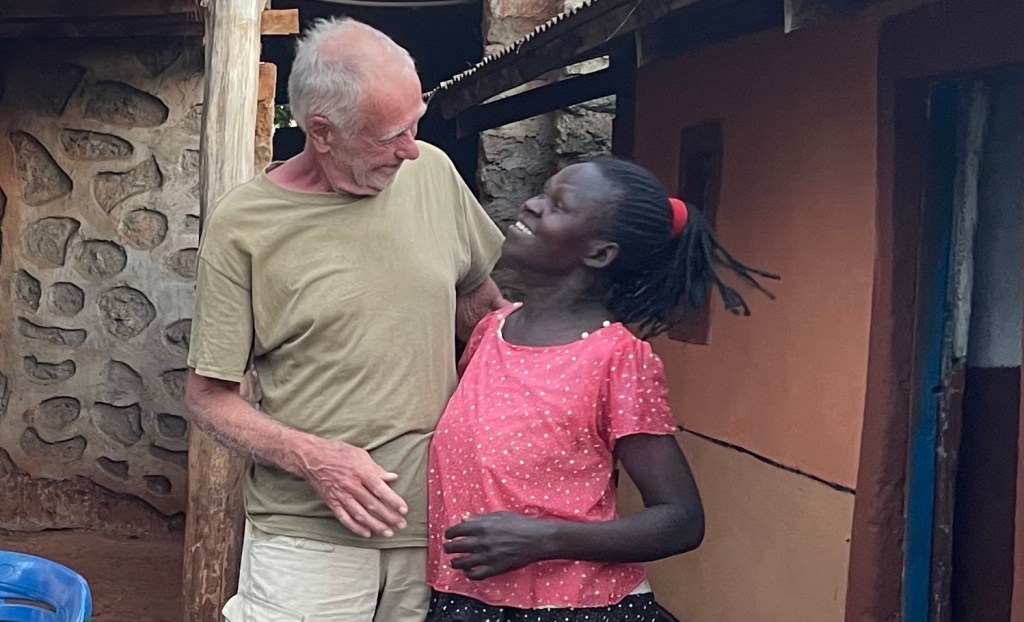
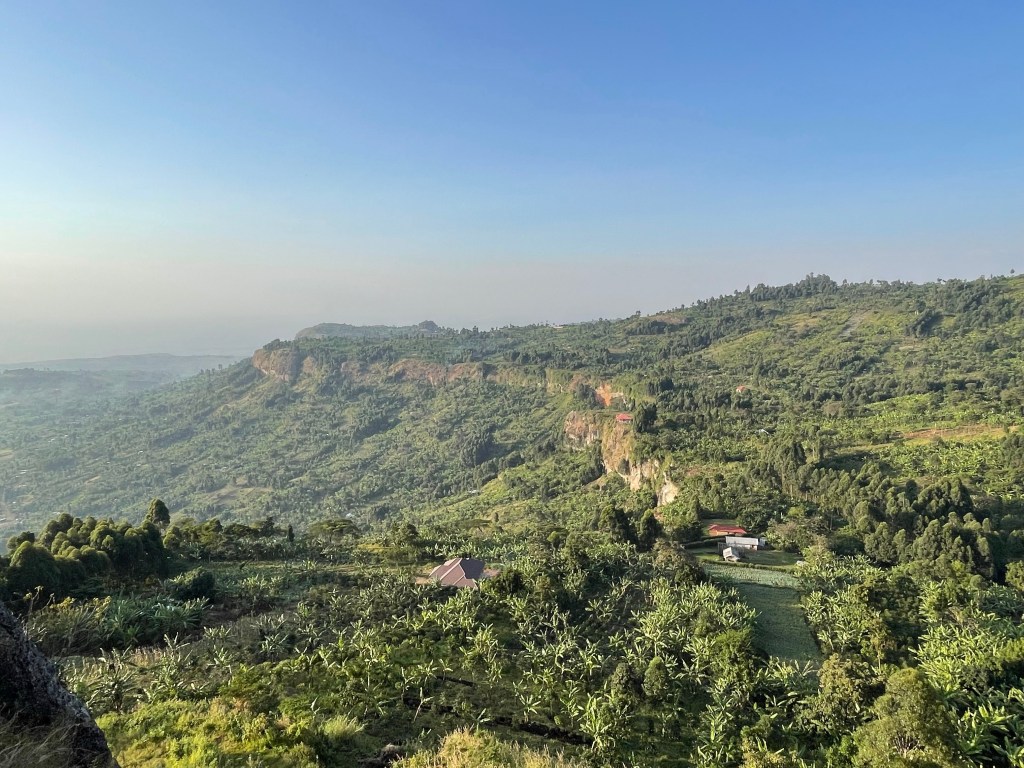
So why am I painting zebra motifs on a Ugandan wall..? I’ve written often of how I met Alex and Precious six or seven years ago, managing a derelict guest house in Sipi, with not much to recommend it but a view across half Uganda. It’s still like that, despite huge investments – in ugly concrete construction by its new owners. It had, apart from the view, one asset: Alex as manager – a fact the current owners didn’t recognise.

Back then, Alex showed me his plot – bare but for a simple earth and stick house he’d built for his small family; just Keilah had been born then. He told me of his plans and ambitions – impossible dreams, more like – to construct his own guest house. With no capital. And I, perhaps foolishly, and certainly innocently, agreed to help – a bit, as I thought. We talked of plans: I told him he should try to attract visitors like me (!): overland travellers and people who wanted an individual ‘traditional’ family stay that they wouldn’t find elsewhere. We came up with the idea of round thatched houses, actually based on a house in which I have loved to stay in Lesotho. I sponsored the first ‘traditional’ house: ‘JB1’.

JB1, the first round room

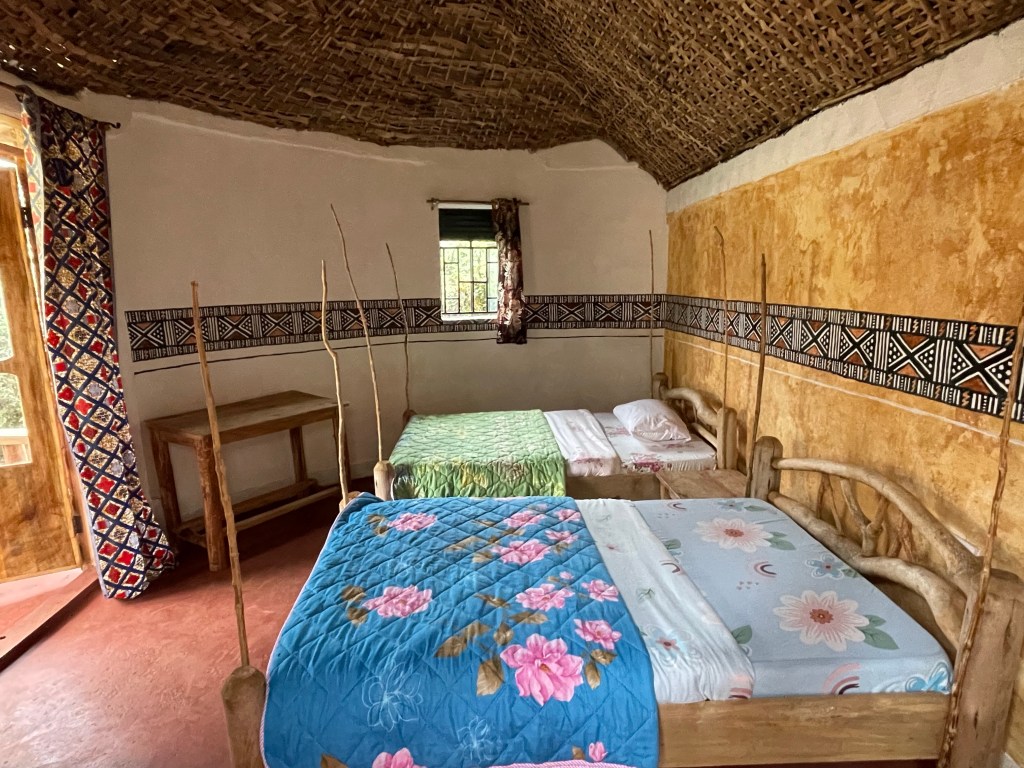
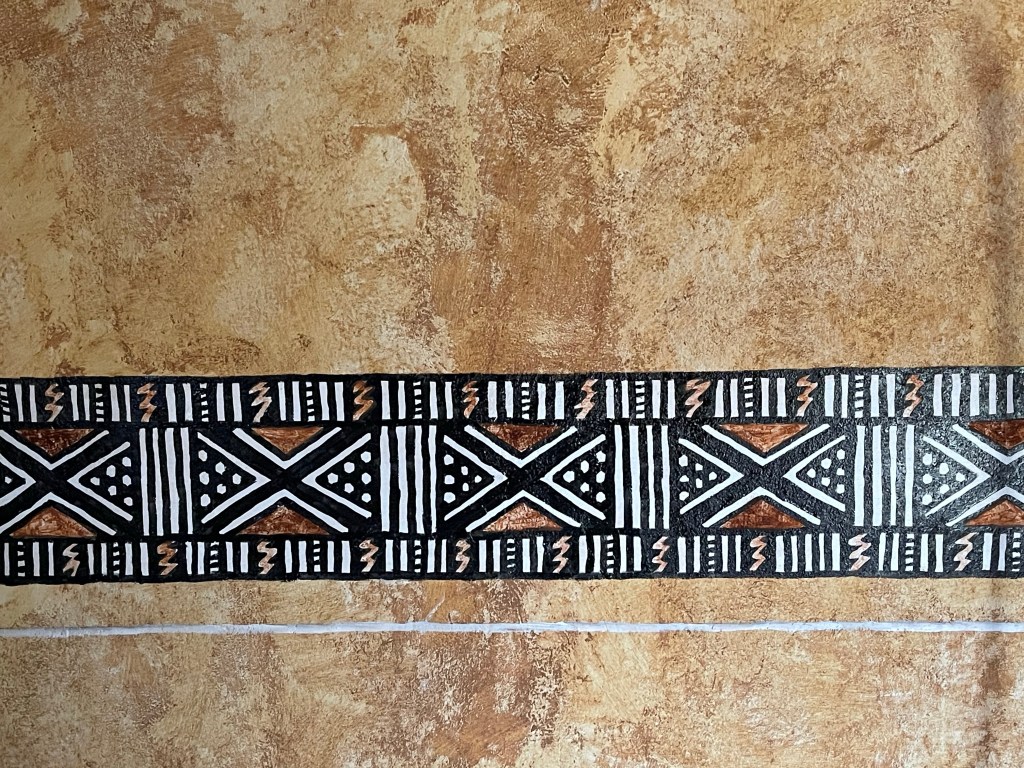
JB1 led to JB2, a smaller, neat rondavel with a thatched roof of pretty proportions. We had local beds made from tree poles, and I introduced the concept of paints made from local earth mixed with PVA and water. With this, we saved hundreds of my pounds, mining the soil within yards and by chance enhancing the feel of ‘traditional’ decoration, even if I invented it. We eschewed the horrible paint colours so common here, vibrant, unsympathetic hues used by the ubiquitous phone companies. Rock Gardens, named after my Rock Cottage, took on a look and feel of no other guest house in Sipi – itself a stop on the Uganda Tourist Trail, thanks to its tall waterfalls, mountainside situation and verdantly profuse greenery.

Famous for its falls, Sipi has become part of the Tourist Trail in Uganda

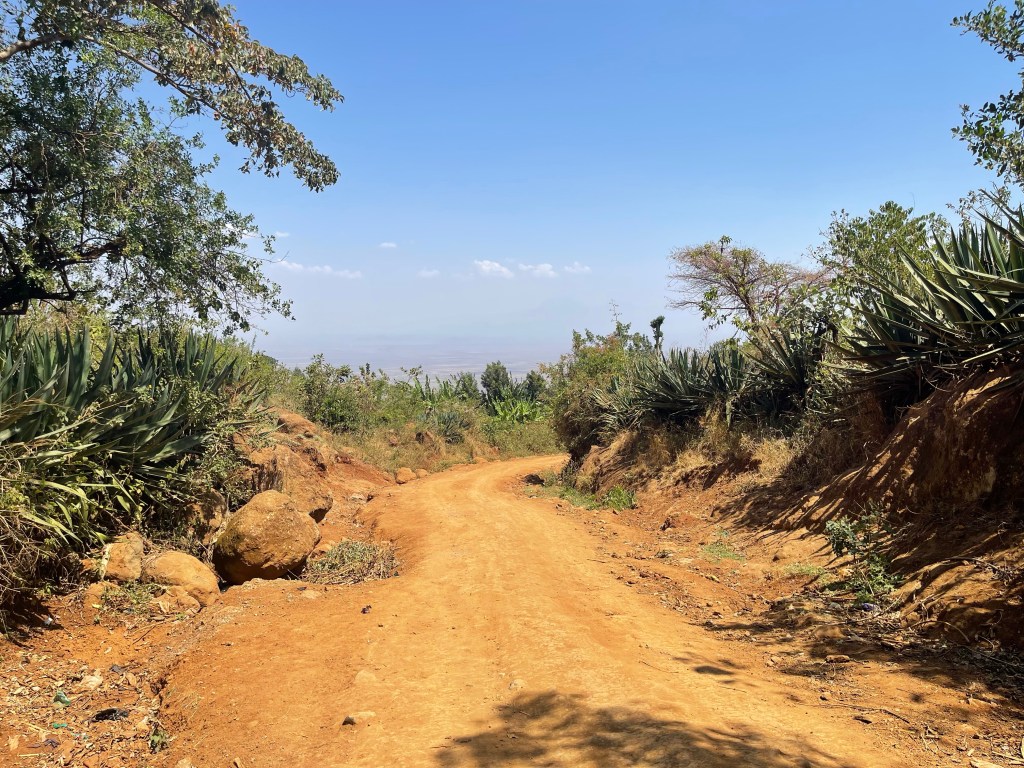
But the guests didn’t come… Well, we had a pandemic and the plot is a kilometre from the main road, up rutted and often muddy tracks. We had signposts painted. I made a brochure. Still no travellers found us. Alex remained confident, “Oh, visitors will come. You see!” I began to despair of my – now considerable – investment.

Then some of his colleagues – who now manage his booking system, on commission of course – put Rock Gardens on the unstoppable booking website (soon to extend to the moon, I suspect) that we all know but I can’t write, for fear of inevitable links invading your device as you read. And it went onto Google Maps as well. Suddenly, a bit before Christmas, the visitors started to arrive. This is the new tourism… It’s a concept with which, as I wrote last time, I am out of touch – and propose to remain so. New travellers have phones in hand – as indeed so many used to have their Lonely Planet guides in former days – and move from one place filled with people like themselves to the next. They read reviews and follow an increasingly deeply rutted trail of footprints around the ‘sights’ of foreign countries, leaving so much of what I enjoyed for 50 years – the serendipity of travel – out of their plans and thinking. It ends up, as with the old guide books, with so many staying amongst their compatriots at the expense of finding locals with whom to commune. Now it’s comparisons on phones instead. I, and most older travellers to whom I speak, are happy the world was so much larger and adventurous when we travelled it; brought more sense of achievement to succeed and cope with what chance threw at us.

Still, it’s bringing visitors to Rock Gardens, now the most popular guest house in Sipi, amongst a veritable plethora of competition. Alex and Precious are good at what they do, adding small extras, like greeting new guests with a couple of local bananas or sliced pineapple; bringing them free homemade passion juice and pots of tea as they sit in the gardens with their phones; bringing chairs for chatting guests. “It costs me almost nothing, but people remember…” says Alex wisely.

***
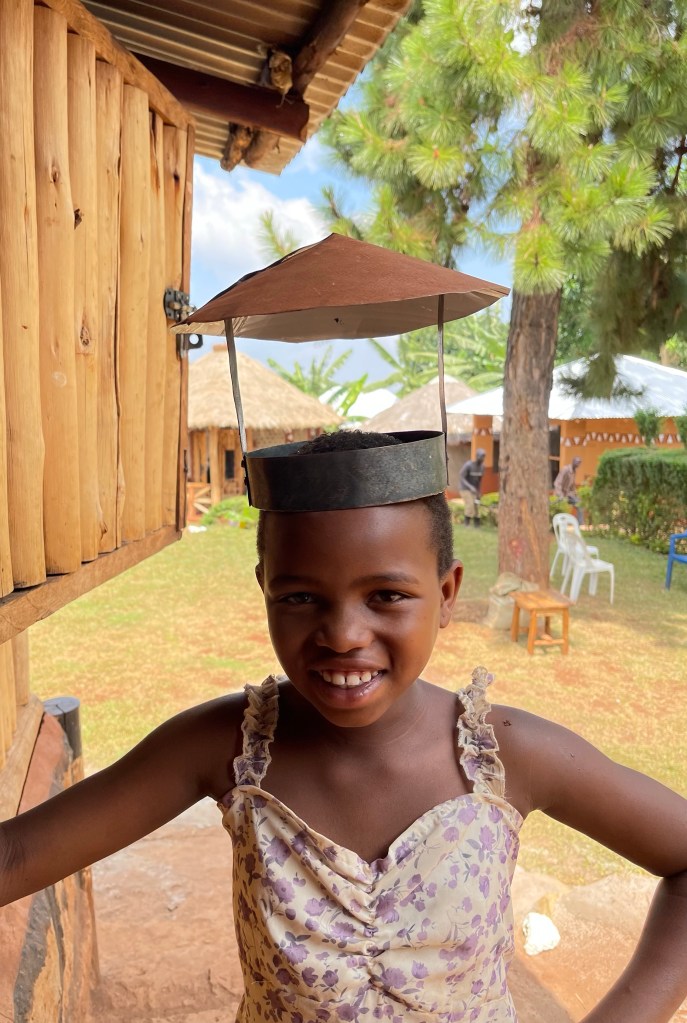
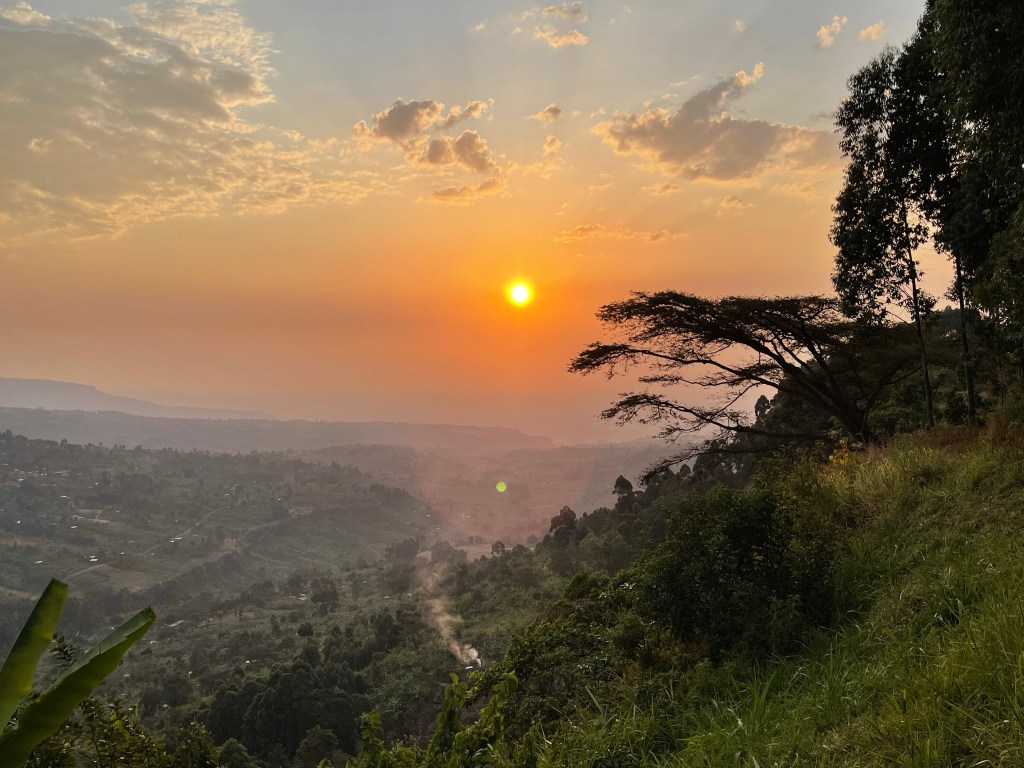
Sipi Falls – with artistic (?) license…

But how do you build and improve a guest house, with many rough edges that the visitors appear to disregard, while it’s full of guests? It’s not easy, I can attest! Much of the past two weeks, we have been firefighting, desperately slapping a coat of paint on bathroom walls even while visitors were approaching from Mbale, down the mountainsides. Uncle Jonathan has been smothered in paint, glue and dirt; becoming plumber, electrician and builder – being better at all than almost all the disinterested workmen in Sipi.

As I painted, I pondered the total lack of motivation and care – the prevalent work ethic in Sipi, probably indicative of most of this failing country. The workmen available, self-styled at their trades, come only to do the minimum and get a pathetic pay packet at the end of the day. They care not a jot for the quality of their work; they use copious amounts of materials without any economy; they create a godawful mess; do third rate – at best – work; fail to clean up before leaving – and then steal any tools they can lay their hands on. It’s depressing and disillusioning, and infinitely frustrating. I make a fuss: insist on cleaning the site, rail about low quality work, sack the ‘electrician’ who has no more than insulating tape for 240 volt connections and leaves two bare three inch copper strands hanging at child height without any protection – and leaves the site for the day. “Oh, take care, those wires are with electricity!” another worker tells me next morning, before I hit the roof, as Keilah and Jonathan almost electrocute themselves. “And don’t come back!” I yell at the irresponsible ‘electrician’, and proceed to turn off the power and fix the plug socket – to which the ‘electrician’ has lost the box screws, so I must tape it together… Later that day, the ‘electrician’ phones Alex pleading for more work. “Talk to the mzungu!” he replies with a private smile. Most workers don’t come for a second day when I am directing work!

Tradition’, totally invented

So, I’m wondering, as I slap brown earth paint on the walls of JB3, just why there’s this total lack of responsibility and commitment? Why the poor morality, the jealousy, the cheating and petty thievery, and the mild aggression, corruption and greed of this country, otherwise so friendly when commerce isn’t involved?

I decide it’s the inevitable result of lack of moral leadership. When you look up at your leaders and see cheating, lack of concern, arrogance, vanity, robbery (why call it corruption?) and nepotism, why would you think integrity, honesty and compassion pay off? The message and lesson is that only cheating your fellow moves you forward. Thus greed and jealousy, graft and petty crime appear excused and become accepted behaviour, such that honesty and compassion for others become weaknesses. And it’s no longer an African problem…

Look at other leaders: the Trumps, Johnsons, Goves, Camerons, Lord Snootys, Putins, Melonis, (insert names yourself) of the world and understand why 2024 is so socially unpleasant and alarming. Totally uncaring people. What examples of moral leadership are they? Thatcherite greed is the way you get up in the world. Look after Number One. I’m alright Jack… I think it was Denis Healey who so succinctly summed up the morality of the day: “Margaret Thatcher turned compassion into a weakness.”

The recipe for modern times…

***
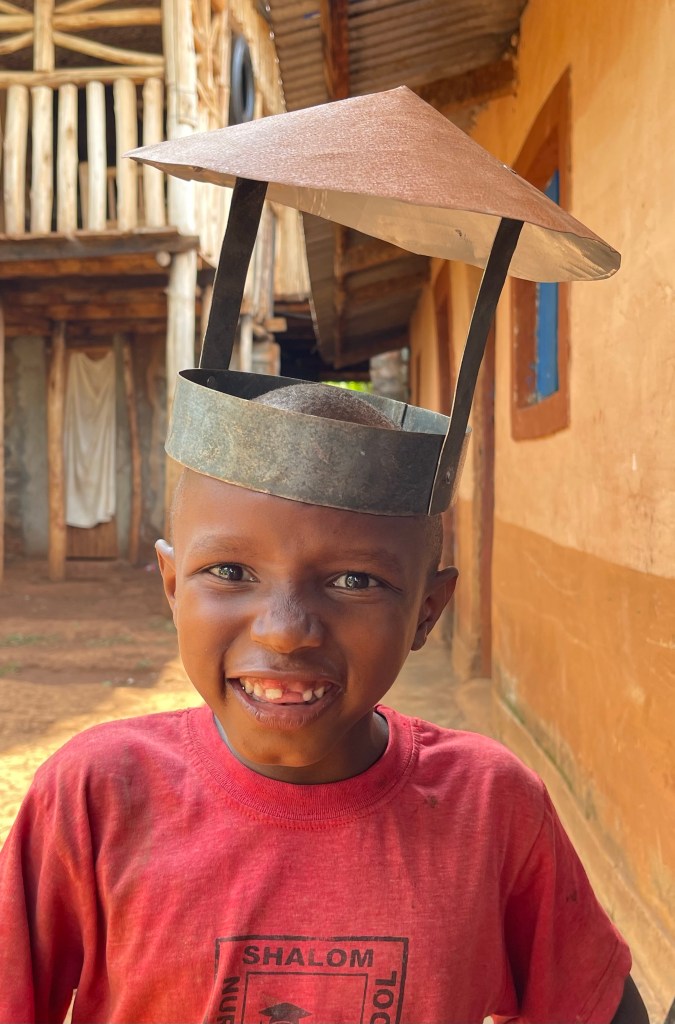
More invented tradition…

I’m so proud to watch Alex and Precious buck the trend, gain respect from their visitors and become exposed to so many influences. There’s no doubt Rock Gardens is a roaring success and the most popular of the plethora of guest houses in this greedy, commercially aggressive tourist town. I’m delighted that my instincts were spot on seven years ago.

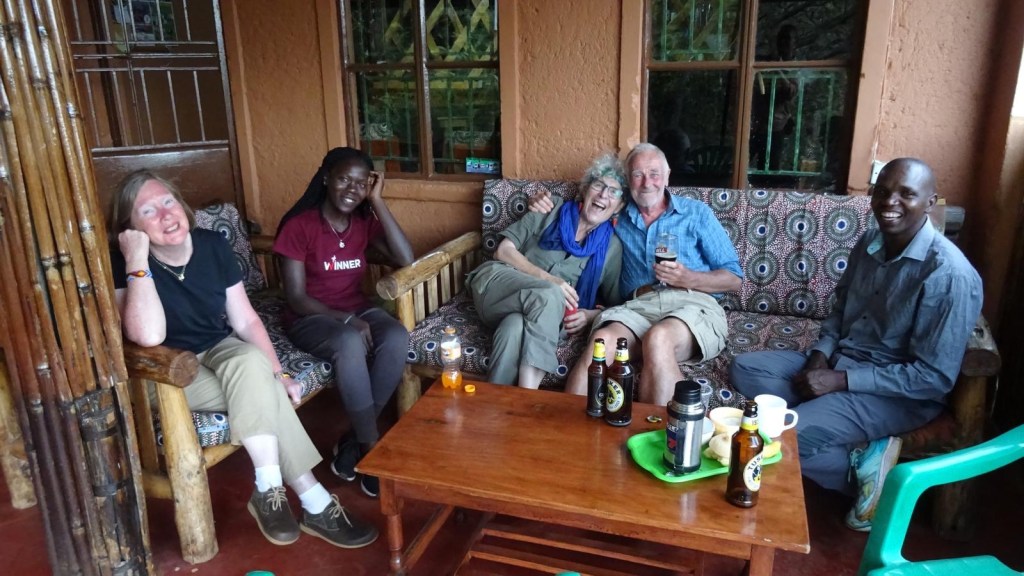
Some charming visitors are now enjoying Rock Gardens. Sandra and Fiona, from Germany and Leicester, turned up on a VAST, heavily loaded Triumph 900cc motorbike. They even carried camping chairs. Both slight, Sandra is pernickety and likes things done sensibly and with logic, the German way. Fiona is more easy-going and adaptable. “I think it’s a woman!” whispers Precious in amazement as the two helmeted figures ride through the gate. They take the only room left, JB5, a room with no bathroom. I reckon Sandra will only stop the night; the latrines are basic, to say the least (lots of work required yet) and at the bottom of the plot. But they enjoy the atmosphere so well that they stay three nights and we all bond. They might even visit me in Harberton in April!

Fiona and Sandra with their giant Triumph

Fiona, perhaps slightly envious of my Mosquito…

Haruto gets a washing lesson!

Haruto from Japan, is a youthful charmer. Slow to join in, by his second day, he’s bonded with Precious and is sitting on a low stool in the kitchen watching her cook and helping her with the endless hand washes caused by so many guests. The garden is festooned with bed sheets.

Precious bonds with Anja

Anja and Peter are from Denmark, Anja of Greenland parentage. We have fascinating conversations by the fire pit, about the competition of USA, Russia and China over the vast wealth of unknown resources that will be exposed by the melting glaciers, riches unseen for ten million years. And the ocean passages that are opening across the polar region. They come for a couple of nights, stay three, go away for one – and come back for a fourth night, they are so relaxed at Rock Gardens. Anja brings sparklers for Keilah and Jonathan.

Jonathan’s first-ever sparkler

Keilah gets one too

Helmut, a 70 year old biker from Germany rides in, also on a huge machine. He’s come from Namibia and hopes to ride back up the west coastal route. He’s frightened by an attack of vertigo. Head spinning and unbalanced. I’ve had it a few times and can comfort him that he’s not having a stroke on his African safari. “Sorry, chum,” I say, “it’s age-related!”

***

Fond goodbyes as Anja and Peter leave – only to come back two days later!

Guests come and guests go. All are charming, cooperative and relaxed about the building works and compromises they must make to live in our rough-edged place. Alex has to juggle rooms constantly and I must rush in, wet paintbrush in hand whenever I get opportunity. The rugged kitchen, made of wood and cement last year, when I decreed, “You can’t cook for mzungu guests on the floor…” is constantly in operation. Alex is rushing from buying building materials, matoke, ‘Irish’ and chickens to preparing meals and advising his guests. He falls asleep across plastic Chinese chairs by the fire. I don’t get to leave the compound for eight days, except for a quick run to the bank in Kapchorwa, 17 kilometres away, for more money. I wear the same socks, tee shirt and grubby shorts every day. I travel light and can’t afford more clothes spattered with mud and homemade paint.

Precious with endless washing up.

***

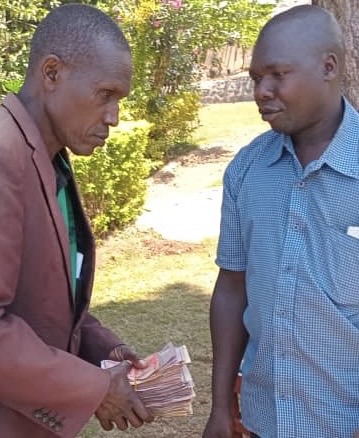
But my greatest relief is in Joshua. Joshua is a young Sipi worker, usually words that fill me with gloom. But Joshua is great! A quiet, charming young man, he is self motivated, thoughtful, economic, cares about his work, and gets calmly on – doing excellent work. It’s a first for Sipi. He’s first to arrive, last to leave – and even cleans his tools at the end of the day! Here in Sipi, he expects to be paid a mere 20,000 Uganda Shillings for a day’s work. That’s a little over £4! It’s obscene to think what I get paid for a day’s work in America by comparison… But it’s more than most are worth. The first few days, I tip him an extra 3,000, and he’s quietly delighted. By day four, I up his pay to 30,000 and compliment him every time I pass. He’s restoring my confidence. We work together happily. “We have to keep Joshua as our builder!” I instruct Alex.

Joshua gets a young helper while paddling mud for building

Joshua tells me he has two children, a girl and a boy, and that that is enough: wise thinking in this crumbling country where education is so poor and families of such numerous proportions. As I write, back in Kitale for two days (to do shopping for materials just impossible to source in Uganda), he’s making stepping stones in moulds we’ve invented from plastic paint containers and carrying out various works to upgrade the latrine. He has weeks of work. I trust him.

***

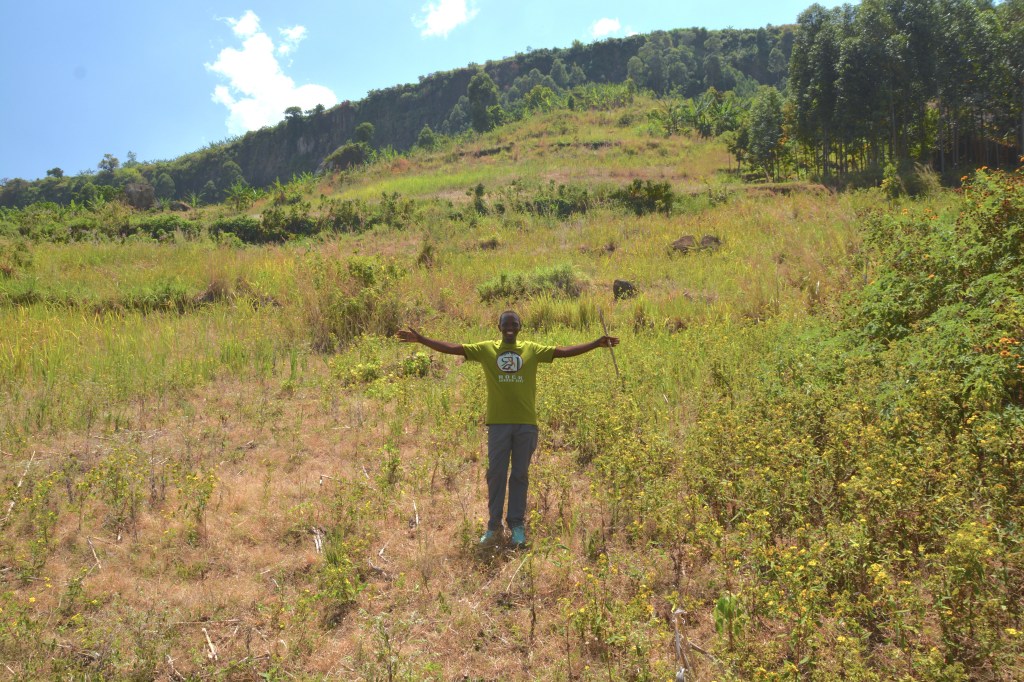
Alex relaxes at last on our hike

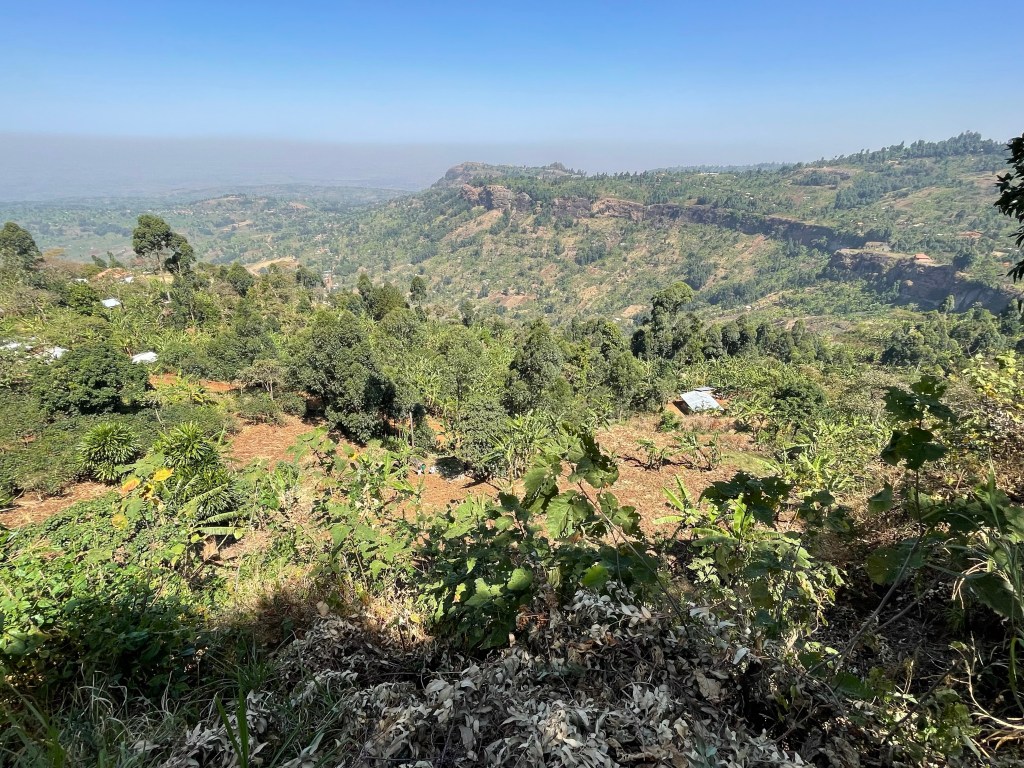
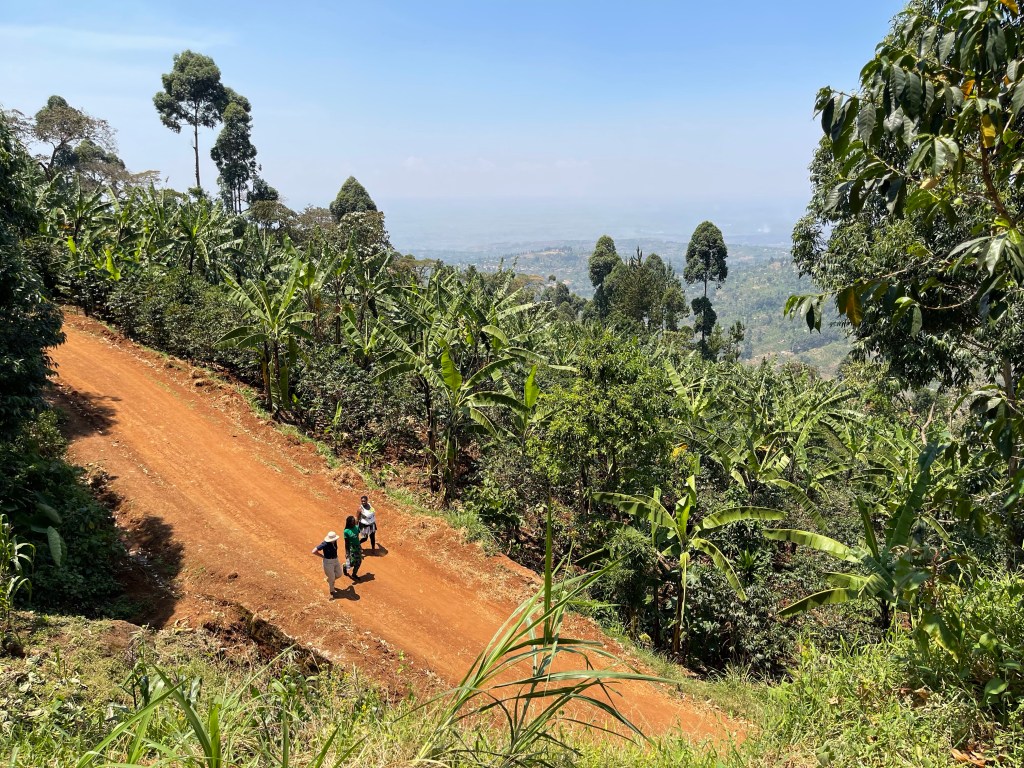
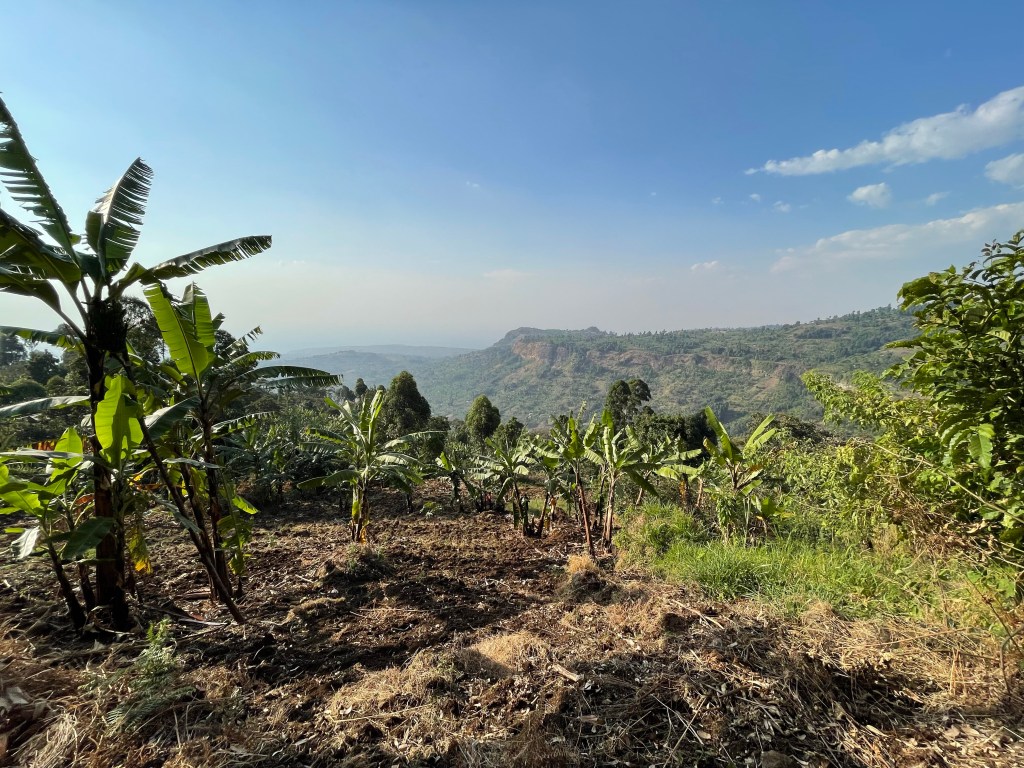
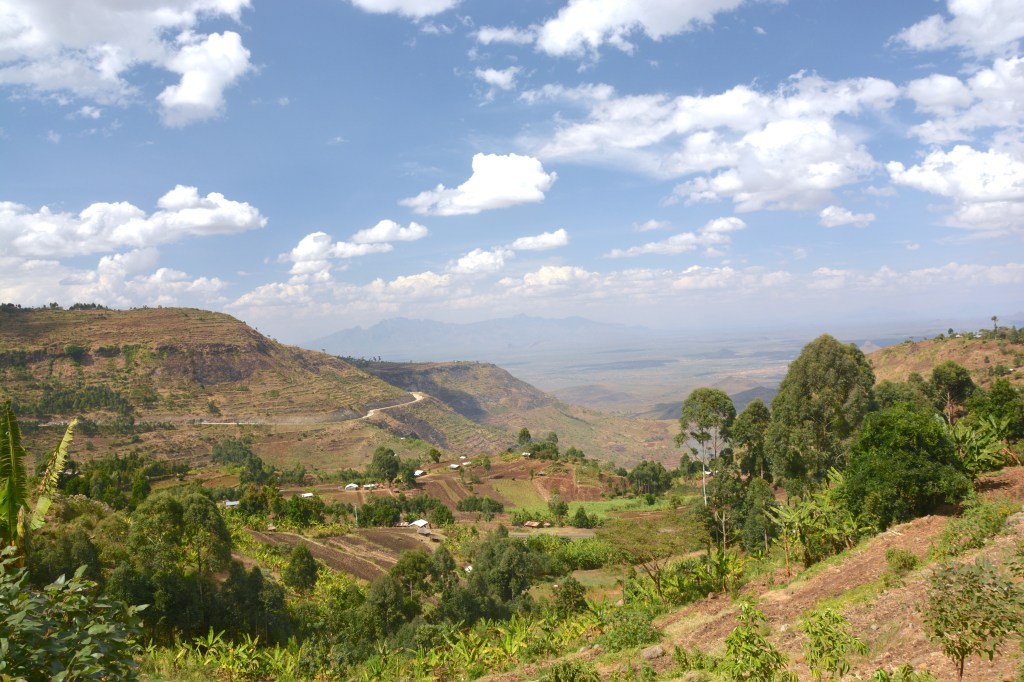
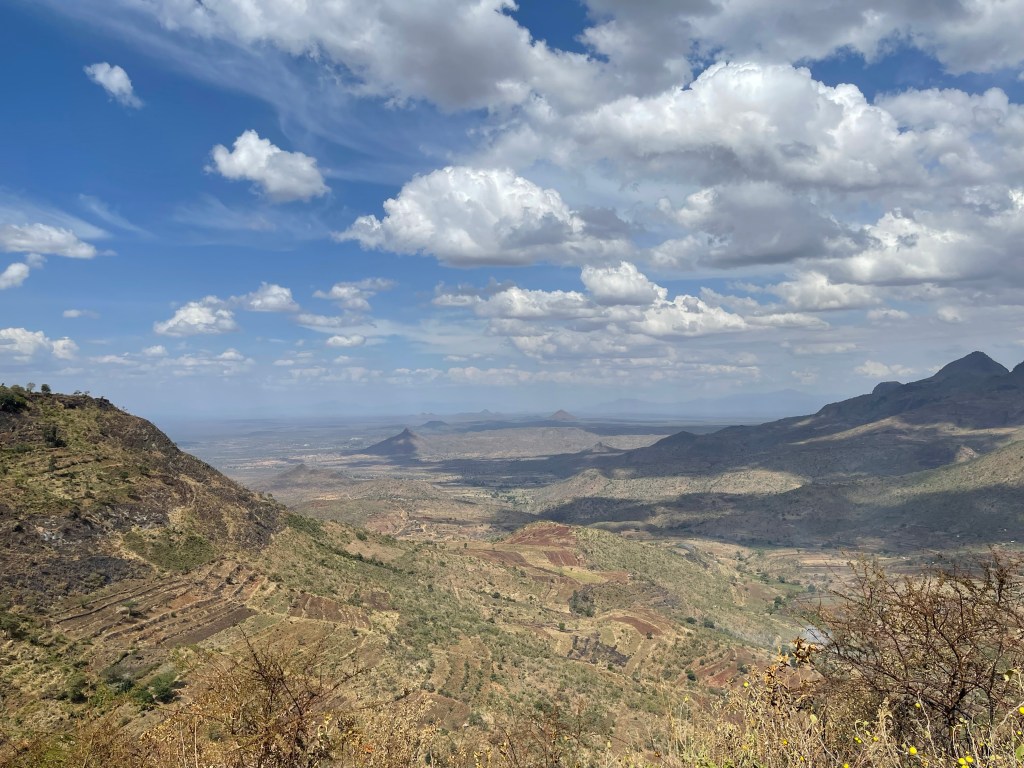
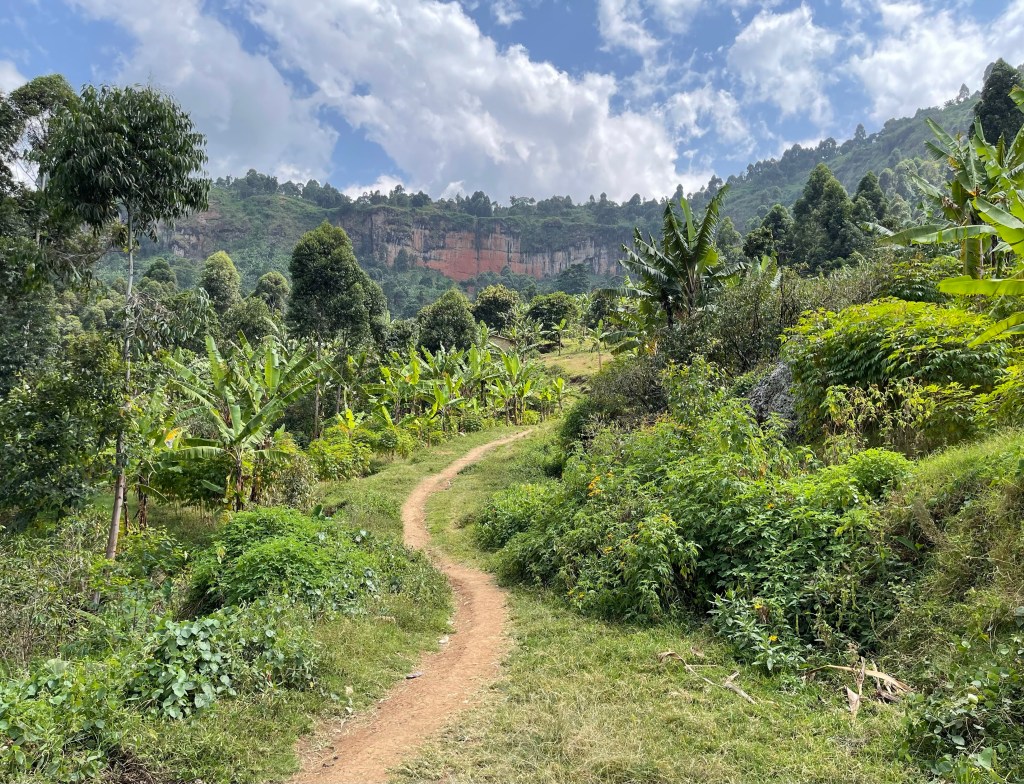
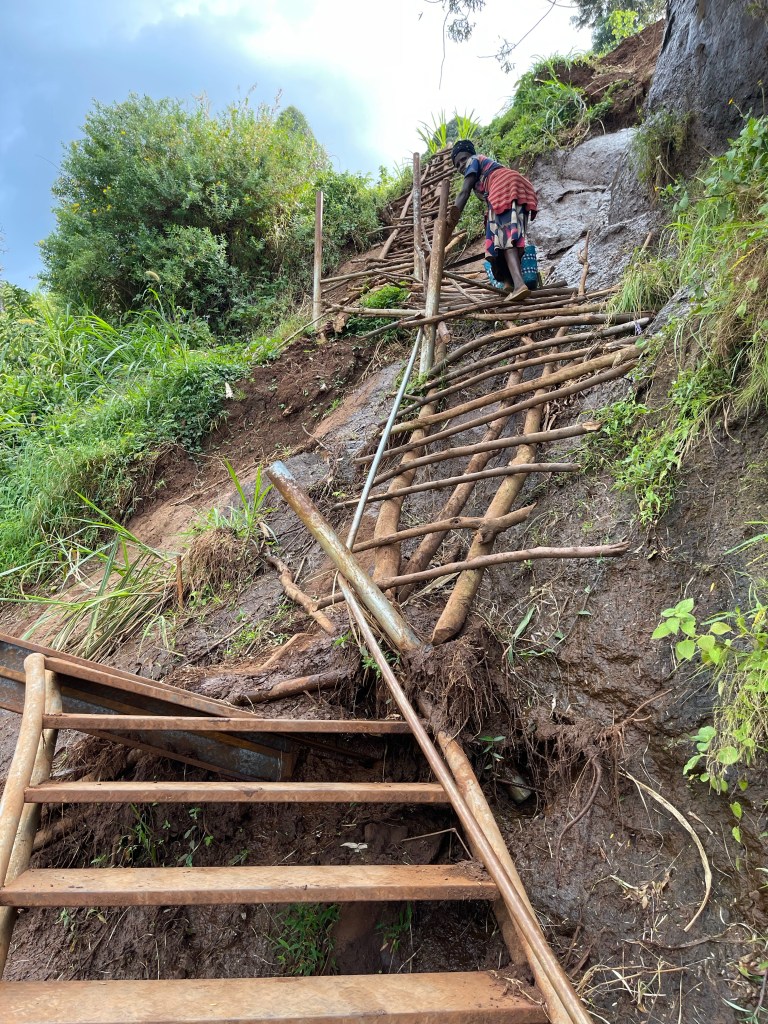
One day only, Alex and I get out for a walk. We both need wider views and to forget the work for a day. We drop down onto the edges of the great plains below Sipi’s escarpment and wander in green matoke and coffee for a few hours, before the inevitable puffing clamber up the cliffs again. But we approach too close to one of the waterfalls for my pleasure. Whenever we get close to the attractions of Sipi, there’s jealousy and commercial tension that Alex is ‘guiding’ me for free – my son-like companion. So-called guides compete for business here and insult him and argue over the pennies they lose by me not being a customer – a wallet on legs. A mzungu. We are seen as no more than cash machines. I prefer that we walk away from the town into rural areas, where I am an excitement for children at a crude mud primary school who break into a welcome song for the visiting mzungu. This is why I travel; not to watch water falling over a cliff – something I can admire as I ride past on the road on my piki-piki.

A reason to travel the world

***

One Rock Garden’s afternoon, we suffer a thunderstorm and cloudburst of biblical proportions! Rain dislodges fir cones like bombs from the high pine tree in the middle of the garden.

Biblical punishment..?

In minutes, we are all stuck in the kitchen, unable to talk over the machine-gunning on the tin roof. The garden becomes a roaring river; the lawn becomes a lake. This should be the dry season, but this is Climate Change at its most extreme. Almost every day we have showers. In the ‘dry’ season… It’s vibrantly green everywhere, but no one knows if they should plant early or wait out the vagaries of the weather and risk failure of crops. What to do? This is the reality of Global Warming, as suffered by those who create the least pollution, but rely most closely on the dependability of regular seasons.

Another consequence for ‘The Money’ of Rock Gardens is that I have to take off the thatched roof of JB2 round house and replace it with corrugated metal, with straw on top. An expense we could have done without. But having dried ALL my clothing and possessions after the storm – fortunately it was me sleeping there that day – it’s an inevitable choice. We have to take the room off the booking system for five days or so; I move into the unfinished, rather damp, new round house, bucket-wash in a corner of the garden, pee in a bucket at night – and workers make the new roof. Then we have to completely renovate the house.

Removing the leaky roof of JB1

One day, Mark the barman comes to me and says, “Uncle Jonathan, I need 50,000 for a crate of beer…” I’m tired and I flip: “Why don’t I pay for the bloody visitors’ holidays?” Then Alex comes for money to buy goat-meat for their supper… So, Alex and I have an important conversation. “Separate Operations from Building. I pay for construction, you take operational funds from income. I’ll invest more money to get the place up to scratch for all the new guests, but YOU pay the bills.” Trouble is, he’s embarrassed to request funds, coming to me endlessly for small sums, when his pocket is empty.

With all the zeros in Ugandan currency, it all appears SO expensive! So, I transfer money to him and he pays the bills. It seems less that way, even though it counts in hundreds of pounds, not millions of an almost useless currency! Odd thing, perception…

Oh well, it’s a good way to spend my pension..!! Haha.

***

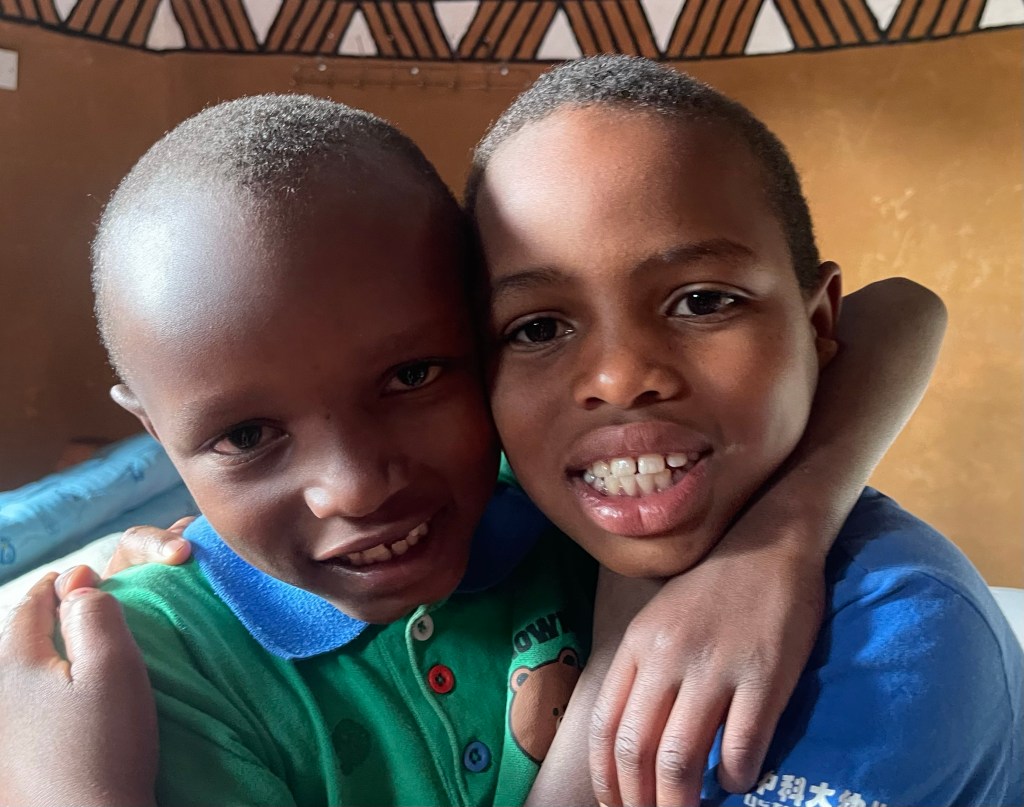
But with all my work – and the idea of lying on a beach reading a book is anathema to me as a holiday – I need activity, and this building work suits me just fine – with all that, it’s the children who make my stay so wonderful. I’ve come to love these two so much.

Assistant painters. The colour is natural soil.

However, they now board at school. It’s odd how much I miss them during the week. It may seem callous to send a five year old and seven year old to boarding school. It’s just another reality and practicality here. The government schools locally available are worthless, so Keilah and Jonathan go to private primary school in Kapchorwa, ten miles up the road. For their first years, they were picked up in a school van at 5.30 and returned at 6.45 in the evening (Jonathan was three when that regime started). The van can’t get to Rock Gardens, on its filthy mud track, in the rainy season, so Alex must walk them a kilometre to the road. “Huh, it was costing me in shoes for Jonathan!” and the school van, often out of service (maintenance only when school fees are in, so usually not running for the first days of term…) carries about 50 children. The road to town is extremely dangerous and the drivers tired. So Alex made the decision to board the children from Monday to Friday. The cost is a bit balanced by not paying for transport, and the children get basic food and accommodation in rough dormitories. And accept it with pleasure! Both love school and are bright, intelligent small people. It’s only we who miss their cheerful company and Jonathan’s endless chatter. “Uncle Jonathaaaan…” His school clothes are embroidered across the bottom: ‘Cheptai Bean J’.

So I make sure I am there for two weekends, and have now returned to Kitale midweek, to ride back tomorrow, Thursday, laden with floor paint, zebra fabric, shower curtains and tile cutter, to work again for a few days. My time is running down now, just 18 days to go before I am back to the rain and gloom of Devon. At least after rain here, the sun shines again! It’s been a different visit: Family, not Adventure. But for an obsessively independent old bloke, maybe family IS an adventure! Here in Kitale, I am welcomed like a brother and uncle; in Sipi a father figure and grandfather. Not a bad development in life! Not bad at all.

The roof goes back on JB2. To be disguised by straw

***

But I still haven’t told you why I was painting a zebra’s bum on a wall in Uganda!

But the painter has to sleep in a building site…

I’d painted zebra stripes in JB3, in panels on the wall. I brought some prints taken from the internet as inspiration, and developed a blister on my finger freehand painting with a small brush, nasty black oil paint on vinyl silk from Kapchorwa. I needed to ‘round off’ my design into the bathroom area. “Has anyone got a connection to get me a Google Image of a zebra’s backside?” I asked at the fire pit. Fiona went one better. “Here, it’s pictures we took in one of the parks!” Close ups of those bizarrely beautiful animals. And their backsides.

So, round the corner of the bathroom entrance, I extended the zebra panel into a flapping tail. A visual joke we all enjoyed.

The zebra’s bum!

***

In another room, I painted an illustration (in brown earth paint) of the round houses and the tall pine trees. In front, I drew Elio, the cow, the friendliest cow in Africa, who actively seeks human company. One night, by the fire pit, she puffs heavily beside us. She’s pregnant and Mark, the barman, has worked with cows. Everyone lifts her tail and views her backside. Silly animal, she loves the attention. Mark declares that he thinks she’ll soon give birth, maybe next day. How exciting, Alex and I think, as Precious rubs Elio’s neck in sympathy. Amusing animal, she loves it.

How disappointed we were, not to wake to a new Rock Gardens member, but a big fat cow that had had indigestion..!

A wonderfully foolish animal! Elio the cow
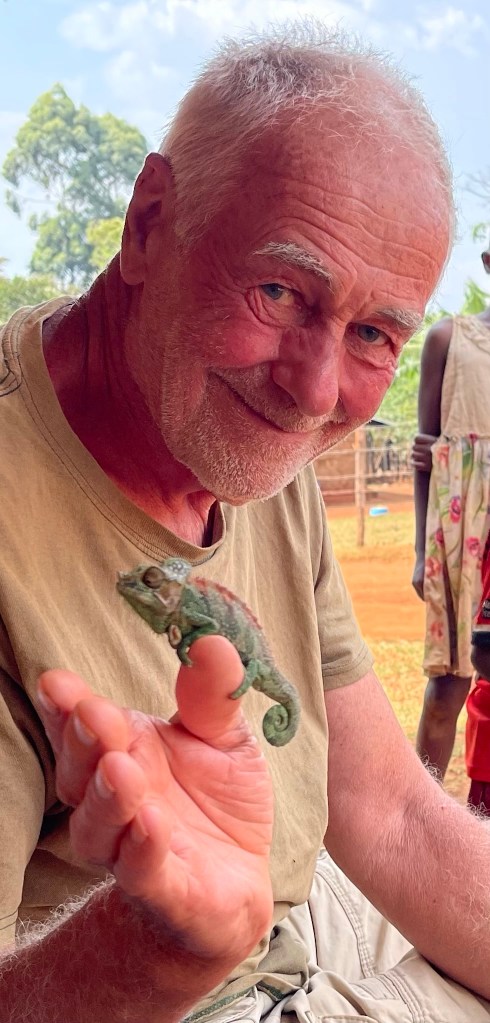
And finally, an insect disguised as a leaf lands on my leg

EPISODE FOUR – January 30th to February 5th 2024

IIN WHICH I – WILLINGLY – CHALLENGE MYSELF TO THE HARDEST TRAIL RIDING OF MY AFRICAN TRAVELS, UP AND DOWN THE SIDE OF THE RIFT VALLEY LIKE A HARDWORKING YO-YO

The oddly named Max Milla sells me 25 pennyworth of my favourite, spinach, right from her field

It’s been only a week since I last updated the story of my 2024 East African travels, but I’ve been in such spectacular places – and I’m off back to Sipi, Uganda tomorrow, where I’ll have no internet for a couple of weeks – so I’m going to write about my terrific rides of the past few days.

I’m a biker… There are aspects of that fact that tell so much of my character and tastes: independence; joy of the serendipity of life; absolute reluctance to be confined; love of the tactile nature of being out in nature on two wheels, not ‘trapped’ in a tin-can-car. I relish the ability to go anywhere without restrictions. If my little motorbike can go, I’ll try it!

Thus it was that I found myself on some of the best rides I’ve enjoyed in East Africa this week, and they are all within forty or fifty miles of my base at Kitale, home of my blue ‘Mosquito’.

***

Wechiga, East African biker for a while

Wechiga left last Sunday, the 28th, from Nairobi. I put him in a taxi at 02.00 to the airport; no point accompanying him there to say goodbye at Departures, I might as well go back to sleep at that time of the morning. He is now a proficient enough international traveller that he can look after himself. He’s practical and easy going and can ask his way when he needs. He had a long journey ahead of him, 05.00 to Addis Ababa, and on later in the morning on the flight across Africa, home to Ghana. He texted at 16.00, that he was in Accra and all well.

It was perhaps a crazy idea to consider that we could meet in East Africa. It could so easily have foundered on bureaucracy or money. The latter, of course, was mine, and I can now despatch money across the world and it arrives in ONE minute! So fast and efficient has the technology become, that World Remit, an alarmingly clever app on my phone, can transmit money from my credit card to a phone of any of my families in Africa in as little time as one minute. Even from a remote village at the bottom of the Rift Valley. I say alarming, as – of course – you still need to cover the funds! It’s so simple to transmit that it’s also easy to forget that it is actual money transferring, not just technical wizardry and a concept…

As for the bureaucracy, well, we managed that too. Even though he was last off the aeroplane that evening he arrived. He’s resourceful enough to cope. I wish Akay had lived to know that her three children all flew out to what she called ‘white man’s land’ over the years. Perry of course studied in London and has been back often as he became a ‘big man’; Wechiga has earned his three trips to Britain and now one to East Africa, through his great integrity and our firm brotherhood; and Gladys, their younger sister, was voted by all her peers to visit Germany some years ago, as representative to a sister church. It’s no small thing that these three siblings have travelled so well – and in no small part the responsibility of their wise, amazing mother, with whom I couldn’t speak – not in words at least, but we ‘conversed’ on other levels in Navrongo; levels that needed no words.

***

So Wechiga departed. I stayed a day to rest up in Nairobi and then travelled back up country by plane to Eldoret and matatu the final 50 miles to Kitale. I just couldn’t face that ten hour bus ride again.

Back in Kitale, Rico helped put a new chain on the Mosquito and a few maintenance jobs necessary after having ridden in some rough places two-up, and on Wednesday, I was off on my own for a couple of days – first time this trip. It’s odd that: for an obsessively independent traveller, I seldom get time to myself to go at will.

But that day I certainly did! I rode back to the Cheringani Hills northwest of Kitale, just a 25 mile ride to Kapcherop, a small straggly town of little appeal, except that it’s my starting off point for rides into the heights of the hills, sitting amidst the highlands of western Kenya at above 7000 feet.

The high Cheringanis

I used one of the new connecting roads that join the deliciously bendy and winding road through the foothills up to the wonderful heights of the Cheringani Highway, the high road that winds and curls above deep fertile valleys, backed by the heights of the mountain chain. Twisting and turning, a big smile on my face – for these are the roads bikers love – I wound and flipped my way upwards. There are four connecting roads, so I chose the new tar one; the others are of varying degrees of dirt and rock (as I discovered upon trying the fourth one on the way home! More on that later). At the top, I turned left on the Highway to approach Murkokoi, a small village of a couple of hundred hardy souls up here at well over 8000 feet, where, despite the equatorial sun, everyone wears old woolly hats and ancient mtumba padded anoraks. I usually have to stop to add a jersey to my riding apparel.

Sweeping round the junction at Murkokoi, an arm waved in excitement, and I saw I was recognised from the tea stop I made here a year ago! There aren’t many white bearded mzungus up here on motorbikes, it has to be said. Daniel is a butcher, with a small wooden booth – surprisingly clean actually – on the corner. A goat carcass hangs in his red and white shack. He must do slow business, here where few can afford the luxury of more than a few pennyworth of mbuzi (goat). So I turned quickly and went back for sweet milky chai and a chat to the gathered men on a plank bench. They moved up to make space and the questions began, as always. Where from? Where to? How old? The motorbike? Which football team? I have the same conversation many times over – but for most it’s their rare opportunity to ask questions and dispel the myths of mzungu life and riches.

“You told me the secret of not getting old is to think young!” said Daniel with a laugh. “You see, I remember!” As I say, not many white bearded old mzungu bikers up here…

From Daniel and his friends, I discover that the road that starts here at Murkokoi is tarred way up into the heights of the ‘hills’. “The tar stops before Tapach,” he says. “Then it’s a rough road, down to Ptop and Parua. From there you can go to Sebit.” I know Sebit is on the main road to the far north of Kenya, up across the vast Turkana Desert to Sudan, the A1 road, now tarred all the way. I went that way over twenty years ago, on my old African Elephant (the BMW 800 at home). It was, I wrote then, the worst road in ALL Africa!

High in the ‘hills’

Finishing my sweet tea, a drink I’d normally eschew vehemently, but which here provides energy for the forthcoming ordeal, I throw my leg over the bike – with, it must be admitted, a bit more chutzpah than usual. After all, they’ve all been SO impressed by this antique mzungu who wants to ride their most difficult trails! Off I ride, with a bravado revving of the little engine of my (to my audience) ‘big’ bike.

I’m soon climbing at ever-increasing inclines. Way up high, half an hour later, I get out my phone to check the altitude. Way over 9000 feet and still climbing. The tar ends and the red murram track begins. It’s rutted and bumpy, takes concentration. Not easy, when the views that are expanding so widely, are so impressive. I’m in very high country. The road is broken and rocky, patches of dust, protruding rocks, always those pesky sheep and goats to avoid. Not so many cows right up here. I bet it’s cold at night. It’s already chilly. In front is a scrappy sort of place with a big secondary school and smallholdings ranged across the mountain slopes. The air is crystal and fresh. You gulp it in and just KNOW it’s the best you’ll ever breathe. A small junction. Dust and dirt roads in both directions. Everyone wrapped in warm clothes. The sun just burning from the intensely clean sky. A boda-boda rider tells me my way is to the left and down. I check the altitude. My little bike and I have made it up to 10,920 feet! Not absolutely the highest we’ve ridden – that was in northern Ethiopia four years back, over 11,000 feet, but I didn’t have the app then to know. Sadly, looking about, I can’t see any track that’d take me the other 80 feet for a photo! From here, the roads and tracks all head down. The highest of the Cheringani ‘hills’, Chebon, is just 150 feet higher, at 3375 metres, a stones-throw away from Tapach.

We turn and start the descent. It’s going to be a huge drop. In the next few miles, at considerable angles and on broken, dusty, sometimes rocky and sometimes grassy hills, we’ll drop just short of six thousand feet to Sebit and the main road – and then another 2000 feet to my sleeping place tonight. The views are stupendous, contorted and tumbling valleys disappearing into a hazed distance. From up here I can see all Africa, it feels. Rolling away to infinity, small rather decorative clouds tumbling across the incredible blue of the equatorial sky. My smile is broad, people wave back at my cheery greetings. This is as good as biking gets! It’s a challenging trail but SO exhilarating, to be this high, this free and with half the world at my feet.

Far far below, I can see the ugly cement factory at Sebit. For now that’s my marker, a horrible wen in the rolling hills and steep valleys, its steel and metal winking up from the glorious scenery. An intrusion. But at least it gives me confidence that I am on the right tracks and paths. In some places they feel dangerously steep. My rear brake’s not doing very well, and a bit of adjustment doesn’t help much, but I need good braking and do much of the descent in low gear, dancing and pirouetting on my footpegs. Great exercise. “Think young,” I told Daniel last year. Well, still doing that!

Stopping to take photos, people come to greet me. They are friendly here. One young man wanders from his house near where I am snapping the enormous, apparently endless vista. His house clings to the edge of this hillside. What a view it must have! But he probably thinks more about the inconvenience of getting his crops to market, for these hills are fertile as well as high and beautiful.

Imagine waking to the view from that small house!

Bumping on down, balancing and weaving, all muscles in use, I feel briefly lost on a REALLY bad path, but it’s still heading down. Steeply. It crashes and bounces over a rocky stream bed and levels out between small farms and countless wandering sheep. Then, at last, with the biggest smile, I am at Sebit. The factory is hideous and here the road’s wet from a recent shower. Sebitians gawp in amazement at the mzee mzungu with the foolish grin. They’ll never really understand what makes us do these apparently pointless things.

From Sebit, I ride the bottom of the gorge that will eventually, in fifteen miles or so, issue me from what feel like great gateposts of the mountains, into the burning northern deserts. Now I’m little more than 3000 feet above sea level (the sea being the best part of 1000 miles away) and the heat has steadily built into the high 30s. Sweaty in my riding clothes, when an hour or two ago, I was pulling on my jumper.

The road disgorges me – literally – onto the flatness of the roasting desert that stretches north to Sudan. Happily, I’m going only a few miles to my sleeping place at Marich Pass, an old campsite with bandas (round huts) started by an English professor, and his Eritrean wife many years ago. I stayed last year and her stepson, Wahid, was restoring some of the buildings. When he heard that I design museum exhibits, he became excited. “Oh, I want to develop some ideas in Khartoum! Are you expensive?”

“Yes, in America I’m expensive, but for a trip to Khartoum, I’d do it for expenses!”

“I can provide you with a motorbike. You could go and visit the ancient pyramids in Sudan. We’ll keep in touch!”

A few weeks after I got home to Devon, all Sudan’s shit hit the fan… There won’t be much interest in heritage designs now – if there’s any heritage left after the battles… You win some and lose some. The Sudanese lost rather more than me.

Bandas at Marich Pass. Good sleep for me in the heat

***

Next morning, after colourful dreams caused as always by sleeping in extreme heat, I was away along the dusty rocky road that circles the base of the great escarpment of the Rift Valley. Just here, the Kerio Valley, that branch of the Great Rift that I’ve come to know and love so much, broadens out into the huge valley. It’s the Rift Valley that contains so much of the desert, going north. Down here, I keep the steep clifflike escarpment on my right for the next few hours, as I bounce and batter my way over the long rock road that would eventually be the one on which William and Wechiga and I walked a couple of weeks ago, that white dusty road that is so boring – and hot – at walking speed. It’s not very interesting now, really. The Chinese have been rebuilding it, but have moved on to a more lucrative project somewhere else, leaving the abandoned bridges and culverts – and rough detours around them.

I’ve ridden this way four or five time, perspiring like a fountain inside my waterproof jacket, motocross trousers, helmet and boots. No shade. In places I have to cross small rivers, and a good run up can provide momentary welcome cooling, but it’s really just a hot punishment, much of the ride today. A certain achievement, but not a lot of pleasure. In the past, I’ve always turned off at the first road that screws itself up to the plateau, 500 feet or so below the rim of the Rift, more than three thousand feet above. I was always instructed to avoid the town and people of Tot, argumentative, aggressive people of the Pokot tribe, known for cattle rustling and gunfights. I suspect, as much as anything, a result of youth with no purpose down here where life is so uncomfortable and unproductive. But now, there seems to be at least an uneasy peace and I have no such warning. Tot, in fact, is so insignificant, I’ve passed it before I realise it was the forbidden township.

A mile or two further along, I turn at a dirt junction and begin what I fondly thought was the tar road up to Kapsowar on the heights. Well, looking DOWN from Chesoi and Kapsowar, there’s a tar ribbon visible twisting downwards. I wasn’t to know that it goes only part-way down and that the rest is as near impassible as anything I’ve yet ridden in Africa! It’s little more than a staircase of rock hacked from the cliffs. Fine for goats maybe, but a big challenge for an old bloke on a motorbike… I reckon it’s the most tiring six or seven miles of trail riding of my life – in the afternoon of a day in which I have slowly oven roasted and broiled, basted by waterfalling sweat! The views down into the increasingly deep valley are stupendous as always, but I have little time to look and little energy to appreciate.

The toughest, roughest…

Somehow, I make it to my next tea stop, a small shack at the top of the steepest road of all. Boda riders freewheel down towards the depths, relying on cheap crap Chinese brakes to save their plunge into the valley off the unguarded sides. It beggars belief how these boys ride – young enough to be my grandchildren, but many of them unlikely to survive to have their own if they ride thus. It’s no good telling them. “It’s the way we do it here…” No one EVER learned to ride down even the slightest slope in gear. “We save petrol!” Multitudes of them and their innocent passengers end up in hospitals and graveyards too.

***

There’s a lovely trail that runs along the very rim of the valley for fifteen miles or so. I’ve been planning to take it, but it’s already early afternoon – and I’m absolutely bushed! So I take to the tar roads instead, a longer ride, but almost possible on autopilot, if I watch for the farm life on the roads. Dodging muddy sheep, clipping goats, wayward wandering cows, I pass along new roads back to the old Kaptagat Hotel, that I visit once every trip. I love it for its old colonial gardens, decrepit bungalows from another era – and the fact that Ellen, the woman who runs the dowdy rooms, makes a roaring log fire in my room in the evening. Last night, I sweated at 3000 feet on a hot night beneath a sheet. Tonight, I sleep at almost 9000 feet again, under a heavy Chinese blanket, falling asleep beside a jolly red fire.

***

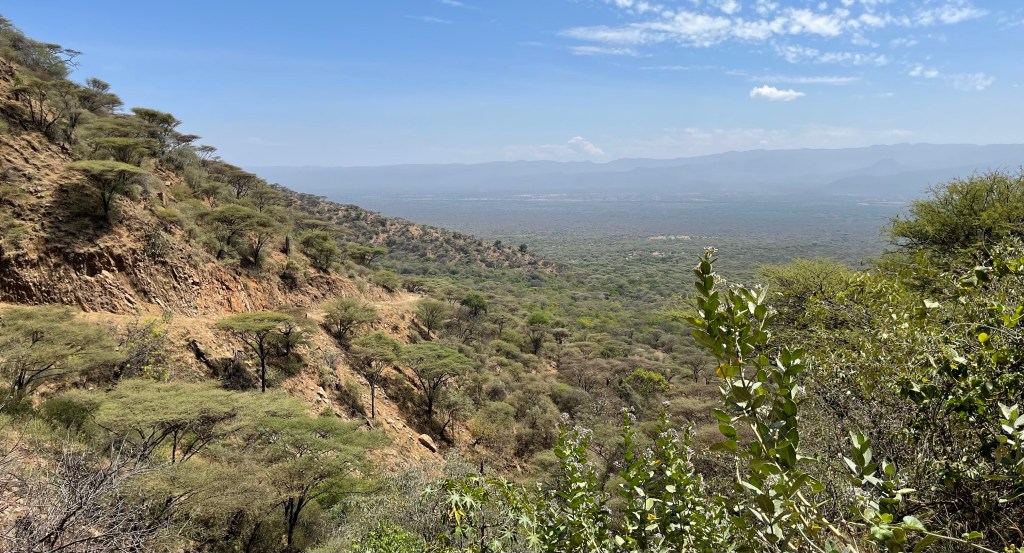
Kerio Valley has some fabulous viewpoints. In an hour I’ll be down there…

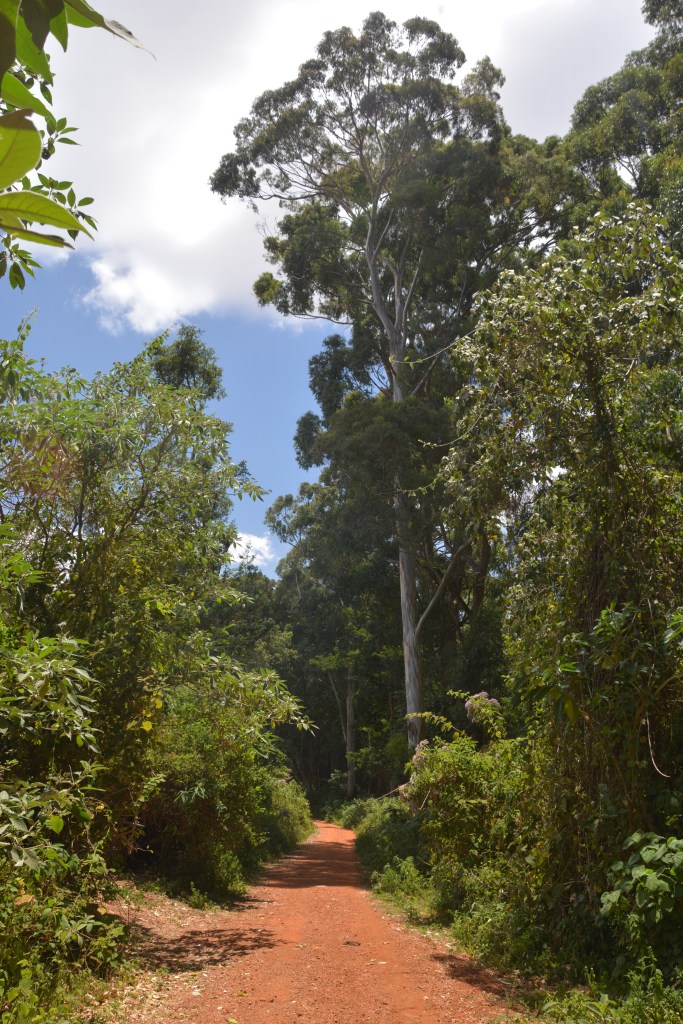
Here too there’s a fine murram road that takes me through the forests of eucalyptus and conifers to yet another newly minted tar road, another one on the rim of the Kerio Valley. I know – and love – all these routes now. The red gravel road’s been graded this year and it’s a fine ride between shady trees this morning, wearing my jumper again, and not starting out from the old hotel until 10.30 when it’s warm enough to ride. Today, I shall ride to Nyaru at over 9000 feet, with pretty bright green carpeted tea estates, and down the winding rock road to Fluorspar, site of sinister old mine ponds, and on down to 3500 feet of burning heat, scrubland and drought, just ten miles down the hairpinning sides of the great valley.

Tea with more unemployed men and youths in a roadside shack under tin sheets like a hotplate. Their womenfolk are busy keeping Africa moving. Next day, walking with William, we come upon a group of young girls, aged about eight to sixteen, combing the hillside for scrap firewood where trees have been felled, and other girls and women bent beneath heavy loads on their backs. I ask a group of girls, “So where are all the boys? The useless boys!” It takes a moment for the girls to register what I’m implying. “Playing… Playing football!” they laugh, but not with much conviction. Nothing changes in Africa, where all the work is done by women. The men sit and chatter uselessly, while their womenfolk strain under loads, do vast family washes by hand, feed the family, harvest the fields, collect the fuel, tend the numerous babies – and often hold down a job as well. My friends who rightly complain of the inequality of the sexes in Europe, wouldn’t want to be born in Africa, where any progress is creepingly, scandalously slow… Kept that way by men and the all pervasive excuse: ‘Tradition and Culture’…’

Busy African men…

Still, my presence here, drinking sweet tea cooked by the only person actually DOING anything: a woman, doesn’t change much. At least it pays her a paltry 10 pence. All the same questions of course. I have to develop a patience, but once again, how often do these people get to quiz a mzungu? Hardly ever, as most mzungus only mix with their guides and drivers. At least these lazy fellows are interacting with a real white man, not a chimera on their phones. It’s incredibly hot. I’m sweating and uncomfortable, but it’s this interaction I relish most on my journeys.

At last, I excuse myself and set off towards Kessup, which, being 3000 feet higher will at least be more clement for my poor northern body. I buy mangoes from some ladies by the roadside, cheerful and laughing as we shop. For 100 bob – 50 pence – I get ten of the best mangoes in the world – not a shred of that tedious tooth-gap fibre that we associate with the fruits from the East.

***

It’s a welcome cooling ride back up to Kessup, where I’ve stayed so often on its plateau three quarters of the way back up the escarpment that I’ve ridden up and down three times these past three days. I’m ready for an early night in my £7.50 room overlooking the thousand dollar view.

When I reach Kessup, William wants me to greet Dutch, the cow I bought for him two years ago, now pregnant and possibly the beginning of financial independence for William. He’s so grateful that I rescued her from possible disaster this week when he had to call the vet for £12.50 he didn’t have to his name. She had ‘cow malaria’ apparently (!!), and had to have a couple of injections. Too much heat, the diagnosis. She thinks I’m the vet, I guess, as she head butts me, ungrateful animal.

I’ve had three days of extreme trail riding – and it feels like it. One of the things I appreciate most about William is that once he’s had his supper, he gets up and goes! Later, after I’ve filled him with meat and four beers, he excuses himself. I eat the spinach and a bit of meat juice: he gets all the meat. The arrangement seems to work. Once in a while, he gets a proper meal, and I get to meet so many of his neighbours and tribespeople, and understand something of his life and culture.

I need to sleep.

***

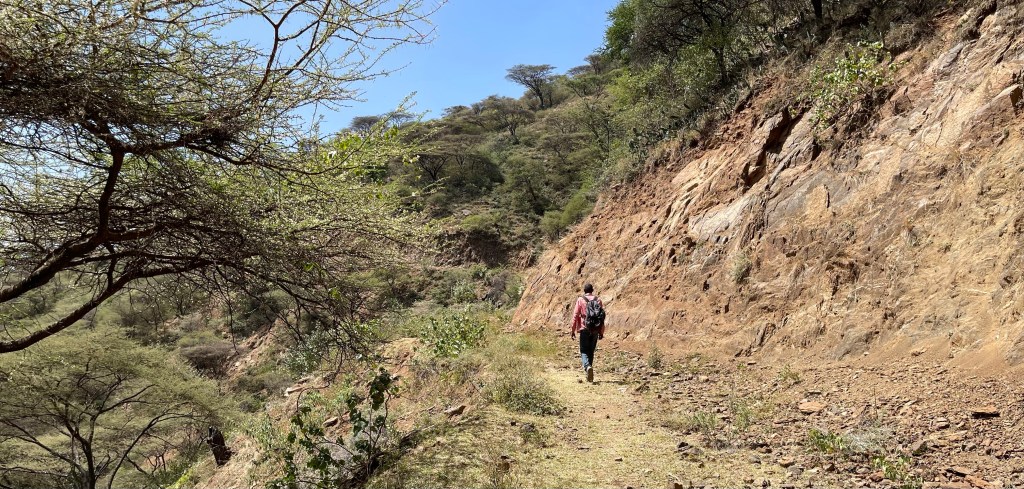
Next day William and I walk again, this time starting at the top of the escarpment and mainly walking downhill gently. An eleven mile hike that takes us through pleasant forest, exposes the valley basking below and introduces us inadvertently to relatives he didn’t even know he had. He was born here, it’s home. We stop for water at a remote homestead and it turns out handsome Tina is a friend to his mother and attended his brothers’ weddings, and even remembers William as a boy! It makes for congenial walking, one of the reasons I’ve become so fond of this very impressive area. Scenery’s OK, but it needs people to make it so attractive.

Tina

As we walk, I get a call on my phone – no one’s out of reach any more. Adelight. She gives me what I feel is a three line whip about her birthday tomorrow. William says as I ring off, “Heh, I think you’d better go back to Kitale tomorrow!” We’d been going to climb the mountainside again and drink moratina, the honey alcohol, with Leonard again. My sister’s birthday has to take precedence.

Kerio Valley

***

As if I hadn’t ridden enough tough trails in the past four days, I mistakenly turn off the high Highway to ride back down to Kapcherop. The rain is following me – always present this year, it rained steadily last night in Kessup for some hours. So, thinking to escape quickly to lower, warmer and probably dry regions, I turn at a tar junction I haven’t tried before.

A giant view of the Highlands

It’s fine for the first three miles or so, just fine… But I should know. The tar ends, I bash and bump and wriggle and dance and pirouette for several more miles, muscles complaining after the rides I’ve had. A VAST view suddenly appears round a corner, the extent of the giant plateau on which Kitale and all these western parts of Kenya sit, dominated by Mount Elgon, just visible in slate rain clouds twenty miles away.

And just to cock a final snook at me, I round a loose earthy corner and find the road builders carving their way upwards. It’s ghastly, the next four miles or more: wet mud, newly spread earth, contractors’ vehicles grinding about in the mess, and THE steepest road I’ve witnessed! It’s surely beyond safety limits, this at present packed earth road – with obstacles? How will clapped out vehicles ever make it up these inclines? How, for that matter, will I make it DOWN them now? It’s tentative stuff. Alarming.

But – of course – it’s fun too. I’m a biker. For 45 years I’ve sought out these tough roads willingly and enthusiastically! Never too old to enjoy a challenge!

***

I’m back for Adelight’s birthday. She roasts chicken in the barbecue, has a few friends and their children for the evening. Marion joins us from Eldoret, and her friend Sharon. It’s a jolly evening with some wine to celebrate. She’s glad to see me home. “You were one person I had to have here!”

***

Tomorrow, I return to Sipi to decorate the new round house and direct some building operations amongst perhaps the world’s most inept, uncaring building workers. Each man will only come for a day, oddly not returning the next day to work with the mzungu who expects them to work tidily, clean their tools, clean the site at the end of the day – and not to steal what few tools we have. No, they don’t often come for a second day. Alex laughs. Even Tom, his carpenter/ wood butcher (who should stick to making his well designed tree trunk furniture, that he does well), with whom I’ve developed a sort of prickly friendship, asked Alex last time I was there, “Will JB be here on Monday?” When told yes, he responded, “I’ll come on Tuesday!” Haha.

Anyway, Sipi, Uganda tomorrow. I hope I get a bed, not that bloody tent once again…

Family shoes

A walk in the high forests

EPISODE THREE – January 9th to 29th 2024

With Wechiga above the Kerio Valley

MY BROTHER, WECHIGA FROM GHANA MEETS MY EAST AFRICAN FAMILIES; ANOTHER HIKE DOWN THE SIDES OF THE RIFT VALLEY; ROCK GARDENS GETS MANY GUESTS – AND A TOURISM AWARD! THE RAIN CONTINUES IN THIS DRY SEASON…

Wechiga feeds a giraffe at Nairobi Giraffe Cente

Wechiga, my closest and fondest African brother for 34 years, left Nairobi well before dawn this morning, January the 29th, to fly back across Africa to Ghana.

Our meeting on December 22nd 1989 was an event that profoundly influenced both our lives, as we came to understand one another’s cultures and values. He’s a man of integrity, curiosity, kindness, humour and sociability. We are both products of remarkable mothers. His mother, Akay, born within a year or so of mine, was the wisest of women, the most admirable African I ever met. She didn’t know her birth date – no one kept records then; we can only surmise from her name, Akay – meaning ‘I have survived’ – that she was perhaps born soon after the influenza pandemic of 1918. She was illiterate but wise. My mother, Joy, born in 1917, used to describe herself as, ‘not much brain, but bags of common sense’, self-deprecating words that both women from such different cultures might use, both extraordinarily sociable and curious, gifts they’ve passed on to their two sons. They’d have recognised this in one another, had they ever had the chance to meet. Wechiga bonded closely with Joy on his visits to Britain, as I did with Akay on my many journeys to Navrongo, before she died in 1999. She was a remarkable woman.

Wechiga has inherited much of Akay’s spirit and curiosity. He loves new experiences and approaches life with a sociable, easy-going nature moulded by his remarkable mother. As probably do I, from my mother.

Time passes… Akay and a rather younger me

***

Full of tales and excitements of my second motorbike crossing of the incomparable Sahara, I arrived in Navrongo that afternoon in late 1989, with Wechiga, who’d met me at the Ghana border a few miles to the north, sitting atop my spare tyre. Introduced by Perry, now back in England, I knew nothing of Wechiga’s culture or the habits of the household, and he knew nothing of mine, three thousand miles away in another, northern world. Everything was new and much of it mysterious. We both started with a clean slate and, I think, there and then decided we must abandon all diffidence. Like Akay, to whom so many young neighbours came for advice, Wechiga has an innate wisdom. He seemed to know what I needed to understand to operate within his culture, an extraordinary gift for one who’d not travelled further than Tamale, that so much enhanced my understanding of this new way of life. It’s a brotherhood that has changed my life, my values, and my opinions. It’s been the greatest privilege: to get inside another, so-different culture and learn its benefits and problems. With all the new devices that the world has invented since we first met, Wechiga and I talk at least every week, and he’s been my cheerful guide, friend, and brother on 21 visits to his home town, and the three long visits to my world that I facilitated for him over the past couple of decades. I planned to visit him last November, but was called to America for work instead. A joke comment from him prompted me to think what a thrill it would be for him to fly across Africa and meet my East African families instead…

So, this episode is much taken up with Wechiga’s visit to East Africa, another adventure in his life, earned by his integrity, curiosity and kindness. 

***

His arrival time in Nairobi was set for 01.20 on the 9th of January. I’d booked us two rooms at the old fashioned United Kenya Club and travelled down, by plane this time, from Eldoret, the day before. After three international trips – to Britain – I had no doubts of Wechiga’s ability to negotiate the intricacies of airlines and airports, but by 03.20, I was uncomfortable, as I waited outside Arrivals, most of the other meeters and greeters fading away into the night. A text message, timed at 01.15, worried me: ‘I am in Addis Ababa’. Was he even on this flight? All the stragglers had cleared baggage and customs and the airport was increasingly silent. I considered returning to the city and bed. But if I wasn’t here, how would he cope? No money, no idea where to go, in the pre-dawn hours at an international airport? Finally, at 03.30, I spotted a smocked figure with a very small backpack (I taught him to travel light!) emerge from the immigration corridor. “Eh! There was some form I hadn’t downloaded. There was no signal, no connection! Huh! And I didn’t know I could have given the official a few dollars and they’d have let me go! Just two of us, last out of the aeroplane!” But here was my brother, whom I haven’t seen for four years, looking more and more like his lined father, now with some grey to his hair, but still the irrepressible smile and happy curiosity, come to see more of the world. “You taught me to travel!” Questions began at once, on our weary race back to the city on empty highways with a crazy young taxi driver.

“But what about that text message saying you were in Addis at one fifteen?”

“Oh, I hadn’t reset my phone from Ghana time!”

***

We stayed two days in Nairobi and then bussed up to Kitale, the usual ten-hour ordeal on a battered bus that left the mud-clogged, chaotic terminal almost two hours late.

A chaotic bus station. Schools reopen all over Kenya

The rain persisted, as it has done so much this year, obscuring the fine views of equatorial Kenya. Wechiga was impressed, even on arrival, to be at the highest altitudes of his life on land. Nairobi is at 5300 feet above sea level, and our travels were to take him up to 10,037 feet, two up on the little 200cc Mosquito, Wechiga sitting uncomplaining on the rack, padded by aged foam pieces in a plastic sack. Crossing the Equator was also a high point, literally, as here the road grinds to over 9000 feet.

He has a great ability to make friends, a result of being a sociable listener. We’ve stayed several days in Kitale, some days in Kessup, with a major hike into and out of the Rift Valley, and a trip around the mountain slopes to Sipi and the Ugandan family. The days have been filled with goodwill, novelty and conversation, Wechiga charming multiple nationalities, but everywhere mistaken for a Kenyan. 

***

It seems my lot in life to introduce people to one another. Here I was, bringing my brother across the continent to make new friends. And on arrival in Kessup at the very lip of the Great Rift Valley, our first ride two-up – in drizzly rain – here were Wanda and Jörg from Koln in their elderly camping car, friendly folks who’ve spent many years exploring Africa, whom I befriended several years ago and introduced to Adelight and Rico in Kitale, and to Alex and Precious in Uganda. They would soon be moving on to Kitale. So that Sunday, Jörg joined Wechiga, William and I on a clamber up the mountainside from Kessup’s plateau part-way down the steep escarpment. It amuses me that that morning, before our walk, I was thinking how excited children would be to have THREE mzungus to shout at and greet. It was some hours before I recognised that Wechiga isn’t a mzungu! A stranger, yes, but certainly not mzungu…

4000 feet above the Rift Valley

I wanted to introduce Wechiga to moratina, a local drink made from honey and herbs that is sunflower yellow in colour and brings smiles to faces from its alcohol. Leonard, a beekeeper, brews it for Sundays at his tidy compound behind the peaceful Kessup Forest, the stretch of providentially protected indigenous woodland that lines the steep edge of the plunging valley. I also wanted Wechiga to be able to claim that he’d hiked from top to bottom of the great split in Africa, a height here of over four thousand feet. From the rocky viewpoint we could gaze far far down to the white dust road on which we planned to hike next day, down in the fiery depths, past the Kessup plateau, like a giant fertile step in the giant incline.

Jörg, Wechiga and William – and moratina
Made with honey, herbs and a big seed pod… And bringing a smile!

***

The hot white road deep in the Kerio Valley, a spur of the Great Rift, is long and boring, joined to the upper plateau by a few tortuous footpaths and a couple of astonishing dirt roads hacked from the cliffs. One ambitious project of road engineers’ will forever remain unconnected, the cliffs too steep to join the spaghetti curls of rocky track where, presumably, the surveyors miscalculated. A green and rocky road wriggles down until it stops bluntly, unstable slopes dropping away impossibly on all sides.

The unfinished – and unfinishable – track behind Wechiga

We must take to a winding, slippery footpath through aloes, thorn trees and seed-catching undergrowth, down to the lower track, 800 feet below, that winds steeply downwards, the road-makers’ ambitions slowly returning to a broken path, down to the depths. We slip and slide, catch seeds in our socks and red dust on our clothes. The heat increases with every metre we drop. We puff and pant, and sometimes I wonder just how much longer I can do this! Always at the back of my mind is the gruelling truth that every metre we go downhill will tomorrow bring a ghastly metre back uphill… We gasp as we stagger down the eleven miles of uneven trail to a couple of springs of cool water. I haven’t brought my metal water bottles this time: we were two-up on my little bike; I travelled as lightly as possible, already carrying waterproofs for us both. There’re still rainclouds boiling about above the cliffs. It’ll rain again tonight. This year, the weather’s terrible: rain most days, in what should by now be the dry season. People blame El Niño, but it’s probably also what we’re doing to the planet, I reflect as I crunch over endless plastic waste, even here in what should be the ‘Depths of Nature’. We don’t deserve this beauty around us. We certainly don’t look after it.

But Wechiga’s too full of the hike to notice these things. He’s chattering away to William, exclaiming at the scale of scenery, comparing the plant life to that of home, telling William about customs and beliefs in his home across the continent. He still limps a bit from his broken leg; a motorbike accident ten years ago. And his shoes aren’t really suitable for hiking, but most Africans don’t have the luxury of multiple choices of footwear: just last time I was here, William had to rush up to Iten at the top of the escarpment to purchase some secondhand shoes for our walk.

We sit under a sparse thorny tree and gaze into the distance over the vast valley. We’ve still several miles to go down, then more miles along the long dust road that draws a line into the distances both ways, disappearing behind a great tree-covered bluff to the north. Somewhere that way, we will stay at the simple guest house at Kipkoyiwo, where the elephants come to drink at the village water source in the dry season. We won’t see them this year, though. There’s too much rain, so they’ll stay discreetly in the midst of the bush. It will rain heavily tonight, rattling on the tin roofs over our basic rooms: just a bed with a none-too-clean blanket, a plastic basin for washing and a holey mosquito net. There’s not much to eat, just chapatis, mangoes and the delicious, copious ten-pennyworth bag of spinach we’ve carried every inch of the way from a field on the plateau high above. But the body can take care of itself when the soul is so rewarded by such magnificence. For a day at least…

It rains hard in the night, but down here in the inferno, it doesn’t turn to mud. We plod along the road a kilometre or so further towards the northern deserts to buy Kerio Valley mangoes from a farmer friend of William’s. They’re surely the best fruits in the world – after Ugandan pineapples, of course. We add them to my old faded and patched backpack that’s been to Africa so often. We’ll take turns to carry our few possessions as we clamber and struggle back up, but stupidly I elect to take the stretch where we must climb at the steepest. I’m struggling; determined not to give up; questioning my sanity at 74; one foot in front of another; lugging the few scant kilos of the bag. It’s heavier at every step, but no, I won’t accept help. Wechiga’s 64 and William’s 58, mere youths. But as always, I have something to prove… The last miles are ghastly! Maybe I really AM getting old! But then, I realise, I have climbed three and a half THOUSAND feet up this slippery, unstable, hot slope – in searing sunshine, floodlit like a moth on a light bulb on the side of this incredible cleft in the Earth’s crust. Life in the old dog yet…

***

Wechiga’s highest point on land – 10,037 feet above sea level

Next day, we ride back to Kitale. It’s harder, two-up on the little bike. It’s the innumerable speed bumps (an obsession of Kenyan road engineers) that make it wearing. On my own, I can stand up and coast over them at speed, but now I must brake for every one of them, hundreds back to Kitale. But I take Wechiga over the magnificent Cheringani Highway. It sounds like a major toll road, but it’s a lovely curling tar road – that used to be one of the hardest and most rewarding trail rides in East Africa – that winds and twists HIGH over the green hills. I’m taking Wechiga higher than he’s ever been on land, up to 10,037 feet. We stop for a photo and gaze at the vistas of these high hills – that anywhere else’d be called mountains, as Rico always says, but are insulted as mere ‘hills’ where they sit atop the high lands of this part of Africa. 

Then we curl down newly constructed link roads – that used to be difficult rock tracks when I started coming this way – chased by rainclouds. We outstrip the rain on the descent, and ride back ‘down’ to Kitale, at its 6000 feet. Wanda and Jörg have pulled their camping car into Rico’s garage for some repairs. We have a happy, cheerful evening on the porch all together. Wechiga meets more people and charms them with his cheerful conversation and endless curiosity. Jörg’s been to Ghana a few times in his African travels. There are stories to tell over our beers and supper. Our friends from Germany enjoy a night ‘indoors’, listening to the heavy rain on the garage roof, protected from the deluge, their windows open. Still this awful weather…

***

Time’s against us. I’ve already paid the airline to extend Wechiga’s visit until the 29th, but there’s a lot to do in our twenty days. I have to spend a frustrating hour before we can leave for Uganda, filling in arcane and pointless bureaucratic nonsense to buy him a permit to re-enter Kenya in four days time. It takes three days to process… A couple of weeks ago, with great fanfare, Kenya’s president announced that Kenya was going to be visa-free for all travellers. It’s propagandist nonsense. Now we must all apply for an ‘Electronic Travel Authorisation’. It’s a visa by another name: all the same pointless questions and form-filling, photos and permissions. It’s a bloody VISA! And it’ll cause me a lot of hassle in future years. At present I obtain (with hours of online angst), for $100, a visa that covers me to go in and out of Kenya and Uganda and Rwanda for three months. With the new system, I’ll have to apply for each country separately, $50 for each Uganda visa, $35 for each Kenyan return. It’ll double my costs. My only thought is how shamefully WE treat any African crazy enough to apply for a visa to our xenophobic, arrogant, cruel country. I’ve heard enough stories, and been involved in sufficient applications to reduce my irritation at African countries’ treatment of me, a privileged mzungu, whose admission is guaranteed so long as I pay the fees and accept the nonsense (largely invented by the colonial British of course).

So we leave late for our ride round the shoulders of great Mount Elgon, a favourite ride. It’s 90 miles to Sipi, now on the impressive Chinese road that’s carved its way across the mountainsides such that we can make the journey in two and a half hours plus the border crossing. Wechiga needs no visa for Uganda (it really IS visa-free there for him. It’ll cost me £27 to be able to bring him back into ‘visa-free’ Kenya…). The Mosquito performs well, despite its meagre 200ccs. It’s dry today, but the wonderful views are obscured by moisture rising from the damp expanses of Uganda below us. “There should be a great view here!” I keep shouting over my shoulder to Wechiga. Happily, the return journey in four days will prove to be sunny and bright: the vistas stunning as always.

***

Rock Gardens at Sipi, our project to build a guest house and make the family independent, has taken off! It’s astonishing. It’s the power of the internet. Alex has the rough-round-the-edges ‘traditional’ guest house on Google Maps and the all pervasive B.kom (once again spelled that way to prevent it uploading links to your device as you read!). A few days ago, he received an award for a 9.2 travel review score by visitors. Reviews of our rough place are ecstatic. My fears about the lack of sophistication of the guest house were unfounded: it’s the welcome and food that are impressing guests. 

We arrive, happily welcomed by the family, to find no less than THIRTEEN international guests staying in the two round thatched rooms, the basic room that was recently a kitchen – now with a very basic bathroom and the other room that hasn’t even a bathroom. Wechiga’s in the storeroom and – of course – The Money: me – in the derelict tent once more.

The 45-minute fire pit and a gathering of many nations. Rock Gardens, a success at last!

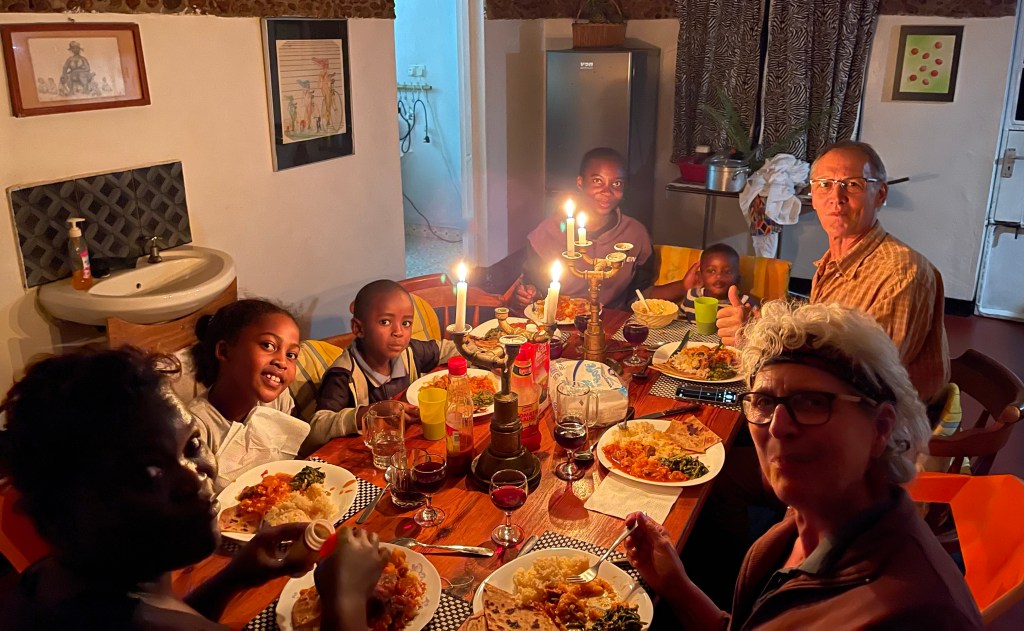
It’s the fire pit, made by me in 45 minutes of inspiration, that’s so popular. Now Alex and Precious cook up plentiful and delicious buffet meals, served from warming trays by the fire. We all sit and chat and exchange stories. Alex is a caring host, Precious a happy hostess and the children loved by all.

Sacha from France reads with JB and Keilah

Debra and I are surprised how timid some of these younger-generation travellers are – I’m sure because they are filled with doom and gloom and dramatic stories from their phone screens – all those Prophet of Doom stories that happened to ‘someone who knew someone’, but never with actual first hand proof.

Rebecca, a lesson in fortitude so often found in Africa

Debra’s travelling with an orphan girl from Jinga, down by Lake Victoria, called Rebecca. She’s shy and innocent, and thinks she’s about 19. Orphaned at three months from parents with AIDS, the father a drunkard, she suffered malnutrition and lived rough with three only slightly older siblings, scratching for scraps. She has little idea of family, despite searching for relations. In this ghastly Ugandan culture, there’s little room for compassion and it’s every man – or baby child – for themselves. Helped for a time by a charity, she now lives with a slightly older sister and has been ‘adopted’ by a friend of Debra’s. Her sister, she tells me, got married very young to find ‘security’… 

‘In Uganda?’ I think to myself as she tells her sad story. With these men who have a vacant space where Morality and Responsibility should reside? 

This is an adventure for Rebecca, who’s never had the chance to see even her own country. Hers is a not-unusual, desperate story, but also a tale of fortitude and strength: determination and hope kept alive somehow in this young woman. She’s having fun as she slowly gains confidence to talk with the United Nations around the fire pit at Sipi. 

***

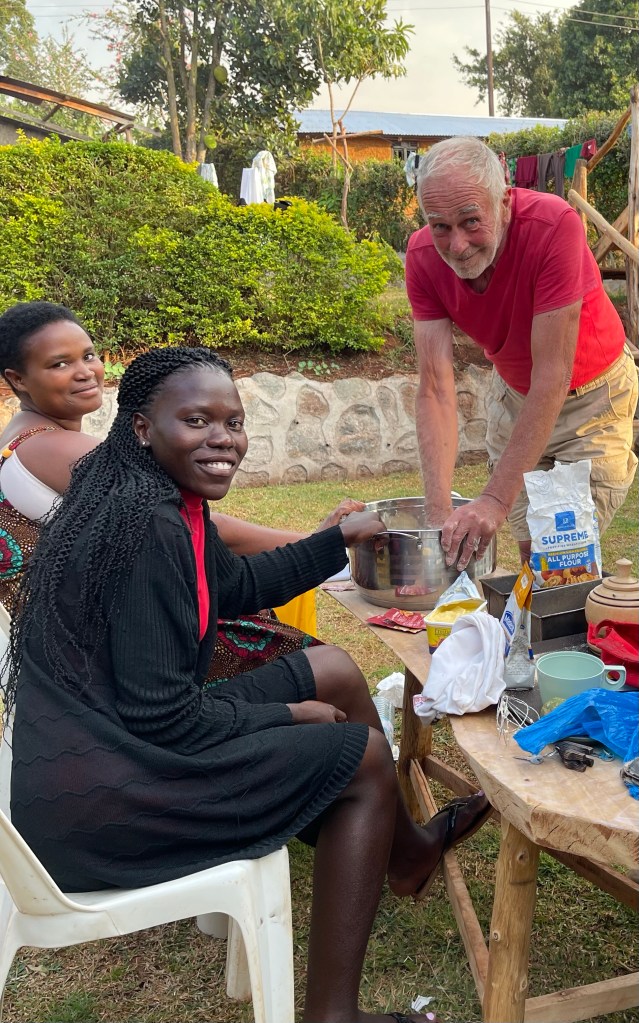
Making mud for the oven. Everyone pitches in
The Joy Bean-bread oven

We enjoy a happy group activity, making mud for the earth bread oven and decorating the new outer layer to protect the structure from the rains. Our bread is another attraction for Rock Gardens, along with the walks that Alex is happy to arrange since he and I started to hike through surrounding communities. One day, down to eleven guests today, we walk all day, four mzungus exciting the local child-population to constant calls and waves.

Children everywhere. 48% of Ugandans under 15 years…
Alex and Precious hiking

I’m content. My instincts were correct five years ago when I met Alex and Precious and started my support for their project. They are very good at this work. They make their guests happy, look after them and feed them well. I’ve a feeling they’ll always need my support, but Alex admits they now earn enough for their family necessities – although, doubtless, Uncle Jonathan will pay the school fees next week..!

Keilah reading. I’m taking back story books – an attempt to limit the ubiquitous American cartoons…

***

Wechiga goodbyes the Sipi family

I find I’m now the old man and mentor, telling travel stories of another era – a more adventurous one, I believe, when we went out with our own curiosity, unburdened by the universal bland knowledge of the internet and numerous spurious ‘guides’ who’ve set up business in tourist centres where young tourists feel so threatened. It’s comforting to meet and bond with Debra from Australia, a quiet, older woman who travelled, like me, before the all-pervading internet. Debra and I spurn it all and tell of a time when we made our own decisions – and mistakes – without ‘reviews’ on the internet – (also frequently spurious). We went and explored and found our own hotels and destinations and bargained. These youngsters don’t understand the concept and have been conned into booking ahead (for ‘security’) through the horrible websites. Sacha from France tells me that he likes to book through B.kom, “Because if I use it often enough, we get a discount”! Debra laughs at my retort: “I ALWAYS get a discount, sometimes 50%! And without boosting the profits of a multinational corporation – who are destroying independent hoteliers… I just bargain!”

Riding back round the mountain, the sun shines and we make good time. We spend a couple more days with Adelight, Rico and Maria and then we get the early morning bus back to Nairobi, 240 miles back down the country.

On this worn, damaged, single carriageway, we crawl slowly, at the speed of the tuk-tuks, donkey carts and straining container wagons trading to and fro to Uganda and even Rwanda; the struggling petrol trucks that fuel Uganda; the clapped-out boda-boda taxi bikes. It takes a special patience to sit and watch, never to anticipate arrival – except as a vague concept in a delayed future. We stop, for no apparent reason, in a car park for almost an hour. We must develop a zen-like acceptance and sense of resignation to the fates of travel. Irritation speeds nothing but disappointment and destructive moodiness. We wonder at the antics of other road users. Time passes slowly. Life passes slowly. Nothing achieved but a mile or two nearer our destination – and the lessons of patient fortitude. The antique battered bus shakes and rattles; the radio insists for attention, but it’s in Kiswahili and happily meaningless to me. The seats are comfortable – for an African bus – legroom surprisingly generous up here at the front with a view of the creeping landscape. The driver yells into his phone, another indecipherable noise. We creep at a snail’s pace across the African mountains. The driver has terrible taste in ‘music’. For hours we listen to ‘techno-pop’, that tedious production of engineers, not artists or musicians – mechanical, repetitive and ear-scratchingly treble-toned, stuff that’s never been near a musical instrument. 

But my brother knows this patience well. He lives with it across the continent. He gazes philosophically out of the grimy window – and dozes off now and again. He’s African, and lives without my privileges, puts up with things. He’s a better man for it. And a wonderful travelling companion. I’m so content that life has given me the ability to show my friends these things. And to learn by their reactions to them. 

At last we reach Nairobi. Wechiga’s still cheerful and positive. “It’s just part of travel!” he says, still smiling. When he gets back to Ghana, after hours of flying, he’ll board a bus to Navrongo, 500 miles to the north of the capital. His journey down took twenty hours…

***

Keilah drives Emil, a Dutch visitor’s hire car

Wechiga’s now back in Ghana. I am back in Kitale, and the next part of my safari can begin – tomorrow. I’ve promised two more weeks in Sipi to decorate the new round house and direct building operations, a visit to Scovia, now living in Narok, southwest of Nairobi, and perhaps a visit to Mombasa, where Adelight’s cousin, Reuben and his Dutch wife, Marienne – whom I met at New Year, invite me to visit. I’ll also have to make another hike in the Rift Valley and want to explore more of the Cheringani Hills and the Kerio Valley escarpment. I’m pondering on a sortie into Tanzania too, if I can put up with the costly bureaucracy now intruded by Kenya’s nonsense ‘visa free’ status – that will cost me hours of online hassle and at least $100! 

I have 38 days left to do all this…

Keilah
Jonathan Bean Cheptai – JB2
Keilah paints a wall in Jonathan Bean Design Limited ‘traditional style‘. Earth and PVA!
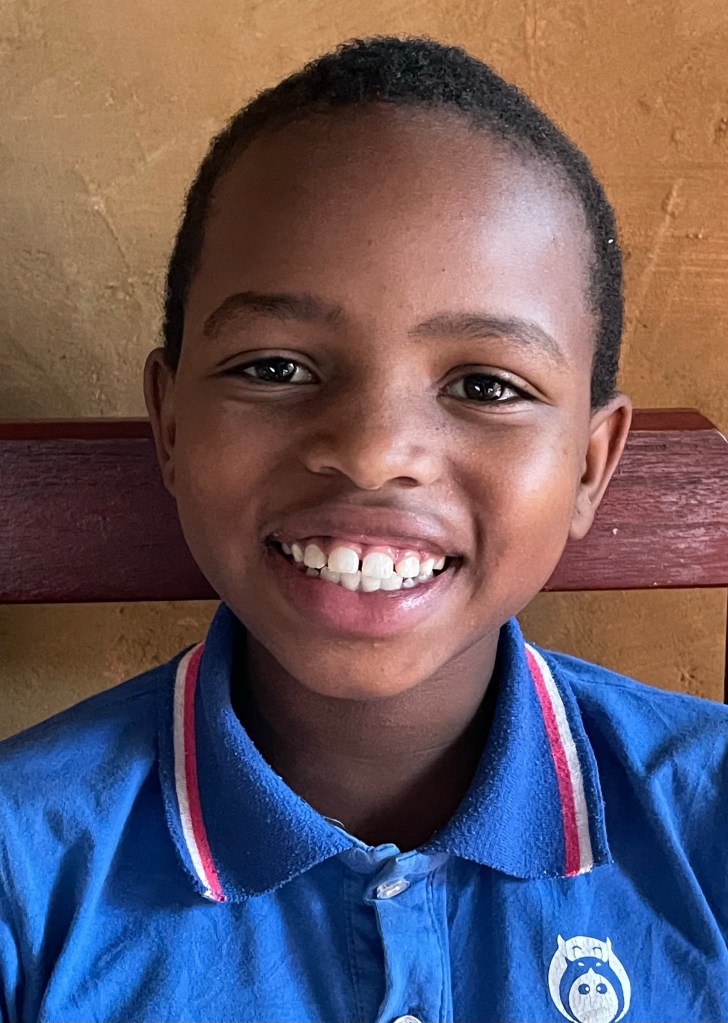
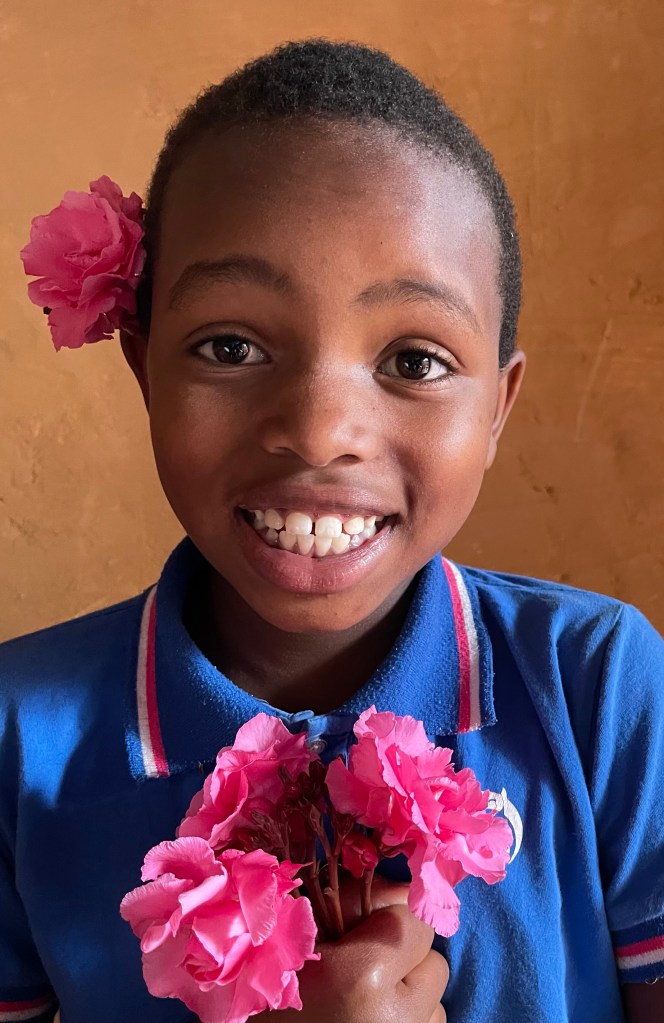
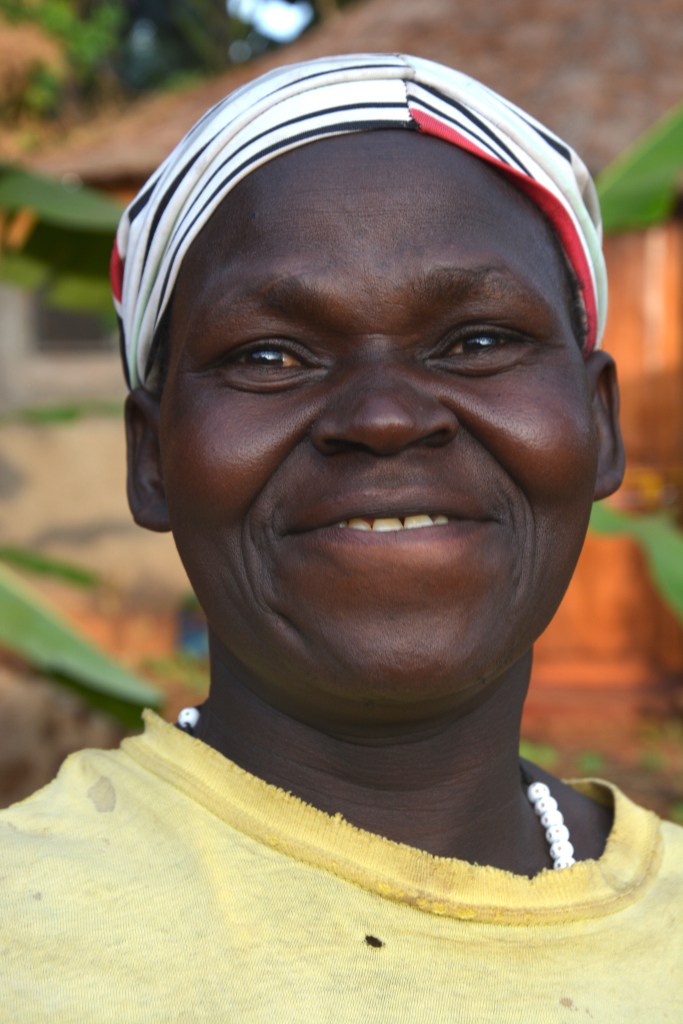
Last, but far from least, a smile that says it all. Meeka, a small Ugandan