
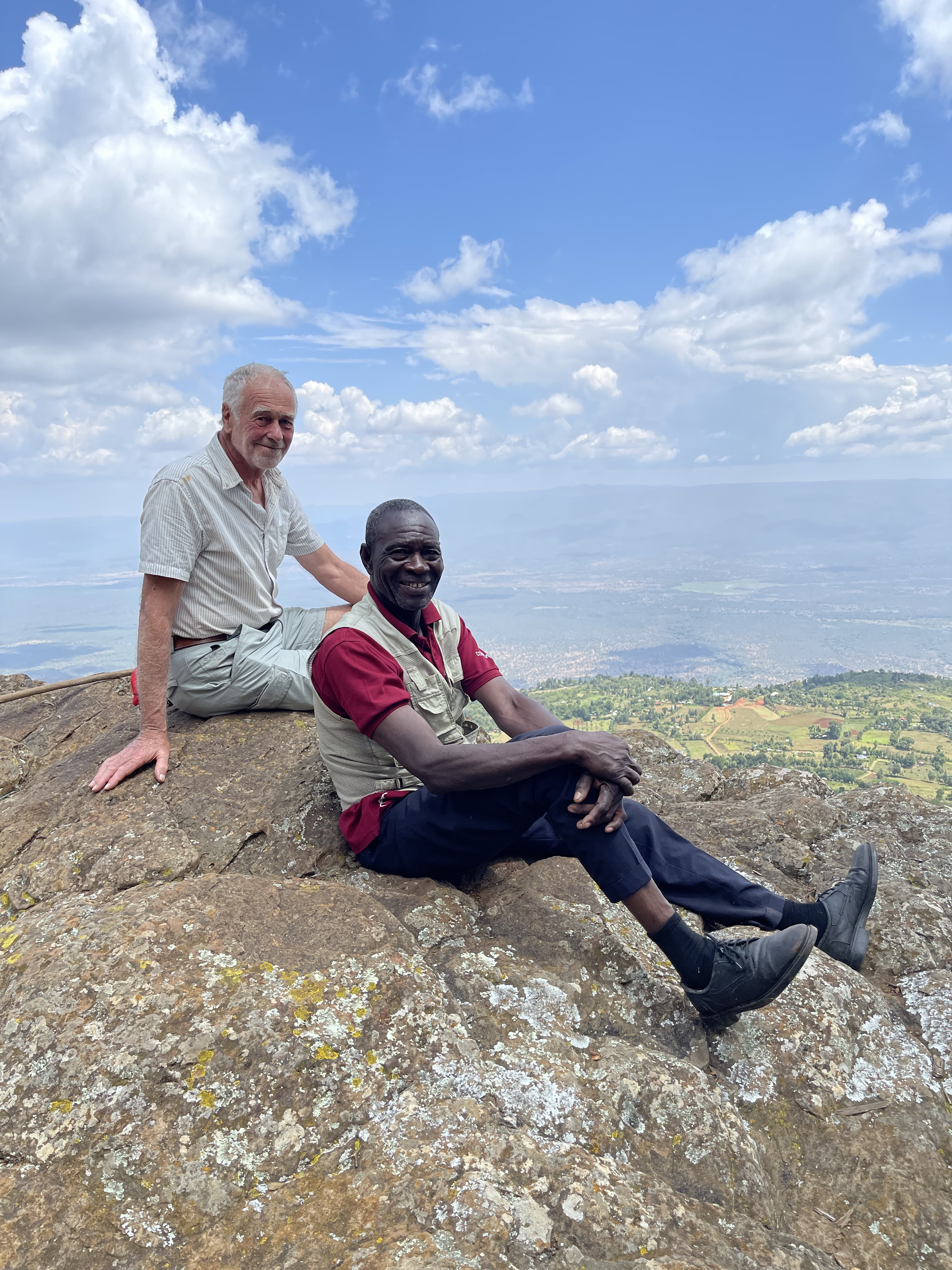
MY BROTHER, WECHIGA FROM GHANA MEETS MY EAST AFRICAN FAMILIES; ANOTHER HIKE DOWN THE SIDES OF THE RIFT VALLEY; ROCK GARDENS GETS MANY GUESTS – AND A TOURISM AWARD! THE RAIN CONTINUES IN THIS DRY SEASON…
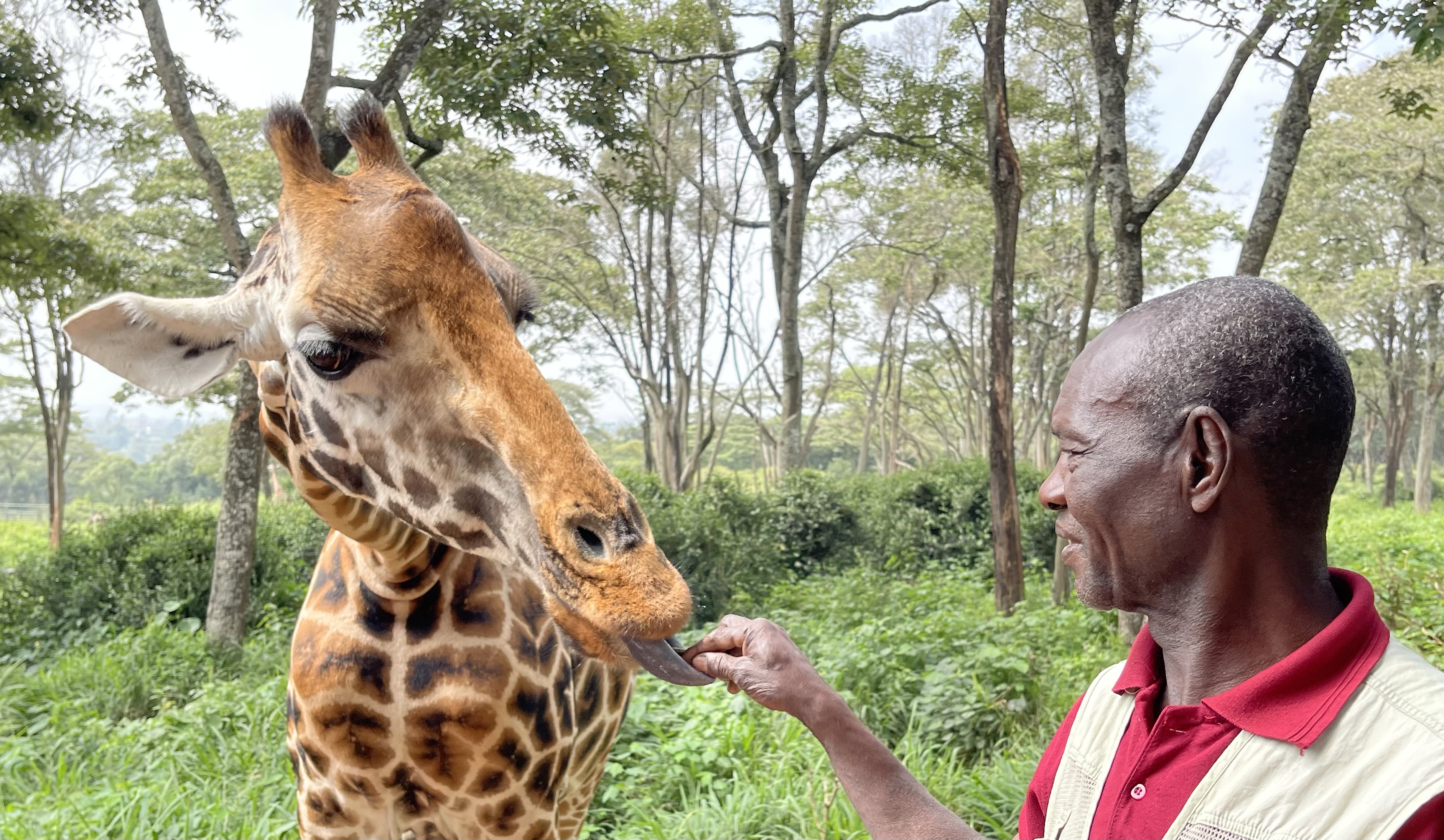
Wechiga, my closest and fondest African brother for 34 years, left Nairobi well before dawn this morning, January the 29th, to fly back across Africa to Ghana.
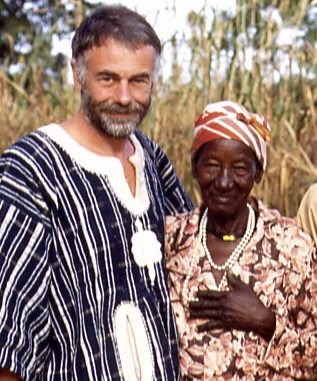
Our meeting on December 22nd 1989 was an event that profoundly influenced both our lives, as we came to understand one another’s cultures and values. He’s a man of integrity, curiosity, kindness, humour and sociability. We are both products of remarkable mothers. His mother, Akay, born within a year or so of mine, was the wisest of women, the most admirable African I ever met. She didn’t know her birth date – no one kept records then; we can only surmise from her name, Akay – meaning ‘I have survived’ – that she was perhaps born soon after the influenza pandemic of 1918. She was illiterate but wise. My mother, Joy, born in 1917, used to describe herself as, ‘not much brain, but bags of common sense’, self-deprecating words that both women from such different cultures might use, both extraordinarily sociable and curious, gifts they’ve passed on to their two sons. They’d have recognised this in one another, had they ever had the chance to meet. Wechiga bonded closely with Joy on his visits to Britain, as I did with Akay on my many journeys to Navrongo, before she died in 1999. She was a remarkable woman.
Wechiga has inherited much of Akay’s spirit and curiosity. He loves new experiences and approaches life with a sociable, easy-going nature moulded by his remarkable mother. As probably do I, from my mother.
***
Full of tales and excitements of my second motorbike crossing of the incomparable Sahara, I arrived in Navrongo that afternoon in late 1989, with Wechiga, who’d met me at the Ghana border a few miles to the north, sitting atop my spare tyre. Introduced by Perry, now back in England, I knew nothing of Wechiga’s culture or the habits of the household, and he knew nothing of mine, three thousand miles away in another, northern world. Everything was new and much of it mysterious. We both started with a clean slate and, I think, there and then decided we must abandon all diffidence. Like Akay, to whom so many young neighbours came for advice, Wechiga has an innate wisdom. He seemed to know what I needed to understand to operate within his culture, an extraordinary gift for one who’d not travelled further than Tamale, that so much enhanced my understanding of this new way of life. It’s a brotherhood that has changed my life, my values, and my opinions. It’s been the greatest privilege: to get inside another, so-different culture and learn its benefits and problems. With all the new devices that the world has invented since we first met, Wechiga and I talk at least every week, and he’s been my cheerful guide, friend, and brother on 21 visits to his home town, and the three long visits to my world that I facilitated for him over the past couple of decades. I planned to visit him last November, but was called to America for work instead. A joke comment from him prompted me to think what a thrill it would be for him to fly across Africa and meet my East African families instead…
So, this episode is much taken up with Wechiga’s visit to East Africa, another adventure in his life, earned by his integrity, curiosity and kindness.
***
His arrival time in Nairobi was set for 01.20 on the 9th of January. I’d booked us two rooms at the old fashioned United Kenya Club and travelled down, by plane this time, from Eldoret, the day before. After three international trips – to Britain – I had no doubts of Wechiga’s ability to negotiate the intricacies of airlines and airports, but by 03.20, I was uncomfortable, as I waited outside Arrivals, most of the other meeters and greeters fading away into the night. A text message, timed at 01.15, worried me: ‘I am in Addis Ababa’. Was he even on this flight? All the stragglers had cleared baggage and customs and the airport was increasingly silent. I considered returning to the city and bed. But if I wasn’t here, how would he cope? No money, no idea where to go, in the pre-dawn hours at an international airport? Finally, at 03.30, I spotted a smocked figure with a very small backpack (I taught him to travel light!) emerge from the immigration corridor. “Eh! There was some form I hadn’t downloaded. There was no signal, no connection! Huh! And I didn’t know I could have given the official a few dollars and they’d have let me go! Just two of us, last out of the aeroplane!” But here was my brother, whom I haven’t seen for four years, looking more and more like his lined father, now with some grey to his hair, but still the irrepressible smile and happy curiosity, come to see more of the world. “You taught me to travel!” Questions began at once, on our weary race back to the city on empty highways with a crazy young taxi driver.
“But what about that text message saying you were in Addis at one fifteen?”
“Oh, I hadn’t reset my phone from Ghana time!”
***
We stayed two days in Nairobi and then bussed up to Kitale, the usual ten-hour ordeal on a battered bus that left the mud-clogged, chaotic terminal almost two hours late.
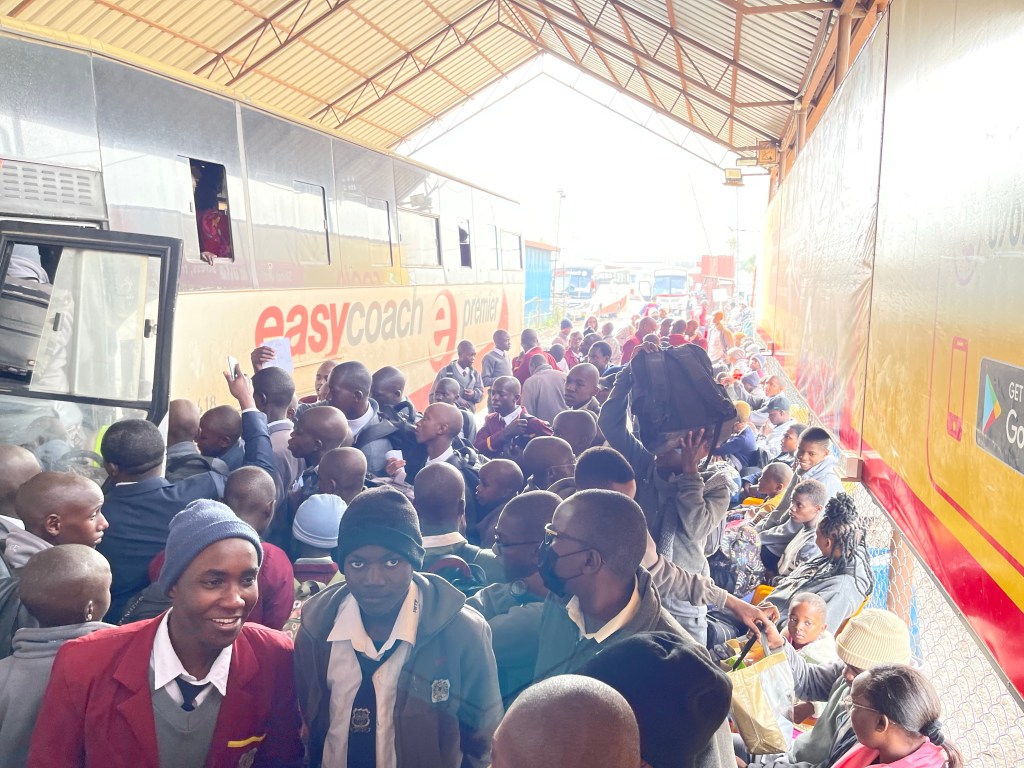
The rain persisted, as it has done so much this year, obscuring the fine views of equatorial Kenya. Wechiga was impressed, even on arrival, to be at the highest altitudes of his life on land. Nairobi is at 5300 feet above sea level, and our travels were to take him up to 10,037 feet, two up on the little 200cc Mosquito, Wechiga sitting uncomplaining on the rack, padded by aged foam pieces in a plastic sack. Crossing the Equator was also a high point, literally, as here the road grinds to over 9000 feet.
He has a great ability to make friends, a result of being a sociable listener. We’ve stayed several days in Kitale, some days in Kessup, with a major hike into and out of the Rift Valley, and a trip around the mountain slopes to Sipi and the Ugandan family. The days have been filled with goodwill, novelty and conversation, Wechiga charming multiple nationalities, but everywhere mistaken for a Kenyan.
***
It seems my lot in life to introduce people to one another. Here I was, bringing my brother across the continent to make new friends. And on arrival in Kessup at the very lip of the Great Rift Valley, our first ride two-up – in drizzly rain – here were Wanda and Jörg from Koln in their elderly camping car, friendly folks who’ve spent many years exploring Africa, whom I befriended several years ago and introduced to Adelight and Rico in Kitale, and to Alex and Precious in Uganda. They would soon be moving on to Kitale. So that Sunday, Jörg joined Wechiga, William and I on a clamber up the mountainside from Kessup’s plateau part-way down the steep escarpment. It amuses me that that morning, before our walk, I was thinking how excited children would be to have THREE mzungus to shout at and greet. It was some hours before I recognised that Wechiga isn’t a mzungu! A stranger, yes, but certainly not mzungu…
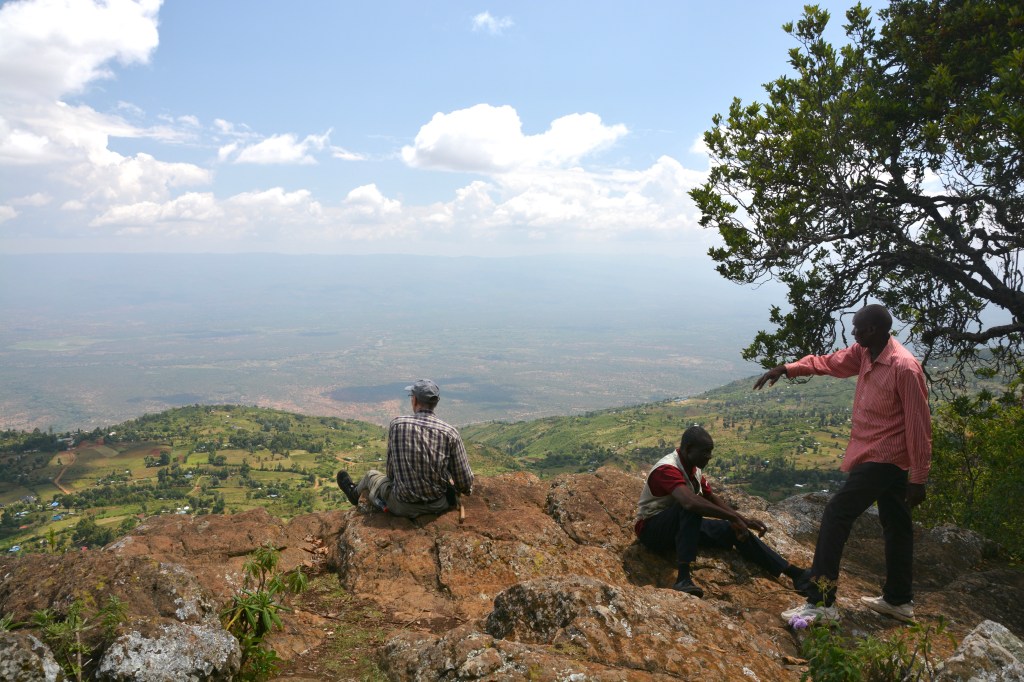
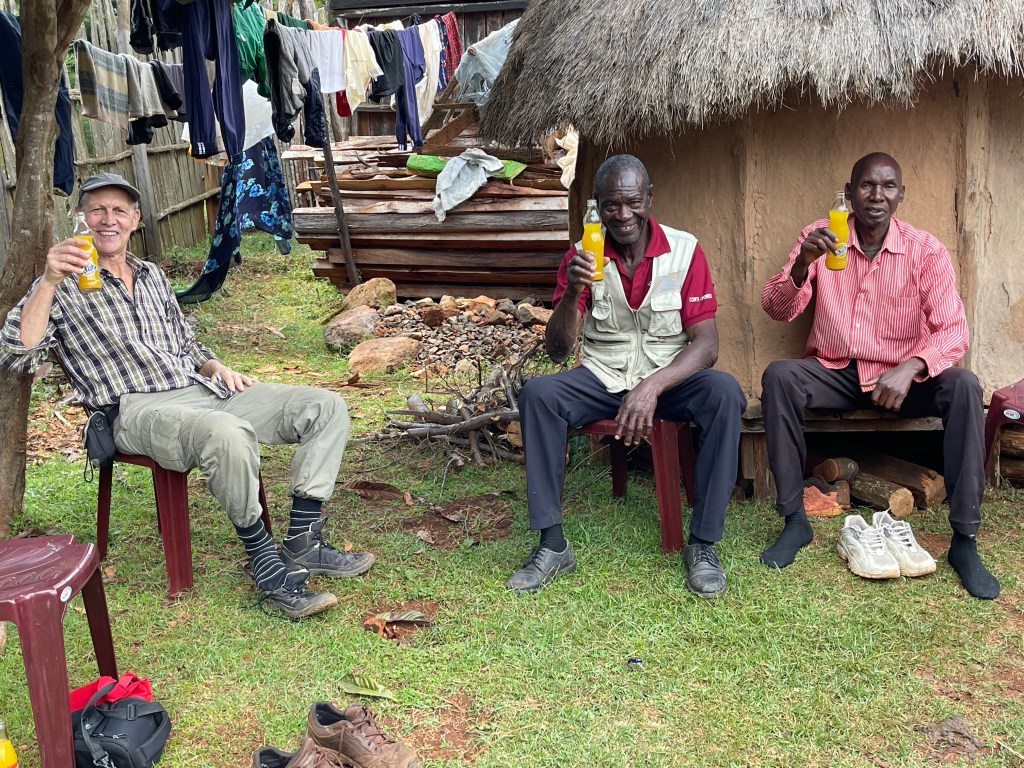
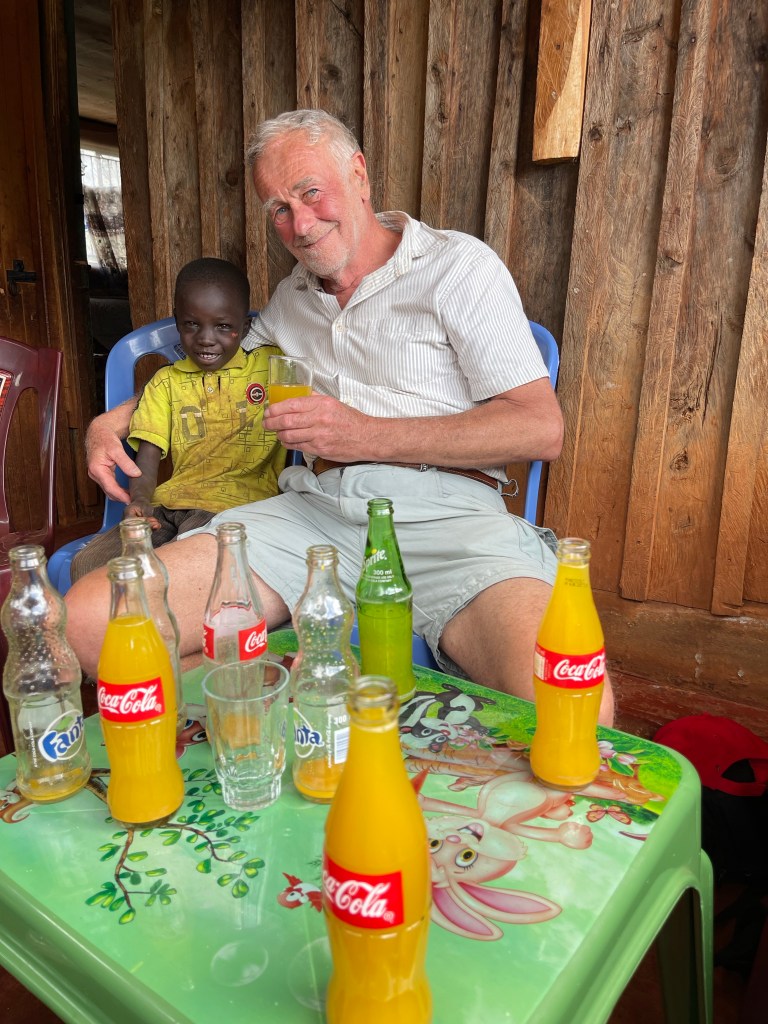
I wanted to introduce Wechiga to moratina, a local drink made from honey and herbs that is sunflower yellow in colour and brings smiles to faces from its alcohol. Leonard, a beekeeper, brews it for Sundays at his tidy compound behind the peaceful Kessup Forest, the stretch of providentially protected indigenous woodland that lines the steep edge of the plunging valley. I also wanted Wechiga to be able to claim that he’d hiked from top to bottom of the great split in Africa, a height here of over four thousand feet. From the rocky viewpoint we could gaze far far down to the white dust road on which we planned to hike next day, down in the fiery depths, past the Kessup plateau, like a giant fertile step in the giant incline.
***
The hot white road deep in the Kerio Valley, a spur of the Great Rift, is long and boring, joined to the upper plateau by a few tortuous footpaths and a couple of astonishing dirt roads hacked from the cliffs. One ambitious project of road engineers’ will forever remain unconnected, the cliffs too steep to join the spaghetti curls of rocky track where, presumably, the surveyors miscalculated. A green and rocky road wriggles down until it stops bluntly, unstable slopes dropping away impossibly on all sides.
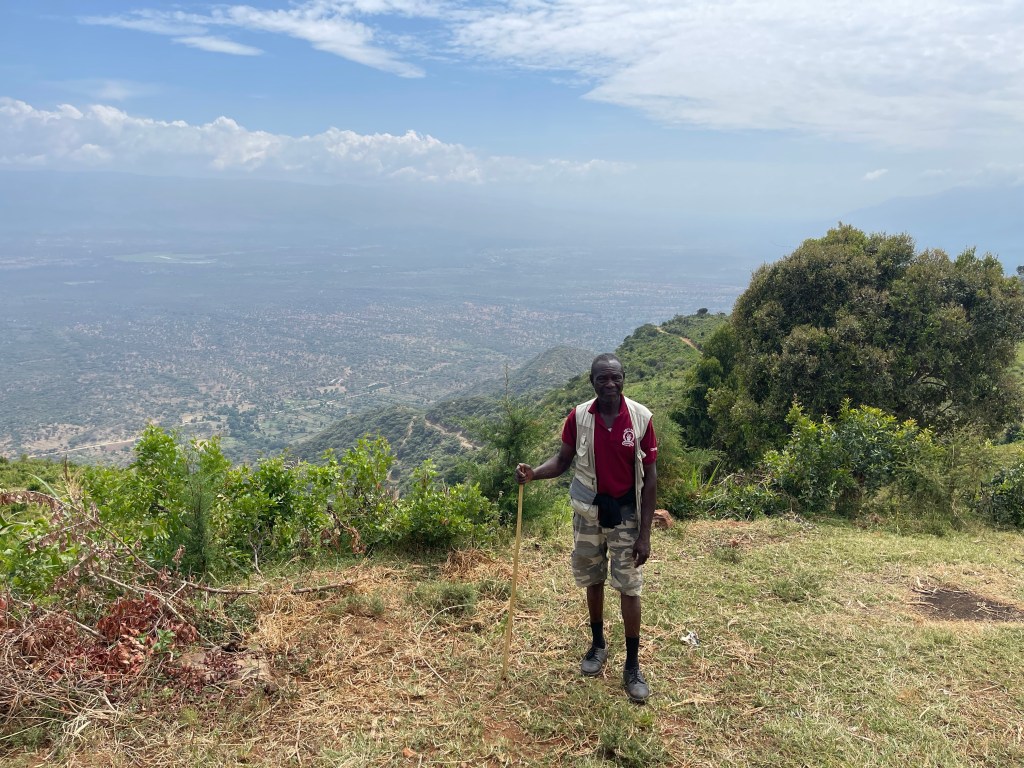
We must take to a winding, slippery footpath through aloes, thorn trees and seed-catching undergrowth, down to the lower track, 800 feet below, that winds steeply downwards, the road-makers’ ambitions slowly returning to a broken path, down to the depths. We slip and slide, catch seeds in our socks and red dust on our clothes. The heat increases with every metre we drop. We puff and pant, and sometimes I wonder just how much longer I can do this! Always at the back of my mind is the gruelling truth that every metre we go downhill will tomorrow bring a ghastly metre back uphill… We gasp as we stagger down the eleven miles of uneven trail to a couple of springs of cool water. I haven’t brought my metal water bottles this time: we were two-up on my little bike; I travelled as lightly as possible, already carrying waterproofs for us both. There’re still rainclouds boiling about above the cliffs. It’ll rain again tonight. This year, the weather’s terrible: rain most days, in what should by now be the dry season. People blame El Niño, but it’s probably also what we’re doing to the planet, I reflect as I crunch over endless plastic waste, even here in what should be the ‘Depths of Nature’. We don’t deserve this beauty around us. We certainly don’t look after it.
But Wechiga’s too full of the hike to notice these things. He’s chattering away to William, exclaiming at the scale of scenery, comparing the plant life to that of home, telling William about customs and beliefs in his home across the continent. He still limps a bit from his broken leg; a motorbike accident ten years ago. And his shoes aren’t really suitable for hiking, but most Africans don’t have the luxury of multiple choices of footwear: just last time I was here, William had to rush up to Iten at the top of the escarpment to purchase some secondhand shoes for our walk.
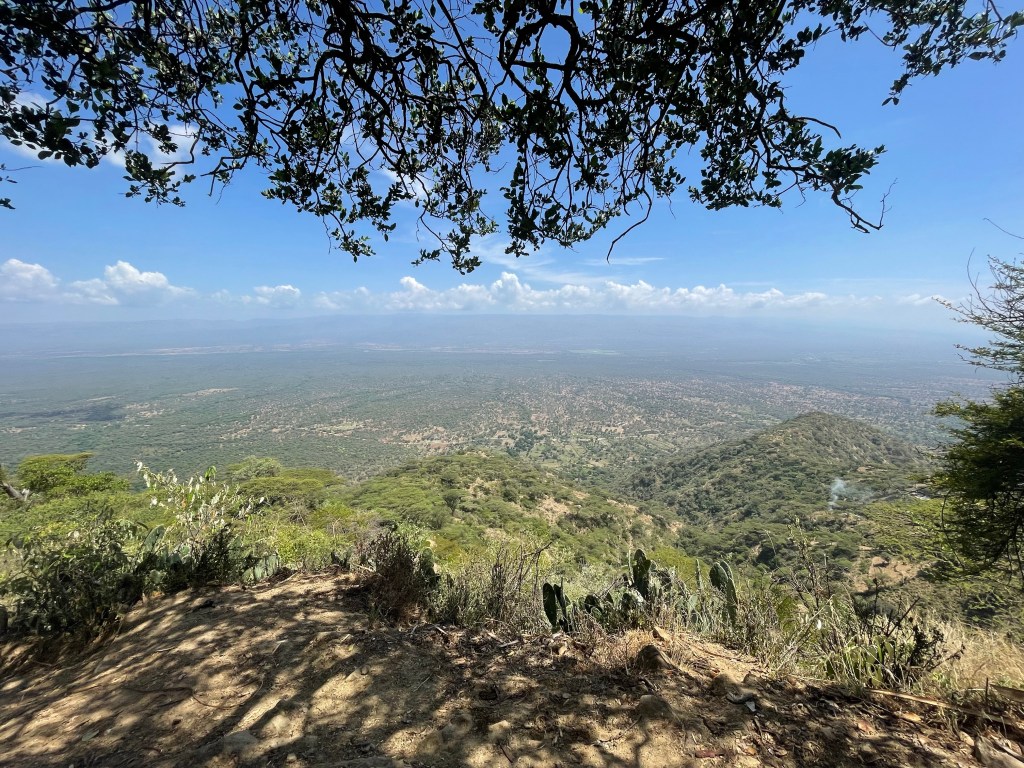
We sit under a sparse thorny tree and gaze into the distance over the vast valley. We’ve still several miles to go down, then more miles along the long dust road that draws a line into the distances both ways, disappearing behind a great tree-covered bluff to the north. Somewhere that way, we will stay at the simple guest house at Kipkoyiwo, where the elephants come to drink at the village water source in the dry season. We won’t see them this year, though. There’s too much rain, so they’ll stay discreetly in the midst of the bush. It will rain heavily tonight, rattling on the tin roofs over our basic rooms: just a bed with a none-too-clean blanket, a plastic basin for washing and a holey mosquito net. There’s not much to eat, just chapatis, mangoes and the delicious, copious ten-pennyworth bag of spinach we’ve carried every inch of the way from a field on the plateau high above. But the body can take care of itself when the soul is so rewarded by such magnificence. For a day at least…
It rains hard in the night, but down here in the inferno, it doesn’t turn to mud. We plod along the road a kilometre or so further towards the northern deserts to buy Kerio Valley mangoes from a farmer friend of William’s. They’re surely the best fruits in the world – after Ugandan pineapples, of course. We add them to my old faded and patched backpack that’s been to Africa so often. We’ll take turns to carry our few possessions as we clamber and struggle back up, but stupidly I elect to take the stretch where we must climb at the steepest. I’m struggling; determined not to give up; questioning my sanity at 74; one foot in front of another; lugging the few scant kilos of the bag. It’s heavier at every step, but no, I won’t accept help. Wechiga’s 64 and William’s 58, mere youths. But as always, I have something to prove… The last miles are ghastly! Maybe I really AM getting old! But then, I realise, I have climbed three and a half THOUSAND feet up this slippery, unstable, hot slope – in searing sunshine, floodlit like a moth on a light bulb on the side of this incredible cleft in the Earth’s crust. Life in the old dog yet…
***
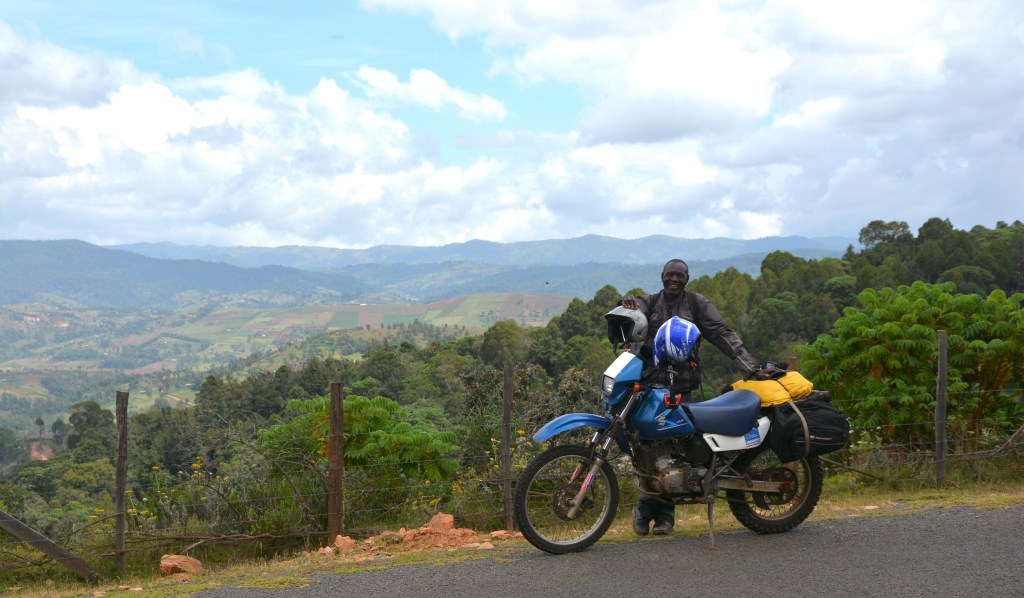
Next day, we ride back to Kitale. It’s harder, two-up on the little bike. It’s the innumerable speed bumps (an obsession of Kenyan road engineers) that make it wearing. On my own, I can stand up and coast over them at speed, but now I must brake for every one of them, hundreds back to Kitale. But I take Wechiga over the magnificent Cheringani Highway. It sounds like a major toll road, but it’s a lovely curling tar road – that used to be one of the hardest and most rewarding trail rides in East Africa – that winds and twists HIGH over the green hills. I’m taking Wechiga higher than he’s ever been on land, up to 10,037 feet. We stop for a photo and gaze at the vistas of these high hills – that anywhere else’d be called mountains, as Rico always says, but are insulted as mere ‘hills’ where they sit atop the high lands of this part of Africa.
Then we curl down newly constructed link roads – that used to be difficult rock tracks when I started coming this way – chased by rainclouds. We outstrip the rain on the descent, and ride back ‘down’ to Kitale, at its 6000 feet. Wanda and Jörg have pulled their camping car into Rico’s garage for some repairs. We have a happy, cheerful evening on the porch all together. Wechiga meets more people and charms them with his cheerful conversation and endless curiosity. Jörg’s been to Ghana a few times in his African travels. There are stories to tell over our beers and supper. Our friends from Germany enjoy a night ‘indoors’, listening to the heavy rain on the garage roof, protected from the deluge, their windows open. Still this awful weather…
***
Time’s against us. I’ve already paid the airline to extend Wechiga’s visit until the 29th, but there’s a lot to do in our twenty days. I have to spend a frustrating hour before we can leave for Uganda, filling in arcane and pointless bureaucratic nonsense to buy him a permit to re-enter Kenya in four days time. It takes three days to process… A couple of weeks ago, with great fanfare, Kenya’s president announced that Kenya was going to be visa-free for all travellers. It’s propagandist nonsense. Now we must all apply for an ‘Electronic Travel Authorisation’. It’s a visa by another name: all the same pointless questions and form-filling, photos and permissions. It’s a bloody VISA! And it’ll cause me a lot of hassle in future years. At present I obtain (with hours of online angst), for $100, a visa that covers me to go in and out of Kenya and Uganda and Rwanda for three months. With the new system, I’ll have to apply for each country separately, $50 for each Uganda visa, $35 for each Kenyan return. It’ll double my costs. My only thought is how shamefully WE treat any African crazy enough to apply for a visa to our xenophobic, arrogant, cruel country. I’ve heard enough stories, and been involved in sufficient applications to reduce my irritation at African countries’ treatment of me, a privileged mzungu, whose admission is guaranteed so long as I pay the fees and accept the nonsense (largely invented by the colonial British of course).
So we leave late for our ride round the shoulders of great Mount Elgon, a favourite ride. It’s 90 miles to Sipi, now on the impressive Chinese road that’s carved its way across the mountainsides such that we can make the journey in two and a half hours plus the border crossing. Wechiga needs no visa for Uganda (it really IS visa-free there for him. It’ll cost me £27 to be able to bring him back into ‘visa-free’ Kenya…). The Mosquito performs well, despite its meagre 200ccs. It’s dry today, but the wonderful views are obscured by moisture rising from the damp expanses of Uganda below us. “There should be a great view here!” I keep shouting over my shoulder to Wechiga. Happily, the return journey in four days will prove to be sunny and bright: the vistas stunning as always.

***
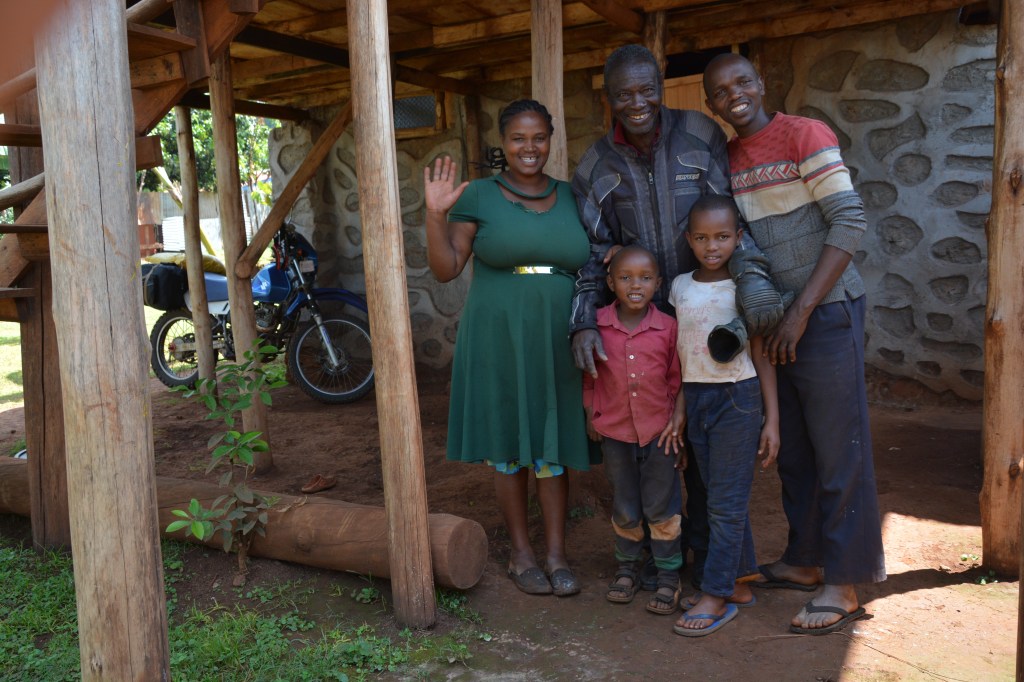
Rock Gardens at Sipi, our project to build a guest house and make the family independent, has taken off! It’s astonishing. It’s the power of the internet. Alex has the rough-round-the-edges ‘traditional’ guest house on Google Maps and the all pervasive B.kom (once again spelled that way to prevent it uploading links to your device as you read!). A few days ago, he received an award for a 9.2 travel review score by visitors. Reviews of our rough place are ecstatic. My fears about the lack of sophistication of the guest house were unfounded: it’s the welcome and food that are impressing guests.
We arrive, happily welcomed by the family, to find no less than THIRTEEN international guests staying in the two round thatched rooms, the basic room that was recently a kitchen – now with a very basic bathroom and the other room that hasn’t even a bathroom. Wechiga’s in the storeroom and – of course – The Money: me – in the derelict tent once more.
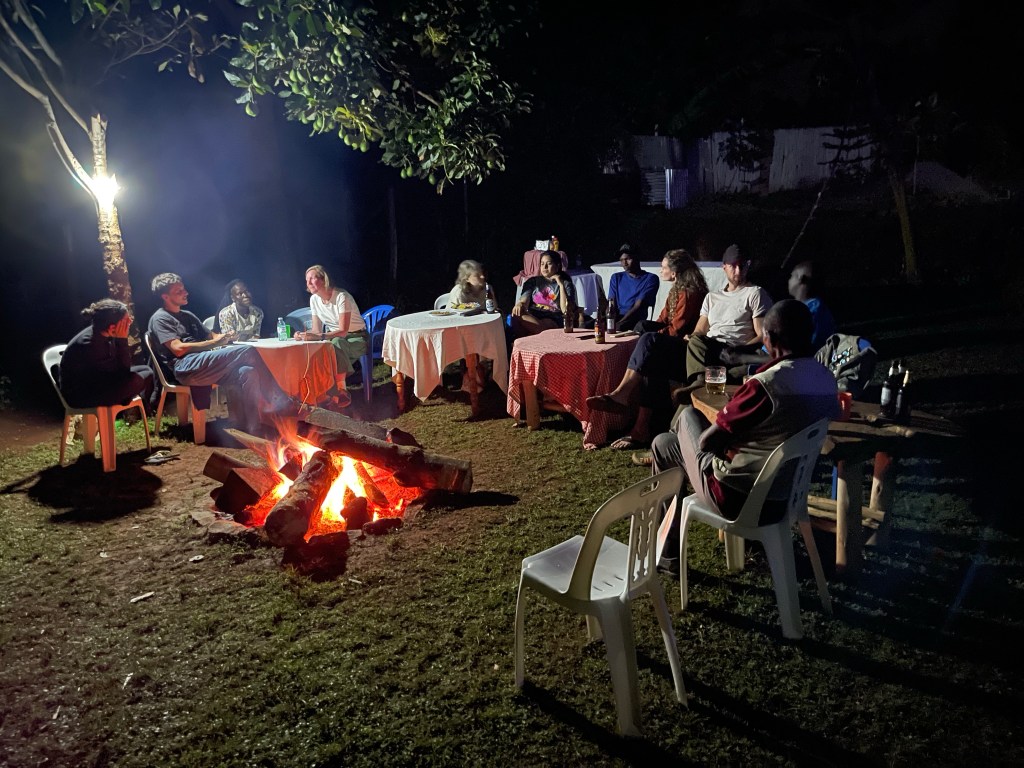
It’s the fire pit, made by me in 45 minutes of inspiration, that’s so popular. Now Alex and Precious cook up plentiful and delicious buffet meals, served from warming trays by the fire. We all sit and chat and exchange stories. Alex is a caring host, Precious a happy hostess and the children loved by all.
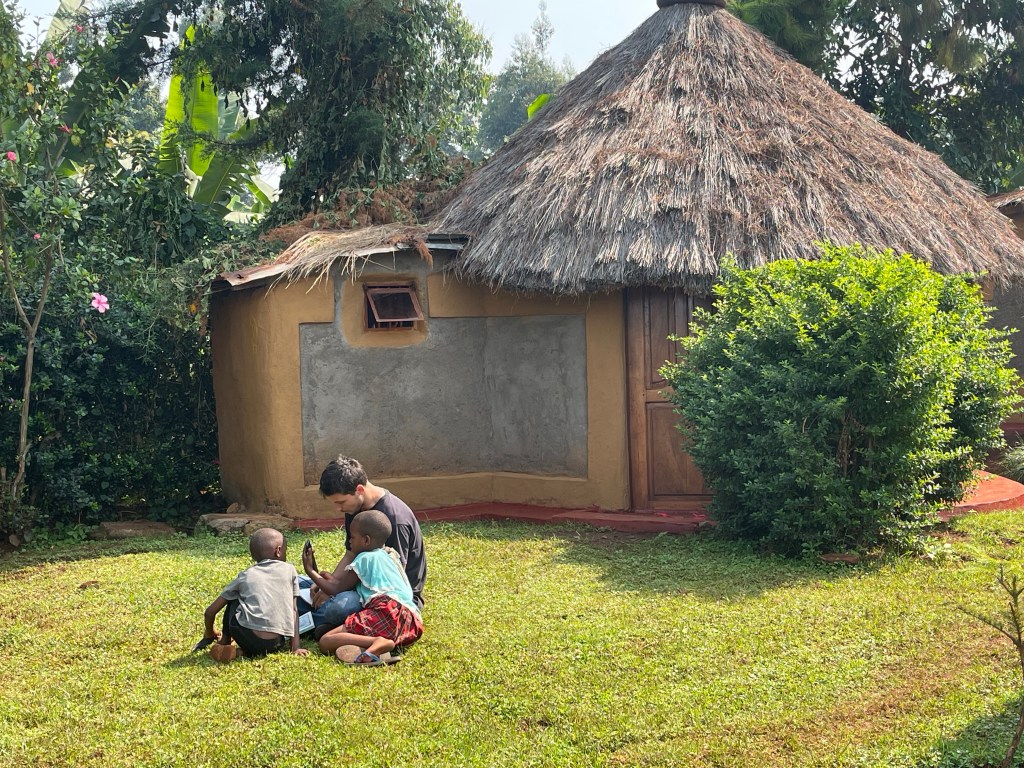
Debra and I are surprised how timid some of these younger-generation travellers are – I’m sure because they are filled with doom and gloom and dramatic stories from their phone screens – all those Prophet of Doom stories that happened to ‘someone who knew someone’, but never with actual first hand proof.
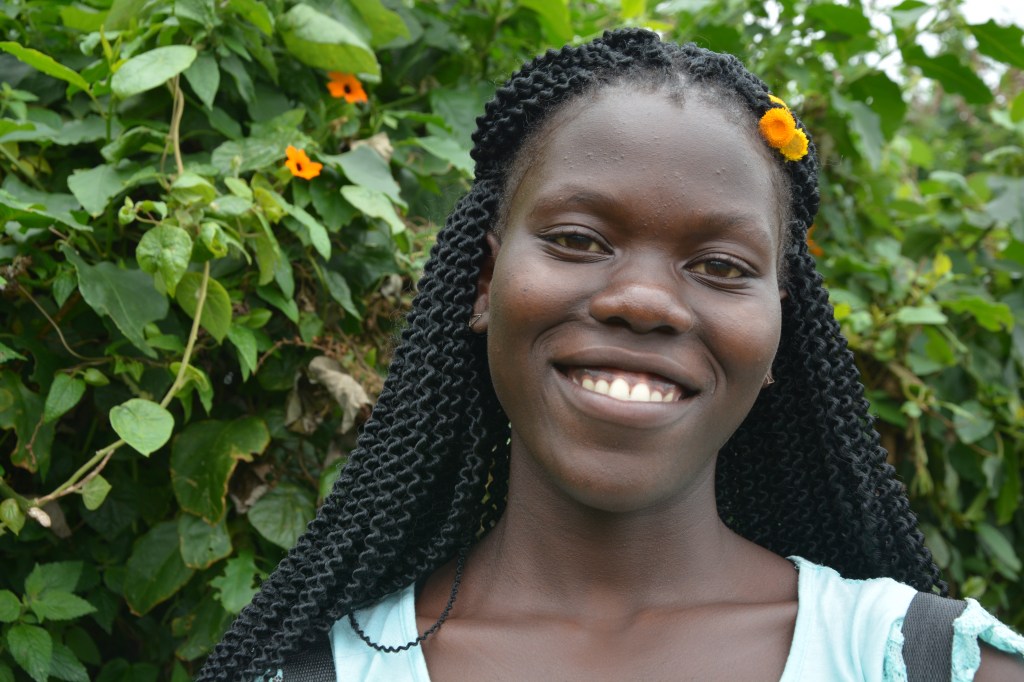
Debra’s travelling with an orphan girl from Jinga, down by Lake Victoria, called Rebecca. She’s shy and innocent, and thinks she’s about 19. Orphaned at three months from parents with AIDS, the father a drunkard, she suffered malnutrition and lived rough with three only slightly older siblings, scratching for scraps. She has little idea of family, despite searching for relations. In this ghastly Ugandan culture, there’s little room for compassion and it’s every man – or baby child – for themselves. Helped for a time by a charity, she now lives with a slightly older sister and has been ‘adopted’ by a friend of Debra’s. Her sister, she tells me, got married very young to find ‘security’…
‘In Uganda?’ I think to myself as she tells her sad story. With these men who have a vacant space where Morality and Responsibility should reside?
This is an adventure for Rebecca, who’s never had the chance to see even her own country. Hers is a not-unusual, desperate story, but also a tale of fortitude and strength: determination and hope kept alive somehow in this young woman. She’s having fun as she slowly gains confidence to talk with the United Nations around the fire pit at Sipi.
***

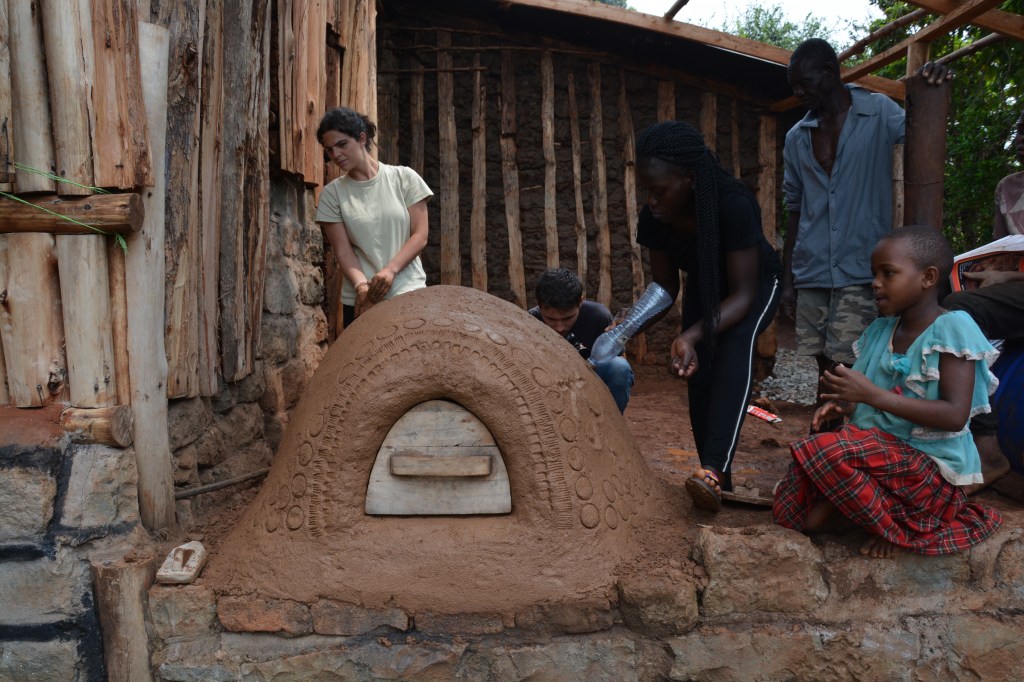
We enjoy a happy group activity, making mud for the earth bread oven and decorating the new outer layer to protect the structure from the rains. Our bread is another attraction for Rock Gardens, along with the walks that Alex is happy to arrange since he and I started to hike through surrounding communities. One day, down to eleven guests today, we walk all day, four mzungus exciting the local child-population to constant calls and waves.
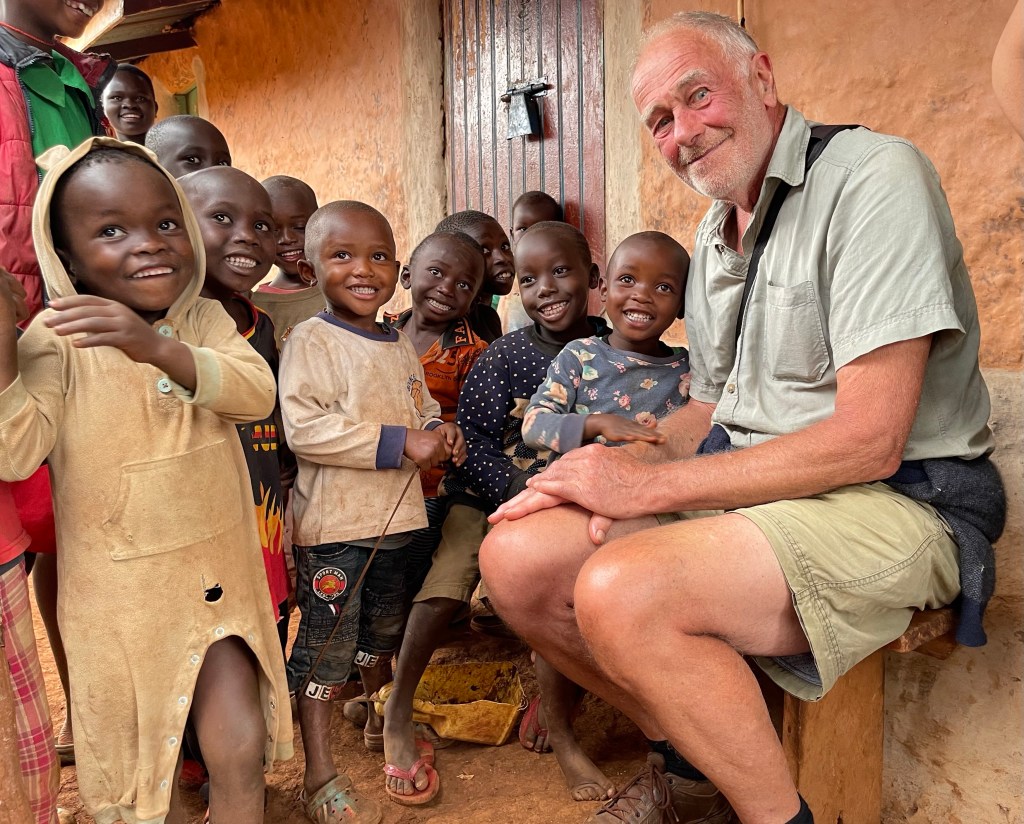
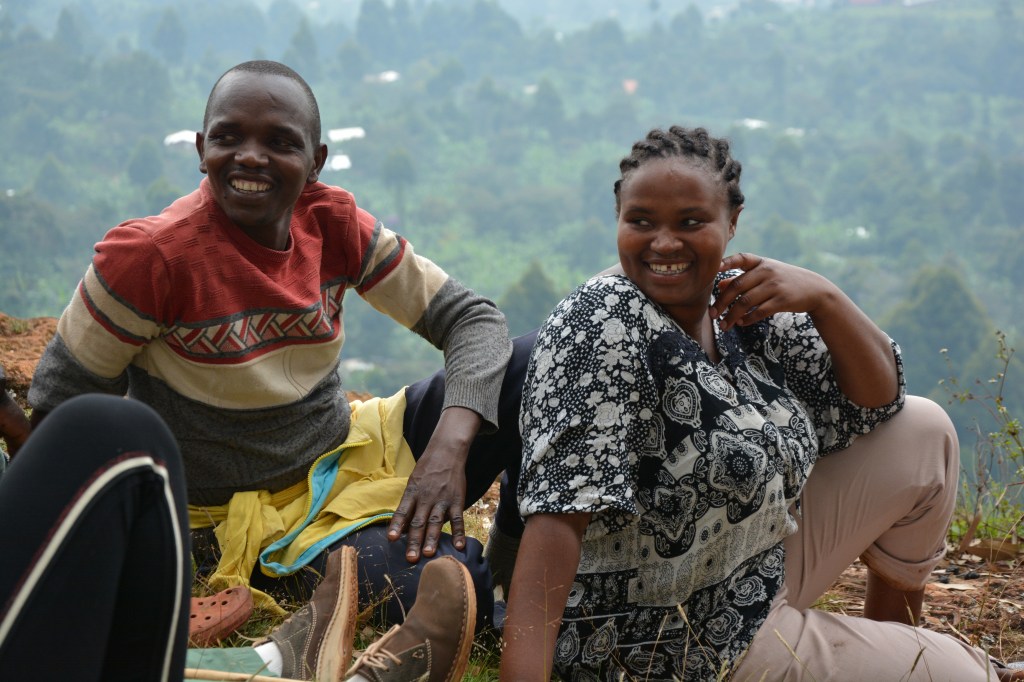
I’m content. My instincts were correct five years ago when I met Alex and Precious and started my support for their project. They are very good at this work. They make their guests happy, look after them and feed them well. I’ve a feeling they’ll always need my support, but Alex admits they now earn enough for their family necessities – although, doubtless, Uncle Jonathan will pay the school fees next week..!
***
I find I’m now the old man and mentor, telling travel stories of another era – a more adventurous one, I believe, when we went out with our own curiosity, unburdened by the universal bland knowledge of the internet and numerous spurious ‘guides’ who’ve set up business in tourist centres where young tourists feel so threatened. It’s comforting to meet and bond with Debra from Australia, a quiet, older woman who travelled, like me, before the all-pervading internet. Debra and I spurn it all and tell of a time when we made our own decisions – and mistakes – without ‘reviews’ on the internet – (also frequently spurious). We went and explored and found our own hotels and destinations and bargained. These youngsters don’t understand the concept and have been conned into booking ahead (for ‘security’) through the horrible websites. Sacha from France tells me that he likes to book through B.kom, “Because if I use it often enough, we get a discount”! Debra laughs at my retort: “I ALWAYS get a discount, sometimes 50%! And without boosting the profits of a multinational corporation – who are destroying independent hoteliers… I just bargain!”
Riding back round the mountain, the sun shines and we make good time. We spend a couple more days with Adelight, Rico and Maria and then we get the early morning bus back to Nairobi, 240 miles back down the country.
On this worn, damaged, single carriageway, we crawl slowly, at the speed of the tuk-tuks, donkey carts and straining container wagons trading to and fro to Uganda and even Rwanda; the struggling petrol trucks that fuel Uganda; the clapped-out boda-boda taxi bikes. It takes a special patience to sit and watch, never to anticipate arrival – except as a vague concept in a delayed future. We stop, for no apparent reason, in a car park for almost an hour. We must develop a zen-like acceptance and sense of resignation to the fates of travel. Irritation speeds nothing but disappointment and destructive moodiness. We wonder at the antics of other road users. Time passes slowly. Life passes slowly. Nothing achieved but a mile or two nearer our destination – and the lessons of patient fortitude. The antique battered bus shakes and rattles; the radio insists for attention, but it’s in Kiswahili and happily meaningless to me. The seats are comfortable – for an African bus – legroom surprisingly generous up here at the front with a view of the creeping landscape. The driver yells into his phone, another indecipherable noise. We creep at a snail’s pace across the African mountains. The driver has terrible taste in ‘music’. For hours we listen to ‘techno-pop’, that tedious production of engineers, not artists or musicians – mechanical, repetitive and ear-scratchingly treble-toned, stuff that’s never been near a musical instrument.
But my brother knows this patience well. He lives with it across the continent. He gazes philosophically out of the grimy window – and dozes off now and again. He’s African, and lives without my privileges, puts up with things. He’s a better man for it. And a wonderful travelling companion. I’m so content that life has given me the ability to show my friends these things. And to learn by their reactions to them.
At last we reach Nairobi. Wechiga’s still cheerful and positive. “It’s just part of travel!” he says, still smiling. When he gets back to Ghana, after hours of flying, he’ll board a bus to Navrongo, 500 miles to the north of the capital. His journey down took twenty hours…
***
Wechiga’s now back in Ghana. I am back in Kitale, and the next part of my safari can begin – tomorrow. I’ve promised two more weeks in Sipi to decorate the new round house and direct building operations, a visit to Scovia, now living in Narok, southwest of Nairobi, and perhaps a visit to Mombasa, where Adelight’s cousin, Reuben and his Dutch wife, Marienne – whom I met at New Year, invite me to visit. I’ll also have to make another hike in the Rift Valley and want to explore more of the Cheringani Hills and the Kerio Valley escarpment. I’m pondering on a sortie into Tanzania too, if I can put up with the costly bureaucracy now intruded by Kenya’s nonsense ‘visa free’ status – that will cost me hours of online hassle and at least $100!
I have 38 days left to do all this…

 jonathansjourney.net